Peptide Research
NAD+ Peptide Benefits for Skin: Research-Backed Guide
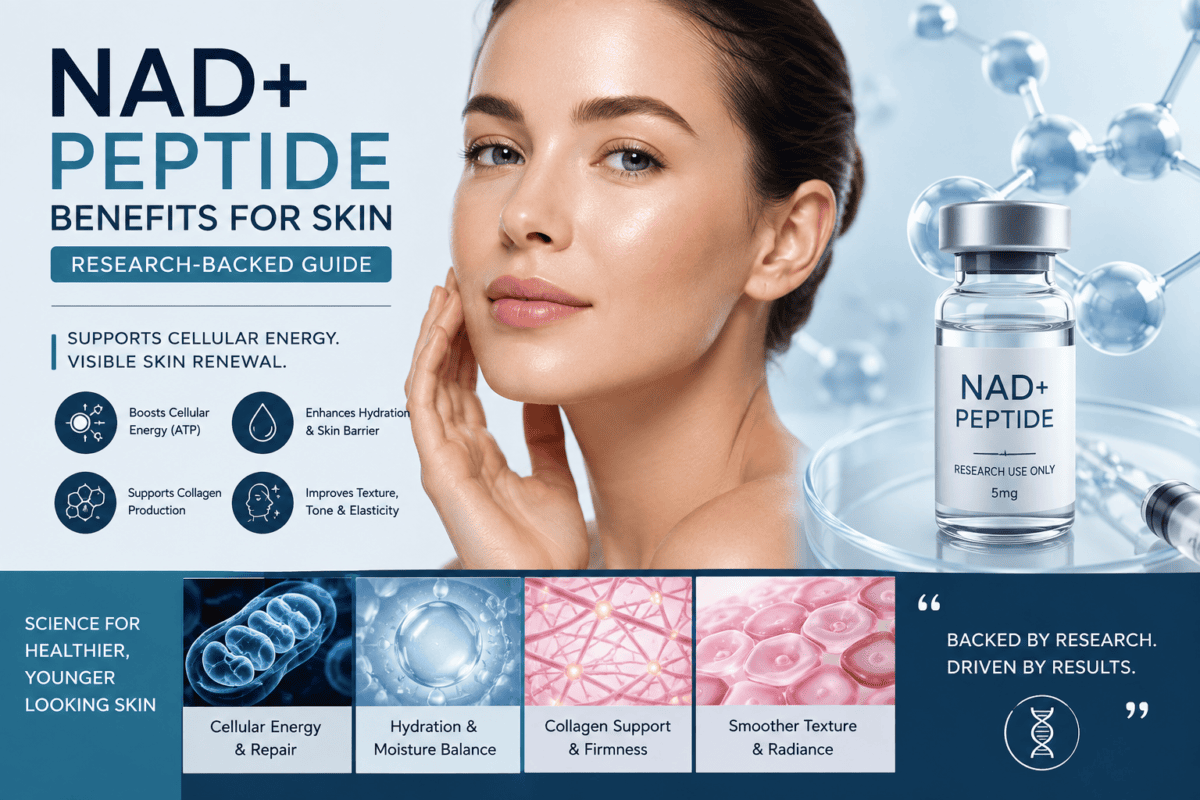
NAD+ Peptide Benefits for Skin: What Research Says About Skin Health, Aging, and Cellular Repair
Look closely at any dermatology conference agenda from the past two years and you’ll notice the same three letters popping up again and again: NAD. Not collagen. Not retinol. NAD+.
That’s a strange thing to see in a skincare context. NAD+, or nicotinamide adenine dinucleotide, isn’t a plant extract or a lab-synthesized acid. It’s a coenzyme that already exists inside every cell in your body, quietly powering the machinery that keeps you alive. So why is a molecule most people associate with biochemistry textbooks suddenly showing up in serums, supplement stacks, and longevity clinics?
The short answer: because researchers studying cellular aging kept running into the same finding. As NAD+ and cellular aging research has expanded, one pattern shows up over and over — NAD+ levels fall as we age, and that decline tracks closely with the same changes we see in aging skin. That correlation has opened up a genuinely interesting area of research into NAD+ peptide benefits for skin, even though the science is still very much in progress.
This guide walks through what’s actually known about NAD+ peptide benefits for skin, what’s still being tested, and where the line sits between laboratory findings and proven cosmetic results. No hype, no miracle claims — just a clear look at the research on NAD+ peptide benefits for skin.
A Quick Note Before We Start
It’s worth saying this upfront, because it shapes everything that follows: most of the science on NAD+ and skin health comes from cell cultures, animal models, and a smaller number of early human studies. That doesn’t make the research meaningless — it’s how every skincare ingredient starts out. But it does mean the honest answer to “does NAD+ work for skin?” is “the mechanism is compelling, and early data is promising, but large-scale human clinical trials are still limited.”
Keep that distinction in mind as we go, because we’ll come back to it often — especially when weighing genuine NAD+ peptide benefits for skin against product marketing claims.
What NAD+ Actually Does Inside Your Cells
Think of NAD+ as the electrical grid of a city. It doesn’t build the buildings, but nothing gets built, repaired, or lit up without it. Every cell in your body — including the ones in your skin — relies on NAD+ to convert nutrients into usable energy, a process that happens inside the mitochondria.
That energy-production role matters more than it might sound. Skin cells are some of the hardest-working cells in the body. They’re constantly dividing, repairing UV damage, and rebuilding the structural proteins that keep skin looking smooth and full. All of that requires fuel, and NAD+ is a core part of the fuel system.
Beyond energy, NAD+ acts as a co-substrate for two major enzyme families:
- Sirtuins — often described as the body’s “longevity enzymes,” involved in regulating inflammation, stress resistance, and cellular repair
- PARPs (poly-ADP-ribose polymerases) — enzymes that step in specifically to repair damaged DNA
This is where NAD+ DNA repair and skin research gets interesting, and it’s a core piece of the case for NAD+ peptide benefits for skin. Skin is uniquely exposed to UV radiation, which causes ongoing DNA damage. Researchers studying regenerative medicine have noted that skin cells rely on continuous DNA-repair activity to keep up with that exposure, and this repair machinery depends directly on adequate NAD+ availability.
Without enough NAD+, that repair process slows down. Damage accumulates faster than it gets fixed — and over years, that’s a big part of what we call aging.
The NAD+ Decline: What Happens As We Age
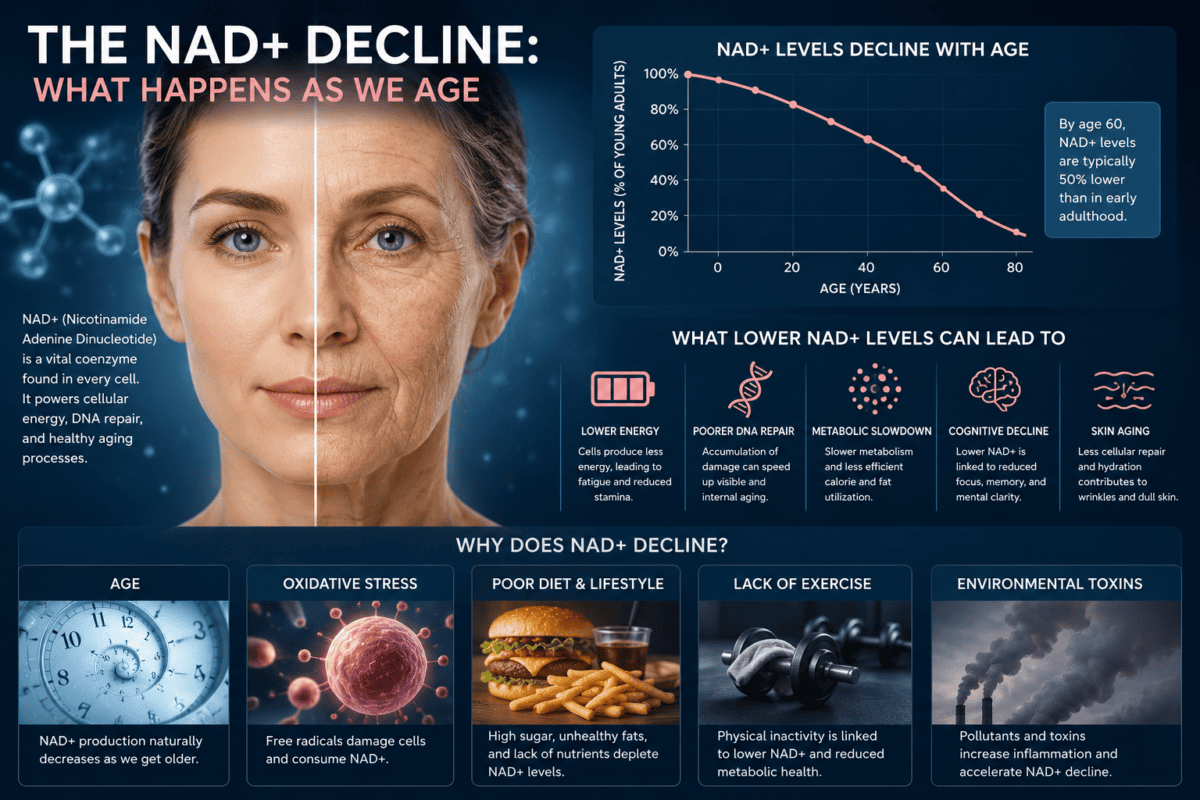
Here’s the part of the story that gets researchers’ attention. It’s well established that cellular NAD+ levels drop as we age — not just in skin, but across multiple tissues, including the liver, brain, and skeletal muscle. This decline appears consistently across species, which is one reason the aging-research community treats it as a serious area of study rather than a passing trend.
When NAD+ dips, a few things tend to happen inside skin cells:
- DNA damage builds up faster than repair mechanisms can address it
- Mitochondrial energy production slows, leaving cells with less fuel to maintain and rebuild tissue
- Oxidative stress increases, as cells lose some ability to neutralize free radicals
That last point connects directly to NAD+ oxidative stress skin research, since oxidative stress is one of the primary drivers behind visible skin aging — think uneven tone, loss of firmness, and a duller overall complexion.
None of this means NAD+ decline is the cause of skin aging. Aging is layered and multifactorial. But it does mean NAD+ availability is one of the cellular dials that researchers believe influences how well skin holds up over time — which is precisely why NAD+ peptide benefits for skin have become such an active research question.
Can NAD+ Help With Collagen and Skin Elasticity?
This is one of the most searched questions in this space, and it deserves a careful answer.
Collagen and elastin are the structural proteins that keep skin firm and bouncy. As we age, we produce less of both, and existing collagen becomes more prone to a process called glycation — where excess sugar molecules bind to collagen fibers and make them stiffer and less resilient.
Here’s where NAD+ and collagen production research gets specific. NAD+ supports a cellular cleanup process called autophagy, which clears out damaged proteins and cellular debris. In theory, better autophagy means fibroblasts — the cells responsible for producing collagen and elastin — can operate in a cleaner cellular environment and function more efficiently.
A 2026 laboratory study on skin fibroblasts treated with nicotinamide mononucleotide (NMN), a direct NAD+ precursor, found that raising cellular NAD+ levels activated sirtuin and autophagy pathways, supported extracellular matrix integrity, and even accelerated wound healing in cell and tissue models. The researchers were careful to note that further study is needed to understand exactly how this translates to real human skin, particularly around penetration and metabolic conversion — but the underlying mechanism is consistent with what’s known about NAD+ and skin regeneration, and it’s one of the clearer data points behind current NAD+ peptide benefits for skin claims.
So: is NAD+ better than collagen? That’s not really an apples-to-apples comparison. Collagen supplements provide the raw building blocks; NAD+ research is about supporting the cellular processes that build and maintain those structures in the first place. They’re addressing different parts of the same system.
NAD+ Peptides and Skin Repair: What the Research Actually Shows
When people search for NAD+ peptide for skin, they’re usually asking about NMN, NR, or nicotinamide (niacinamide) — the smaller precursor molecules that the body converts into NAD+ once absorbed. This distinction matters more than most marketing acknowledges, and it’s central to understanding realistic NAD+ peptide benefits for skin.
NAD+ itself is a large, polar, chemically unstable molecule. That creates two practical problems, both discussed in recent formulation and dermatological research:
- Skin penetration. The outer skin barrier (stratum corneum) is built to keep large molecules out. Multiple formulation researchers have pointed out that NAD+’s size makes it genuinely difficult to deliver topically without specialized encapsulation technology.
- Stability. NAD+ degrades relatively quickly when exposed to light, heat, or pH shifts — all things a skincare product routinely encounters between the factory and your bathroom shelf.
This is exactly why most NAD+ topical skin benefits products on the market don’t actually contain pure NAD+. They contain precursors — usually niacinamide (vitamin B3), NMN, or NR — which are smaller, more stable, and better able to cross into skin cells, where they get converted into NAD+ internally.
Niacinamide has the deepest clinical track record here. A frequently cited 2005 trial published in the Journal of Cosmetic Dermatology found that a 5% niacinamide formulation measurably reduced fine lines and improved hyperpigmentation after 12 weeks of use — one of the few NAD+-pathway ingredients with actual human clinical data behind it for NAD+ peptide for wrinkles and skin tone.
NMN and NR, by comparison, have promising cell and animal data — including evidence of improved hydration and elasticity in mouse models — but human trials specifically on topical NMN/NR for skin are still limited and ongoing.
The bottom line for this section: if a product is marketed under the NAD+ umbrella, check whether it’s actually delivering NAD+ itself or one of its precursors. That single detail changes what evidence-based claims can reasonably be made about NAD+ peptide benefits for skin.
Does NAD+ Help With Skin Hydration and Barrier Function?
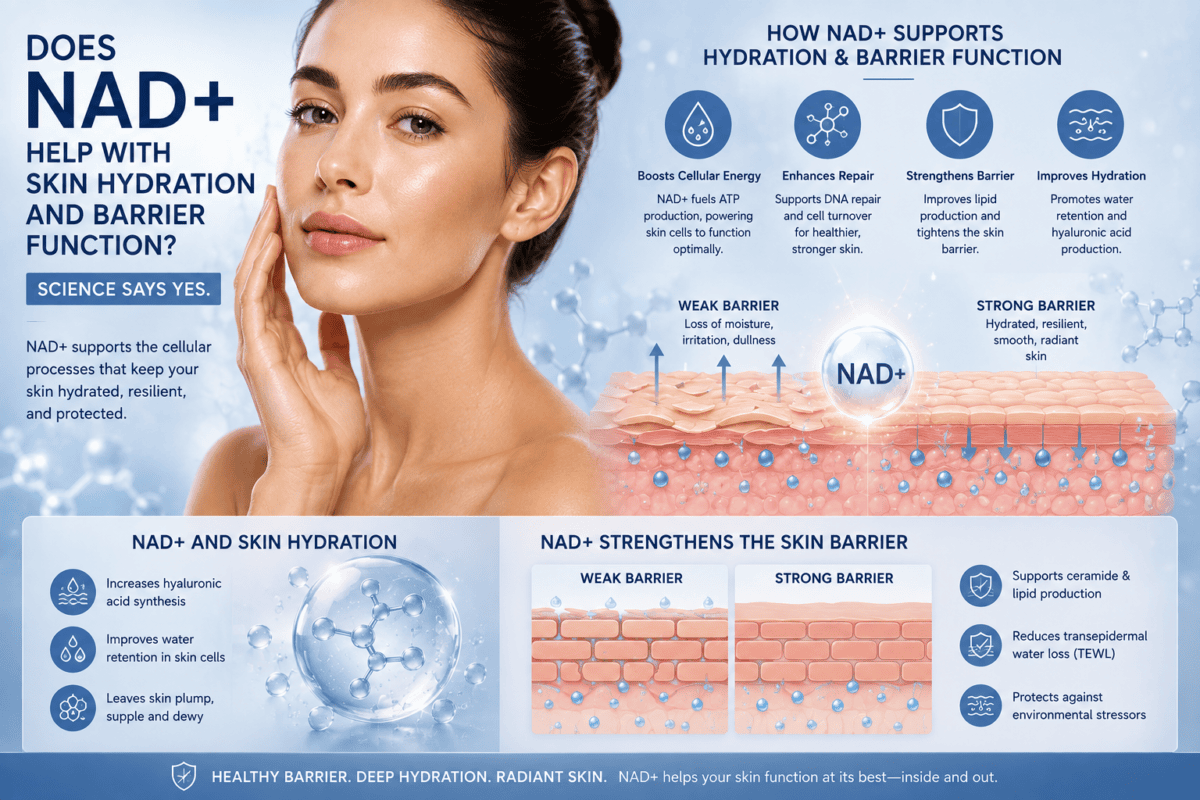
NAD+ and skin hydration, along with skin barrier function, is an area still catching up to the broader NAD+ research base. The clearest data again comes from niacinamide, which has repeatedly been shown in clinical studies to strengthen the skin barrier and improve moisture retention — likely by supporting ceramide synthesis, a key component of the skin’s outer protective layer.
Whether pure NAD+ itself contributes independently to barrier strength is less established. The mechanistic argument is reasonable — better-fueled skin cells should, in theory, maintain barrier proteins more effectively — but dedicated clinical research isolating NAD+’s specific role in hydration is one of the gaps researchers are still working to fill.
What About Wrinkles and Fine Lines, Specifically?
Can NAD+ peptides reduce wrinkles and fine lines? Based on current evidence, the honest answer is: precursor compounds like niacinamide have documented, published clinical support for reducing the appearance of fine lines. Pure NAD+ and newer precursors like NMN have strong mechanistic reasoning and encouraging lab data, but they don’t yet have the same weight of large, controlled human trials behind them specifically for wrinkle reduction.
That’s not a dismissal — it’s just where the research timeline currently stands. Ingredients like retinoids took decades of study to build their clinical evidence base. NAD+ research in dermatology is comparatively young, even though the underlying biochemistry has been studied for over a century.
A Real-World Example: Why the Distinction Matters
A few years ago, a friend of mine — a longtime skincare enthusiast who reads ingredient lists the way other people read restaurant reviews — got excited about an “NAD+ serum” she’d seen recommended online. She messaged me the ingredient list, and it turned out the product’s actual active ingredient was 4% niacinamide, with trace NAD+ listed near the bottom, likely present in a concentration too small to do much of anything on its own.
That’s not necessarily a scam — niacinamide is genuinely well-supported by research. But it’s a good illustration of why understanding NAD+ vs NAD+ precursors for skin matters before you buy, and why real NAD+ peptide benefits for skin depend so heavily on formulation specifics. The molecule doing the actual work in most current formulations is usually the precursor, not NAD+ itself.
How Long Does It Take to See Results?
This question comes up constantly, and the honest answer depends heavily on which ingredient and delivery method you’re asking about.
For niacinamide, published trials generally measured visible improvements in tone and fine lines around the 8–12 week mark of consistent use — which lines up with the natural skin cell turnover cycle.
For NAD+ precursors like NMN and NR taken orally, research on systemic NAD+ levels shows measurable increases in blood NAD+ within weeks, though how that translates to visible skin changes specifically is still being studied.
For pure topical NAD+, there simply isn’t enough robust, long-term human trial data yet to give a reliable timeline. Most existing studies are shorter-duration, smaller-scale, or conducted in lab and animal models rather than large human cohorts.
If you’re trying products in this category, patience and consistency matter more than any single week’s mirror check — realistic NAD+ peptide benefits for skin tend to build gradually rather than appearing overnight.
Are NAD+ Peptides Safe for Skin?
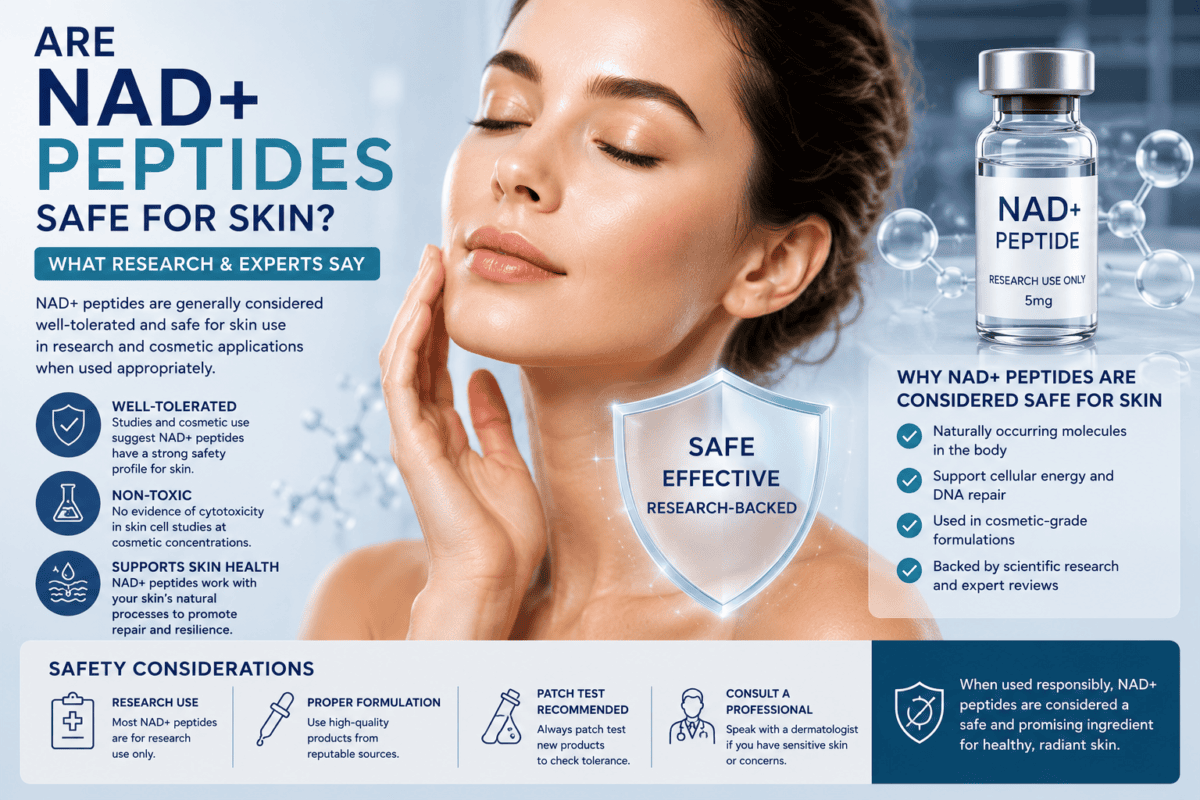
Regulatory bodies generally consider NAD+ and niacinamide safe cosmetic ingredients when used within labeled concentrations. In the United States, the FDA treats them as generally safe cosmetic ingredients; the EU permits both in cosmetic formulations with recommended concentration limits to reduce irritation risk.
That said, “generally recognized as safe” and “clinically proven to reverse skin aging” are two very different regulatory standards. Safety data and efficacy data are separate questions, and it’s worth not conflating the two when evaluating a product’s marketing claims.
As with most active ingredients, patch-testing a new NAD+ or niacinamide product before full-face use is a reasonable precaution, particularly for anyone with sensitive or reactive skin. Safety is a separate question from proven NAD+ peptide benefits for skin, and it’s worth evaluating each on its own evidence.
Is NAD+ Approved for Skin Rejuvenation?
No cosmetic ingredient — NAD+ included — carries an FDA “approval” for anti-aging or rejuvenation claims in the way a drug would be approved for a medical condition. Cosmetic ingredients in the U.S. are regulated differently from drugs, and claims must stay within what’s legally defined as cosmetic (affecting appearance) rather than therapeutic (treating or curing a condition).
This is a useful filter to apply any time you see the phrase “clinically proven” attached to an NAD+ skincare product. It’s worth asking: proven by which study, in what population, measuring what outcome, over what timeframe?
Where the Research Is Headed
The market interest here is real — industry analysts have tracked rapid growth in the NAD+ skincare category over the past two years, and that commercial momentum tends to accelerate research funding, which is a genuinely good thing for the field. More formulation research is now focused specifically on solving the penetration and stability problems that have limited pure topical NAD+ so far, including encapsulation and enhanced-delivery techniques designed to unlock fuller NAD+ peptide benefits for skin.
At the same time, one of the field’s more measured voices — a University of Copenhagen research team publishing in Cell Metabolism — added important nuance to the broader NAD+ conversation in 2025, a reminder that the picture is still being filled in rather than settled.
For readers following NAD+ skin rejuvenation research, the responsible approach is the same one that serves you well with any emerging ingredient: track the studies, not just the marketing language. Look for peer-reviewed, controlled human trials specifically on skin outcomes — like this dermatological review of NAD+ precursors — rather than cell-culture data being generalized into sweeping claims about NAD+ peptide benefits for skin.
Frequently Asked Questions
Can NAD+ make you look younger? There’s no clinical evidence that NAD+ reverses visible aging on its own. What research does support is NAD+’s role in the cellular processes — energy production, DNA repair, oxidative stress management — that are known to decline with age and contribute to how skin looks and behaves over time.
Does NAD+ increase collagen production? Indirectly, potentially. NAD+ supports fibroblast function and autophagy, both of which play a role in collagen synthesis and maintenance, based on cell-based research. Direct clinical proof of increased collagen output from NAD+ specifically in human skin is still developing.
Can NAD+ peptides be used topically on the skin? Yes, though pure NAD+ faces real penetration and stability challenges. Most topical products use smaller, more stable precursors like niacinamide, NMN, or NR instead.
What is the difference between NAD+ and NAD+ precursors for skin? NAD+ is the active coenzyme itself — large and hard to deliver topically. Precursors (niacinamide, NMN, NR) are smaller molecules the body converts into NAD+ once absorbed, and they currently have better skin-penetration profiles and, in niacinamide’s case, more established clinical data.
Is there scientific research supporting NAD+ benefits for skin? Yes — a growing body of cell, tissue, and animal research supports the underlying mechanisms connecting NAD+ to skin aging, DNA repair, and cellular energy. Large-scale human clinical trials specifically on topical NAD+ products remain more limited, which is an important distinction to keep in mind when evaluating claimed NAD+ peptide benefits for skin.
What are the benefits of NAD+ peptides for skin? Based on current research, the plausible NAD+ peptide benefits for skin center on supporting cellular energy production, DNA repair after UV exposure, and the autophagy processes that keep collagen-producing fibroblasts functioning well. These are mechanism-level findings rather than guarantees of visible results for every user.
The Takeaway
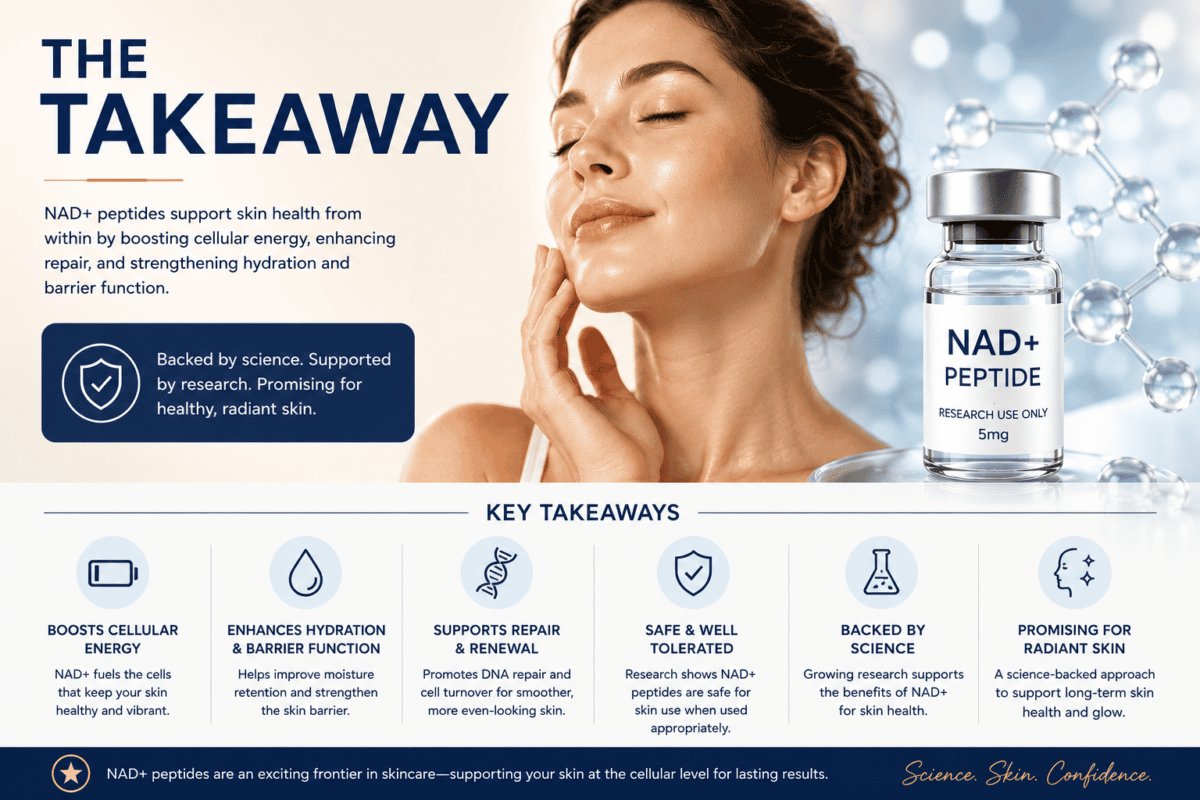
NAD+ sits at a genuinely interesting intersection of longevity science and skincare — not because it’s a proven miracle ingredient, but because the underlying biology gives researchers a real reason to keep studying it. The cellular story is solid: NAD+ powers the energy production, DNA repair, and stress-response systems that skin depends on, and those systems measurably decline with age.
Where the story is still being written is in translating that cellular science into proven, clinically validated NAD+ peptide benefits for skin — particularly for pure topical NAD+, as opposed to its better-studied precursors like niacinamide.
If you’re researching NAD+ peptide benefits for skin, the most useful approach is the same one seasoned researchers use: separate the mechanism from the marketing, track which specific molecule a product actually delivers, and give real weight to peer-reviewed human trials over cell-culture headlines. The science is promising. It’s just not finished yet — and that distinction is exactly what makes it worth watching closely.
Further Reading
- The Role of NAD+ in Regenerative Medicine — Plastic and Reconstructive Surgery
- Distinctive Gene Expression Profiles and Biological Responses of Skin Fibroblasts to Nicotinamide Mononucleotide — NIH/PMC
- The Emerging Potential of NAD+ Precursors in Dermatological Health and Anti-Aging — Cosmoderma
- Penetration Enhancement of Topical Formulations — NIH/PMC