Peptide Research
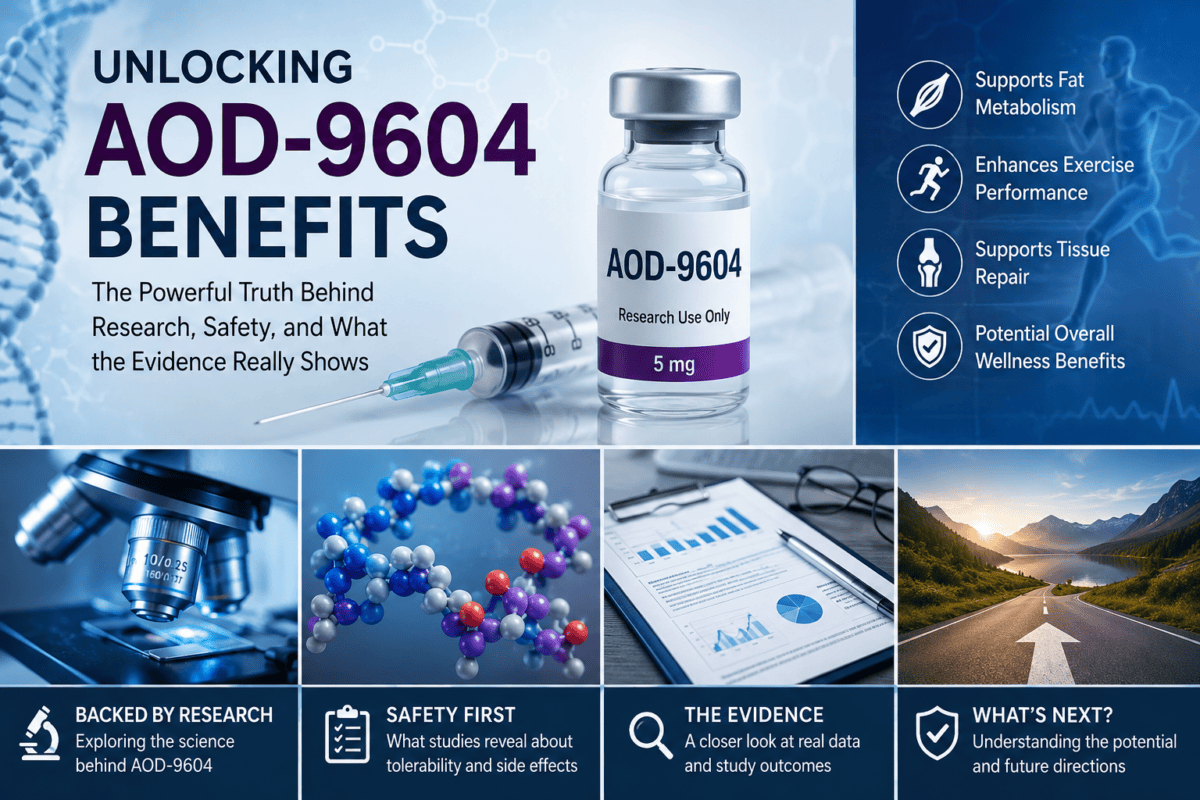
Unlocking AOD-9604 Benefits: The Powerful Truth Behind Research, Safety, and What the Evidence Really Shows
AOD-9604 Benefits: Research, Potential Effects, Safety, and What the Evidence Shows
Walk into any online peptide forum and you’ll bump into discussions about AOD-9604 benefits within minutes. Some voices call it the “fat-burning fragment.” Others treat it like a miracle shortcut around diet and exercise. Between the glossy marketing and the actual laboratory record, though, sits a much more compelling story—one grounded in decades of research, cautious optimism, and a fair share of unanswered questions.
This guide unpacks what science genuinely says about AOD-9604 benefits, how the compound was developed, what human and animal studies have reported, and where the evidence still runs thin. Whether you’re a researcher comparing peptide candidates, a student writing a review, or a wellness reader trying to separate hype from data, you’ll find a balanced, honest picture here.
According to peer-reviewed literature indexed on the National Center for Biotechnology Information, AOD-9604 has been studied in both animal and human models over the past two decades, producing a mixed but scientifically interesting record.
Let’s dig in.
What Is AOD-9604? A Brief Origin Story
AOD-9604—short for Anti-Obesity Drug 9604—is a synthetic peptide derived from the C-terminal region of human growth hormone (hGH). Specifically, it corresponds to amino acids 176–191 of the hGH molecule, with a tyrosine residue added at the N-terminus for stability.
The compound was developed at Monash University in Australia during the 1990s, spearheaded by researchers investigating whether the fat-mobilizing properties of growth hormone could be isolated from its growth-promoting effects. The theory was elegant: if a small fragment of hGH could stimulate lipolysis (fat breakdown) without triggering the insulin resistance, tissue growth, or IGF-1 elevation associated with full-length growth hormone, it might become a targeted anti-obesity therapy.
That vision drove AOD-9604 peptide research forward, eventually leading to human clinical trials in the early-to-mid 2000s under the biotech firm Metabolic Pharmaceuticals. Understanding the origin story is essential for evaluating AOD-9604 benefits honestly—because the peptide was engineered with a very specific purpose in mind, and that purpose has evolved over time.
AOD-9604 Vs HGH Benefits: The Core Difference
Understanding AOD-9604 compared with HGH is central to understanding why it was developed in the first place. Growth hormone influences fat breakdown, but it also drives cell growth and can affect insulin sensitivity — which is part of why long-term HGH use carries real risks.
The theory behind AOD-9604 was that if you could isolate just the C-terminal fragment responsible for lipolysis (fat breakdown), you might get a compound that affects fat metabolism without the broader hormonal effects of full HGH. That’s a reasonable scientific hypothesis — and it’s exactly what got tested.
How Does AOD-9604 Work? The Proposed Mechanism of Action.
The AOD-9604 mechanism of action centers on lipolysis — the breakdown of stored fat into fatty acids that the body can use for energy — and the inhibition of lipogenesis, or new fat formation.
In laboratory and animal studies, AOD-9604 appeared to:
- Stimulate the breakdown of triglycerides stored in fat cells (lipolysis)
- Inhibit the process by which the body converts excess nutrients into new fat (lipogenesis)
- Do this without significantly affecting blood sugar or insulin levels the way full-length HGH can
This is where a lot of the buzz around AOD-9604 effects on fat metabolism comes from. On paper, a compound that promotes fat breakdown while sparing insulin sensitivity sounds like exactly what obesity researchers have long looked for. The catch is that “how it works in a petri dish or a mouse” and “how it works in a person taking a specific dose over months” are two very different questions — and only one of them has strong answers right now.
Table 1: AOD-9604 Cellular Effects Summary
| Cellular Process | Effect | Evidence Strength |
|---|---|---|
| Lipolysis (fat breakdown) | Increased | Moderate |
| Lipogenesis (fat storage) | Inhibited | Moderate |
| IGF-1 release | Not elevated | Strong |
| Insulin sensitivity | Unchanged | Moderate |
| Muscle protein synthesis | No significant effect | Moderate |
| Beta-3 adrenergic activation | Positive | Preliminary |
AOD-9604 Benefits: What the Research Actually Shows
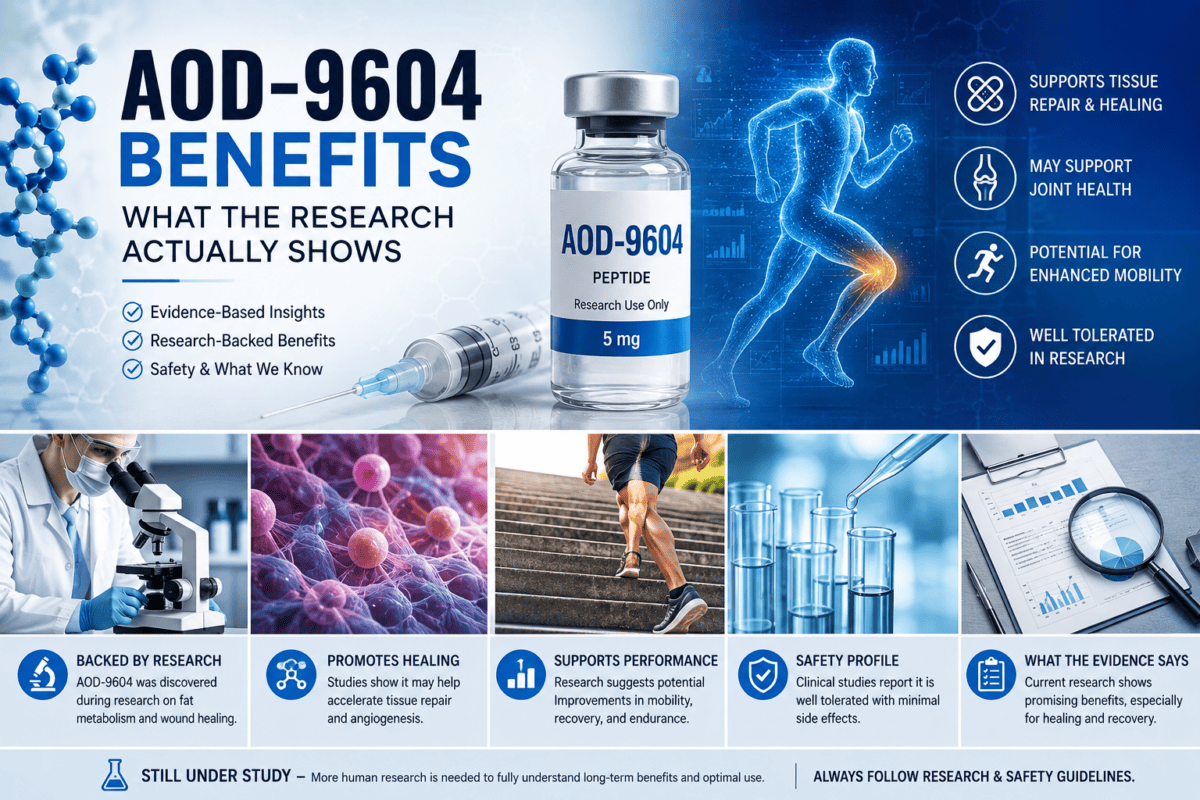
The most persistent question readers ask is simple: what are the benefits of AOD-9604, and does the evidence back them up? Let’s walk through each proposed benefit alongside the studies.
1. AOD-9604 Benefits for Weight Loss
The headline claim behind AOD-9604 peptide weight loss interest comes from early rodent studies conducted at Monash. In genetically obese mice, the peptide produced measurable reductions in body fat without affecting food intake or lean mass. Those findings sparked enthusiasm and paved the way for human trials, and they continue to underpin much of today’s conversation about AOD-9604 benefits.
The pivotal human study came in 2007, published in the Journal of Clinical Endocrinology & Metabolism, when Metabolic Pharmaceuticals ran a 12-week randomized, double-blind, placebo-controlled trial involving 534 obese adults. Participants received daily oral doses ranging from 1 mg to 30 mg. The results:
- The 1 mg group lost roughly 2.6 kg (about 5.7 lbs) more than placebo over 12 weeks.
- Higher doses did not produce greater weight loss—an unusual dose-response pattern.
- The peptide was well tolerated overall.
While that outcome was statistically significant, it fell short of the commercial threshold the company was hoping for. A follow-up Phase IIb trial reportedly failed to replicate the earlier weight-loss magnitude, and development as an anti-obesity drug was eventually shelved.
So AOD-9604 weight loss research exists—but it’s modest, mixed, and doesn’t support the dramatic transformations sometimes marketed online. When evaluating AOD-9604 benefits for weight loss, keep this modest magnitude in mind.
2. AOD-9604 Fat Loss Benefits and Fat Metabolism
Where the peptide has shown more consistent signals is in AOD-9604 effects on fat metabolism at the cellular level. In vitro and animal studies suggest it can:
- Increase the rate of triglyceride breakdown in adipose tissue
- Reduce accumulation of new fat stores, particularly in visceral depots
- Shift energy substrate use toward fatty acid oxidation
These findings underpin the AOD-9604 fat burning research narrative and represent some of the most reproducible AOD-9604 fat loss benefits in the published record. Still, cellular activity doesn’t automatically translate into meaningful body-composition changes in humans—a gap that continues to define this compound’s story and shapes how we should discuss AOD-9604 benefits overall.
3. AOD-9604 and Body Fat: Preservation of Lean Mass
One frequently cited advantage in AOD-9604 peptide benefits discussions is that the compound appears to reduce fat without cannibalizing muscle. In the 2007 human trial, participants who lost weight didn’t show significant reductions in lean tissue, suggesting the peptide’s action stayed relatively selective to adipose tissue.
That’s a meaningful distinction, especially compared with aggressive caloric-restriction diets that often erode muscle alongside fat. This selectivity remains one of the more attractive AOD-9604 benefits cited in research settings.
4. Cartilage and Joint Research
Interestingly, later research pivoted away from obesity and toward musculoskeletal applications. Studies published in the Journal of Musculoskeletal Research examined whether AOD-9604 combined with hyaluronic acid could support cartilage regeneration in osteoarthritis models. Preliminary animal data looked promising, though large-scale human confirmation is still lacking.
This shift illustrates something crucial about AOD-9604 benefits: the peptide’s biological footprint may extend beyond fat metabolism, but the strongest AOD-9604 scientific evidence still sits in early-phase territory.
5. Metabolic Rate and Energy Expenditure
Some researchers have proposed that AOD-9604 and metabolism interact in ways beyond direct lipolysis—potentially nudging resting metabolic rate upward through enhanced fatty acid oxidation. While this remains one of the more speculative AOD-9604 benefits, animal data hints at modest thermogenic effects.
AOD-9604 Research Studies: What Has Actually Been Tested
Animal and Preclinical Research
Early studies — largely conducted or funded by Metabolic Pharmaceuticals, the company that originally developed the compound — found that AOD-9604 reduced fat mass in obese and normal mice without the adverse effects associated with full HGH, such as changes in insulin sensitivity. These AOD-9604 clinical trials in animal models were promising enough to justify moving into human testing.
Human Studies and Clinical Trials
Has AOD-9604 been studied in humans? Yes — this is one of the more overlooked facts in the peptide community. AOD-9604 went through actual Phase I and Phase IIb clinical trials in humans in the early-to-mid 2000s, involving hundreds of overweight and obese participants.
The results were mixed. Some trials reported modest reductions in body fat compared with placebo. However, the effect sizes were small, and importantly, the developer’s own 2008 Phase IIb trial did not demonstrate weight loss significantly greater than placebo at the doses tested. Following that outcome, Metabolic Pharmaceuticals discontinued further development of AOD-9604 as an obesity treatment and the program was shelved.
That’s a critical piece of context that’s frequently left out of AOD-9604 weight loss research summaries: this compound was tested in real human clinical trials, and the pivotal trial did not deliver the fat-loss results the developers were hoping for. That’s not a rumor or a technicality — it’s the reason AOD-9604 never made it to market as a drug.
What About Effectiveness Since Then?
Does AOD-9604 actually work? Based on the published clinical trial record, the honest answer is: the evidence for meaningful fat loss in humans is weak and inconsistent, and the compound’s own developer stopped pursuing it as a weight-loss treatment after its major human trial underperformed. Any claims you see today promising dramatic AOD-9604 results are going well beyond what the clinical data actually showed.
Some smaller or more recent studies have continued to explore other angles — including AOD-9604’s potential role in cartilage and joint tissue repair — but this is a separate research thread from the fat-loss story, and it remains in early, preclinical stages.
AOD-9604 vs HGH Benefits: Why the Comparison Matters
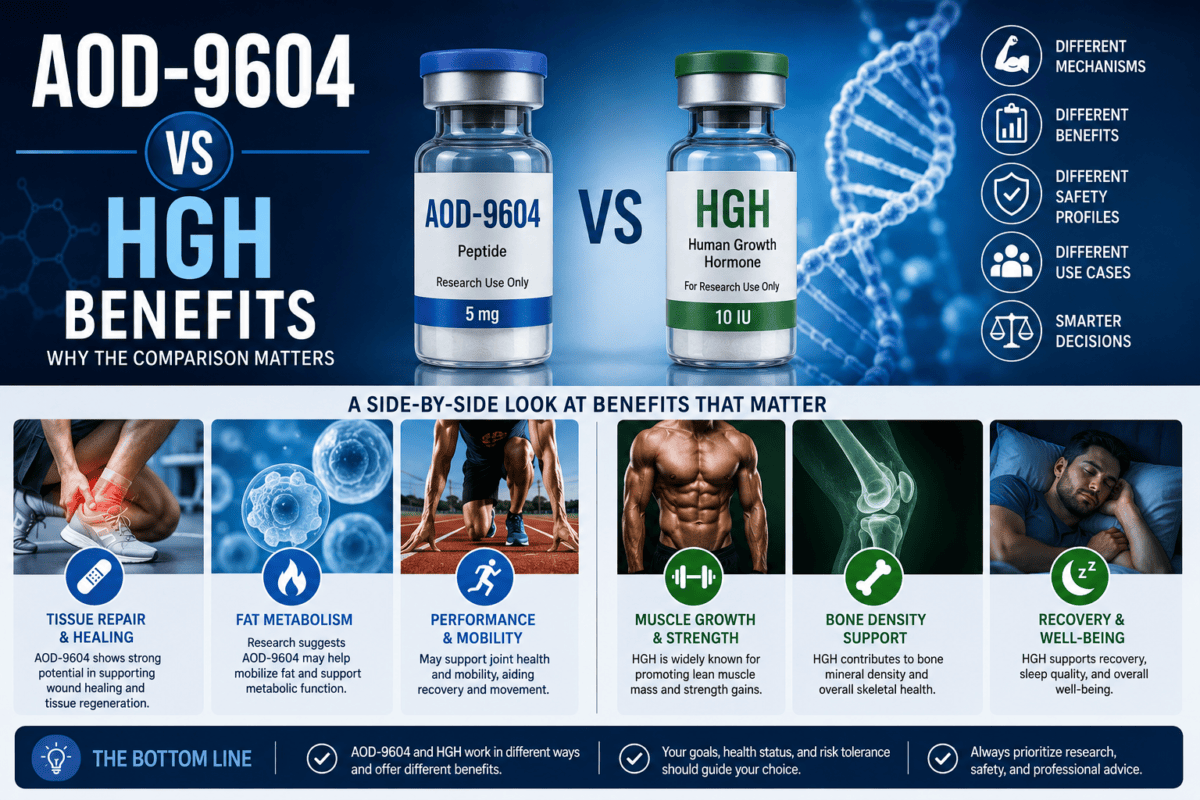
Readers often ask how AOD-9604 compared with HGH stacks up. According to information published by the U.S. Food and Drug Administration, full-length growth hormone products carry significant regulatory oversight due to their systemic effects. Here’s an honest breakdown of AOD-9604 vs HGH benefits:
Table 2: AOD-9604 vs. HGH Comparison
| Feature | Full HGH | AOD-9604 |
|---|---|---|
| Stimulates general growth | Yes | No (in theory) |
| Raises IGF-1 | Yes | No documented rise |
| Promotes lipolysis | Yes | Yes |
| Affects blood glucose | Often yes | No documented effect |
| Regulatory status (US) | Prescription (specific indications) | Not approved as a drug |
| GRAS supplement status | No | Yes (2014) |
| Cost | High | Lower |
| Injection frequency | Daily | Daily (in research) |
| Half-life | Variable | Short (~30 min) |
| Muscle-building effect | Significant | Minimal to none |
The core selling point of the AOD-9604 vs HGH benefits conversation is that AOD-9604 aims to isolate the fat-loss effect while leaving the rest of the hormonal cascade alone. In practical terms, though, HGH produces more pronounced body-composition changes—along with more pronounced risks.
AOD-9604 Clinical Trials and Human Studies: The Evidence Base
Let’s be candid about the depth of AOD-9604 human studies. The peptide has been examined in:
- Multiple rodent studies demonstrating fat reduction and metabolic effects (searchable on PubMed Central)
- Phase I and Phase II human trials for obesity (early to mid 2000s)
- Small musculoskeletal studies exploring cartilage support
- Limited pharmacokinetic studies documenting absorption and half-life
What we don’t have:
- Large-scale Phase III trials confirming meaningful weight loss
- Long-term safety data spanning years of continuous use
- Head-to-head comparisons with modern weight-loss agents like GLP-1 agonists
- Robust research on injectable versus oral versus transdermal delivery in humans
The limitations of AOD-9604 research are, frankly, significant. Much of the online enthusiasm about AOD-9604 benefits outpaces the published literature, and any honest evaluation must acknowledge that gap.
Table 3: Summary of Key AOD-9604 Clinical Trials
| Study Year | Population | Duration | Dose Range | Key Outcome |
|---|---|---|---|---|
| 2003 (preclinical) | Obese mice | 14 days | Varied | Reduced body fat |
| 2007 (Phase IIa) | 534 obese adults | 12 weeks | 1–30 mg oral | 2.6 kg loss (1 mg group) |
| Follow-up Phase IIb | Obese adults | 24 weeks | Optimized dose | Failed to replicate |
| Cartilage studies | Animal models | Varied | Local injection | Improved cartilage markers |
AOD-9604 Safety, Side Effects, and Risks
Any honest evaluation of AOD-9604 benefits and side effects requires giving equal weight to the safety picture.
Reported Side Effects
In the clinical trials that have been published, AOD-9604 was described as well tolerated. Reported AOD-9604 side effects were generally mild and included:
- Occasional headache
- Mild nausea
- Injection-site irritation (in injectable formulations)
- Transient fatigue
- Mild dizziness
No significant impact on blood glucose, insulin sensitivity, or IGF-1 levels was documented in the 12-week trial. This favorable short-term profile is often cited as one of the safety-related AOD-9604 benefits.
Unknown Risks
The bigger safety concern isn’t what has been reported—it’s what hasn’t been studied. AOD-9604 risks that remain undefined include:
- Effects of use beyond 12 weeks
- Interactions with other peptides, hormones, or medications
- Impact during pregnancy, lactation, or in adolescents
- Long-term consequences on endocrine function
- Quality and purity variation from non-pharmaceutical sources
That last point deserves emphasis. Because the peptide isn’t produced under uniform pharmaceutical oversight globally, the material sold as AOD-9604 varies widely in purity, concentration, and contamination profile. Sourcing matters enormously when researching AOD-9604 benefits.
The bigger risk conversation isn’t really about what happened in the clinical trials — it’s about what happens outside of them. Compounds sold today as “AOD-9604” through research-chemical suppliers are not regulated the way pharmaceutical-grade products are. Purity, dosing accuracy, and sterility can vary significantly between suppliers, and none of it is verified by a regulatory body. That’s a materially different risk profile than what was tested in the original clinical trials.
Because AOD-9604 was pushed through real Phase I and Phase IIb human trials, there is some published safety data — though it’s still limited compared to an approved drug with years of post-market surveillance.
In the trials that were conducted, AOD-9604 was generally reported as well-tolerated at the doses tested, without the same insulin-resistance or fluid-retention issues associated with full-length HGH. That said:
- Long-term safety data doesn’t exist, because the drug program was discontinued before reaching that stage
- AOD-9604 side effects outside of controlled trial settings — including at different doses, purities, or administration methods — are not well documented
- Injection-site reactions and general immune responses to any injected peptide are a possibility, though data specific to AOD-9604 remains sparse
Is AOD-9604 FDA Approved? Regulatory Reality Check
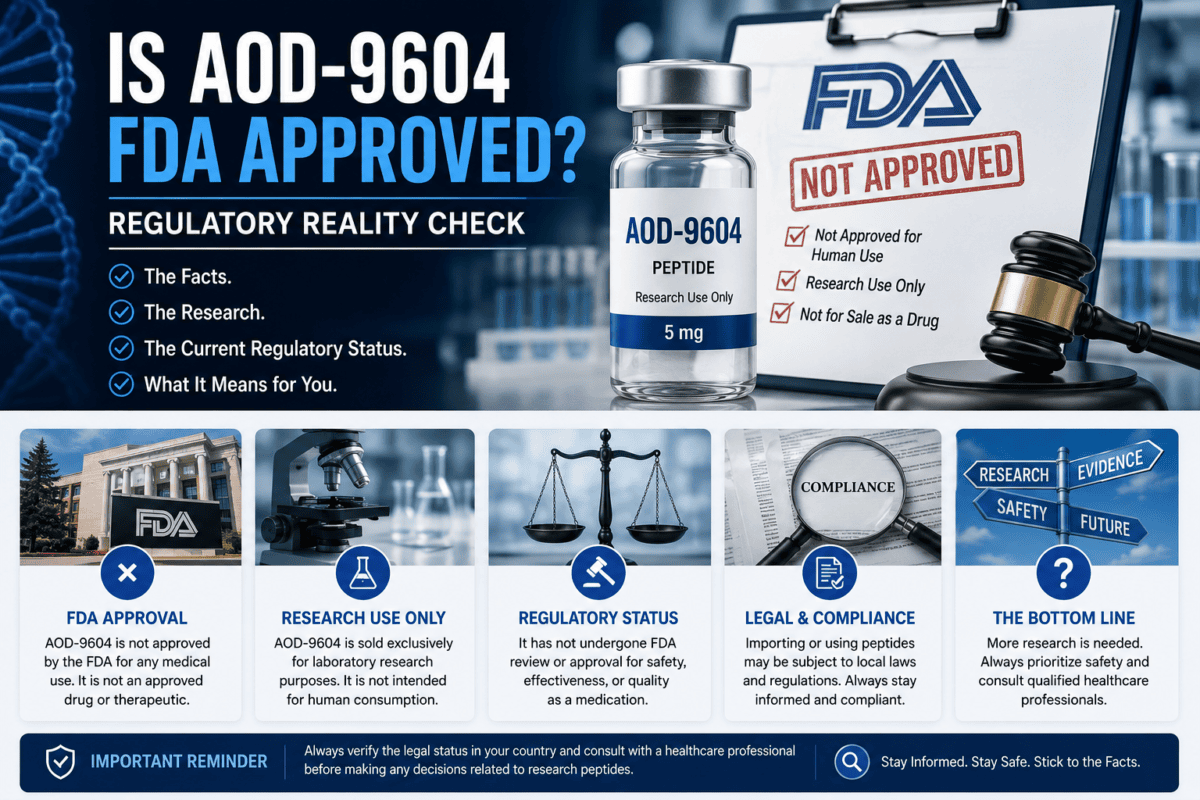
Short answer: No. Is AOD-9604 FDA approved is one of the most common questions people search, and the answer is straightforward: AOD-9604 is not approved by the FDA for any human use — not for weight loss, not for any other indication.
The compound’s regulatory journey is unusual:
- The U.S. FDA granted GRAS (Generally Recognized as Safe) status to AOD-9604 in 2014 for use as an ingredient in dietary supplements at specific dosages.
- It has not been approved as a prescription therapeutic.
- It is not authorized by the FDA as a weight-loss medication.
- The World Anti-Doping Agency (WADA) has included it on the prohibited list for athletic competition.
So when marketing copy suggests AOD-9604 is “FDA cleared for fat loss,” that language is misleading. GRAS status for supplement use is a very different thing from drug approval, and this distinction matters when evaluating AOD-9604 benefits in a regulatory context.
It’s typically sold labeled “for research purposes only, not for human consumption” — and that label reflects its actual legal and regulatory status, not just fine print. The clinical development program that might have led to approval was discontinued after the Phase IIb trial failed to show the needed results.
How long does it take for AOD-9604 to work?
Published trials measured outcomes over 12 weeks. Cellular effects on lipolysis can occur within hours of administration, but visible body-composition changes—if they occur—typically require weeks of consistent research protocols.
How much weight can you lose on AOD-9604?
In the largest published human trial, participants lost approximately 2.6 kg (5.7 lbs) more than placebo over 12 weeks at the most effective dose. This is modest compared with modern weight-loss medications and provides a realistic ceiling for expected AOD-9604 benefits.
Does AOD-9604 actually work?
Evidence suggests it has real biological activity on fat metabolism, but the magnitude of clinical AOD-9604 effectiveness in humans has been smaller than initially hoped, and results have been inconsistent across trials.
What is the strongest peptide for weight loss?
Currently, GLP-1 receptor agonists (semaglutide, tirzepatide) produce the most substantial documented weight loss in clinical research, as reported by the New England Journal of Medicine. AOD-9604’s effects are more modest by comparison.
Does AOD-9604 make you hungry?
Unlike some fat-loss compounds, AOD-9604 doesn’t appear to significantly affect appetite in either direction based on published data. Participants in trials didn’t report notable hunger changes—another quiet point in the AOD-9604 benefits column.
Which is better, AOD-9604 or tesamorelin?
Tesamorelin is an FDA-approved growth hormone-releasing hormone analog with documented efficacy for reducing visceral fat in specific patient populations. It has a more robust evidence base than AOD-9604, though it works through a different mechanism.
AOD-9604 Benefits for Weight Loss: Separating Theory From Evidence
Given how often AOD-9604 benefits for weight loss show up as a search term, it’s worth being direct: proposed benefits and demonstrated benefits are not the same thing.
Proposed / theoretical, based on mechanism and animal data:
- Increased fat breakdown (lipolysis)
- Reduced new fat storage (lipogenesis)
- A metabolic profile distinct from full HGH, without major blood-sugar effects
What human clinical trials actually showed:
- Small, inconsistent effects on body fat compared with placebo
- No result strong enough for the developer to continue pursuing FDA approval
- No established safe or effective dose in humans, since the drug development program was discontinued
This is the gap that most marketing copy glosses over. A compound having a plausible mechanism and encouraging animal data is genuinely interesting from a research standpoint — but it is not the same as a compound with proven, replicated human benefits.
Does AOD-9604 Increase Metabolism or Reduce Body Fat?
Can AOD-9604 reduce body fat? The mechanistic case is there, and it’s part of why researchers found it worth testing in the first place. But is AOD-9604 effective for weight loss in a way that’s clinically meaningful? The pivotal human trial data says no — not at a level beyond placebo. This is genuinely one of the more important nuances in the whole conversation around this compound, and it’s the main reason serious researchers treat marketing claims about AOD-9604 with skepticism.
AOD-9604 Vs Tesamorelin: How Does It Compare?
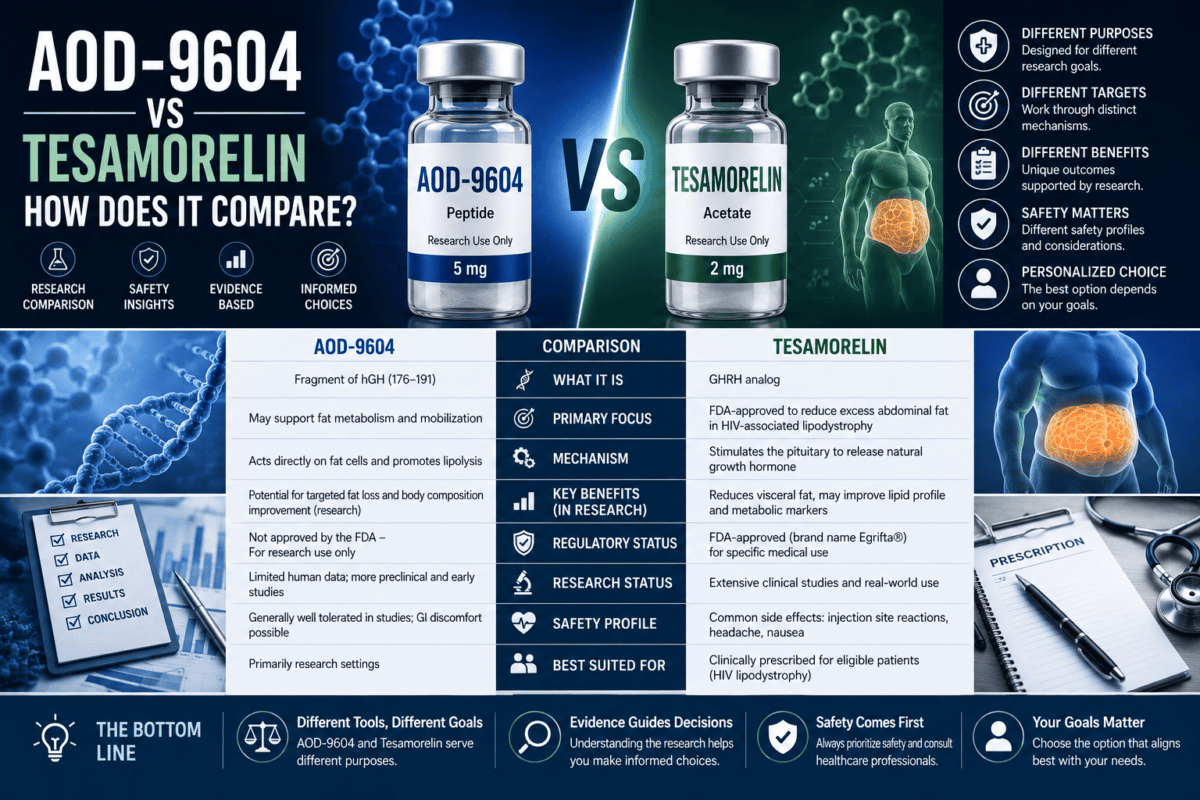
This is a common comparison question, and it’s a useful one for context. Tesamorelin is an FDA-approved growth-hormone-releasing hormone analog, specifically approved for reducing excess abdominal fat in HIV-associated lipodystrophy. It has been through full clinical development and carries FDA approval for that specific, narrow indication — backed by published trial data showing statistically significant fat reduction in that population.
AOD-9604, by contrast, never completed that path. So when people ask which is better, AOD-9604 or tesamorelin, the honest framing is: they aren’t really comparable in regulatory terms. One is an approved drug with a defined, narrow use case. The other is a discontinued experimental compound with mixed trial results and no approval.
What Are the Limitations of AOD-9604 Research?
Being clear-eyed about the limitations of AOD-9604 research is really the whole point of an evidence-based look at this compound:
- The pivotal human trial didn’t meet its goal. The 2008 Phase IIb study didn’t show weight loss meaningfully better than placebo, which is why development stopped.
- Most of the compelling data is preclinical. Mouse and cell studies showed promising lipolytic effects, but those don’t reliably predict human outcomes — which is exactly what the human trial demonstrated.
- There’s no established human dosing standard. Because the drug was never approved, there’s no regulatory body-verified dose, frequency, or administration protocol.
- Products sold today aren’t the same as trial-grade compound. Purity and sourcing vary widely among research-chemical suppliers, adding a layer of uncertainty the original clinical trials didn’t have to deal with.
- Long-term data doesn’t exist. Short trials can’t tell you what happens with months or years of exposure.
Frequently Asked Questions
What are the potential benefits of AOD-9604 peptide? Proposed benefits, based on its mechanism and animal studies, center on fat breakdown (lipolysis) and reduced new fat storage, without the insulin-related effects of full HGH. Human clinical trial results for actual fat loss were modest and inconsistent.
Does AOD-9604 make you hungry, or does it affect appetite? Unlike some other peptides used in weight-management research (such as GLP-1 agonists), AOD-9604 wasn’t designed to act on appetite-regulating pathways. Its proposed mechanism is about fat metabolism, not hunger signaling, and appetite effects haven’t been a major focus of its trial data.
Does AOD-9604 preserve lean muscle during weight loss? This is a claim sometimes made in marketing materials, based loosely on the theory that isolating the lipolytic fragment of HGH might spare muscle tissue the way full HGH can. However, this hasn’t been robustly demonstrated in the published human trial data.
What is the strongest peptide for weight loss? / What kills visceral fat fast? Among compounds with strong human clinical evidence, GLP-1 receptor agonists (like semaglutide and tirzepatide) currently have by far the most robust, FDA-approved trial data for meaningful fat loss. AOD-9604 does not have comparable clinical support.
Are AOD-9604 weight-loss claims supported by research? Only partially. The mechanism and animal data provide a plausible rationale, but the key human clinical trial did not demonstrate significant weight loss over placebo, which is why marketing claims of dramatic results outpace what the actual research shows.
The Bottom Line on AOD-9604 Benefits
The story of AOD-9604 benefits is a good example of why it pays to read past the headline claims. This isn’t a compound with no science behind it — it went through real preclinical research and genuine human clinical trials, which is more than can be said for a lot of research chemicals sold online. But the science also has a clear, disappointing chapter: the pivotal human trial didn’t hit its mark, development was discontinued, and it was never approved for any use in people.
If you’re researching AOD-9604, the most useful thing you can do is treat every claim — including the ones on supplier websites — with the same scrutiny the original researchers applied when they ran their own trials. The evidence deserves respect. So does its limits.
This article is for informational and research purposes only. It does not constitute medical advice, and it is not an endorsement of the purchase or use of AOD-9604 or any other unapproved compound. AOD-9604 is not approved by the FDA for human use.