
Peptide Research
ARA-290 Peptide Dosage: What Science Actually Shows
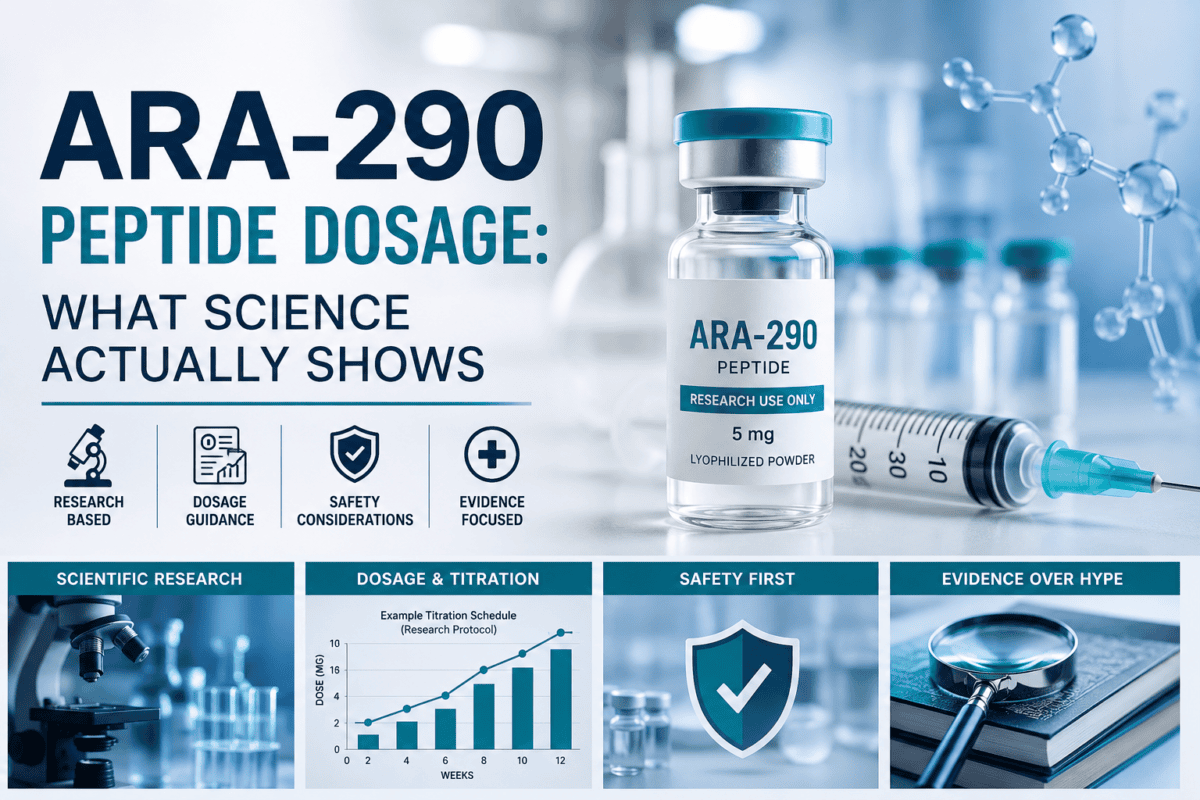
ARA-290 Peptide Dosage: Important Clinical Research Facts You Need to Know
If you’ve spent any time researching ARA-290 peptide dosage, you’ve probably noticed something strange. Search the term and you’ll find two very different worlds colliding. On one side, there’s a small but real body of peer-reviewed clinical research. On the other, there’s a crowded marketplace of vendor blogs offering step-by-step “protocols,” reconstitution math, and injection schedules — written in a tone that sounds clinical but isn’t.
That gap matters, and it’s exactly why a careful discussion of ARA-290 peptide dosage has to start with the primary literature rather than secondhand summaries. ARA-290, also known scientifically as cibinetide, is not an approved medication. It has never been cleared by the FDA or any other regulatory body for use outside of a supervised research setting. Yet a quick search makes it look almost routine — like a supplement you could pick up and start using tomorrow.
This guide exists to close that gap with something closer to the truth: what has actually been tested in humans, what researchers were trying to learn, what the safety data shows, and why “what a trial used” is a completely different thing from “what you should do.” Think of this as the annotated map — not the driving directions.
Every section below is built around one goal: giving you an accurate, well-sourced picture of ARA-290 peptide dosage as it actually exists in the published scientific record — not as it’s marketed. We’ll walk through the trial history, the specific ARA-290 dosage in clinical trials, how researchers approached ARA-290 dose escalation, what safety monitoring looked like, and why translating any of that into a ARA-290 peptide dosing protocol for personal use isn’t something the evidence supports. Along the way, you’ll find comparison tables summarizing the trial data, so you can see exactly where the numbers you may have encountered elsewhere actually come from.
What Is ARA-290? A Quick Primer Before the Dosage Discussion
Before diving into ARA-290 peptide dosage protocol details, it helps to understand what this molecule actually is and why scientists built it in the first place. Any accurate discussion of ARA-290 peptide dosage has to start with the molecule’s origin story, since the same design choices that make it interesting also explain why no simple dosage figure exists yet.
ARA-290 is a small, synthetic peptide — just 11 amino acids long — engineered from a specific region of erythropoietin (EPO), the hormone your kidneys naturally produce to stimulate red blood cell production. Researchers identified that EPO actually does two separate jobs in the body. One is the well-known job: telling bone marrow to make more red blood cells. The other, quieter job involves calming inflammation and helping damaged tissue repair itself.
The trouble with using EPO itself for tissue repair is that you can’t get one effect without the other. Raise EPO levels enough to protect nerves or reduce inflammation, and you also thicken the blood, raise hematocrit, and increase clotting risk — which is exactly why EPO doping is banned in competitive sports.
Scientists led by researcher Michael Brines and colleagues isolated the segment of EPO responsible for tissue protection — often called the helix-B domain — and used it to engineer a new molecule that could activate protective pathways without touching red blood cell production at all. That molecule became ARA-290.
ARA-290 Mechanism of Action
So how does ARA-290 work? Rather than binding to the classic EPO receptor, ARA-290 selectively activates something called the innate repair receptor (IRR) — a distinct receptor complex made up of the EPO receptor paired with a different subunit (CD131). This receptor sits on damaged or stressed cells, particularly nerve tissue, and when activated, triggers anti-inflammatory and cell-survival signaling.
Picture it like a building’s fire-suppression system that only switches on where there’s actual smoke — rather than flooding every floor of the building regardless of need. That selectivity is the entire premise behind ARA-290’s development: protection and repair, without the bloodstream side effects of its parent hormone.
ARA-290 in Human Clinical Trials: What Was Actually Studied
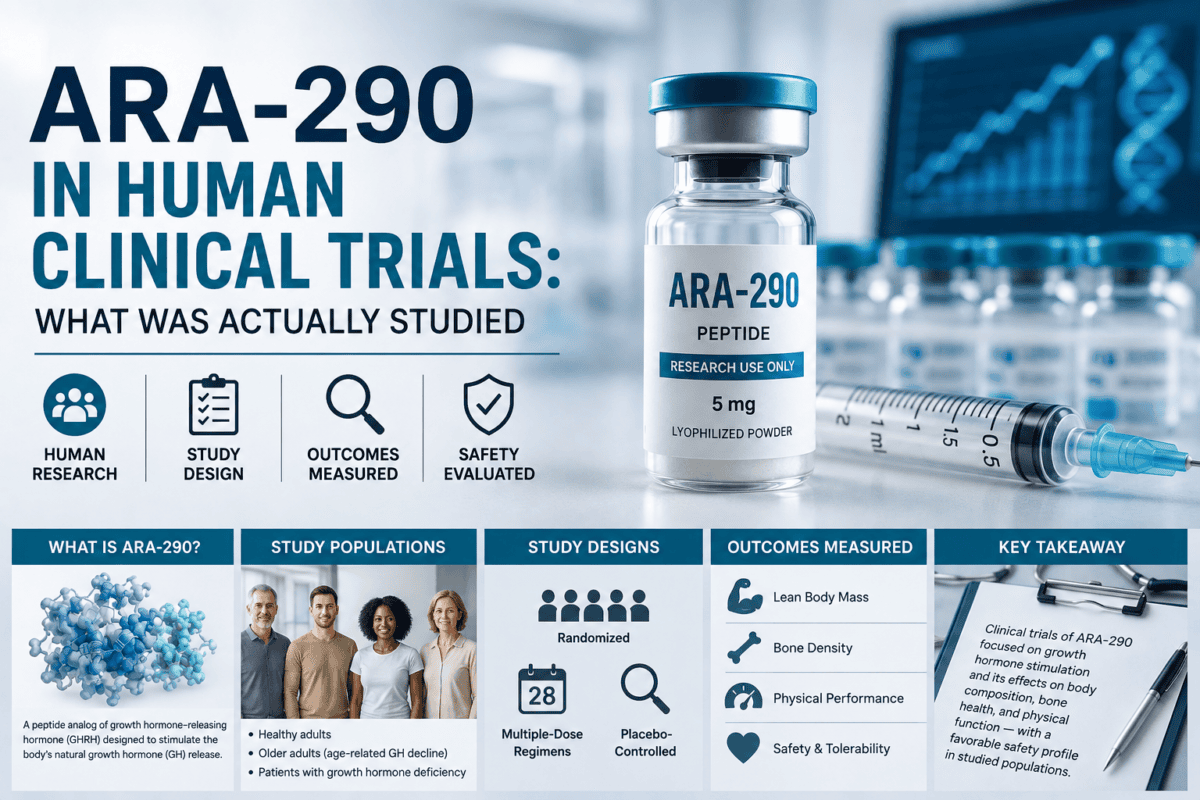
This is the heart of any honest conversation about ARA-290 human clinical trials, and it’s the section most relevant to anyone specifically trying to understand ARA-290 peptide dosage as documented in the scientific record. The compound has been tested by researchers, mostly in small Phase 2 studies, across a handful of specific conditions. It has never advanced to Phase 3, and no pharmaceutical company currently has it in active development.
Sarcoidosis-Associated Small Fiber Neuropathy
The strongest body of ARA-290 neuropathy research comes from studies in patients with sarcoidosis, an inflammatory disease that can damage small nerve fibers and cause chronic pain. A placebo-controlled, dose-ranging trial compared several dose levels of daily subcutaneous cibinetide over a 28-day course. Researchers measured outcomes using corneal nerve fiber imaging and skin biopsies looking for regenerating nerve fibers (identified by a marker called GAP-43).
The results showed real, measurable structural nerve regeneration at the higher end of the tested dose range, along with increased corneal nerve fiber density — objective, biopsy-and-imaging-based findings rather than just self-reported symptom scores. Pain relief, however, didn’t separate as cleanly from placebo across the full study population, which is an important and honest caveat that responsible ARA-290 research studies coverage should always include. Nerve structure improved more consistently than pain did.
Type 2 Diabetes and Diabetic Neuropathy
A separate 2015 Phase 2 trial, published in the journal Molecular Medicine, tested daily subcutaneous cibinetide against placebo in patients with type 2 diabetes over a 28-day period. Alongside neuropathic symptom improvements, the trial reported secondary metabolic findings — improvements in HbA1c, cholesterol-to-HDL ratio, and triglycerides — plus an increase in corneal nerve fiber density in the treatment group. Because these metabolic outcomes were secondary endpoints in a small, single-site trial, they’re best read as an interesting signal rather than proof of a diabetes treatment.
Diabetic Macular Edema
More recently, a small open-label pilot study extended the research into diabetic eye disease, testing daily subcutaneous cibinetide over roughly 12 weeks in a handful of patients with diabetic macular edema. A follow-up UK-based Phase 2 trial was later registered for the same condition but was terminated early — not due to safety issues, but because the supply of investigational study drug expired with no replacement available. That detail is a useful window into the current state of the ARA-290 program: promising early data, but a development pipeline that has largely stalled.
ARA-290 Dosage in Clinical Trials: A Summary Table
Because so much confusion online stems from figures being lifted out of context, it helps to see the published ARA-290 dosage in clinical trials side by side, with links to the primary source for each:
| Trial / Population | Phase | Route | Duration | Primary Outcome Measured | Source |
|---|---|---|---|---|---|
| Sarcoidosis-associated small fiber neuropathy (dose-ranging) | Phase 2 | Subcutaneous | 28 days | Corneal nerve fiber area; regenerating (GAP-43+) skin nerve fibers | Investigative Ophthalmology & Visual Science (Culver et al., 2017) |
| Type 2 diabetes / prediabetes | Phase 2 | Subcutaneous | 4 weeks | Glucose tolerance, insulin sensitivity, HbA1c | ClinicalTrials.gov NCT01933529 |
| Type 2 diabetes with neuropathic symptoms | Phase 2 | Subcutaneous | 28 days | PainDetect score, corneal nerve fiber density, metabolic markers | Molecular Medicine (Brines et al., 2015) |
| Diabetic macular edema (pilot) | Phase 2 | Subcutaneous | 12 weeks | Best-corrected visual acuity, central retinal thickness | PMC7408632 (Lois et al., 2020) |
| Diabetic macular edema i(multicenter follow-up) | Phase 2 | Subcutaneous | 84 days (planned) | Effect on macular edema | ClinicalTrials.gov NCT06626971 — terminated (study drug expired, no replacement) |
| Early pilot, sarcoidosis SFN | Phase 1/2 | Intravenous | 4 weeks | SFN Screening List score, safety | Published pilot study, n=22 |
This table reflects what was administered inside monitored clinical trials. It is a historical research record, not a personal dosing reference — see the section below on why that distinction matters.
ARA-290 Dose Escalation and Dose-Ranging Study Design
One thing worth understanding about ARA-290 dose escalation research is what “dose-ranging” actually means in a clinical trial. Researchers don’t guess at one number and run with it — they test multiple dose levels against each other and against placebo, specifically to find the point where a treatment’s benefit is strongest without added risk. In the sarcoidosis dose-ranging study, several different daily dose levels were compared side by side. This is standard, careful pharmacology — but it’s also precisely why a single number pulled out of that study and presented as a personal “protocol” strips away the context that made the finding meaningful in the first place.
The Development Timeline: How ARA-290 Research Has Evolved
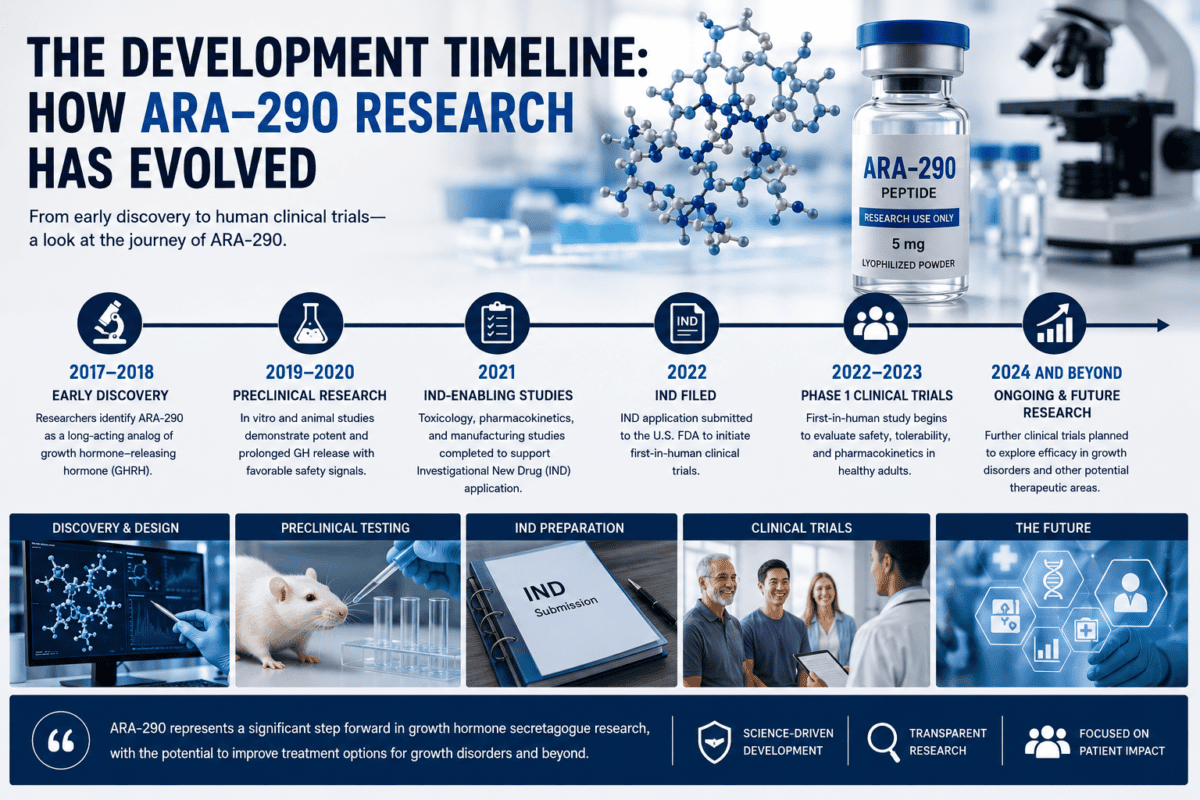
Understanding ARA-290 clinical research as a story, rather than a snapshot, makes the current gaps easier to understand. The compound’s development traces back to work identifying the tissue-protective, non-erythropoietic activity buried inside erythropoietin’s molecular structure. Once that mechanism was isolated, Araim Pharmaceuticals — the company behind ARA-290’s development — moved the molecule through early Phase 1 safety testing and into a series of Phase 2 proof-of-concept trials across several conditions where nerve damage and chronic inflammation play a central role.
The mid-2010s saw the most productive period of publication: the sarcoidosis dose-ranging study and the type 2 diabetes trial both emerged during this window, and together they remain the backbone of everything currently known about ARA-290 therapeutic dosage in humans. The FDA’s decision to grant Orphan Drug status for sarcoidosis-associated neuropathic pain followed from this data, reflecting genuine scientific interest in the compound’s potential.
From there, momentum slowed. Araim Pharmaceuticals wound down operations before a Phase 3 confirmatory trial could be completed — the step that would have been required to move ARA-290 toward actual approval. The diabetic macular edema research picked up the thread years later at a UK academic center, but even that follow-up effort was cut short when the supply of investigational drug expired with no manufacturer able to replace it. You can review the trial’s official status directly on its ClinicalTrials.gov registry page.
That’s the honest state of play in 2026: a peptide with a genuinely interesting mechanism, a handful of well-conducted but small Phase 2 trials, and no active company currently steering it toward regulatory approval. Anyone researching ARA-290 peptide dosage today is, in effect, reading the record of a paused research program rather than an established treatment.
Why the Trials Stopped Short of Answering the Dosage Question Definitively
A recurring theme across coverage of ARA-290 clinical trial dose data is that dose-ranging work was still in progress when development stalled. The sarcoidosis study compared multiple dose levels and identified which produced the strongest nerve-fiber response — but a single dose-ranging study, however well designed, is not the same as the multi-study confirmation process regulators require before declaring an “established” dose for a marketed drug. That confirmation process simply never happened here. It’s a big part of why no legitimate source — including this one — can responsibly hand you a validated ARA-290 peptide dosing protocol for personal use.
ARA-290 Administration: How It Was Delivered in Research Settings
Across the published trials, ARA-290 administration followed a fairly consistent pattern: subcutaneous injection, once daily, for a defined trial period — typically around four weeks, with some extensions lasting up to twelve weeks under close medical supervision. One early pilot study used intravenous dosing several times a week instead.
It’s worth pausing on that phrase “under close medical supervision.” In every published trial, participants were monitored by clinical staff, with structured safety assessments, lab work, and adverse event tracking built into the study design. That infrastructure — not just the injection itself — is part of what made the research safe enough to conduct. Removing that supervision and keeping only the injection is not the same intervention; it’s a different, unstudied situation entirely.
ARA-290 Half-Life and What It Means
Peptides like ARA-290 tend to have short half-lives in circulation, which is part of why researchers used daily dosing schedules in trials — the innate repair receptor needed repeated activation to sustain an effect over the treatment period. Precise pharmacokinetic parameters for ARA-290 in humans haven’t been widely published in detail, which is itself a reminder of how early-stage this research program remains. Much of what’s confidently stated online about ARA-290 half-life goes beyond what’s actually in the public scientific literature.
ARA-290 Safety and Side Effects: What Trials Reported
Across the published studies, the ARA-290 safety and dosage picture has been reassuring within the scope of what was tested. Understanding this safety record is a core part of understanding ARA-290 peptide dosage as a whole, since dose and safety can’t really be separated from each other in trial design. Reported adverse events in trial participants were generally mild — things like injection site reactions and transient headache were the most commonly noted issues. Importantly, because ARA-290 was specifically engineered to avoid activating the classic erythropoietin receptor, trials did not report the blood-thickening, elevated hematocrit, or clotting risks associated with EPO itself.
That’s genuinely encouraging. But it comes with real limits worth naming honestly:
- Small sample sizes. Most trials enrolled well under 100 participants, some far fewer.
- Short duration. The longest studies ran around 12 weeks. Nothing is known about safety over months or years of use.
- Immunogenicity is still an open question. Repeated dosing with any synthetic peptide carries some risk of the immune system developing antibodies against it over time — something short trials aren’t designed to fully catch.
- No Phase 3 confirmation. A promising Phase 2 signal is not the same as proven safety and efficacy at a population level. Many drugs that look good in Phase 2 fail to replicate in larger trials.
If you’re weighing ARA-290 dosage safety, the honest summary is: nothing alarming has shown up yet, but the studies simply haven’t run long enough or enrolled enough people to rule out longer-term risks with confidence.
Reported Safety Signals Across ARA-290 Trials
| Finding Category | What Trials Reported | Context |
|---|---|---|
| Injection site reactions | Mild, transient | Most commonly noted adverse event across studies |
| Headache | Occasional, transient | Resolved without intervention in reported cases |
| Hematological effects (clotting, hematocrit rise) | Not observed | Consistent with ARA-290’s design to avoid classic EPO receptor activation |
| Serious adverse events attributable to treatment | None reported in published trials | Based on small sample sizes; not a guarantee of absence in larger populations |
| Immunogenicity (antibody formation) | Not fully characterized | Flagged as an open question requiring longer-term monitoring |
| Long-term safety (beyond ~12 weeks) | No data available | No trial has followed participants long enough to assess this |
Reading a table like this side by side with vendor dosing pages is instructive. Those pages often present the “no serious adverse events” line as reassurance that self-administration is low-risk. What they tend to leave out is the second half of the picture: that reassurance applies specifically to a small number of people, monitored closely, for a matter of weeks — not to open-ended, unsupervised use over months or years.
It’s also worth noting what animal toxicology data can and can’t tell us. Preclinical studies in animals have generally shown a wide safety margin, with no significant organ toxicity observed even at doses well above those used in human trials. That’s a reasonable reason for cautious optimism heading into human testing — it’s part of why regulators allowed the human trials to proceed at all. But animal toxicology is a screening step, not a substitute for the kind of large, long-duration human safety data that would normally be required before a drug reaches the market. ARA-290 simply hasn’t accumulated that data yet.
Is ARA-290 FDA Approved? Current Regulatory Status
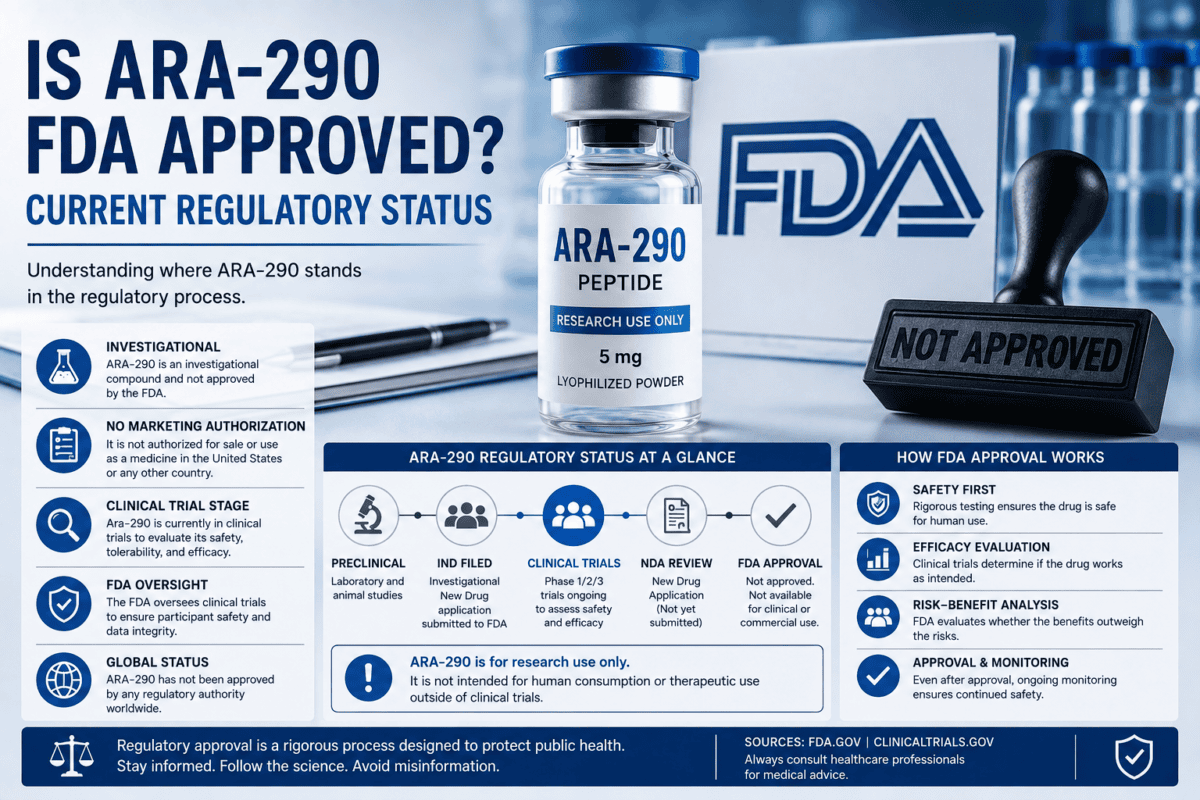
This is one of the most searched questions about the compound, and the answer is unambiguous: no. Understanding this regulatory reality is essential to interpreting ARA-290 peptide dosage correctly — without approval, there is no official dosage to reference in the first place. ARA-290 (cibinetide) is not FDA-approved for any medical use, and it is not available as a prescription treatment anywhere. It does hold FDA Orphan Drug designation for neuropathic pain associated with sarcoidosis — a status that can speed up and incentivize future development, but is not the same thing as approval. Orphan designation simply flags that a condition is rare enough to qualify for certain regulatory benefits if a company pursues full development.
As of the most recent public trial registry data, there are no active clinical trials recruiting participants for ARA-290 anywhere. The company that originally developed it, Araim Pharmaceuticals, ceased operations without completing the Phase 3 studies that would be required for approval. In practical terms, that means ARA-290 currently exists in a kind of scientific limbo: real, published, peer-reviewed human data — but no active path toward becoming an approved medicine in the near term.
That regulatory reality is also why ARA-290 legal status varies by jurisdiction and why anyone encountering it outside a registered clinical trial should treat that as a meaningful research-only compound, not a treatment option.
Clinical Trial Dosing vs. Self-Use: Why the Distinction Matters
Here’s the anecdote that sums up why this distinction matters for anyone researching ARA-290 peptide dosage in good faith. Picture two people reading the exact same Phase 2 trial paper. One is a clinical researcher designing a follow-up study. The other found the paper through a vendor’s product page. Both see the same dose figure and the same 28-day trial length. But only one of them also has the rest of the picture: a clinical team monitoring lab values, screening for contraindications, tracking every adverse event in real time, and stopping treatment immediately if something looks wrong.
Strip away that infrastructure, and the number by itself tells you almost nothing about what’s safe for an individual, unsupervised person to do. A trial dose is not a recommendation. It’s a data point collected inside a carefully controlled system — the number is only meaningful in that context.
This is exactly the gap that separates ARA-290 dosage in clinical trials from the “protocols” circulating on peptide vendor sites. Those pages often present trial figures as though they were an established, personal-use dosing guideline, sometimes even including reconstitution instructions or injection frequency tables. That framing borrows the credibility of clinical research while quietly discarding everything that made the research safe.
Are Online ARA-290 Dosage Recommendations Reliable?
In a word: not really, at least not in the way they’re usually presented. Community and vendor sources aren’t peer-reviewed, aren’t monitored by an ethics board, and typically can’t verify what any individual actually experienced or whether the peptide they used was accurately dosed and pure. If you compare ARA-290 dosage vs clinical trial protocol content side by side, the language on vendor pages often mimics scientific citation style — footnotes, study names, dose tables — while still functioning as a self-use guide rather than a research summary. That distinction is easy to miss and worth watching for.
Does ARA-290 Dosage Differ Based on Condition or Individual?
Within the published literature, the dose and duration used did vary somewhat by what was being studied — sarcoidosis neuropathy trials, diabetes trials, and eye-disease trials weren’t identical in design. That variation itself is telling: researchers were still exploring, not applying a single settled formula. No study has established what factors — body weight, kidney function, disease severity, or anything else — should individually adjust a person’s dose, because no dose has been formally established for any indication in the first place. Any claim that ARA-290 dosing should be personalized in a specific way is, at this point, extrapolation rather than documented science.
What the Research Actually Says vs. What Marketing Claims
It’s worth being direct about ARA-290 peptide benefits claims you’ll see elsewhere online, since inflated benefit claims usually travel together with inflated ARA-290 peptide dosage claims. Many pages describe ARA-290 in sweeping terms — as a general anti-inflammatory, an anti-aging compound, or a performance enhancer. The actual human evidence is narrower and more specific than that. The strongest, most consistent finding across trials is objective small-nerve-fiber regeneration, primarily in the context of sarcoidosis-related neuropathy. Metabolic and diabetic-eye-disease findings exist but come from smaller, more preliminary studies.
That’s not a knock against the compound — a peptide with real, biopsy-confirmed nerve regeneration data is genuinely interesting from a research standpoint. But interesting and proven are different categories, and a page that blurs the line between them isn’t doing readers any favors.
Key Takeaways at a Glance
| Question | Short Answer |
|---|---|
| Is there an approved ARA-290 peptide dosage? | No — no dosage has been approved or medically established for any use. |
| What dose have trials used? | Daily subcutaneous doses tested in Phase 2 trials, generally over 4–12 week periods, varying by study. |
| Is ARA-290 FDA approved? | No. It holds Orphan Drug designation for sarcoidosis-related neuropathic pain only. |
| Are vendor dosing guides reliable? | Not as personal-use guidance — they typically repackage trial figures without the clinical supervision that made those figures safe. |
| What’s the strongest evidence so far? | Objective small-nerve-fiber regeneration in sarcoidosis-associated neuropathy, confirmed via corneal imaging and skin biopsy. |
| Is development still active? | Largely stalled since the original developer, Araim Pharmaceuticals, ceased operations; no active recruiting trials as of the latest registry check. |
Further Reading and Primary Sources
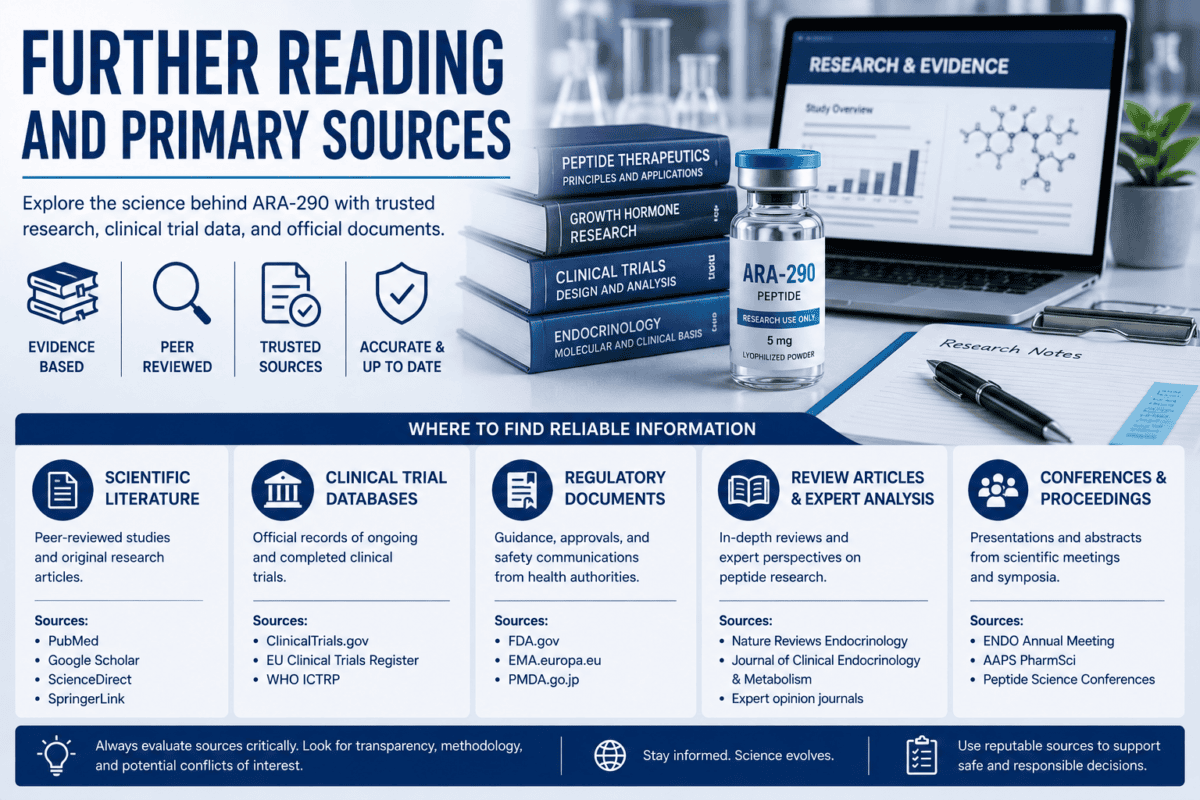
For readers who want to go directly to the primary research behind this article rather than relying on secondhand summaries, these are legitimate starting points:
- ClinicalTrials.gov: ARA 290 in Type 2 Diabetes (NCT01933529)
- ClinicalTrials.gov: ARA290 for Diabetic Macular Oedema (NCT06626971)
- A Phase 2 Clinical Trial on the Use of Cibinetide for Diabetic Macular Edema — full text (PMC)
- PubChem compound record for Cibinetide
Cross-referencing claims about ARA-290 peptide dosage against sources like these — rather than against product marketing pages — is the single most useful habit for navigating this topic accurately.
Frequently Asked Questions About ARA-290 Peptide Dosage
What is the recommended ARA-290 peptide dosage? There isn’t one. ARA-290 peptide dosage has no FDA-approved or medically established figure because the compound isn’t approved for use outside clinical trials. Published research used specific doses under close supervision, but those figures were part of a controlled study, not a public dosing recommendation.
What dosage of ARA-290 has been studied in clinical trials? Human trials have tested a range of subcutaneous and intravenous dose levels, typically administered daily (or several times weekly in one early study) over periods of roughly four to twelve weeks, depending on the trial.
How often is ARA-290 administered in research? Most Phase 2 studies used a once-daily subcutaneous injection schedule, though at least one early pilot study tested a several-times-weekly intravenous schedule instead.
Does ARA-290 have a loading dose or escalation protocol? Dose-ranging trials tested multiple dose levels to compare outcomes, which is different from a “loading dose” concept. No escalation protocol has been established as a treatment guideline, since ARA-290 isn’t an approved treatment.
How long is ARA-290 typically administered in clinical research? Study durations have generally run between four and twelve weeks, with some follow-up monitoring extending further to track nerve and symptom outcomes over time.
What are the potential side effects of ARA-290? Reported effects in trials have been mild overall, mainly injection site reactions and transient headache, with no signal of the blood-related risks associated with erythropoietin itself. Long-term safety data doesn’t yet exist.
Is ARA-290 dosage the same for everyone? No standardized dosage exists for any population, since the compound hasn’t completed the trials required to establish one.
How long does ARA-290 stay in the body? Detailed human pharmacokinetic data isn’t well established in the public literature. Daily dosing in trials suggests a relatively short-acting profile requiring repeated administration to sustain effects.
Is ARA-290 FDA approved? No. It holds FDA Orphan Drug designation for sarcoidosis-related neuropathic pain, which is a development incentive, not an approval.
Can ARA-290 research doses be used for personal treatment? Doses used in clinical trials were administered under direct medical supervision as part of a monitored research protocol. That context can’t be replicated outside of a registered trial, which is why research dosing figures aren’t a personal-use guideline.
The Bottom Line on ARA-290 Peptide Dosage
If you take one thing away from this guide, let it be this: the honest answer to “what’s the right ARA-290 peptide dosage?” is that no right dosage exists outside of a clinical trial setting. The compound has a genuinely interesting research story — a peptide engineered to separate EPO’s healing properties from its cardiovascular risks, tested in real human trials, with some objective evidence of nerve repair. That’s worth paying attention to as a research subject.
What it isn’t, at least not yet, is a settled, personal-use treatment with an established dose. Anyone comparing published trial data on ARA-290 peptide dosage against dosing claims found on vendor or community sites should treat that gap seriously — and treat any decision involving an unapproved, investigational compound as one to make in conversation with a qualified healthcare provider, not a product page.
This article is for informational and educational purposes only. It does not constitute medical advice, and ARA-290 (cibinetide) is not approved for human treatment use outside of registered clinical trials.