

AICAR
$70.00
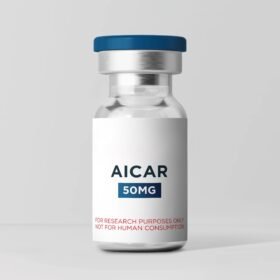
AICAR is an AMPK-activating compound for laboratory and in vitro research. Supplied at >99% purity with a full third-party Certificate of Analysis. For laboratory and in vitro research use only. Not for human consumption. Not a medicine.
50mg*10vials
Buy AICAR: High-Purity AMPK Activator for Metabolic Research
Looking for a trusted place to buy AICAR? Sino Research Peptide Manufacturer supplies AICAR at >99% HPLC-verified purity, complete with a batch-specific Certificate of Analysis (COA). Every order ships fast and is intended strictly for laboratory and in vitro research use.
What Is AICAR Peptide?
AICAR — also known as Acadesine, AICA Riboside, and 5-Aminoimidazole-4-carboxamide ribonucleoside — is a naturally occurring nucleoside analogue and intermediate in the purine biosynthesis pathway. When researchers introduce it exogenously, cells take it up through nucleoside transporters and phosphorylate it into ZMP, an AMP-mimetic compound. From there, ZMP allosterically activates AMP-activated protein kinase (AMPK), the master cellular energy sensor. If you want to Buy AICAR from Sino Research Peptide Manufacturer be rest assured you’re in the right place.
Consequently, AMPK activation triggers a coordinated shift toward fat oxidation, glucose uptake, mitochondrial biogenesis, and reduced anabolic energy consumption. This is why AICAR remains the most widely used pharmacological AMPK activator and exercise mimetic in pre-clinical metabolic research.
Also Known As
- Acadesine
- AICA Riboside / AICA-r
- AICAr
- 5-Aminoimidazole-4-carboxamide ribonucleoside
- ZMP precursor (intracellular active form: ZMP)
- CAS No. 2627-69-2
A Brief Research History
Scientists first studied AICAR in the 1980s as a cardioprotective agent, largely due to its connection with adenosine signalling. Then, in 1995, Corton et al. formally established its role as a direct AMPK activator, building on Sullivan et al.’s earlier work showing that ZMP mimics AMP’s allosteric effects on rat liver AMPK. Since then, AICAR has become the go-to pharmacological tool for AMPK research across nearly every metabolic tissue and disease model. Buy AICAR from Sino Research Peptide Manufacturer the best peptide factory with good and high-quality products.
Notably, the World Anti-Doping Agency (WADA) classifies AICAR as a prohibited substance because of its metabolic activity in exercise models. As a result, it holds relevance for both metabolic research and anti-doping assay development.
How Does AICAR Peptide Work?
Cellular Uptake and ZMP Conversion
AICAR enters cells primarily through the equilibrative nucleoside transporter ENT1, a well-characterised uptake pathway that doesn’t require receptor-mediated internalisation. Once inside the cell, adenosine kinase phosphorylates AICAR into ZMP, which then mimics elevated AMP levels and engages the AMPK system.
AMPK Activation Pathways
ZMP binds to the γ subunit of AMPK, allosterically activating the enzyme while also stimulating upstream phosphorylation at Thr172 by liver kinase B1 (LKB1). This binding protects the Thr172 site from dephosphorylation, sustaining AMPK activation over time. Researchers typically confirm AMPK engagement by detecting pThr172 AMPK via Western blot.
Downstream Metabolic Effects
Once activated, AMPK coordinates several downstream adaptations:
- GLUT4 translocation — boosts glucose transporter movement to the cell membrane, driving insulin-independent glucose uptake
- Fatty acid oxidation — inhibits acetyl-CoA carboxylase (ACC), which reduces malonyl-CoA and promotes mitochondrial fatty acid import
- mTORC1 inhibition — suppresses protein synthesis and lipogenesis via TSC2 and Raptor phosphorylation
- PGC-1α upregulation — supports mitochondrial biogenesis and oxidative fibre gene expression
- Autophagy and mitophagy — triggers ULK1 phosphorylation at Ser555, initiating autophagosome assembly and mitochondrial clearance
- p53/p21 pathway — induces G1/S cell cycle arrest in stem cell and cancer models
AMPK-Independent Mechanisms: A Key Research Distinction
Importantly, published research shows that several effects once credited to AMPK are, in fact, AMPK-independent. These include direct interference with nucleotide synthesis, adenosine pathway modulation, and Akt/PI3K activation. Because of this, AICAR functions as both a complex research tool and a broader metabolic probe — a factor researchers must consider carefully during experimental design.
For instance, AICAR shares structural similarities with adenosine and competes for nucleoside transporters, which raises extracellular adenosine concentrations. It also inhibits adenosine deaminase, shifting ATP catabolism toward adenosine rather than inosine production — a mechanism that ties back to its early cardioprotective research applications.
What Does AICAR Peptide Do in Research?
Researchers rely on AICAR across a wide range of metabolic and disease-focused applications, including:
- AMPK biology and Thr172 phosphorylation studies
- Exercise mimetic research and endurance modeling
- Skeletal muscle glucose uptake and insulin resistance models
- Fatty acid oxidation and lipid flux studies
- Mitochondrial biogenesis and OXPHOS gene expression
- Autophagy, mitophagy, and mitochondrial quality control
- mTOR/mTORC1 signalling research
- Obesity and metabolic syndrome models
- Type 2 diabetes and glucose homeostasis studies
- Cardiovascular and cardiac ischaemia research
- Cancer cell biology and apoptosis modulation
- CLL and haematological malignancy models
- Stem cell pluripotency and differentiation research
- Diabetic neuropathy models
- Neuroinflammation and neuroprotection studies
- Anti-doping assay development
What Do Studies Say About AICAR?
The Founding AMPK Activator Studies
Corton et al.’s foundational 1995 work established AICAR as the first cell-permeable AMPK activator for intact cells, building directly on Sullivan et al.’s earlier confirmation that ZMP mimics AMP’s allosteric effects. Together, these two studies laid the methodological groundwork for thousands of later AMPK publications.
The Exercise Mimetic Study: 44% Endurance Improvement
In a landmark 2008 study published in Cell, Narkar, Evans, and colleagues found that four weeks of AICAR treatment in sedentary mice—without any exercise training—boosted treadmill running endurance by 44%. When researchers combined AICAR with exercise training, the mice showed even greater gains in oxidative myofibre content and endurance, cementing AICAR’s reputation as a genuine exercise mimetic.
A Critical Systematic Review of AMPK-Independent Effects
A comprehensive 2021 systematic review by Dembitz and Lalic, published in the International Journal of Molecular Sciences, catalogued AICAR’s AMPK-independent effects, including nucleotide synthesis interference and Akt/PI3K activation. This review remains essential reading, as it urges caution when interpreting AICAR-based studies as pure AMPK evidence.
CLL and Cancer Research
Researchers have evaluated Acadesine in clinical trials involving patients with relapsed and refractory chronic lymphocytic leukaemia (CLL). Pre-clinical work confirmed selective cytotoxic activity in CLL cell lines through an AMPK-independent mechanism, positioning the compound as a valuable candidate for haematological malignancy research.
Diabetic Polyneuropathy Models
A 2024/2025 study in the International Journal of Molecular Sciences found that AICAR treatment prevented and reversed experimental diabetic polyneuropathy in mouse models. Specifically, AICAR increased pAMPK levels in dorsal root ganglion neurons by 3-fold and restored mitochondrial respiration—pointing to a mitophagy-dependent neuroprotective mechanism.
Stem Cell Pluripotency
Microarray analysis of AICAR-treated mouse embryonic stem cells revealed significant upregulation of pluripotency genes, including Klf4, Nanog, Oct4, and Sox2. This suggests AICAR engages both AMPK and non-AMPK pathways to influence stem cell fate decisions.
Key Cited Studies
- Corton JM et al. (1995) — Eur J Biochem 229(2):558–565. PMID: 7744080
- Sullivan JE et al. (1994) — FEBS Lett 353(1):33–36. DOI: 10.1016/0014-5793(94)01006-4
- Narkar VA et al. (2008) — Cell 134(3):405–415. DOI: 10.1016/j.cell.2008.06.051
- Dembitz V & Lalic H (2021) — Int J Mol Sci 22(10):5271. DOI: 10.3390/ijms22105271
- Van Den Neste E et al. (2010) — Expert Opin Investig Drugs 19(5):571–578
- Azmi S et al. (2024/2025) — Int J Mol Sci 26(1):80. DOI: 10.3390/ijms26010080
Where to Buy AICAR Peptide
Best Place to Buy AICAR Online
Sino Research Peptide Manufacturer makes it simple to buy AICAR online. Every batch comes with independent purity verification, so you can trust what’s in every vial. If you’ve been searching for where to buy AICAR or where can I buy AICAR, our streamlined ordering process gets research-grade material to your lab quickly.
AICAR Peptide for Sale
We keep AICAR peptide for sale in lyophilised format, distributed through Peptides Lab CHINA under controlled laboratory conditions. Whether you’re placing your first AICAR purchase or restocking for an ongoing study, our team supports your research timeline with fast dispatch and reliable supply. Buy AICAR from Sino Research Peptide Manufacturer above $500 and get a free shipping.
AICAR is intended strictly for laboratory and in vitro research use. It has no approved applications in human or veterinary medicine. Please review and adhere to our Terms and Conditions before placing an order.
References:
- Cieslik, K. A., Taffet, G. E., Crawford, J. R., Trial, J., Mejia Osuna, P., & Entman, M. L. (2013). AICAR-dependent AMPK activation improves scar formation in the aged heart in a murine model of reperfused myocardial infarction. Journal of molecular and cellular cardiology, 63, 26–36. https://doi.org/10.1016/j.yjmcc.2013.07.005
- Mangano D. T. (1997). Effects of acadesine on myocardial infarction, stroke, and death following surgery. A meta-analysis of the 5 international randomized trials. The Multicenter Study of Perioperative Ischemia (McSPI) Research Group. JAMA, 277(4), 325–332. https://doi.org/10.1001/jama.277.4.325
- Longnus, S. L., Wambolt, R. B., Parsons, H. L., Brownsey, R. W., & Allard, M. F. (2003). 5-Aminoimidazole-4-carboxamide 1-beta -D-ribofuranoside (AICAR) stimulates myocardial glycogenolysis by allosteric mechanisms. American journal of physiology. Regulatory, integrative and comparative physiology, 284(4), R936–R944. https://doi.org/10.1152/ajpregu.00319.2002
- Tomita, K., Tamiya, G., Ando, S., Kitamura, N., Koizumi, H., Kato, S., Horie, Y., Kaneko, T., Azuma, T., Nagata, H., Ishii, H., & Hibi, T. (2005). AICAR, an AMPK activator, has protective effects on alcohol-induced fatty liver in rats. Alcoholism, clinical and experimental research, 29(12 Suppl), 240S–5S. https://doi.org/10.1097/01.alc.0000191126.11479.69
- de Laat, M. A., Robinson, M. A., Gruntmeir, K. J., Liu, Y., Soma, L. R., & Lacombe, V. A. (2015). AICAR administration affects glucose metabolism by upregulating the novel glucose transporter, GLUT8, in equine skeletal muscle. Veterinary journal (London, England : 1997), 205(3), 381–386. https://doi.org/10.1016/j.tvjl.2015.05.018
- Cuthbertson, D. J., Babraj, J. A., Mustard, K. J., Towler, M. C., Green, K. A., Wackerhage, H., Leese, G. P., Baar, K., Thomason-Hughes, M., Sutherland, C., Hardie, D. G., & Rennie, M. J. (2007). 5-aminoimidazole-4-carboxamide 1-beta-D-ribofuranoside acutely stimulates skeletal muscle 2-deoxyglucose uptake in healthy men. Diabetes, 56(8), 2078–2084. https://doi.org/10.2337/db06-1716
- Boon, H., Bosselaar, M., Praet, S. F., Blaak, E. E., Saris, W. H., Wagenmakers, A. J., McGee, S. L., Tack, C. J., Smits, P., Hargreaves, M., & van Loon, L. J. (2008). Intravenous AICAR administration reduces hepatic glucose output and inhibits whole body lipolysis in type 2 diabetic patients. Diabetologia, 51(10), 1893–1900. https://doi.org/10.1007/s00125-008-1108-7
- Višnjić D, Lalić H, Dembitz V, Tomić B, Smoljo T. AICAr, a Widely Used AMPK Activator with Important AMPK-Independent Effects: A Systematic Review. Cells. 2021 May 4;10(5):1095. doi: 10.3390/cells10051095. PMID: 34064363; PMCID: PMC8147799.
- Hardie DG. AMP-activated protein kinase: an energy sensor that regulates all aspects of cell function. Genes Dev. 2011 Sep 15;25(18):1895-908. doi: 10.1101/gad.17420111. PMID: 21937710; PMCID: PMC3185962.
- Narkar, V. A., Downes, M., Yu, R. T., Embler, E., Wang, Y. X., Banayo, E., Mihaylova, M. M., Nelson, M. C., Zou, Y., Juguilon, H., Kang, H., Shaw, R. J., & Evans, R. M. (2008). AMPK and PPARdelta agonists are exercise mimetics. Cell, 134(3), 405–415. https://doi.org/10.1016/j.cell.2008.06.051
- Goodyear, L. J. (2008). The exercise pill—too good to be true?. New England Journal of Medicine, 359(17), 1842-1844.
- Bueno Júnior, C. R., Pantaleão, L. C., Voltarelli, V. A., Bozi, L. H., Brum, P. C., & Zatz, M. (2012). Combined effect of AMPK/PPAR agonists and exercise training in mdx mice functional performance. PloS one, 7(9), e45699. https://doi.org/10.1371/journal.pone.0045699
- Bosselaar, M., Boon, H., van Loon, L. J., van den Broek, P. H., Smits, P., & Tack, C. J. (2009). Intra-arterial AICA-riboside administration induces NO-dependent vasodilation in vivo in human skeletal muscle. American journal of physiology. Endocrinology and metabolism, 297(3), E759–E766. https://doi.org/10.1152/ajpendo.00141.2009
- Campàs, C., Lopez, J. M., Santidrián, A. F., Barragán, M., Bellosillo, B., Colomer, D., & Gil, J. (2003). Acadesine activates AMPK and induces apoptosis in B-cell chronic lymphocytic leukemia cells but not in T lymphocytes. Blood, 101(9), 3674–3680. https://doi.org/10.1182/blood-2002-07-2339
1 review for AICAR
 AICAR
AICAR
Related products
All Peptides
All Peptides
All Peptides
All Peptides
All Peptides
All Peptides
All Peptides
All Peptides
Legitimate products promptly and discreetly delivered. Customer service highly responsive; payment easy and no issue. Already noticing results. Shipment came with complimentary supplies as mentioned in other comments.