
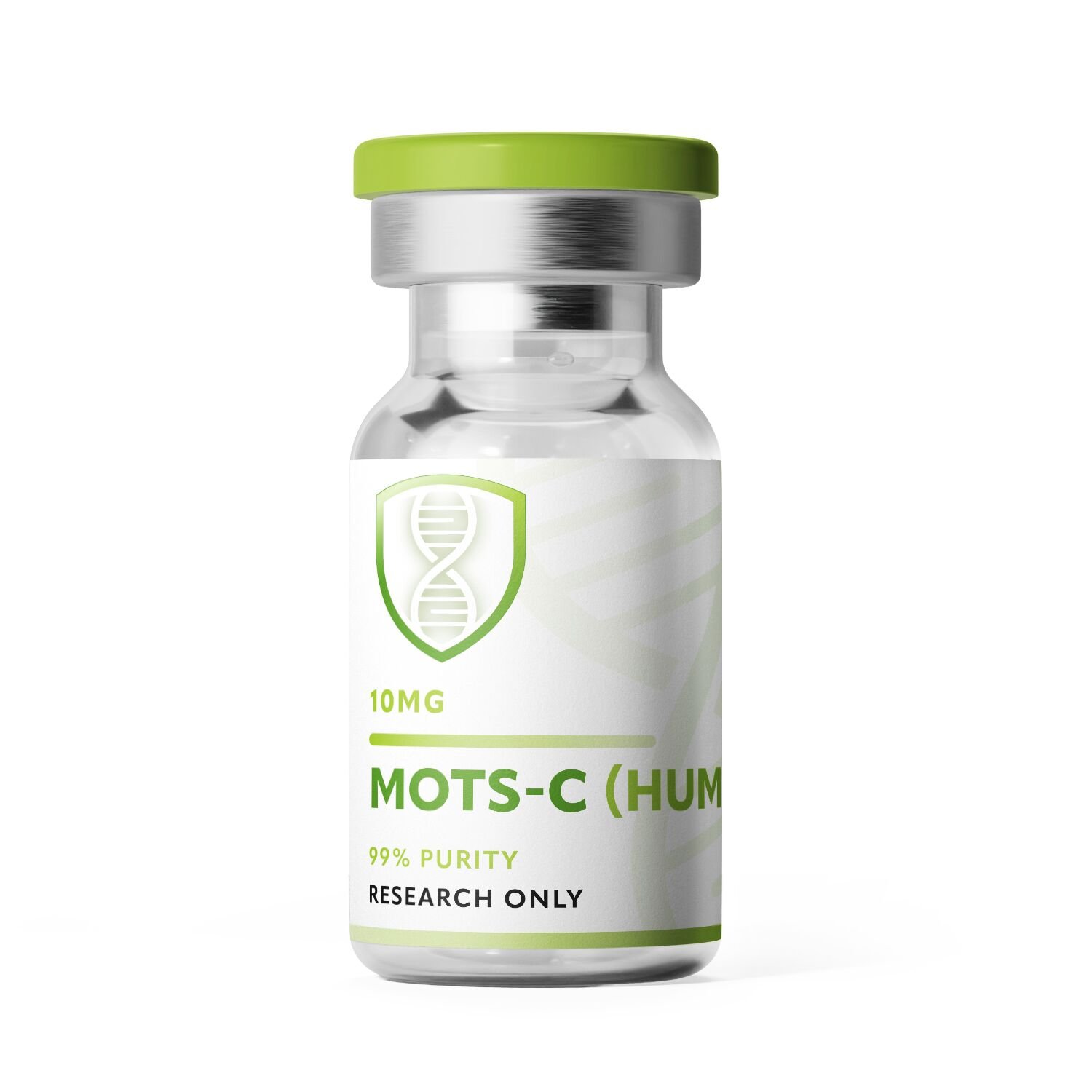

Buy MOTS-c Peptide: A Mitochondria-Derived Tool for Metabolic Research
Ready to buy MOTS-c peptide for your lab? Sino Research Peptide Manufacturer supplies high-purity MOTS-c, formulated specifically for laboratory and research use. Below, you’ll find a full research overview of this mitochondria-derived peptide, along with everything you need to know before you buy MOTS-c online.
What Is MOTS-c Peptide?
MOTS-c (mitochondrial open-reading-frame of the 12S rRNA-c) is a novel mitochondria-derived peptide composed of just 16 amino acids. Researchers have found it expressed in tissues and plasma, pointing to both a cell-specific and hormonal role. With this dual potential, MOTS-c appears to act by stimulating the AMP-activated protein kinase (AMPK) pathway.
Currently, scientists have identified only two mitochondrial-derived peptides (MDPs): Humanin and MOTS-c. When metabolic stress occurs in the organism, researchers believe the peptide translocates to cellular nuclei and alters gene expression. MOTS-c may also release extracellularly, earning it the nickname “mitochondrial hormone,” or simply “mitokine.”
Chemical Makeup
| Property | Detail |
|---|---|
| Molecular Formula | C101H152N28O22S2 |
| Molecular Weight | 2174.64 g/mol |
| Other Titles | Mitochondrial-derived peptide MOTS-c, Mitochondrial open reading frame of the 12S rRNA-c |
Biological Origin and Expression
MOTS-c translates from a short open reading frame (sORF) within the 12S rRNA region of human mitochondrial DNA, making it one of the few peptides produced directly from mitochondrial DNA. Its expression responds to cellular energy requirements and stress conditions. Researchers have found MOTS-c present in multiple tissues, including skeletal muscle, cardiac tissue, neural tissue, and plasma.
Circulating levels increase transiently after physical activity, with tissue-specific patterns observed — active muscle shows higher levels, while sedentary or older individuals tend to show lower levels. Notably, endogenous MOTS-c decreases with age, reflecting broader changes in mitochondrial and metabolic function.
How Does MOTS-c Work?
MOTS-c modulates cellular function primarily through the AMP-activated protein kinase (AMPK) pathway, a central regulator of energy homeostasis. Under metabolic stress, the peptide can translocate to the nucleus to regulate genes involved in glucose and lipid metabolism. Key mechanisms include:
- Activation of the folate-polyamine-AICAR pathway, triggering AMPK signaling independently of cellular energy depletion
- Enhanced glucose uptake in skeletal muscle via GLUT4 translocation, resembling insulin-responsive metabolic pathways
- Interaction with nuclear transcription factors to support antioxidant defense and control inflammatory pathways
Through these mechanisms, MOTS-c functions as a mitochondria-to-nucleus messenger, facilitating cellular adaptation to energy demands and oxidative stress.
Animal research models have indicated multiple potential actions from MOTS-c, including increased physical performance, regulated cellular and tissue metabolism, and myoblast adaptation. Researchers suggest these actions may primarily depend on age and age-related changes in MOTS-c expression, with levels and activity potentially declining as part of the cell aging process. MOTS-c may also interact with known aging regulators, such as NAD+ and sirtuins, suggesting involvement in pathways that modulate cellular lifespan. Endogenous peptide expression has also been posited to increase via physical activity, potentially enhancing cellular metabolism.
MOTS-c Peptide Benefits: What Does the Research Say?
Before you buy MOTS-c peptide online, it helps to understand what current research suggests about its potential applications. Below, we break down the key study areas.
MOTS-c and Muscle Metabolism
With increasing age, skeletal muscles tend to gain insulin resistance, leading to decreased glucose uptake. Upon peptide exposure, skeletal muscles may respond with improved AMPK activation, potentially increasing glucose transporter expression and improving skeletal muscle metabolism, function, and growth.
MOTS-c’s actions are also posited to target metabolic pathways such as the folate-methionine cycle and purine biosynthesis, potentially modulating cellular metabolism, including glucose uptake and lipid utilization. In systemic metabolism, MOTS-c is thought to function as a mitochondrial hormone, with circulating peptide levels appearing to affect metabolic function in skeletal muscle and possibly adipose tissue.
MOTS-c and Fat Cell Metabolism
Research suggests the peptide may leave the mitochondrial site, translocate to cellular nuclei, and alter gene expression — particularly genes with antioxidant response elements (ARE), hinting at a regulatory relationship with stress-responsive transcription factors like NRF2.
This hypothesis first emerged from a study where experimental mice received high-fat food, with only half presented with the peptide. Researchers indicated that MOTS-c may impact cellular metabolism by inhibiting the folate cycle tethered to de novo purine biosynthesis, leading to AMPK activation. These actions hint at a broader role in regulating insulin sensitivity and metabolic homeostasis. The murine models exposed to the peptide appeared leaner and more energetic than the rest, further suggesting the peptide might prevent fat accumulation and induce glucose uptake via the AMPK pathway.
MOTS-c and Bone Research
MOTS-c has been suggested to regulate the transforming growth factor beta (TGF-beta)/SMAD pathway, which may profoundly affect bone tissues. Specifically, MOTS-c’s actions may involve upregulation of TGF-β/Smad pathway-related genes, including TGF-β1, TGF-β2, and Smad7, suggesting a pivotal role in MOTS-c-mediated osteogenic differentiation. This hypothesis gains support since osteogenic differentiation promoted by MOTS-c reverses upon TGF-β1 knockdown.
The peptide may also stimulate expression of osteogenesis-related genes such as ALP, Bglap, and Runx2, potentially improving bone density and strength. When studied in bone marrow cells, MOTS-c appeared to trigger stem cell differentiation, which may lead to bone tissue development.
MOTS-c and Cardiac Function Research
Researchers haven’t suggested that MOTS-c directly influences cardiac function. Instead, they posit the peptide exerts potential effects on the endothelial cells lining blood vessels, which affect blood pressure and clotting. Researchers suspect a positive correlation between MOTS-c levels and microvascular and epicardial endothelial function, tentatively suggesting MOTS-c as a potential biomarker for endothelial function.
Research also suggested that when mice were exposed to MOTS-c, endothelial tissue functioning appeared to improve. The mechanistic basis for this action remains speculative but may involve AMPK activation.
MOTS-c and Cell Lifespan Research
Research suggests the peptide may associate with enhanced longevity at the cellular level. MOTS-c typically contains a glutamate residue, but when replaced by lysine, the resulting compound may exert a functional change — though how this specific structural change affects peptide functionality remains to be fully understood. Researchers have suggested a biological link between MOTS-c and extended lifespan through the peptide’s putative endocrine action, though further mechanistic research is needed.
Areas of Scientific Research
MOTS-c has emerged as a significant focus of metabolic and cellular research. As a signaling molecule encoded by mitochondrial DNA, it represents a distinct class of peptides involved in mitochondria-to-nucleus communication. Ongoing studies explore its role in energy regulation, stress adaptation, and age-associated metabolic processes.
Metabolic Regulation and Insulin Sensitivity
Researchers have studied MOTS-c in preclinical models of metabolic disorders, including obesity and type 2 diabetes. Research shows MOTS-c improves insulin sensitivity, reduces lipid accumulation, and enhances glucose utilization. Chronic exposure produces metabolic adaptations similar to those observed under caloric restriction, including reduced body weight and improved metabolic markers, without changes in caloric intake.
Aging and Longevity Research
Endogenous MOTS-c levels decline with age, corresponding with alterations in mitochondrial activity and energy regulation. Preclinical studies suggest that higher MOTS-c signaling supports cellular stress resilience, modulates inflammation, and promotes mitochondrial maintenance, with animal models showing potential for mitigating age-related decline in muscle, neural, and other tissues.
Exercise Mimetic and Cellular Adaptation Effects
MOTS-c levels increase following physical activity, indicating responsiveness to metabolic demand. Preclinical studies demonstrate enhanced fatty acid utilization, improved energy efficiency, and cellular resilience under stress conditions, including oxidative or thermal challenges — mimicking exercise- or calorie-restriction-induced adaptive responses.
Storage and Handling
Store MOTS-c at −20°C or below, in a dry, desiccated environment. When ready to use, reconstitute in sterile water or an appropriate buffer immediately before your experiment. Avoid repeated freeze-thaw cycles and handle the peptide under aseptic conditions to preserve stability.
Where to Buy MOTS-c Peptide
Where to Buy MOTS-c
If you’ve been searching for where to buy MOTS-c, Sino Research Peptide Manufacturer offers a straightforward path to reliable, research-grade material. Every batch ships with purity verification, so you always know exactly what you’re working with.
MOTS-c Peptide for Sale
We keep MOTS-c peptide for sale as a lyophilized powder, supplied strictly for in vitro experiments or animal studies. Whether you’re placing your first order or restocking for an ongoing project, our team supports your research timeline with fast, dependable supply.
MOTS-c Peptide Price
Sino Research Peptide Manufacturer offers competitive MOTS-c peptide price points across our research-grade inventory, without ever compromising on purity or batch consistency.
Important Research Notice
MOTS-c Human is provided strictly for laboratory and research use. It is not intended for human consumption, diagnostic procedures, or therapeutic applications. This product is not approved by the FDA or other regulatory agencies for medical use. All research must comply with local laws and institutional ethical guidelines. Please review and adhere to our Terms and Conditions before placing an order.
References:
- Lee C, Kim KH, Cohen P. MOTS-c: A novel mitochondrial-derived peptide regulating muscle and fat metabolism. Free Radic Biol Med. 2016 Nov;100:182-187. doi: 10.1016/j.freeradbiomed.2016.05.015. Epub 2016 May 20. Buy MOTS-c Peptide PMID: 27216708; PMCID: PMC5116416. https://www.ncbi.nlm.nih.gov/pmc/articles/PMC5116416/
- Mohtashami Z, Singh MK, Salimiaghdam N, Ozgul M, Kenney MC. Most Recent Mitochondrial Derived Peptide in Human Aging and Age-Related Diseases. Int J Mol Sci. 2022 Oct 9;23(19):11991. doi: 10.3390/ijms231911991. PMID: 36233287; PMCID: PMC9570330. Buy MOTS-c Peptide
- Lee C, Zeng J, Drew BG, Sallam T, Martin-Montalvo A, Wan J, Kim SJ, Mehta H, Hevener AL, de Cabo R, Cohen P. The mitochondrial-derived peptide MOTS-c promotes metabolic homeostasis and reduces obesity and insulin resistance. Cell Metab. 2015 Mar 3;21(3):443-54. doi: 10.1016/j.cmet.2015.02.009. PMID: 25738459; PMCID: PMC4350682. Buy MOTS-c Peptide
- Lu H, Wei M, Zhai Y, Li Q, Ye Z, Wang L, Luo W, Chen J, Lu Z. MOTS-c peptide regulates adipose homeostasis to prevent ovariectomy-induced metabolic dysfunction. J Mol Med (Berl). 2019 Apr;97(4Buy MOTS-c Peptide):473-485. doi: 10.1007/s00109-018-01738-w. Epub 2019 Feb 6. PMID: 30725119. https://pubmed.ncbi.nlm.nih.gov/30725119/
- Reynolds JC, Lai RW, Woodhead JST, Joly JH, Mitchell CJ, Cameron-Smith D, Lu R, Cohen P, Graham NA, Benayoun BA, Merry TL, Lee C. MOTS-c is an exercise-induced mitochondrial-encoded regulator of age-dependent physical decline and muscle homeostasis. Buy MOTS-c Peptide Nat Commun. 2021 Jan 20;12(1):470. https://pubmed.ncbi.nlm.nih.gov/33473109/
- Kim KH, Son JM, Benayoun BA, Lee C. The Mitochondrial-Encoded Peptide MOTS-c Translocates to the Nucleus to Regulate Nuclear Gene Expression in Response to Metabolic Stress. Cell Metab. 2018 Sep 4;28(3):516-524.e7. doi: 10.1016/j.cmet.2018.06.008. Epub 2018 Jul 5. PMID: 29983246; PMCID: PMC6185997. https://www.ncbi.nlm.nih.gov/pmc/articles/PMC6185997/
- Hu BT, Chen WZ. MOTS-c improves osteoporosis by promoting osteogenic differentiation of bone marrow mesenchymal stem cells via TGF-β/Smad pathway. Eur Rev Med Pharmacol Sci. 2018 Nov;22(21):7156-7163. doi: 10.26355/eurrev_201811_16247. Buy MOTS-c Peptide PMID: 30468456. https://pubmed.ncbi.nlm.nih.gov/30468456/
- Qin Q, Delrio S, Wan J, Jay Widmer R, Cohen P, Lerman LO, Lerman A. Downregulation of circulating MOTS-c levels in patients with coronary endothelial dysfunction. Int J Cardiol. 2018 Mar 1;254:23-27. doi: 10.1016/j.ijcard.2017.12.001. Epub 2017 Dec 6. PMID: 29242099. https://pubmed.ncbi.nlm.nih.gov/29242099/
- Noriyuki Fuku el al., The mitochondrial-derived peptide: A player in exceptional longevity?, http://dx.doi.org/10.1111/acel.12389.
| MOTS-c | 5mg*10vials, 10mg*10vials |
|---|
2 reviews for MOTS-c
 MOTS-c
Related products
All Peptides
All Peptides

All Peptides
All Peptides
All Peptides
All Peptides

All Peptides
All Peptides
Hard to find reliable peptide suppliers that ship to NZ but Sino Research Peptide Manufacturer delivers without any problems. Ordered KissPeptin-10, Thymosin Alpha-1, MOTS-C and BPC-157, all arrived in 9 days from China warehouse. Packaging was completely discreet. Daisy Zhang was helpful through the entire ordering process via WhatsApp.
Ordered MK-677 from Sino Research Peptide Manufacturer. The product itself was fine and appeared to be legitimate quality. Shipping from the CHINA warehouse was quick at about 6 days. Nothing particularly stood out positively or negatively. It was an ordinary transaction.