
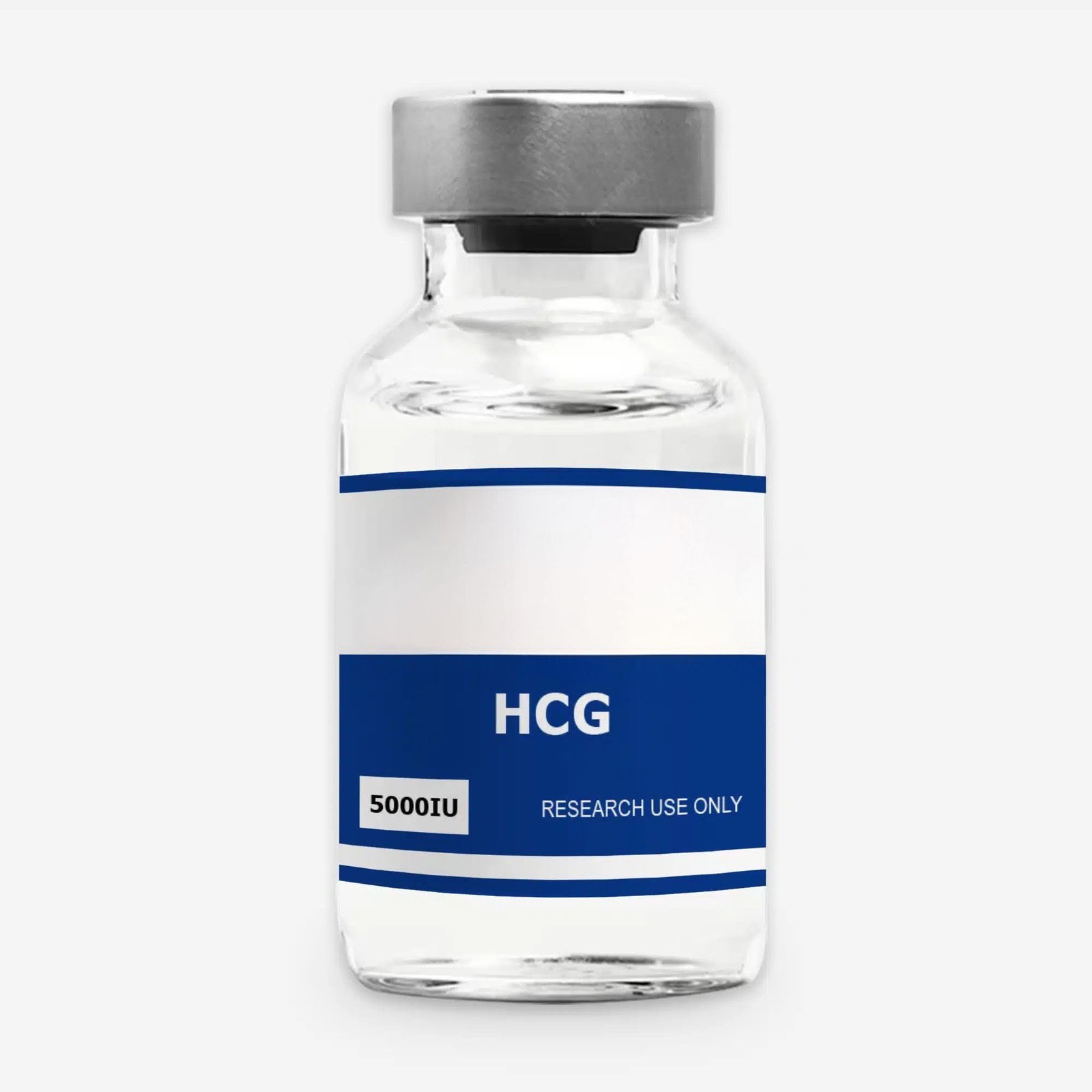
HCG
Price range: $90.00 through $160.00
HCG (Human Chorionic Gonadotropin) is a glycoprotein hormone for laboratory and in vitro research. Supplied at high purity with a full third-party COA. For laboratory and in vitro research use only. Not for human consumption. Not a medicine.
HCG Peptide for Sale: Research-Grade Gonadotropin for Reproductive Biology
Looking for HCG peptide for sale? Sino Research Peptide Manufacturer supplies human chorionic gonadotropin (HCG) at >99% HPLC-verified purity, complete with a batch-specific Certificate of Analysis (COA) and fast dispatch for laboratory and in vitro research use only.
What Is HCG?
HCG (Human Chorionic Gonadotropin) is a naturally occurring glycoprotein hormone produced by the trophoblast cells of the early embryo and, later, the placenta. It ranks among the most extensively studied gonadotropins in reproductive biology, Leydig cell function, HPG axis research, and embryo implantation science.
Researchers study HCG for its potent activation of the LHCGR receptor, its role in steroidogenesis and testosterone synthesis, trophoblast invasion, early pregnancy signalling, and biased agonism at the LH/CG receptor.
HCG and LH: Related but Distinct
Luteinizing hormone (LH) and HCG are integral components of the hypothalamic–pituitary–gonadal (HPG) axis, which controls sexual maturation and functionality. Although they share a high degree of homology, these hormones play unique physiological roles, governed by differences in expression pattern, biopotency, and regulation. LH primarily regulates gonadal steroidogenesis and ovulation, while HCG remains predominantly active in pregnancy and fetal development.
HCG is a heterodimeric glycoprotein composed of an α-subunit — identical to that of LH, FSH, and TSH — and a unique β-subunit. This β-subunit carries a highly glycosylated 24-amino acid C-terminal tail absent from LH, which increases receptor activity and slows metabolic clearance. As a result, HCG has a half-life of approximately 36 hours, compared to just 30 minutes for LH, making it an extended-duration analogue of LH for receptor biology research.
Early Pregnancy Signalling
HCG represents one of the first molecular messages sent by the pre-implanting embryo to modulate the implantation site and support timely nidation. Active secretion begins at the blastocyst stage, allowing researchers to detect HCG in maternal circulation approximately 10 days after fertilisation, with peak values reached between the 10th and 11th week of pregnancy.
How Does HCG Work?
HCG functions as a high-affinity agonist of the LH/CG receptor (LHCGR), a G protein-coupled receptor expressed primarily in Leydig cells of the testis, granulosa cells of the ovary, and trophoblast cells of the developing placenta. Despite sharing a receptor with LH, research shows that HCG and LH aren’t equivalent in their intracellular signalling profiles.
LHCGR Binding and Biased Agonism
Studies using BRET and FRET technologies confirm that HCG and LH differentially promote cell responses mediated by LHCGR, revealing differences in potency, efficacy, and kinetics. Researchers found recombinant HCG to be more potent than LH in both HEK293 and mouse Leydig tumour cells, demonstrating biased agonism at the shared receptor.
cAMP/PKA Steroidogenic Signalling
In primary mouse Leydig cell cultures, HCG proved approximately 10-fold more potent than LH in cAMP recruitment, and slightly more potent in cAMP-dependent Erk1/2 phosphorylation. However, researchers observed no significant differences at the level of downstream steroidogenic events, including Creb phosphorylation, Stard1 gene expression, and testosterone synthesis.
Leydig Cell Testosterone Synthesis
Testicular Leydig cells respond readily to LH and its analogue HCG via the LH/hCG receptor on the plasma membrane. Researchers have shown that HCG derivatives bind these receptors with different affinities than native HCG and modulate testosterone production — findings that inform LHCGR activation pharmacology in steroidogenesis research.
HPG Axis Signalling and Spermatogenesis
Luteinizing hormone-driven testosterone plays a central role in spermatogenesis, with LH acting on Leydig cells to stimulate steroid production. Since HCG and LH bind the same LHCGR receptor on Leydig cells, but HCG does so with greater affinity, it preferentially induces cAMP and increases intracellular Ca²⁺, upregulating genes that code for steroidogenic enzymes.
Trophoblast Invasion and Endometrial Remodelling
HCG is one of the earliest embryo-derived secreted signals in the endometrium, which abundantly expresses HCG receptors. In vitro research has demonstrated that HCG decreases TIMP-1 secretion in endometrial stromal cells, facilitating extravillous trophoblast invasion, with gelatine zymography confirming increased MMP-2 activity following HCG treatment.
Immune Modulation at the Maternal-Fetal Interface
Research has demonstrated that HCG modulates immune responses at the maternal-fetal interface through epigenetic mechanisms. Specifically, HCG inhibits CXCL10 expression in human endometrial stromal cells by enhancing EZH2 expression and inducing H3K27me3 histone methylation at the CXCL10 promoter, suppressing T cell recruitment to the implantation site.
Benefits of HCG in Research Applications
Researchers have studied HCG across an exceptionally broad range of biological systems, including:
- LHCGR receptor binding, biased agonism, and intracellular cAMP/PKA signalling
- Leydig cell steroidogenesis and testosterone synthesis pathway research
- HPG axis regulation and gonadotropin interaction studies in male and female models
- Spermatogenesis, intratesticular testosterone, and male fertility biology
- Trophoblast invasion, placentation, and endometrial ECM remodelling
- Embryo implantation and the embryo-endometrial microenvironment
- Immune modulation at the maternal-fetal interface
- Hyperglycosylated HCG (hCG-H) isoform biology and early pregnancy signalling
- VEGF-driven angiogenesis and corpus luteum rescue pathways
- Comparative LH vs HCG biased agonism and receptor signalling kinetics
HCG and Corpus Luteum Research
Research shows that rising systemic HCG levels cause a rapid elevation of serum progesterone, reflecting rescue of the corpus luteum — one of HCG’s primary endocrine functions. Beyond this, HCG stimulates VEGF production significantly in endometrial tissue, suggesting a role in endometrial vascularisation and placentation.
HCG and Hyperglycosylated Isoform Research
Hyperglycosylated HCG (hCG-H) is an over-glycosylated isoform that comprises up to 90% of total HCG measurable in serum and urine during the first 2–3 weeks of pregnancy, when invasive trophoblast activity peaks. Functionally, hCG-H has been found to promote trophoblast invasion during early pregnancy and may play roles in immune cell modulation and endothelial function within the uterus.
HCG and Immune Cell Modulation
Research confirms that HCG regulates local immune cell numbers at the implantation site while driving these cells to adopt a phenotype that supports and protects the developing fetus. These findings have informed research into HCG’s role in idiopathic infertility, recurrent miscarriage, and immunological tolerance of the semi-allogeneic embryo.
HCG and Male Reproductive Research
Research has confirmed HCG’s utility in pre-clinical models of male hypogonadism driven by impaired HPG axis signalling, including conditions where exogenous hormone exposure has suppressed pulsatile GnRH and LH secretion. These models use HCG as a direct LHCGR agonist to study HPG axis function and spermatogenesis restoration.
What Do Studies Say About HCG?
HCG carries one of the most extensive and diverse published research profiles of any naturally occurring hormone, spanning reproductive endocrinology, developmental biology, immunology, and clinical research.
HCG and LH: Not Equivalent in Signalling
A landmark review in Endocrine Reviews concluded that the long-assumed equivalence of LH and HCG has been disproved by accumulating in vitro and clinical evidence, highlighting their sex-specific functions. HCG displays notably greater cAMP/PKA-mediated steroidogenic and pro-apoptotic potential compared to LH.
HCG and Fetal Leydig Cell Development
Research confirms that HCG plays a larger role than fetal pituitary LH in testosterone production by Leydig cells during early fetal development, with LHCGR undetectable in fetal Leydig cells until 10–12 weeks after conception. Testosterone produced in response to HCG drives virilisation of the reproductive tract.
HCG and Trophoblast Invasion
Research confirms that first-trimester human trophoblastic cells — specifically extravillous cytotrophoblasts — express hCG/LH receptors and present an invasive phenotype, establishing an autocrine/paracrine role for HCG in regulating the trophoblast invasion essential for blastocyst implantation.
HCG Isoforms and Pregnancy Complication Research
Altered levels of hyperglycosylated HCG characterize pregnancy complications associated with aberrant trophoblast function and inadequate placentation, including pre-eclampsia and Down’s syndrome. This makes HCG isoform research a significant area of inquiry in obstetric risk prediction and early pregnancy monitoring.
Key Cited Studies
- Cole LA (2012) — Clin Chim Acta 413(1–2):48–65. PMID: 21982680
- Casarini L et al. (2017) — Reprod Biol Endocrinol 15(1):2. PMC5217336
- Casarini L et al. (2017) — Sci Rep 7:940. DOI: 10.1038/s41598-017-01078-8
- Casarini L & Simoni M (2018) — Endocr Rev 39(5):549–592. DOI: 10.1210/er.2018-00065
- Schumacher A et al. (2019) — Front Immunol 10:2896. PMC6914810
- Boehm U et al. (2020) — PMID: 32238853
- Evans J (2016) — Am J Reprod Immunol 75(3):333–40. PMID: 26676718
- Esteves SC et al. (2025) — Andrology. DOI: 10.1111/andr.70003
Where to Buy HCG Peptide
Buy HCG Peptide Online
If you’re wondering where to buy HCG peptide, Sino Research Peptide Manufacturer offers a straightforward path to reliable, research-grade material. Every batch ships with purity verification, so you know exactly what you’re working with.
Best Place to Buy HCG Peptide Online
Researchers looking for the best place to buy HCG peptide online choose Sino Research Peptide Manufacturer for our >99% HPLC-verified purity, batch-specific COA, and consistent quality control across every order.
Buy HCG Research Peptide for Men or General Study
Whether you need HCG peptide for men research applications or broader reproductive biology studies, we supply HCG in high-purity lyophilised form suited to a wide range of laboratory protocols.
Important Research Notice
HCG (Human Chorionic Gonadotropin) is intended strictly for laboratory and in vitro research use. It is not intended for human or veterinary use, and it has no approved medical or therapeutic applications outside a controlled research setting. Please review and adhere to our Terms and Conditions before placing an order.
References:
- Clark RG, Robinson IC. Growth induced by pulsatile infusion of an amidated fragment of human growth hormone releasing factor in normal and GHRF-deficient rats. HCG Peptide for Sale, Nature. 1985 Mar 21-27;314(6008):281-3. doi: 10.1038/314281a0. PMID: 2858818.
- Berlanga-Acosta J, Abreu-Cruz A, Herrera DGB, Mendoza-Marí Y, Rodríguez-Ulloa A, García-Ojalvo A, Falcón-Cama V, HCG Peptide for Sale, Hernández-Bernal F, Beichen Q, Guillén-Nieto G. Synthetic Growth Hormone-Releasing Peptides (GHRPs): A Historical Appraisal of the Evidences Supporting Their Cytoprotective Effects. HCG Peptide for Sale, Clin Med Insights Cardiol. 2017 Mar 2;11:1179546817694558. doi: 10.1177/1179546817694558. PMID: 28469491; PMCID: PMC5392015.
- Culhane KJ, Liu Y, Cai Y, Yan EC. Transmembrane signal transduction by peptide hormones via family B G protein-coupled receptors. Front Pharmacol. 2015 Nov 5;6:264. doi: 10.3389/fphar.2015.00264.HCG Peptide for Sale. PMID: 26594176; PMCID: PMC4633518.
- Yin Y, Li Y, Zhang W. The growth hormone secretagogue receptor: its intracellular signaling and regulation. Int J Mol Sci. 2014 Mar 19;15(3):4837-55. doi: 10.3390/ijms15034837. PMID: 24651458; PMCID: PMC3975427.
- Vittone J, Blackman MR, Busby-Whitehead J, Tsiao C, Stewart KJ, Tobin J, Stevens T, Bellantoni MF, Rogers MA, Baumann G, Roth J, Harman SM, Spencer RG. Effects of single nightly injections of growth hormone-releasing hormone (GHRH 1-29) in healthy elderly men. Metabolism. HCG Peptide for Sale. 1997 Jan;46(1):89-96. doi: 10.1016/s0026-0495(97)90174-8. PMID: 9005976.
- Khorram O, Laughlin GA, Yen SS. Endocrine and metabolic effects of long-term administration of [Nle27]growth hormone-releasing hormone-(1-29)-NH2 in age-advanced men and women. J Clin Endocrinol Metab. 1997 May;82(5):1472-9. doi: 10.1210/jcem.82.5.3943. PMID: 9141536.HCG Peptide for Sale
- Bowers, C. Y., Granda, R., Mohan, S., Kuipers, J., Baylink, D., & Veldhuis, J. D. (2004). Sustained elevation of pulsatile growth hormone (GH) secretion and insulin-like growth factor I (IGF-I), IGF-binding protein-3 (IGFBP-3), and IGFBP-5 HCG Peptide for Sale. concentrations during 30-day continuous subcutaneous infusion of GH-releasing peptide-2 in older men and women. The Journal of clinical endocrinology and metabolism, 89(5), 2290–2300. https://doi.org/10.1210/jc.2003-031799
- Chatelain PG, Sanchez P, HCG Peptide for Sale, Saez JM. Growth hormone and insulin-like growth factor I treatment increase testicular luteinizing hormone receptors and steroidogenic responsiveness of growth hormone deficient dwarf mice. Endocrinology. 1991 Apr;128(4):1857-62. doi: 10.1210/endo-128-4-1857. PMID:HCG Peptide for Sale 2004605.
| HCG | 10000IU*10vials, 5000IU*10vials |
|---|
1 review for HCG
 HCG
HCG
Related products
All Peptides
All Peptides
All Peptides
All Peptides
All Peptides
All Peptides
All Peptides
All Peptides
Super-fast delivery came with extra bits as well like Bac water and needles ect which is amazing. Super happy they also accept other crypto currencies for payment so that was a huge bonus for me not using USDT or Bitcoin and I will most definitely be a regular customer from now; products also seem to be great quality.