Peptide Research
GHK-Cu Peptide Facts: Science, Uses & Safety Guide
GHK-Cu Peptide Facts: What the Science Actually Says About This Copper Peptide
Copper has a strange reputation. Most people think of it as wiring or pipes — not something your own body quietly manufactures and relies on. But tucked inside human blood plasma is a small, naturally occurring molecule called GHK-Cu, and it’s become one of the most talked-about compounds in skincare labs and peptide research circles alike.
If you’ve spent any time reading skincare ingredient lists or scrolling through peptide research forums, you’ve probably run into the name. Maybe a dermatologist mentioned it. Maybe you saw it buried in the ingredient panel of an expensive serum. Or maybe you’re a researcher trying to separate the real science from the marketing noise.
This guide is built for that last group most of all. We’re going to walk through the GHK-Cu peptide facts that are actually supported by research — what it is, how it appears to work, what’s been studied, and just as importantly, what hasn’t been proven yet. No inflated claims, no miracle-cure language. Just a clear, honest look at the evidence.
Quick GHK-Cu Peptide Facts at a Glance
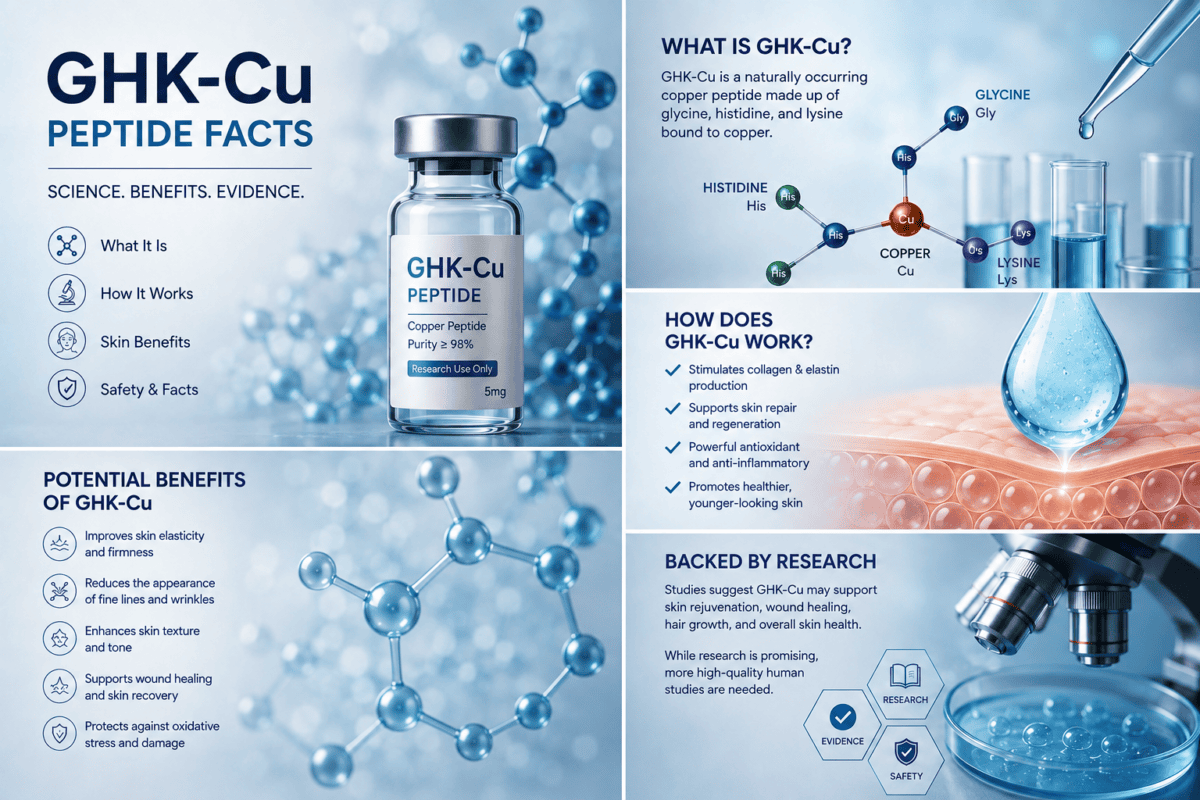
Before we go deep into the science, here’s a fast summary of the core GHK-Cu peptide facts worth knowing up front:
- GHK-Cu is a naturally occurring copper-binding tripeptide, first isolated from human plasma in 1973.
- It’s studied mainly for its potential role in collagen production, wound healing, and antioxidant activity.
- The strongest human evidence relates to topical, cosmetic use — not injectable or oral use.
- GHK-Cu levels appear to decline naturally with age, which is part of why researchers became interested in it.
- There is no approved human injectable dosing protocol, and this guide won’t provide one.
- Most supportive clinical trials are small to moderate in size, and some are industry-funded.
Keep these GHK-Cu peptide facts in mind as a frame of reference as we walk through the deeper research below — they’ll come up again as we look at mechanisms, history, and evidence quality.
What Is GHK-Cu, Exactly?
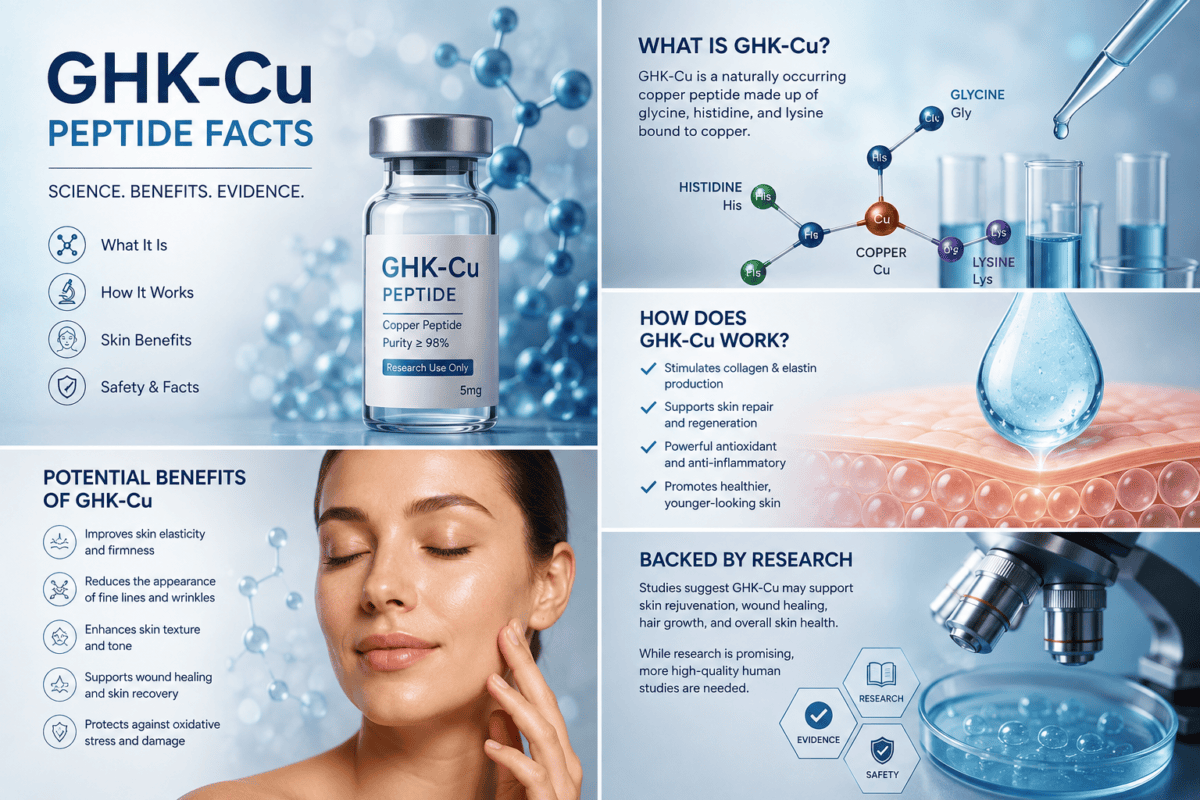
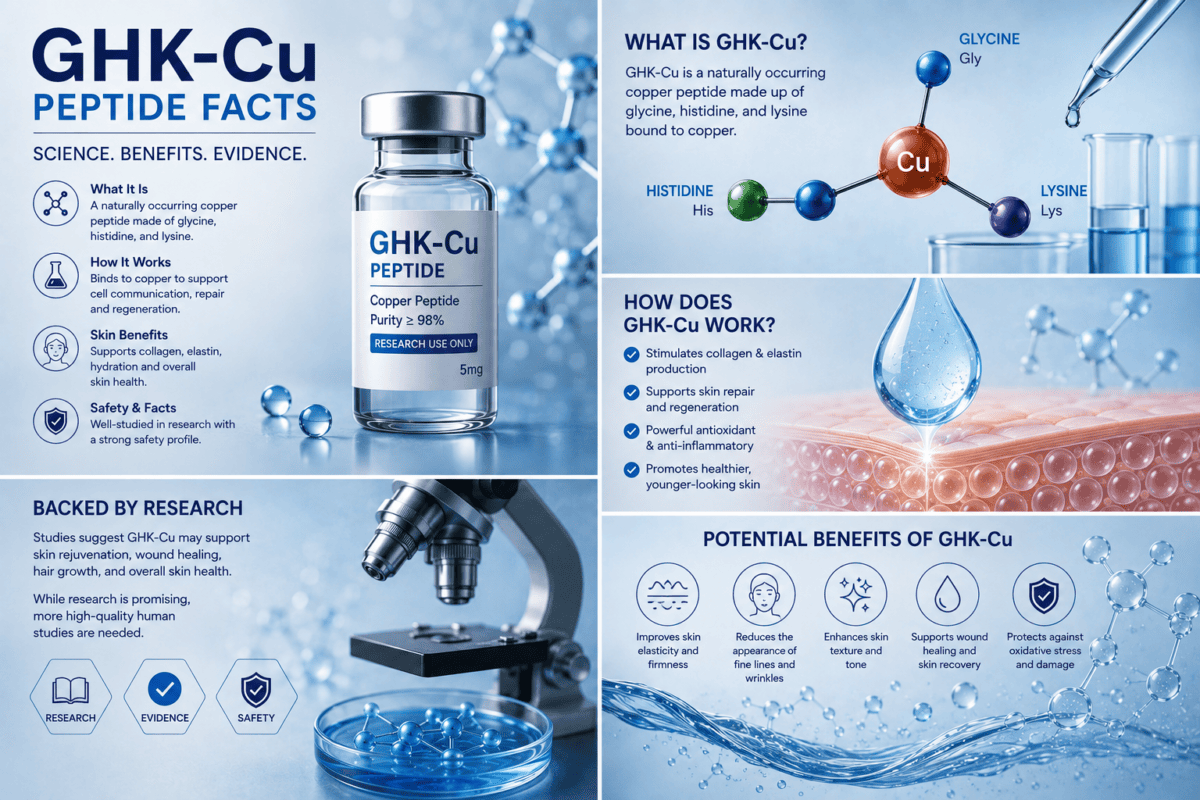
GHK-Cu stands for Glycyl-L-Histidyl-L-Lysine-Copper, a mouthful that breaks down into something simpler: it’s a tripeptide (a chain of three amino acids — glycine, histidine, and lysine) bound to a copper ion. The “Cu” is literally the chemical symbol for copper.
This isn’t a synthetic invention dreamed up in a lab. Researchers first isolated the GHK peptide from human plasma back in 1973, and later work revealed that it naturally binds copper with remarkable affinity, forming the complex we now call GHK-Cu. It’s also been detected in saliva and urine, which tells us it’s a normal part of human biology rather than a foreign substance.
Here’s the detail that made scientists sit up and pay attention: GHK-Cu levels in the body are highest in young, healthy tissue and appear to decline as we age. A person in their twenties has considerably more circulating GHK-Cu than someone in their sixties. That correlation — high levels in youthful tissue, lower levels with age — is the observation that launched decades of research into what this small molecule might actually be doing.
This age-related decline is one of the more consistently reported GHK-Cu peptide facts across the literature, and it’s the reason so much follow-up research has focused on tissue repair and skin biology rather than treating GHK-Cu as an isolated curiosity. Think of it less like a single switch and more like a background hum that gets quieter with time — researchers have been trying to understand what turning that hum back up, even partially, might mean for tissue.
It’s also worth understanding what GHK-Cu is not. It isn’t a hormone, and it isn’t a drug in the traditional sense — it’s a small signaling peptide, and its effects depend heavily on concentration, delivery method, and the tissue environment it’s introduced into. That nuance gets lost in a lot of consumer-facing content, which is exactly why sorting fact from assumption matters here.
The Biological Role of GHK-Cu
To understand why researchers are interested in GHK-Cu peptide mechanism of action, it helps to zoom out and think about what copper does in the body generally.
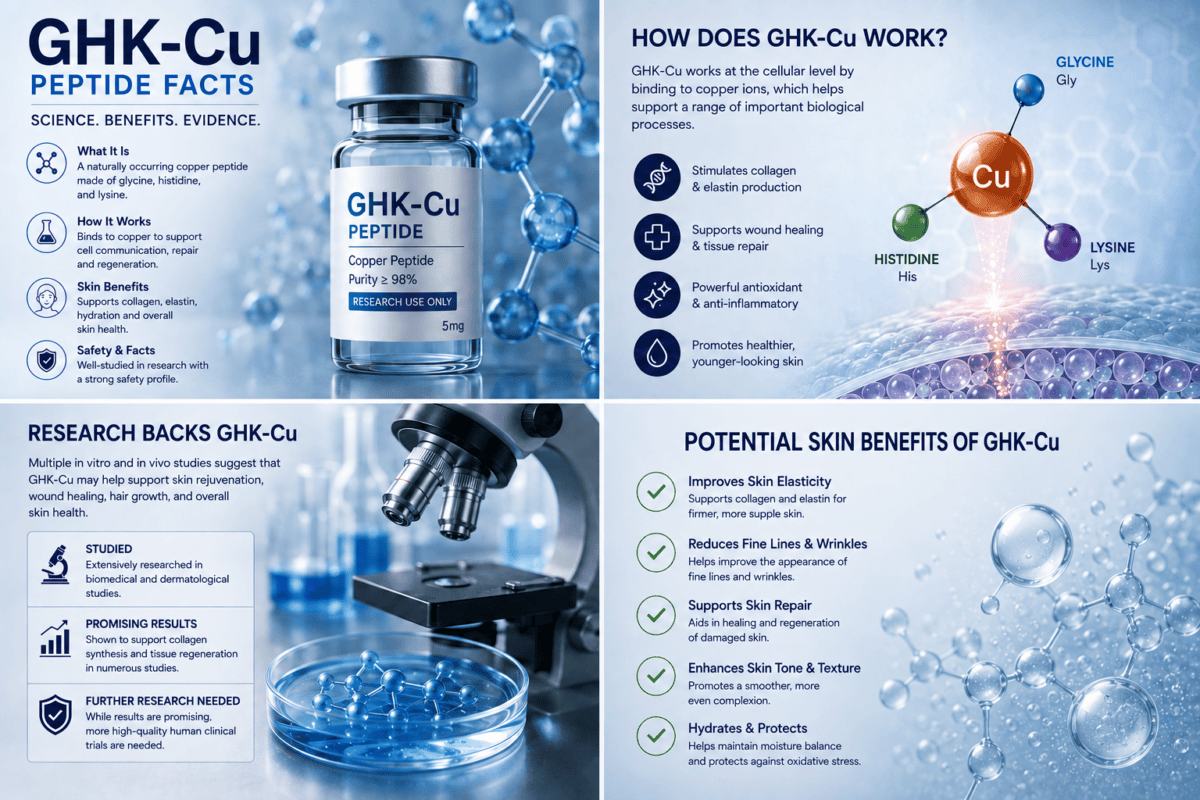
Copper is a trace mineral, but it’s essential. It’s a cofactor for enzymes involved in wound healing, antioxidant defense, and the formation of connective tissue. GHK-Cu appears to be one of the body’s natural systems for shuttling copper to where it’s needed and triggering some of the repair processes copper enzymes are involved in.
Researchers have proposed that GHK-Cu acts less like a single-purpose molecule and more like a biological signal — something that tells tissue “start the repair process.” Laboratory studies suggest it may influence:
- Collagen and elastin synthesis in skin fibroblasts
- Antioxidant enzyme activity, including superoxide dismutase
- Anti-inflammatory signaling in damaged tissue
- Blood vessel formation (angiogenesis) in wound sites
- Gene expression patterns tied to tissue remodeling
That last point is worth pausing on. A notable line of research using genomic databases found that GHK-Cu appears to influence the expression of a large number of genes tied to tissue repair — one widely cited analysis found effects on more than 4,000 human genes in specific study contexts. That’s a striking number, and it’s part of why GHK-Cu has attracted so much scientific curiosity beyond skincare. But it’s important to say clearly: genomic association studies tell us about correlated activity, not proof of a specific clinical outcome. It’s a reason to keep researching, not a finished conclusion.
Key GHK-Cu Peptide Facts Researchers Generally Agree On
Sorting through dozens of studies, a handful of GHK-Cu peptide facts show up consistently enough that most researchers in this space would sign off on them:
- GHK-Cu binds copper with high affinity, which is central to nearly every proposed mechanism.
- It’s associated with fibroblast activity, the cells responsible for producing collagen.
- It shows antioxidant-related effects in laboratory models, likely tied to its interaction with copper-dependent enzymes.
- Its natural concentration in the body drops with age, a pattern observed across multiple studies.
- Most of its well-documented human effects come from topical application, not systemic or injectable use.
Where researchers don’t fully agree is on how far these effects translate into guaranteed real-world outcomes — that’s the gap between mechanism and proof that this guide keeps coming back to.
A Brief Research History
The story of GHK-Cu research spans more than fifty years:
- 1973 — Loren Pickart and colleagues isolate the GHK peptide from human plasma while studying substances that stimulated liver cell growth.
- 1980s–1990s — Research shifts toward wound healing, with animal and cell-culture studies exploring GHK-Cu’s role in tissue repair.
- 1990s–2000s — Cosmetic chemistry takes notice. GHK-Cu peptide skincare research expands, with copper peptide complexes appearing in topical formulations aimed at improving skin appearance.
- 2000s–present — Genomic and molecular biology tools allow researchers to study GHK-Cu’s broader gene-expression effects, extending interest beyond skin into general tissue regeneration research.
This history matters because it shows GHK-Cu wasn’t invented as a product — it was discovered as a biological phenomenon, and the product applications came later, built on top of decades of foundational research. Understanding this timeline is itself one of the more useful GHK-Cu peptide facts for evaluating marketing claims — a molecule with fifty years of academic research behind it deserves a different level of scrutiny than one invented last year for a product launch, and that history should give you more confidence in the mechanism, not a blank check to believe every claim built on top of it.
GHK-Cu and Skin: What the Evidence Shows
This is where most people encounter GHK-Cu, so it deserves a close look.
GHK-Cu peptide and collagen research is probably the most developed area of the evidence base. Cell-culture and some human trials have examined copper peptide GHK-Cu for skin applications, generally through topical formulations rather than injectables. Reported findings in this body of research include:
- Increased collagen and glycosaminoglycan production in skin models
- Improvements in the appearance of fine lines in some small clinical trials
- Reported increases in skin firmness and elasticity with topical use over several weeks
- Antioxidant effects that may help counter UV-related skin stress
A frequently cited human study, comparing a copper peptide-based cream against a vitamin C product and a retinol-containing product, reported measurable improvements in skin appearance and texture with the copper peptide formulation over roughly twelve weeks. It’s a real finding worth noting — but it’s also a single study with a modest sample size, funded within the cosmetic industry, and not the kind of large, independent, multi-center trial that would let anyone call the case closed.
That distinction matters for GHK-Cu peptide for skin aging claims you’ll see online. The underlying biology is genuinely interesting, and the topical research is more developed than for almost any other application. But “promising early evidence” and “clinically proven” are different things, and a lot of marketing copy blurs that line.
This is arguably the single most important set of GHK-Cu peptide facts for anyone shopping for skincare products: the topical evidence is real, it’s more developed than for most peptides on the market, and it still isn’t the same thing as a guaranteed result for every user, every formulation, or every skin type.
GHK-Cu vs. Other Skincare Ingredients
People often want to know how GHK-Cu stacks up against other well-known actives. Here’s a fair, evidence-grounded comparison:
GHK-Cu peptide vs hyaluronic acid — These aren’t really competitors; they do different jobs. Hyaluronic acid is primarily a humectant — it draws and holds moisture in the skin, offering fairly immediate plumping effects. GHK-Cu is being studied more for its potential role in stimulating collagen production and tissue remodeling, a slower, structural process. Many formulations actually combine both.
GHK-Cu vs copper peptides generally — This one causes confusion because GHK-Cu is a copper peptide — it’s the specific, most-researched copper peptide complex. Not every “copper peptide” ingredient on a label refers to the same molecule or concentration, so this is worth checking if you’re comparing products.
GHK-Cu vs other peptides (like matrixyl or palmitoyl pentapeptide) — Other cosmetic peptides tend to target specific signaling pathways more narrowly. GHK-Cu’s proposed mechanism is broader, touching antioxidant, anti-inflammatory, and tissue-remodeling pathways simultaneously — which is part of why it’s been studied for wound healing, not just cosmetic use.
Beyond Skin: Other Areas of Research Interest
While skin research is the most mature, GHK-Cu hasn’t stayed confined to cosmetic science. Researchers have also explored it in the context of:
- Wound healing — some of the earliest and most consistent findings, particularly in animal models
- Hair-related research — a small number of studies have looked at how GHK-Cu affects hair growth, generally through its influence on follicle-related gene expression and blood flow to the scalp, though this research base is considerably smaller than the skin literature
- General tissue regeneration — including bone and lung tissue models in preclinical research
- Anti-inflammatory research — exploring GHK-Cu’s interaction with inflammatory signaling pathways
It’s worth being direct here: for every one of these areas outside topical skin application, the evidence is earlier-stage — mostly cell studies and animal models rather than large human trials. That doesn’t mean the research is worthless. It means the honest answer to “does GHK-Cu do X for humans” is very often “there’s a plausible mechanism and some early data, but not definitive human evidence yet.” These are exactly the kind of GHK-Cu peptide facts worth holding onto — genuinely promising, not yet conclusive.
Addressing the Injectable / Bodybuilding Questions Directly
Search around and you’ll find questions like “why do bodybuilders use GHK-Cu” or requests for daily injection amounts. It’s worth being straightforward about this rather than dodging it.
GHK-Cu has, in some corners of the internet, been marketed as an injectable “research compound” for muscle recovery or anti-aging purposes. It’s true that some researchers use injectable GHK-Cu in laboratory settings to study its biological effects in animal models. But that’s a research context, conducted under controlled protocols — it isn’t the same thing as an approved, dosed human therapeutic.
GHK-Cu does not currently have regulatory approval as an injectable product for human use, and there isn’t a validated, safe human dosing protocol established through clinical trials. Because of that, this article isn’t going to provide injection instructions or “how much to take” guidance — doing so wouldn’t be responsible, and frankly, the science doesn’t support a confident answer anyway. If you’re encountering GHK-Cu in a research or clinical context, that conversation belongs with a qualified physician or the research institution overseeing the study, not a blog post.
Where GHK-Cu genuinely does have a track record is in topical, cosmetic formulations — creams and serums applied to the skin, which is the context nearly all of the supportive human evidence actually comes from. That distinction — topical evidence versus injectable speculation — is one of the most important GHK-Cu peptide facts in this entire guide.
Safety Considerations and Known Limitations
No honest GHK-Cu peptide safety research discussion can skip the caveats. Here’s what’s genuinely worth knowing:
Topical use — Copper peptide creams are generally well tolerated in the studies conducted so far, with mild irritation being the most commonly reported side effect in a minority of users. As with any active skincare ingredient, patch-testing before broader use is a reasonable precaution.
Copper sensitivity — People with known copper allergies or certain copper metabolism conditions (such as Wilson’s disease) should be especially cautious and should talk to a doctor before using copper peptide products, given copper’s role in the underlying condition.
Limited long-term data — Most skin studies run for weeks to a few months. There isn’t robust long-term human safety data for continuous use over years, which is a genuine gap in the evidence.
Small sample sizes — Many of the human trials behind GHK-Cu’s skincare reputation involve dozens of participants, not thousands. That’s normal for early cosmetic research, but it means results should be read as promising rather than conclusive.
Industry-funded research — A meaningful share of the supportive studies were conducted or funded by companies with a commercial interest in copper peptide products. That doesn’t automatically invalidate the findings, but it’s a reason to weigh them alongside independent research where it exists.
Pregnancy and nursing — There isn’t sufficient safety data in these populations, so caution and medical guidance are warranted.
Any responsible discussion of GHK-Cu peptide benefits and risks has to hold both sides at once: real, biologically plausible mechanisms and encouraging early data on one hand, and a still-developing, imperfect evidence base on the other.
GHK-Cu Peptide Myths and Facts
A few corrections worth making explicitly, since misinformation spreads faster than the underlying GHK-Cu peptide facts ever do:
Myth: GHK-Cu is a synthetic lab invention. Fact: It’s naturally present in the human body and was isolated from human blood plasma.
Myth: Higher copper content in a product always means better results. Fact: Formulation stability, concentration, and delivery method all affect whether GHK-Cu actually reaches and interacts with skin cells effectively — more copper isn’t automatically more effective, and poorly stabilized formulations can lose potency quickly.
Myth: GHK-Cu is clinically proven to reverse aging. Fact: The research shows promising effects on collagen production and skin appearance in some trials — that’s meaningfully different from a proven anti-aging cure.
Myth: If it’s natural, it’s automatically risk-free. Fact: Naturally occurring doesn’t mean risk-free for every person or every use case, particularly outside topical application.
GHK-Cu Peptide FAQ: Common Questions Answered
The questions below come up constantly in reader searches, so here are direct, evidence-grounded GHK-Cu peptide facts in answer to each one.
What does GHK-Cu peptide do for your body? In its natural role, it appears to participate in the body’s copper transport and tissue-repair signaling systems. In topical skincare research, it’s been studied mainly for effects on collagen production, skin firmness, and antioxidant activity.
What are the real results of GHK-Cu treatment? In the strongest available human studies — topical, several weeks in duration — researchers have reported modest but measurable improvements in skin texture, fine lines, and firmness. Results vary by study and formulation, and “dramatic transformation” claims go beyond what the current data supports.
What to avoid when using copper peptides? Avoid combining copper peptide products with direct vitamin C (ascorbic acid) or strong exfoliating acids in the same routine, since some formulators note these can interact or reduce each other’s stability — many recommend using them at different times of day. Also avoid products with no clear concentration or sourcing information.
What cancels out copper peptides? Direct combination with high-dose vitamin C serums is the most commonly cited conflict in formulation literature, along with strong chelating ingredients that can bind and deactivate the copper ion.
Who should avoid GHK-Cu? People with diagnosed copper metabolism disorders, known copper allergies, and pregnant or nursing individuals should consult a physician before use. Anyone considering non-topical use should do so only under professional medical or research supervision.
Can GHK-Cu damage kidneys? There’s no established human clinical evidence that topical GHK-Cu use causes kidney damage. Concerns about copper toxicity generally relate to excessive systemic copper exposure, which is a different scenario from typical topical cosmetic use. Anyone with kidney or copper-metabolism concerns should get individualized medical advice rather than relying on general information.
How long does GHK-Cu stay in your system? This depends heavily on route of exposure and individual metabolism, and precise pharmacokinetic data in humans is limited, especially outside topical use — another reason self-directed dosing isn’t something this guide can responsibly speculate on.
What peptide makes wrinkles go away? No peptide “makes wrinkles go away” in the sense of a guaranteed cure. Several peptides, including GHK-Cu, palmitoyl pentapeptide, and others, have research suggesting they may improve the appearance of fine lines over time as part of a broader skincare routine — not as a standalone miracle fix.
More GHK-Cu Peptide Facts You Should Know
A couple of additional GHK-Cu peptide facts come up often enough in reader questions that they’re worth addressing directly, even though they weren’t part of the main sections above.
Is GHK-Cu the same in every product? No. Concentration, formulation stability, and whether the copper peptide complex is properly bound all vary between brands. Two products both listing “copper peptides” or “GHK-Cu” on the label can behave quite differently in practice.
How is GHK-Cu different from retinol? Retinol works primarily by speeding up skin cell turnover and has one of the largest, longest-standing bodies of clinical evidence of any skincare ingredient. GHK-Cu’s proposed mechanism centers more on signaling collagen production and antioxidant activity. Some formulators use them together, though retinol and copper peptides are sometimes recommended at separate times due to potential stability interactions.
The Bottom Line
GHK-Cu is a genuinely interesting molecule with a real, decades-long research history — not a fad ingredient invented for a marketing campaign. The GHK-Cu peptide scientific evidence is strongest for topical, cosmetic applications, where multiple studies point to plausible benefits for skin firmness, texture, and collagen support. Its role in wound healing, hair-related processes, and broader tissue regeneration is biologically plausible and actively being researched, but the human evidence there is still developing.
What it isn’t — at least not yet, and not based on current regulatory status or clinical data — is an approved injectable therapeutic with an established human dosing protocol. Treating it as one skips past real, unanswered safety questions.
If you’re approaching GHK-Cu as a researcher, skincare enthusiast, or simply a curious reader, the most useful thing you can do is exactly what you’re probably already doing here: separating the marketing claims from what controlled studies actually show, and staying alert to where the evidence is strong versus where it’s still emerging.
To recap the core GHK-Cu peptide facts covered in this guide: it’s a naturally occurring copper-binding peptide with a genuine research history, the best human evidence supports topical rather than injectable use, its proposed mechanisms touch collagen production, antioxidant activity, and wound healing, and the overall evidence base — while promising — is still earlier-stage than a lot of marketing language suggests. Keeping these GHK-Cu peptide facts in mind is the best defense against both unfounded hype and unfair dismissal of a molecule that genuinely deserves continued research.
Sources & Further Reading
- Pickart, L., & Margolina, A. (2018). Regenerative and Protective Actions of the GHK-Cu Peptide in the Light of the New Gene Data. International Journal of Molecular Sciences, 19(7), 1987. ncbi.nlm.nih.gov/pmc/articles/PMC6073405
- Abdulghani, A. A., et al. (1998). Effects of topical creams containing vitamin C, a copper-binding peptide cream and melatonin compared with tretinoin on the ultrastructure of normal skin. Disease Management and Clinical Outcomes, 1(4), 136–141. doi.org/10.1016/S1088-3371(98)00011-4
- Pickart, L., Vasquez-Soltero, J. M., & Margolina, A. (2015). GHK Peptide as a Natural Modulator of Multiple Cellular Pathways in Skin Regeneration. BioMed Research International, 2015, 648108. pubmed.ncbi.nlm.nih.gov/26236730
- Wikipedia contributors. Copper peptide GHK-Cu. en.wikipedia.org/wiki/Copper_peptide_GHK-Cu
- National Institutes of Health, Office of Dietary Supplements. Copper — Health Professional Fact Sheet. ods.od.nih.gov/factsheets/Copper-HealthProfessional
- MedlinePlus (U.S. National Library of Medicine). Wilson Disease. medlineplus.gov/wilsondisease.html
This article is for informational and research purposes only and does not constitute medical advice. Consult a qualified healthcare provider before using any peptide product, particularly outside topical cosmetic use.