Buy GHK-Cu: High-Purity Copper Peptide for Laboratory Research
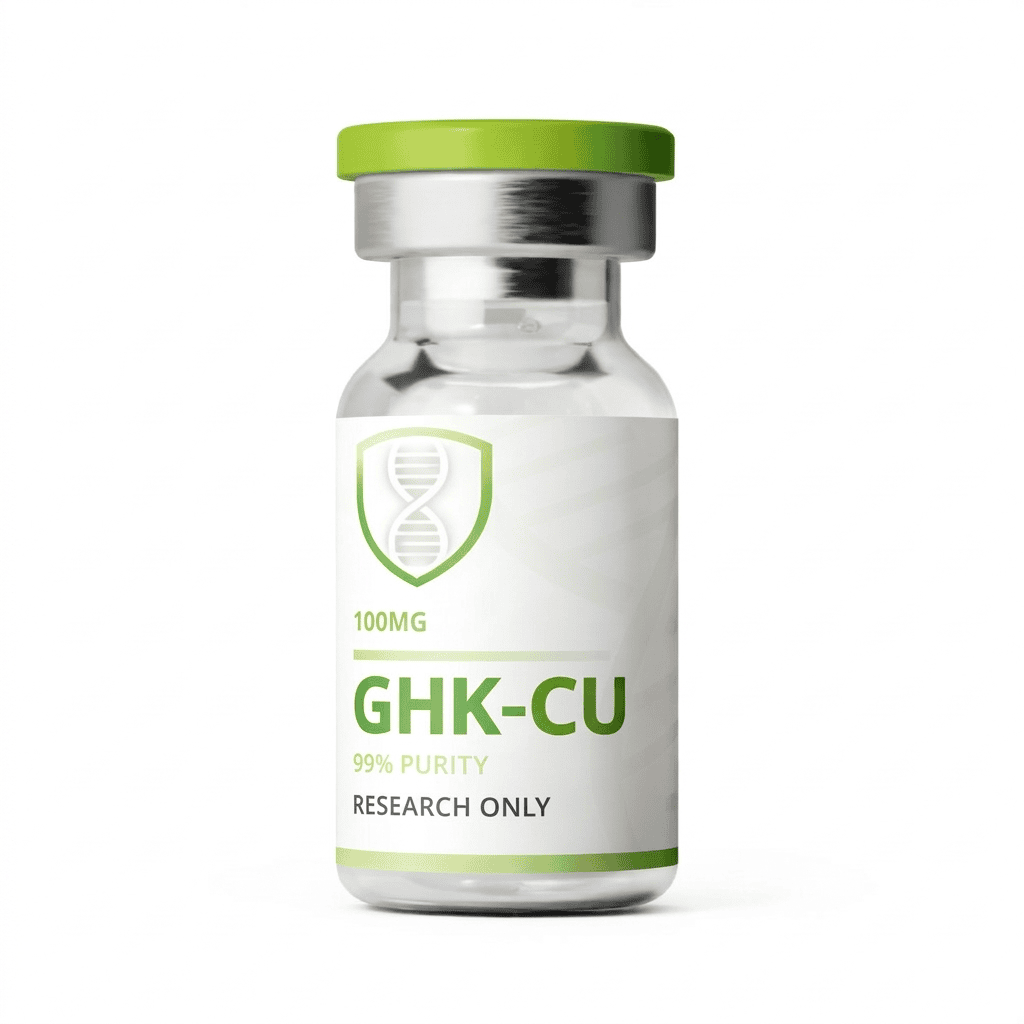
Are you looking to buy GHK-Cu from a manufacturer that verifies purity on every batch? Sino Research Peptide Manufacturer supplies research-grade GHK-Cu, a naturally occurring copper-binding tripeptide composed of glycyl-L-histidyl-L-lysine.(1) The “-Cu” designation refers to the chemical addition of copper, and researchers study this small peptide extensively across tissue repair, gene expression, and antioxidant pathways.
What Is Buy GHK-Cu Copper Peptide?
GHK-Cu occurs naturally in plasma and appears to release at the time of injury. Interestingly, its concentration declines with age — from an average of 200 ng/mL at age 20 down to 80 ng/mL by age 60.(1)
Research shows that when scientists add plasma GHK peptide to cell cultures in nanomolar amounts, the peptide can trigger a wide range of responses, from growth stimulation to cell differentiation.(4) During isolation, researchers found the peptide exhibits chelating properties, often co-isolating with nearly equal amounts of copper ions and roughly a fifth the amount of iron found in cells. When incubated as a bound complex with copper and iron, the peptide showed its maximal potential.
GHK-Cu Research Overview
Buy GHK-Cu? Studies suggest may influence gene expression and potentially help reset elements of the genome.(5) Through this proposed mechanism, researchers are exploring whether GHK-Cu might help restore impaired cells, including carcinogenic and COPD-affected cells. Across various research areas, GHK-Cu has been studied for its potential to:(1)
- Tighten and address the thinning of aging skin structure by supporting the extracellular matrix
- Restore the skin barrier and moderate texture, hyperpigmentation, and lesions
- Support tissue repair and help mitigate inflammation
- Stimulate increases in hair follicle size
- Exert antioxidant properties
- Influence gene restructuring pathways
GHK-Cu Peptide Specifications
| Property | Detail |
|---|---|
| Molecular Formula | C14H23CuN6O4 |
| Molecular Weight | 340.38 g/mol |
| Other Known Titles | Glycyl-L-histidyl-L-lysine-copper 2+ |
GHK Copper Peptide Research and Clinical Studies
GHK Peptide Initial Research
A 1980s study first suggested the biological potential of this naturally occurring peptide in tissue repair.(6) Since GHK peptide may host copper (II) ions through possible copper affinity, researchers proposed it could stimulate collagen synthesis and increase protein and DNA accumulation at injury sites. Buy GHK-Cu at
Researchers studied dermal wounded rats for this work. At the time of injury, GHK peptide release appeared to trigger “emergency response molecules” from the matrix at the injury site. Once released, GHK appeared to bind with copper ions in the blood and stimulate decorin protein synthesis — a protein responsible for collagen synthesis, wound healing regulation, and anti-tumor defense. Further studies in the 2000s suggested GHK-Cu peptide may also stimulate production of tissue inhibitors TIMP-1 and TIMP-2.(7)
GHK Peptide and Tissue Repair Research
One study compared the GHK-Cu peptide complex against zinc oxide when applied to open wounds.(8) Researchers used 18 New Zealand white rabbits, divided into three groups: one presented with Buy GHK-Cu, one with zinc oxide, and one with placebo. After inducing wounds and applying each compound for 21 consecutive days, researchers suggested the GHK-Cu group showed increased healing compared to both the zinc oxide and placebo groups.
A separate study compared GHK-Cu against helium neon laser application, measured at 1 J/cm² and 3 J/cm².(9) Using 24 New Zealand white rabbits divided into three groups over 28 consecutive days, researchers found that rabbits receiving GHK-Cu alongside the higher laser concentration appeared more receptive to wound healing. This group also showed a decline in neutrophil counts and an increase in neovascularization.
GHK Peptide and Metastasis Research
A 1983 study examined the combined actions of GHK-Cu complex and ascorbic acid (Vitamin C) on sarcoma cell growth.(1) Researchers exposed 180 mice with cancerous growths to this mixture and observed a decline in carcinogenic cell growth. About Buy GHK-Cu, The GHK-Cu complex also appeared to increase expression of caspase-related genes and genes associated with DNA repair.
Specifically, the peptide appeared to suppress growth in two cancer cell types: SH-SY5Y neuroblastoma cells (used to study nerve cell behavior) and U937 histiocytic lymphoma cells (used to study immune responses to cancer). Researchers also observed potential reactivation of the apoptosis pathway, evidenced by activity in caspases 3 and 7. In contrast, when tested on non-cancerous NIH-3T3 fibroblasts, GHK appeared to promote healthy cell growth instead.
GHK Peptide and Ulcer Research
A clinical study examined GHK-Cu peptide complex gel in diabetic subjects with neuropathic ulcers.(10) Researchers enrolled subjects with sharp ulcer wounds or debridement into a randomized, placebo-controlled trial, dividing them between peptide gel treatment and standard placebo care. Subjects who received the gel showed elevated healing rates above 98%. The gel appeared to induce closure of 98.5% of plantar ulcers, compared to 60.8% ulcer healing in the control group.
GHK Peptide and Behavioral Research
In one study, researchers delivered that buy GHK-Cu to mice placed on a moderately hot plate to measure pain response.(1) Mice typically take longer to lick their paws under heat-induced pain, but after receiving the peptide, this response time decreased compared to control conditions.
Another study placed male rats in a maze designed to induce anxiety and observe behavioral change.(11) Anxious rats typically restrict movement to “closed arms,” while rats with lower anxiety levels show more “open arm” behavior. After peptide delivery, researchers observed increased “open arm” behavior among the rats studied.
A separate study placed two rats in a small cage and administered minor electric shocks, which typically causes agitation and aggression.(12) Twelve minutes before the experiment, researchers delivered GHK-Cu to both rats. Post-shock attack frequency dropped to roughly one-fifth of the usual rate.
GHK-Cu and Antioxidative Research
One study investigated GHK’s potential to regulate reactive oxygen species (ROS) within laboratory cells, focusing on its ability to mitigate oxidative stress.(13) Researchers propose GHK may act as an endogenous antioxidant through selective targeting of hydroxyl (·OH) and peroxyl (ROO·) radicals.
Using flow cytometry and electron spin resonance (ESR) spin-trapping, researchers found GHK lowered ROS levels induced by tert-butyl hydroperoxide (t-BOPD), a known oxidative stress promoter. ESR data showed GHK notably reduced ·OH and ROO· radical concentrations, though it showed only modest activity against superoxide (O2-·) radicals. Comparative testing against carnosine and reduced glutathione (GSH) suggested GHK may neutralize ·OH radicals more effectively than these established antioxidants.
Buy GHK-Cu and Lung Inflammation Research
A separate study examined possible anti-inflammatory mechanisms of GHK-Cu against lung tissue inflammation induced by cigarette smoke (CS).(14) In mouse models exposed to CS, GHK-Cu exposure was linked to a potential decrease in pro-inflammatory cytokines IL-1β and TNF-α within bronchoalveolar lavage fluid.
Researchers also noted a possible reduction in myeloperoxidase (MPO) activity, a marker for neutrophil-driven inflammation, suggesting GHK-Cu may help limit neutrophil activation and related oxidative bursts. At the molecular level, researchers proposed GHK-Cu may interact with the NF-κB signaling pathway by affecting IκBα phosphorylation, potentially lowering expression of inflammation-promoting genes. The study also suggested GHK-Cu may influence the Nrf2 pathway, potentially boosting expression and nuclear translocation of Nrf2 to support cellular defenses against oxidative damage. Researchers additionally observed a tentative reduction in malondialdehyde (MDA) levels and possible restoration of glutathione (GSH) levels.
GHK-Cu and Lipid Peroxidation Research
A theoretical model suggests GHK could play a role in limiting iron release from ferritin.(15) Since ferritin can release iron in a form that facilitates lipid peroxidation and subsequent cell damage, researchers suggest GHK might inhibit iron complex assembly within injured tissues, potentially decreasing inflammation. Provisional estimates suggest this interaction might restrict iron release by up to 87%, which could meaningfully reduce both inflammation and oxidative stress in affected tissues.
Where to Buy GHK-Cu Peptide for Research
GHK-Cu Powder for Sale at Sino Research Peptide Manufacturer
When you compare sources for GHK-Cu powder for sale, purity verification should top your checklist. Sino Research Peptide Manufacturer documents identity and purity on every batch, so your lab can trust the material behind your research data.
Buy Copper Peptide GHK-Cu With Confidence
Whether your study focuses on tissue repair, antioxidant pathways, or gene expression research, Sino Research Peptide Manufacturer ships high-purity GHK-Cu peptide backed by rigorous internal quality checks.
Order GHK-Cu Peptide Today
Ready to add GHK-Cu to your research pipeline? Sino Research Peptide Manufacturer makes ordering simple, with consistent, research-grade material for every study.
GHK-Cu peptide is available for research and laboratory purposes only. It is not intended for human or veterinary use. Please review and adhere to our Terms and Conditions before ordering.
References:
- Pickart, Loren, and Anna Margolina. “Regenerative and Protective Actions of the GHK-Cu Peptide in the Light of the New Gene Data.” International journal of molecular sciences vol. 19,7 1987. 7 Jul. 2018, doi:10.3390/ijms19071987. https://www.ncbi.nlm.nih.gov/pmc/articles/PMC6073405/
- Pickart L, Freedman JH, Loker WJ, Peisach J, Perkins CM, Stenkamp RE, Weinstein B. Growth-modulating plasma tripeptide may function by facilitating copper uptake into cells. Nature. 1980 Dec 25;288(5792):715-7. doi: 10.1038/288715a0. PMID: 7453802. https://pubmed.ncbi.nlm.nih.gov/7453802/
- L.O. Pilgeram, L.R. Pickart, Control of fibrinogen biosynthesis: The role of free fatty acid, Journal of Atherosclerosis Research, Volume 8, Issue 1, 1968, Pages 155-166, ISSN 0368-1319, https://doi.org/10.1016/S0368-1319(68)80089-4
- Pickart L, Freedman JH, Loker WJ, Peisach J, Perkins CM, Stenkamp RE, Weinstein B. Growth-modulating plasma tripeptide may function by facilitating copper uptake into cells. Nature. 1980 Dec 25;288(5792):715-7. doi: 10.1038/288715a0. PMID: 7453802. https://pubmed.ncbi.nlm.nih.gov/7453802/
- Pickart L, Vasquez-Soltero JM, Margolina A. GHK and DNA: resetting the human genome to health. Biomed Res Int. 2014;2014:151479. doi: 10.1155/2014/151479. Epub 2014 Sep 11. PMID: 25302294; PMCID: PMC4180391. https://pubmed.ncbi.nlm.nih.gov/25302294/
- Maquart FX, Pickart L, Laurent M, Gillery P, Monboisse JC, Borel JP. Stimulation of collagen synthesis in fibroblast cultures by the tripeptide-copper complex glycyl-L-histidyl-L-lysine-Cu2+. FEBS Lett. 1988 Oct 10;238(2):343-6. doi: 10.1016/0014-5793(88)80509-x. PMID: 3169264. https://pubmed.ncbi.nlm.nih.gov/3169264/
- Siméon A, Emonard H, Hornebeck W, Maquart FX. The tripeptide-copper complex glycyl-L-histidyl-L-lysine-Cu2+ stimulates matrix metalloproteinase-2 expression by fibroblast cultures. Life Sci. 2000 Sep 22;67(18):2257-65. doi: 10.1016/s0024-3205(00)00803-1. PMID: 11045606. https://pubmed.ncbi.nlm.nih.gov/11045606/
- Cangul IT, Gul NY, Topal A, Yilmaz R. Evaluation of the effects of tripeptide-copper complex and zinc oxide on open-wound healing in rabbits. Vet Dermatol. 2006 Dec;17(6):417-23. doi: 10.1111/j.1365-3164.2006.00551.x. PMID: 17083573. https://pubmed.ncbi.nlm.nih.gov/17083573/
- Gul NY, Topal A, Cangul IT, Yanik K. The effects of tripeptide copper complex and helium-neon laser on wound healing in rabbits. Vet Dermatol. 2008 Feb;19(1):7-14. doi: 10.1111/j.1365-3164.2007.00647.x. PMID: 18177285. https://pubmed.ncbi.nlm.nih.gov/18177285/
- Mulder GD, Patt LM, Sanders L, Rosenstock J, Altman MI, Hanley ME, Duncan GW. Enhanced healing of ulcers in patients with diabetes by treatment with glycyl-l-histidyl-l-lysine copper. Wound Repair Regen. 1994 Oct;2(4):259-69. doi: 10.1046/j.1524-475X.1994.20406.x. PMID: 17147644. https://pubmed.ncbi.nlm.nih.gov/17147644/
- Bobyntsev II, Chernysheva OI, Dolgintsev ME, Smakhtin MY, Belykh AE. Anxiolytic effects of Gly-His-Lys peptide and its analogs. Bull Exp Biol Med. 2015 Apr;158(6):726-8. doi: 10.1007/s10517-015-2847-3. Epub 2015 Apr 23. PMID: 25900608. https://pubmed.ncbi.nlm.nih.gov/25900608/
- Sever’yanova LА, Dolgintsev ME. Effects of Tripeptide Gly-His-Lys in Pain-Induced Aggressive-Defensive Behavior in Rats. Bull Exp Biol Med. 2017 Dec;164(2):140-143. doi: 10.1007/s10517-017-3943-3. Epub 2017 Nov 27. PMID: 29181666. https://pubmed.ncbi.nlm.nih.gov/29181666/
- Sakuma, S., Ishimura, M., Yuba, Y., Itoh, Y., & Fujimoto, Y. (2018). The peptide glycyl-ʟ-histidyl-ʟ-lysine is an endogenous antioxidant in living organisms, possibly by diminishing hydroxyl and peroxyl radicals. International journal of physiology, pathophysiology and pharmacology, 10(3), 132–138.
- Zhang, Q., Yan, L., Lu, J., & Zhou, X. (2022). Glycyl-L-histidyl-L-lysine-Cu2+ attenuates cigarette smoke-induced pulmonary emphysema and inflammation by reducing oxidative stress pathway. Frontiers in molecular biosciences, 9, 925700. https://doi.org/10.3389/fmolb.2022.925700
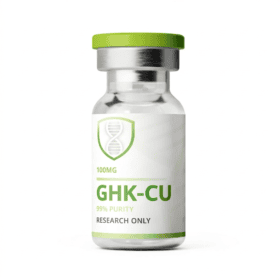
| GHK-Cu – 100mg | 50mg*10vials, 100mg*10vials |
|---|
1 review for GHK-Cu – 100mg
Customer photos and videos
 GHK-Cu – 100mg
Related products
All Peptides
All Peptides
All Peptides
All Peptides
All Peptides
All Peptides
All Peptides
All Peptides
Fifth order from Sino Research Peptide Manufacturer now and the semaglutide is consistently top quality. Sent my last batch to Janoshik and it came back at 99.1% purity. Shipped from their CHINA warehouse and arrived in 7 days to Texas. Paid with Bitcoin and the whole process was seamless. DAISY ZHANG is always quick to respond.