Peptide Research
What Is KPV10 Peptide? Benefits, Research & Safety Guide
KPV10 Peptide Benefits: Potential Uses, Mechanisms, Research, and Safety Considerations
If you’ve spent any time in peptide science forums or scrolling through longevity-focused corners of the internet, you’ve probably run into three letters that keep popping up: KPV. Sometimes it’s written as KPV-10. Sometimes it’s discussed alongside heavyweight peptides like BPC-157. And almost always, it’s discussed with a mix of curiosity and confusion.
That confusion is fair. KPV peptide research is still young, scattered across cell studies and animal models, and not yet translated into approved human treatments. So this guide is built to do one thing well: give you a clear, honest, well-organized picture of the KPV10 peptide benefits researchers are actually investigating, what scientists have found so far, how it’s thought to work, and where the real limitations are.
Think of this as the article you’d want a sharp, no-nonsense friend in biochemistry to write for you — someone who won’t hype up KPV10 peptide benefits, but also won’t bury the interesting parts under jargon. You can cross-reference much of the underlying science yourself through PubMed and the National Institutes of Health, which index the peer-reviewed studies this article draws on.
What Is KPV-10 Peptide?
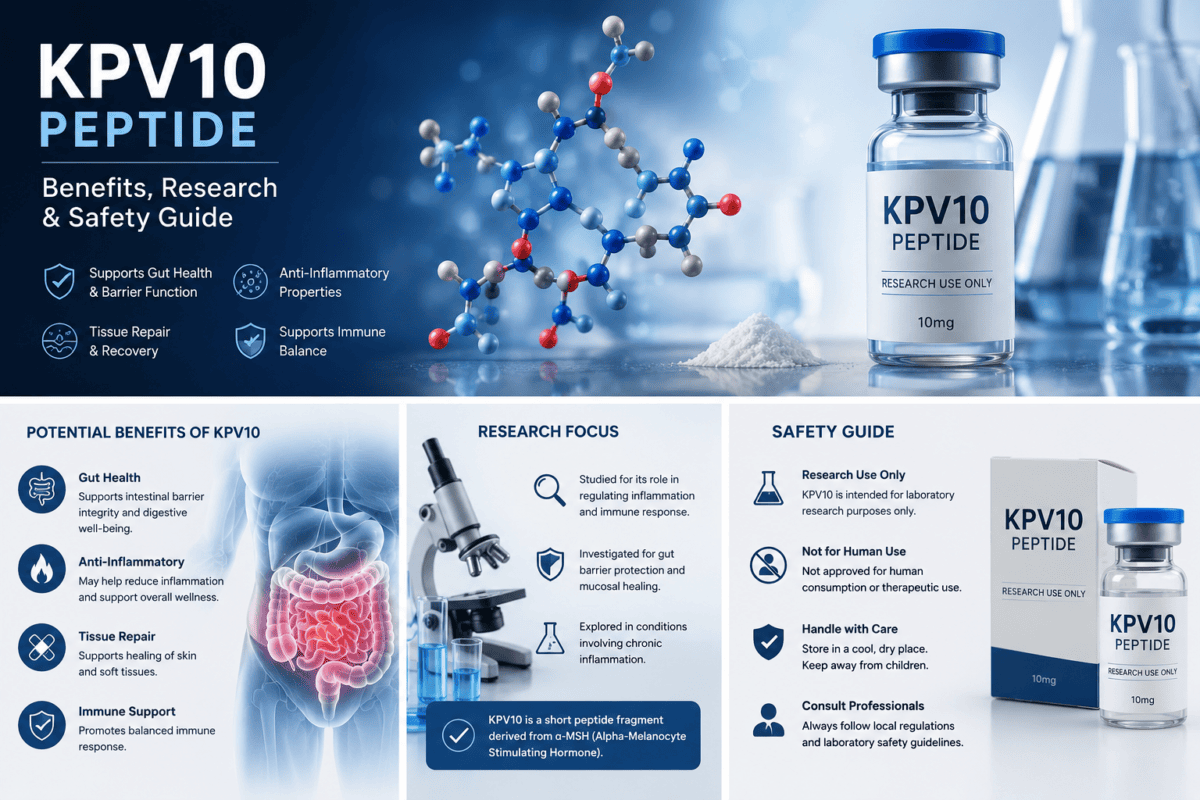
Let’s start with the basics. KPV is a short tripeptide — meaning it’s built from just three amino acids: lysine (K), proline (P), and valine (V). It’s derived from a larger, well-studied hormone called alpha-melanocyte-stimulating hormone (α-MSH).
Here’s the interesting part: α-MSH is known for regulating pigmentation, but researchers eventually discovered that its anti-inflammatory properties live almost entirely in this tiny three-amino-acid tail. Strip away the rest of the molecule, and KPV still retains a meaningful chunk of that anti-inflammatory signal — without the pigmentation effects.
KPV-10 typically refers to a specific formulation or sequence variant used in laboratory research settings. When people search “what is KPV10 peptide,” they’re usually asking about this exact distinction — is it the same as plain KPV, or something modified? In most contexts, KPV-10 is used interchangeably with KPV in early-stage research, though formulations can vary between suppliers, which is worth knowing if you’re comparing sources.
In short: KPV peptide explained simply — it’s a minimal, stripped-down fragment of a natural hormone, studied primarily for its anti-inflammatory signaling. Understanding this basic structure is the foundation for understanding KPV10 peptide benefits as they appear in the current research literature, which you can explore further via NCBI’s PubChem database.
The Backstory: How Scientists Found KPV
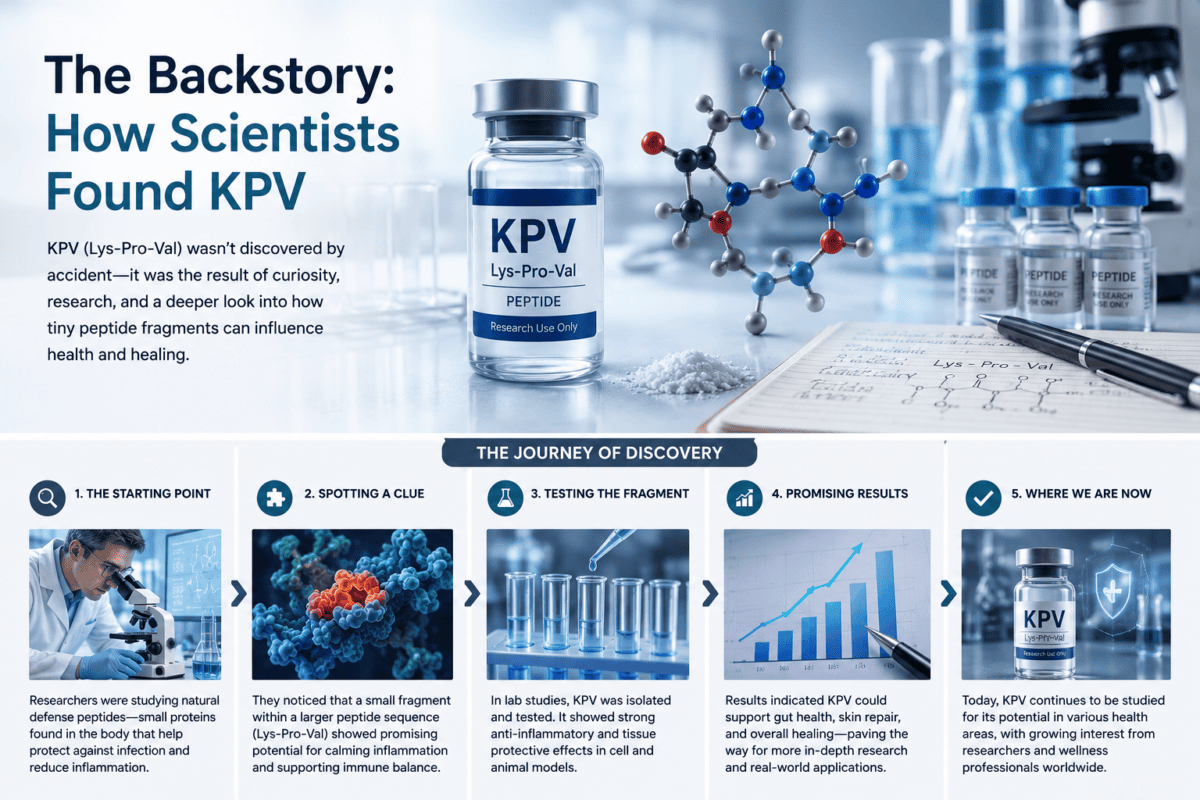
Every peptide has an origin story, and KPV’s is genuinely interesting.
Researchers studying α-MSH noticed something odd. Even after removing most of the hormone’s structure, a small leftover fragment — the C-terminal tripeptide, KPV — still triggered anti-inflammatory effects in immune cells. That was a big deal, because it suggested you didn’t need the whole hormone (with all its other effects) to get the calming influence on inflammation.
This is a common theme in peptide science: nature builds these long molecular chains, but often the “active ingredient” is hiding in a tiny segment. Scientists just have to go looking for it.
That discovery is what set off a wave of KPV-10 Peptide Benefits — mostly in petri dishes and animal models, mapping out exactly how this small peptide interacts with the immune system. It’s also the discovery that laid the groundwork for everything we now understand about potential KPV10 peptide benefits.
Proposed Mechanisms of Action: How KPV Peptide Works
So how KPV peptide works is really a question about the immune system’s inflammatory machinery, and it’s the key to understanding where the proposed KPV10 peptide benefits actually come from. Based on current research — some of which is catalogued through the NCBI Bookshelf — a few mechanisms have been proposed:
1. Melanocortin Receptor Interaction
KPV appears to interact with melanocortin receptors, particularly MC1R, which are expressed on various immune cells. This receptor family plays a role in modulating inflammatory responses. Activating this pathway is thought to be central to the KPV peptide mechanism of action.
2. NF-κB Pathway Modulation
A lot of inflammation in the body is orchestrated by a signaling pathway called NF-κB — think of it as a molecular alarm system that, once triggered, calls in inflammatory cytokines. Preclinical studies suggest KPV may dampen this pathway, effectively turning the volume down on that alarm.
3. Cytokine Regulation
Related to the above, laboratory studies have observed KPV influencing the production of pro-inflammatory cytokines (like TNF-alpha and IL-6) — the chemical messengers that drive swelling, redness, and tissue irritation.
4. Gut Epithelial Barrier Support
This is where a lot of the buzz around KPV peptide gut health research — and, by extension, discussions of KPV10 peptide benefits — comes from. In animal models of colitis, KPV has been studied for its potential role in supporting the intestinal lining and reducing markers of gut inflammation.
It’s worth pausing here to underscore something important: these are proposed and observed mechanisms in controlled lab and animal settings — not confirmed mechanisms of action in humans.
What the Research Actually Shows: KPV10 Peptide Benefits Under the Microscope
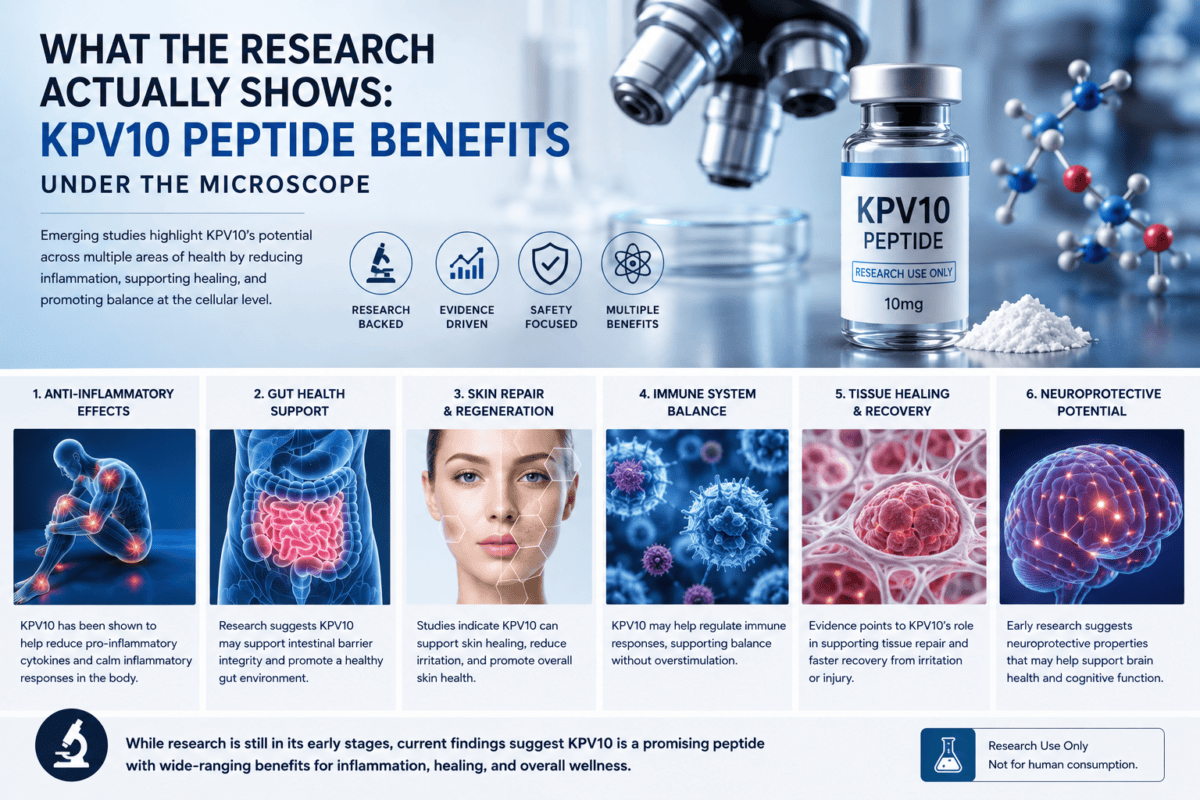
Let’s get specific about KPV10 peptide benefits, because vague claims are where a lot of peptide content goes wrong. You can browse the primary source studies referenced throughout this section directly on PubMed Central.
KPV and Intestinal Inflammation
Much of the foundational interest in KPV10 peptide benefits comes from KPV peptide intestinal inflammation studies, particularly a widely cited body of animal research examining colitis models. Researchers observed that KPV administration was associated with reduced inflammatory markers and improved tissue outcomes in these models.
As one peptide researcher summarized in a review of anti-inflammatory tripeptides, “fragments like KPV represent an elegant example of how minimal structural motifs can retain significant biological activity” — a sentiment echoed across several papers examining melanocortin-derived peptides.
KPV and General Anti-Inflammatory Activity
Beyond the gut, KPV anti-inflammatory research has extended into other inflammatory cell models, examining how the peptide behaves in the presence of inflammatory triggers at a cellular level. The consistent theme across these studies: KPV tends to correlate with reduced inflammatory signaling in the systems tested.
Where the Evidence Gets Thin
Here’s the honest part. Almost all of this research has occurred in:
- Cell culture (in vitro) models
- Rodent and animal models
- Early-stage preclinical settings
There is currently a lack of large-scale, peer-reviewed KPV peptide human studies. This matters enormously, because a lot of compounds that look promising in mice never replicate the same effect in humans — biology doesn’t always translate cleanly across species.
So when you see broad claims about KPV10 peptide benefits for humans, it’s worth mentally filing them under “KPV peptide preclinical research” rather than “established clinical benefit.” The ClinicalTrials.gov database is a useful way to independently check whether a peptide has moved into registered human trials yet.
Comparing KPV to Other Research Peptides
If you’ve been researching peptides for a while, you’ve likely encountered BPC-157, TB-500, and others. Understanding KPV vs other peptides helps put the discussion of KPV10 peptide benefits into proper context.
| Peptide | Primary Research Focus | Research Stage |
|---|---|---|
| KPV | Anti-inflammatory signaling, gut barrier studies | Preclinical (cell/animal) |
| BPC-157 | Tissue repair, gut healing | Preclinical (limited human data) |
| TB-500 | Tissue regeneration, wound models | Preclinical |
This side-by-side view is useful context for anyone weighing KPV10 peptide benefits against other early-stage research compounds before deciding where to focus their reading.
What Are the Benefits of Taking KPV and BPC-157 Together?
This is a frequently asked question, and it deserves a careful answer. Some researchers investigating gut-related inflammation have explored KPV and BPC-157 in combination within animal models, theorizing that their mechanisms — one more anti-inflammatory, one more tissue-repair oriented — could be complementary.
However, there isn’t robust, peer-reviewed human data confirming a synergistic effect between the two. Any claims of a specific combined benefit are extrapolations from separate lines of preclinical research, not a validated combination protocol.
Is KPV Peptide FDA Approved?
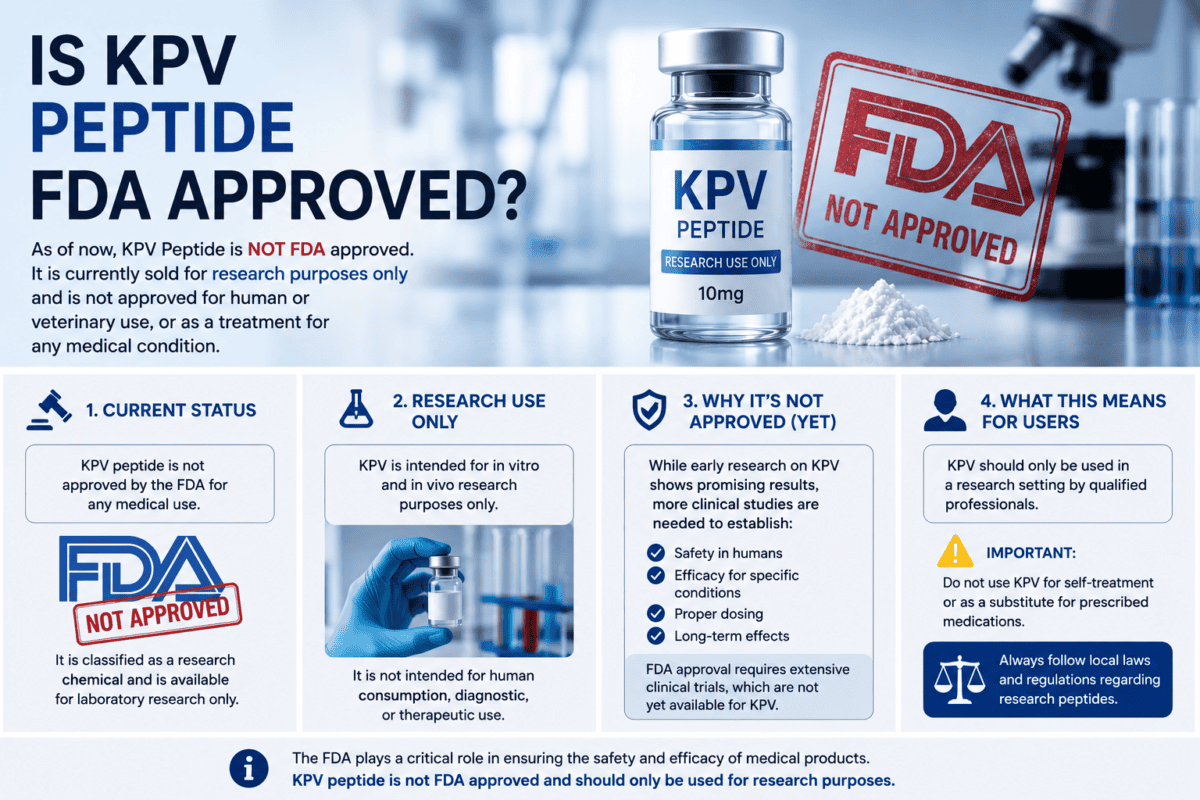
Let’s be direct, because this is one of the most searched and most important questions in this space, and it directly shapes how you should interpret any claimed KPV10 peptide benefits: no. KPV peptide is not FDA approved for any human therapeutic use. It is not an approved drug, supplement, or treatment. You can verify a compound’s approval status yourself using the FDA’s official drug database.
Currently, KPV and KPV-10 exist in a research classification — meaning any legitimate supplier should be distributing it strictly for laboratory and research purposes, not as a product intended for human consumption or self-administration.
This distinction matters for a few reasons:
- Regulatory oversight: FDA approval involves extensive human clinical trials evaluating safety and efficacy. KPV hasn’t gone through that process.
- Manufacturing standards: Research-grade compounds aren’t held to the same purity and quality controls as pharmaceutical-grade medications.
- Legal and safety implications: Using a research compound outside of a laboratory or clinical research setting carries risks that haven’t been formally studied or regulated.
KPV Peptide Safety: What Does the Research Say?
KPV10 peptide safety hasn’t been established through the kind of long-term, controlled human trials required to make confident safety claims, which is a critical caveat to any discussion of KPV10 peptide benefits. Here’s what’s genuinely known and unknown:
What preclinical research suggests:
- In animal studies, KPV has generally been well-tolerated within the specific study parameters tested.
- No major acute toxicity signals have been prominently reported in the peptide’s existing preclinical literature.
What remains unknown about KPV10 peptide benefits and risks:
- Long-term effects in humans
- Interactions with medications or existing health conditions
- Appropriate human dosing (since none has been clinically established)
- Effects in specific populations (pregnancy, chronic illness, immunocompromised individuals, etc.)
Who Should Not Take KPV Peptide?
Because KPV has not been evaluated through human clinical trials, there isn’t an established clinical answer to who should or shouldn’t use it — that determination simply hasn’t been made through the regulatory process that normally produces this kind of guidance. Anyone considering involvement with research peptides, especially those with existing health conditions, who are pregnant or breastfeeding, or who are on other medications, should have that conversation with a licensed healthcare provider rather than relying on peptide forums or supplier marketing.
What Is the Safest Peptide to Take?
This is a common question in peptide research communities, but it doesn’t have a single clean answer. “Safety” for any peptide is contextual — it depends on the research stage, dosing, formulation, purity, and individual health factors, none of which are standardized outside of clinical trial settings. Framing any unapproved research peptide, including KPV, as broadly “safe to take” would misrepresent where the science currently stands.
Common Questions About Using KPV (And Why We Can’t Answer Some of Them Precisely)
A lot of searchers land on this topic looking for practical specifics — dosing, timing, injection technique. In the interest of accuracy (and your safety), it’s important to be upfront: because KPV-10 has not completed human clinical trials, there is no established, validated human dosing protocol, injection site, or administration schedule.
That means questions like:
- How much KPV to take?
- Where is the best place to inject KPV peptide?
- When is the best time to take KPV peptide injection?
- Can I take KPV peptides every day?
- How long does KPV take to work?
…don’t have scientifically validated answers right now. Any specific numbers or protocols circulating online typically originate from anecdotal community use, not clinical research — and following them would mean self-experimenting with an unapproved compound outside of medical supervision. If you’re seriously considering research involvement with KPV, the responsible path is a conversation with a physician or a formal research/laboratory setting, not a forum thread.
How to Tell If Peptides Are “Working”
Since there’s no clinically validated protocol for KPV in humans, there’s also no clinically validated way to measure whether it’s “working” in an individual. In legitimate research settings, effects are measured through specific biomarkers, imaging, or controlled trial endpoints — tools that aren’t available or meaningful for casual self-monitoring.
How Much Does KPV Peptide Cost?
Pricing varies significantly between research suppliers based on purity, quantity, and formulation, and it fluctuates with the broader peptide market. Rather than citing a number that will likely be outdated or misleading, the more useful advice is this: price alone is a poor indicator of quality. Look for suppliers who provide third-party purity testing (like HPLC/mass spec certificates of analysis) — that’s a far more meaningful signal than cost.
Limitations of Current KPV Research
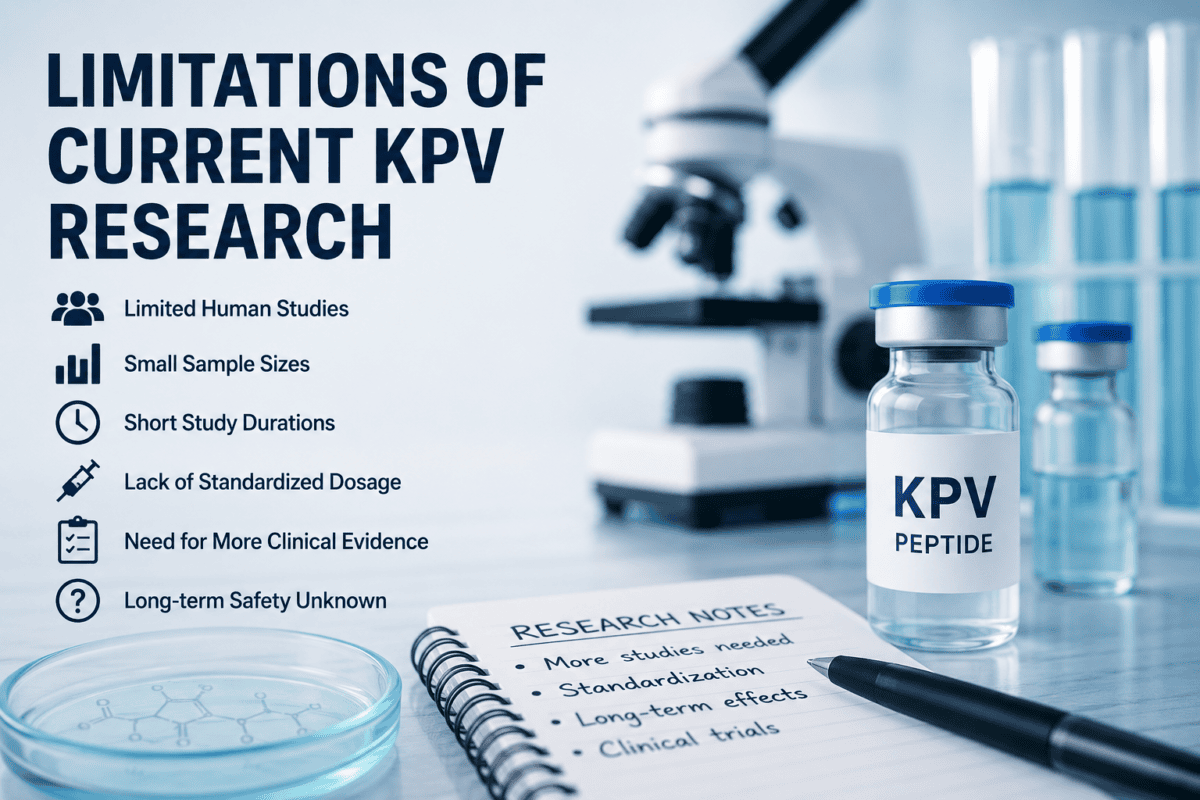
In the interest of giving you the full picture (not just the exciting parts), here are the honest limitations of where KPV peptide scientific evidence — and therefore any claimed KPV10 peptide benefits — currently stands:
- Small sample sizes in most animal studies
- No large-scale human clinical trials published to date
- Variability in study design, making it hard to compare results directly across papers
- Limited long-term data, even in animal models
- Formulation inconsistency across research suppliers, which can affect purity and results
None of this means KPV is uninteresting or that the mechanisms aren’t real — it means the science is still in its early innings. Preclinical promise is a genuinely important first step in peptide research, but it’s a different category from a validated human therapy.
Where KPV Research Might Be Headed
Looking forward, the trajectory for KPV peptide research studies — and the point at which KPV10 peptide benefits could move from preclinical promise to something more established — likely follows a familiar path for promising preclinical compounds, one you can track through registries like ClinicalTrials.gov and the NIH’s PubMed:
- Expanded animal models examining different inflammatory and gut-related conditions
- Mechanistic studies refining exactly how KPV interacts with melanocortin receptors and immune signaling
- Potential early-phase human trials, if preclinical data continues to hold up, though this can take years
- Formulation research, exploring stability, delivery methods, and bioavailability
Peptide science as a whole is accelerating, and short anti-inflammatory fragments like KPV represent a genuinely interesting area of study — but interesting and established are two different things.
The Bottom Line on KPV10 Peptide Benefits
Here’s the honest summary: the KPV10 peptide benefits discussed across research forums and supplier sites are, at this stage, a story written in preclinical research — cell studies and animal models pointing toward anti-inflammatory and gut-barrier-related mechanisms. That’s scientifically meaningful. It’s also not the same as a proven, FDA-approved human treatment, so any claim of established KPV10 peptide benefits in humans should be treated with healthy skepticism.
If you’re researching KPV10 peptide benefits because you’re genuinely curious about peptide science, this is a fascinating corner of the field to follow. If you’re researching KPV10 peptide benefits because you’re considering personal use, the responsible next step isn’t a dosing chart from a forum — it’s a conversation with a qualified healthcare provider or involvement in a legitimate research setting.
Science moves in careful steps for good reason. The full picture of KPV10 peptide benefits is still being written, and that’s exactly why it’s worth watching.
Further Reading and External Resources
For readers who want to dig into the primary literature and regulatory context behind this article, these external resources are good starting points:
- PubMed — searchable database of peer-reviewed biomedical literature
- PubMed Central (PMC) — full-text archive of life sciences research
- PubChem — chemical and molecular data on compounds like KPV
- ClinicalTrials.gov — registry of ongoing and completed human clinical trials
- U.S. FDA Drug Database — official approval status for pharmaceutical compounds
- National Institutes of Health — general biomedical research resources
This article is for educational and informational purposes only. KPV-10 is not FDA approved and is not intended for human use outside of qualified research settings. Nothing in this article constitutes medical advice, and it should not be used as a basis for self-administration or treatment decisions. Consult a licensed healthcare provider with any questions about your health.