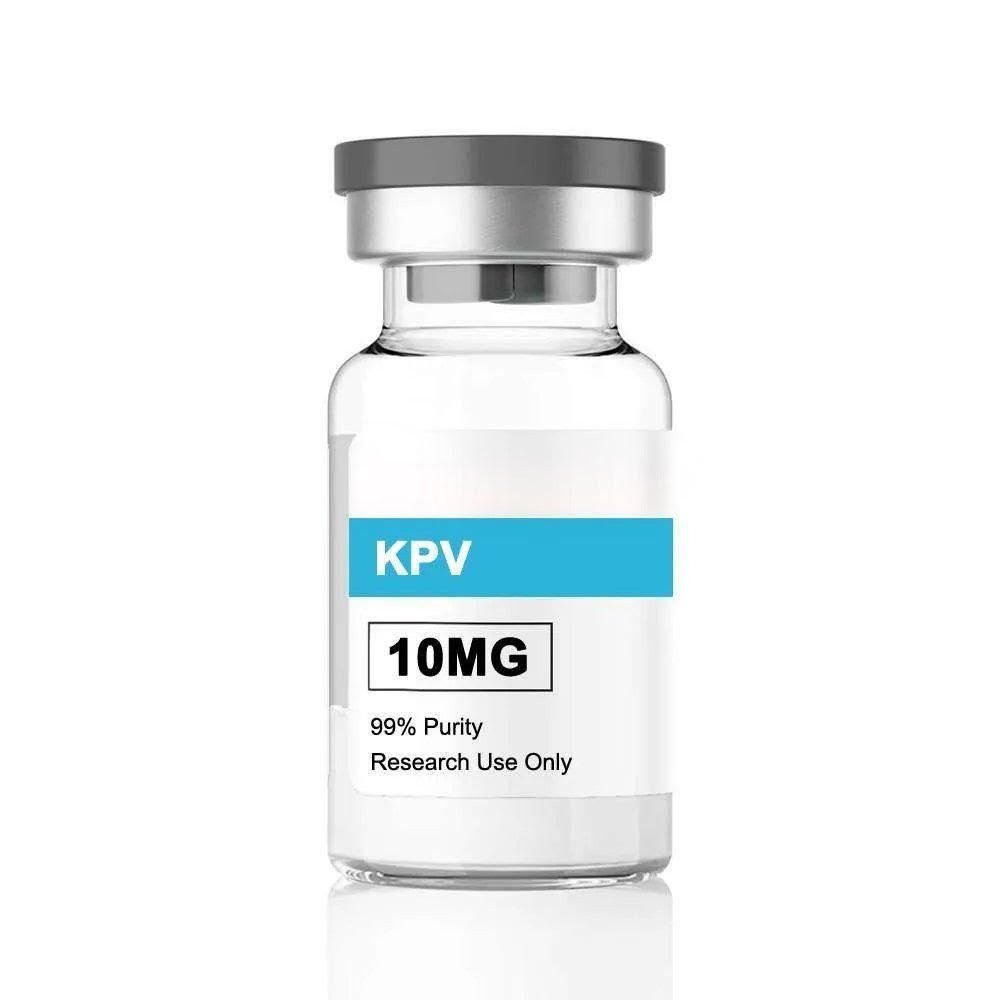
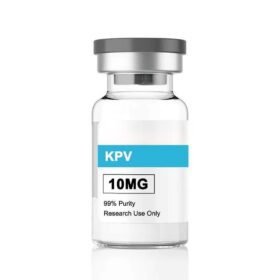
Buy KPV10 Peptide: Research-Grade α-MSH Fragment for Inflammation Studies
Looking for a trusted source to buy KPV10 peptide? Sino Research Peptide Manufacturer supplies high-purity KPV, formulated specifically for laboratory and research use. Below, you’ll find a full research overview of this alpha-MSH-derived tripeptide, along with everything you need to know before you buy KPV10 online.
What Is KPV Peptide?
Alpha melanocyte-stimulating hormone (α-MSH), also classified as a melanotropin, is an endogenous peptide hormone composed of 13 amino acids, considered to play a role in metabolic function and other biological processes. Scientists isolated a fragment of this protein hormone and identified its potential biological action, naming it KPV peptide.
KPV comprises three amino acids: lysine, proline, and valine. This tripeptide represents a C-terminal fragment of the α-MSH protein hormone, considered the primary amino acid sequence responsible for its properties.
A Brief Research History
A 1989 study first explained how researchers isolated this tripeptide and determined its biological potential. Upon discovering that the COOH terminal peptide in the α-MSH hormone is the primary amino acid messenger sequence, scientists conducted preliminary research to determine whether KPV might prevent excessive vasopermeability and swelling of blood vessels. As part of this study, researchers isolated KPV and presented it to experimental mice to determine its potential to mitigate ear swelling.
After completing the study, researchers reported that the isolated fragment appeared to inhibit swelling. KPV’s potential anti-inflammatory action may be induced by inactivating inflammatory pathways, and it may also possibly inhibit synthesis and release of pro-inflammatory cytokine cells in intestinal and immune cells.
Chemical Makeup
| Property | Detail |
|---|---|
| Molecular Formula | C16H30N4O4 |
| Molecular Weight | 342.43 g/mol |
| Other Known Titles | MSH (11-13), ACTH(11-13), alpha-MSH(11-13) |
What Is KPV Peptide Used For in Research?
Before you buy KPV10 peptide online, it helps to understand what current research suggests about its potential applications. Below, we break down the key study areas.
KPV Peptide and Intestinal Protection
One study examined KPV’s potential effect on intestinal inflammation in murine models induced with bowel dysfunction, divided into a peptide group and a placebo group. Researchers reported that peptide-exposed mice exhibited reduced inflammatory cells and anti-enzymatic symptoms.
A separate study exposed mice to a chemical-induced KPV compound combined with hyaluronic acid, intended to aid targeted peptide delivery to specific intestinal locations. Researchers observed mitigated intestinal swelling as a result.
KPV Peptide and Intestinal Cells
One study examined inflamed intestinal cell cultures exposed to either KPV or a placebo. Results indicated that even nanomolar concentrations of the peptide appeared to produce anti-inflammatory effects, with researchers suggesting KPV appeared to act mainly via PepT1 expression in these cells — indicating PepT1 may play a role in transporting the peptide to inflammation sites.
Another study explored KPV’s potential for addressing ulcerative inflammation of colonic mucosa cells. Researchers hypothesized KPV might mitigate inflammatory responses by accelerating mucosal healing and alleviating colonic mucosa inflammation, potentially through targeted delivery to inflamed colonic tissues. Researchers found KPV may have exhibited a capacity to protect mucosal surfaces and downregulate TNF-α, a key inflammation marker.
Further trials in two murine models of intestinal inflammation suggested KPV may lead to significant improvements, including earlier recovery, notable body weight regain, and reduced inflammatory infiltrates in colonic tissue. These outcomes were supported by a notable decrease in myeloperoxidase (MPO) activity, indicating reduced neutrophil accumulation and inflammation. Researchers also explored whether KPV’s anti-inflammatory actions linked to the melanocortin-1 receptor (MC1R), suggesting the peptide’s action might be at least partially independent of MC1R signaling.
A 1984 study examined KPV’s potential antipyretic action in rabbits, evaluating its effect on the nervous system. Researchers suggested the peptide exhibited antipyretic potential, reducing body temperature to optimal levels.
KPV Peptide and Inflammation Comparison Studies
A comparative analysis examined the potential of α-MSH and KPV on organ swelling, using mice with ear swelling induced by skin rashes and dermatitis. One group received an irritant followed by KPV exposure; the other received the irritant followed by α-MSH. After 24 hours, both groups showed apparently equal improvement in reducing ear swelling. After 2 weeks, once researchers ceased exposure to both compounds and continued only the irritant, the α-MSH group appeared to continue showing reduced swelling compared to the KPV group.
KPV Peptide and Wound Healing
Wound healing is a complex biological process comprising three general phases: inflammation, proliferation, and remodeling. Most cells involved in this process possess a melanocortin 1 receptor (MC1R), the same receptor where α-MSH binds — and researchers suggest α-MSH analogs, such as KPV, may also bind to these receptors.
One study explored KPV’s potential to enhance corneal epithelial wound healing, focusing on possible involvement of nitric oxide (NO). Following mechanical abrasion to the corneal epithelium, researchers exposed tissue to variable KPV concentrations and tracked epithelial wound healing through computerized software analysis. Findings suggested a potential acceleration in healing compared to placebo — within 60 hours, all KPV-exposed corneas appeared to achieve complete re-epithelialization, while none of the placebo corneas achieved full healing in the same period.
This accelerated healing effect was apparently hindered by pre-treatment with a nitric oxide synthase inhibitor, suggesting KPV’s facilitating impact on corneal healing might be linked to NO activity. Further in vitro experiments with corneal epithelial cells exposed to KPV reportedly showed stimulated cell viability at 1 and 10 μM concentrations, suggesting a broader reparative role that may involve NO dynamics.
KPV Peptide and Scar Formation Research
One study examined KPV’s potential in scar recovery using murine models, where half received KPV exposure before undergoing surgical incisions in dorsal skin, while the other half served as controls. Researchers analyzed wound healing and scar formation on days 3, 7, 40, and 60.
On days 3 and 7, KPV-exposed mice appeared to show improved skin healing, possibly due to reduced levels of inflammatory cells such as leukocytes and mast cells. By days 40 and 60, KPV-exposed mice exhibited a smaller scar area than the control group.
Where to Buy KPV10 Peptide Online
Where to Buy KPV Peptide
If you’ve been searching for where to buy KPV10 peptide, Sino Research Peptide Manufacturer offers a straightforward path to reliable, research-grade material. Every batch ships with purity verification, so you always know exactly what you’re working with.
KPV Peptide for Sale
We keep KPV peptide for sale, manufactured under strict, controlled laboratory conditions for consistent, reproducible research results. If you’ve been searching for KPV for sale online, our team is ready to support your research timeline.
Buy KPV10 Online
You can buy KPV10 online directly through our platform, with fast, tracked dispatch to laboratories and research institutions.
Important Research Notice
KPV peptide is available for research and laboratory purposes only. It is not intended for human or veterinary use. Please review and adhere to our Terms and Conditions before placing an order.
References:
- Dalmasso, G., Charrier-Hisamuddin, L., Nguyen, H. T., Yan, Y., Sitaraman, S., & Merlin, D. (2008). PepT1-mediated tripeptide KPV uptake reduces intestinal inflammation. Gastroenterology, 134(1), 166–178. https://doi.org/10.1053/j.gastro.2007.10.026
- Hiltz ME, Lipton JM. Antiinflammatory activity of a COOH-terminal fragment of the neuropeptide alpha-MSH. FASEB J. 1989 Sep;3(11):2282-4. https://pubmed.ncbi.nlm.nih.gov/2550304/
- Brzoska T, Luger TA, Maaser C, Abels C, Böhm M. Alpha-melanocyte-stimulating hormone and related tripeptides: biochemistry, antiinflammatory and protective effects in vitro and in vivo, and future perspectives for the treatment of immune-mediated inflammatory diseases. Buy KPV10 Peptide Endocr Rev. 2008 Aug;29(5):581-602. doi: 10.1210/er.2007-0027.Buy KPV10 Peptide Epub 2008 Jul 8. https://pubmed.ncbi.nlm.nih.gov/18612139/
- Klaus Kannengiesser, MD, Christian Maaser, MD, Jan Heidemann, MD, Andreas Luegering, MD, Matthias Ross, MD, Thomas Brzoska, PhD, Markus Bohm, MD, Thomas A. Luger, MD, Wolfram Domschke, MD, Torsten Kucharzik, MD, Melanocortin-derived tripeptide KPV has anti-inflammatory potential in murine models of inflammatory bowel disease, Buy KPV10 Peptide Inflammatory Bowel Diseases, Volume 14, Issue 3, 1 March 2008, Pages 324–331, https://doi.org/10.1002/ibd.20334
- Dalmasso G, Charrier-Hisamuddin L, Nguyen HT, Yan Y, Sitaraman S, Merlin D. PepT1-mediated tripeptide KPV uptake reduces intestinal inflammation. Gastroenterology. 2008 Jan;134(1):166-78. https://pubmed.ncbi.nlm.nih.gov/18061177/
- Xiao, B., Xu, Z., Viennois, E., Zhang, Y., Zhang, Z., Zhang, M., Han, M. K., Kang, Y., & Merlin, D. (2017). Orally Targeted Delivery of Tripeptide KPV via Hyaluronic Acid-Functionalized Nanoparticles Efficiently Alleviates Ulcerative Colitis. Molecular therapy : the journal of the American Society of Gene Therapy, 25(7), 1628–1640. https://doi.org/10.1016/j.ymthe.2016.11.020
- Kannengiesser K, Maaser C, Heidemann J, Luegering A, Ross M, Brzoska T, Bohm M, Luger TA, Domschke W, Kucharzik T. Melanocortin-derived tripeptide KPV has anti-inflammatory potential in murine models of inflammatory bowel disease. Inflamm Bowel Dis. 2008 Mar;14(3):324-31. doi: 10.1002/ibd.20334. PMID: Buy KPV10 Peptide 18092346.
- D.B. Richards, J.M. Lipton, Effect of α-MSH 11–13 (lysine-proline-valine) on fever in the rabbit, Peptides, Volume 5, Issue 4, 1984, Pages 815-817, ISSN 0196-9781, https://doi.org/10.1016/0196-9781(84)90027-5
- Luger, T. A., & Brzoska, T. (2007). alpha-MSH related peptides: a new class of anti-inflammatory and immunomodulating drugs. Buy KPV10 Peptide Annals of the rheumatic diseases, 66 Suppl 3(Suppl 3), iii52–iii55. https://www.ncbi.nlm.nih.gov/pmc/articles/PMC2095288/#!po=3.33333
- Brzoska T, Luger TA, Maaser C, Abels C, Böhm M. Alpha-melanocyte-stimulating hormone and related tripeptides: biochemistry, antiinflammatory and protective effects in vitro and in vivo, and future perspectives for the treatment of immune-mediated inflammatory diseases. Endocr Rev. 2008 Aug;29(5):581-602. https://pubmed.ncbi.nlm.nih.gov/18612139/
- Bonfiglio V, Camillieri G, Avitabile T, Leggio GM, Drago F. Effects of the COOH-terminal tripeptide alpha-MSH(11-13) on corneal epithelial wound healing: role of nitric oxide. Exp Eye Res. 2006 Dec;83(6):1366-72. doi: 10.1016/j.exer.2006.07.014. Buy KPV10 Peptide Epub 2006 Sep 11. PMID: 16965771.
- de Souza KS, Cantaruti TA, Azevedo GM Jr, Galdino DA, Rodrigues CM, Buy KPV10 Peptide Costa RA, Vaz NM, Carvalho CR. Improved cutaneous wound healing after intraperitoneal injection of alpha-melanocyte-stimulating hormone. Exp Dermatol. 2015 Mar;24(3):198-203. https://pubmed.ncbi.nlm.nih.gov/25431356/
1 review for kpv10
 kpv10
kpv10
Related products
All Peptides
AICAR
All Peptides
All Peptides
All Peptides
All Peptides
All Peptides
All Peptides
Ordered a handful of times now from Sino Research Peptide ManufacturerA, deliveries always fast and products always legit.