
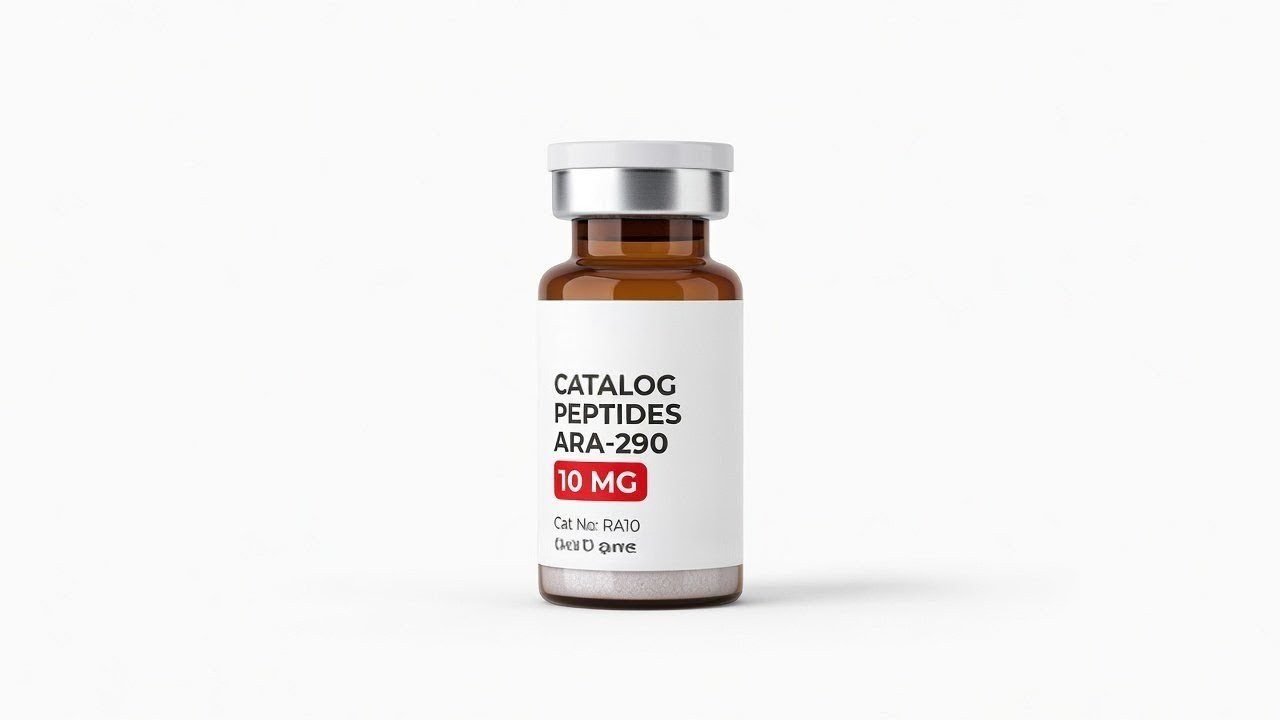
Ara-290
$70.00
ARA-290 brings a refined profile to research focused on tissue-protective signaling, inflammatory response pathways, and erythropoietin-receptor-related mechanisms. It is often positioned in laboratory models where cellular stress response, nerve-related signaling, and recovery pathway behavior are the central questions. Sophisticated, focused, and highly specialized. Designed for deeper insight into protection and repair signaling.
10mg*10vials
Buy ARA-290: Research-Grade Tissue-Protective Peptide
Looking for a trusted source to buy ARA-290? Sino Research Peptide Manufacturer supplies high-purity ARA-290 peptide, formulated specifically for laboratory and research use. Below, you’ll find a full research overview of this tissue-protective peptide, along with everything you need to know before you buy ARA-290 online.
What Is ARA-290 Peptide?
Do you want to buy ARA-290 peptide or know more about the product? also known as cibinetide and helix B surface peptide (HBSP) in scientific literature, is an 11 amino acid chain derived from the beta domain of the naturally occurring protein erythropoietin (EPO). Researchers consider this part of the EPO sequence to assist in tissue regeneration and repair, without stimulating red blood cell production.
While EPO’s primary function is to stimulate tissues to produce red blood cells, the beta domain of the protein — and consequently ARA-290 — doesn’t appear to possess this property. Instead, researchers believe ARA-290 may carry certain potential regenerative, anti-inflammatory, anti-nociceptive, and other lesser-known properties of the original EPO protein.
The Innate Repair Receptor Pathway
Scientific findings suggest that once tissue undergoes injury, a tissue-protective receptor (TPR) pathway may activate. This TPR mainly consists of a beta receptor unit (CD131) and a subunit from the EPO receptor, jointly called the innate repair receptor (IRR). Researchers have suggested that ARA-290 may bind to this innate repair receptor and possibly attenuate nerve and allodynia-led pain (nociception). It’s also suggested that ARA-290 may act primarily via this IRR-mediated pathway.
Chemical Makeup
| Property | Detail |
|---|---|
| Molecular Formula | C51H54N16O21 |
| Molecular Weight | 1257.3 g/mol |
| Other Known Titles | PH-BSP |
ARA-290 Peptide Benefits: What Does the Research Say?
Before you buy ARA-290 online, it helps to understand what current research suggests about its potential applications. Below, we break down the key study areas.
ARA-290 and Nociception
Scientists consider Transient Receptor Potential (TRP) channels the primary nociceptive stimulating channels, responding to thermal, chemical, and mechanical stimuli. When a causative agent triggers one of these channels — namely TRPV1 — it may induce neuropeptide release, which generates action potential in the nervous system. This action potential is known as “nociception.”
A 2016 study suggested ARA-290 may have the potential to increase the threshold of the TRPV1 channel, potentially inhibiting its actions so fewer neuropeptides release to spark a nociceptive response. Researchers studied C57/BL6 murine models, taking neurons from the dorsal root ganglion and trigeminal ganglion and examining them using calcium imaging.
The experiment measured how these neurons reacted to ARA-290, capsaicin (the compound that makes chili peppers hot), and KCl as a control. Researchers were particularly interested in whether ARA-290 could reduce neuron reactions to capsaicin. Direct tests on the murine models measured appendage sensitivity to nociception before and after capsaicin exposure, along with withdrawal frequency over 24 hours.
Findings suggested ARA-290 might specifically block neuron reactions to capsaicin without affecting other heat sensors — pointing to a TRPV1-specific target that might increase the amount of capsaicin needed to activate these channels. Researchers continue to actively study ARA-290’s possible role in nociception mitigation, alongside hypotheses about anti-inflammatory and immunomodulatory mechanisms.
ARA-290 and Retinal Ischemia
A recent study suggested ARA-290 may have the potential to protect endothelial blood vessels and combat retinal ischemia in models of ischemic retinopathies, potentially through restoration of endothelial colony-forming cells (ECFC) in retinal tissue. Researchers explored ARA-290’s potential to reduce pro-inflammatory conditions in the ischemic retina and its effects on ECFC-aided vascular regeneration.
Experimental murine models with induced retinal ischemia underwent ECFC transplantation, with some occurring in the presence of ARA-290 and others without. Research suggested ARA-290 might initiate survival pathways and improve ECFC survival under oxidative stress caused by H2O2.
Preliminary results indicated that introducing ECFCs with EPO or ARA-290 before transplantation didn’t significantly enhance blood vessel repair. However, systemic ARA-290 introduction in oxygen-induced retinopathy (OIR) mice seemed to lower pro-inflammatory cytokines like IL-1β and TNF-α in retinal tissue, hinting at possible anti-inflammatory properties. Notably, ARA-290 appeared to enhance the vaso-reparative capacity of ECFCs — a result not observed with EPO alone. Researchers concluded that regulating the pro-inflammatory environment of the ischemic retina with ARA-290 may offer a useful research agent for ECFC-based procedures in ischemic retinopathies.
ARA-290 and Inflammatory Cytokine Research
One study investigated whether ARA-290 possesses anti-inflammatory and cell-protective potential in pancreatic islet transplantation (PITx) models, which typically show limited success due to islet damage during isolation and severe inflammatory reactions from the transplantation procedure.
Researchers introduced ARA-290 to murine models right before transplantation, and again at 0, 6, and 24 hours after intervention. Peptide-exposed cells appeared to exhibit minimal islet damage, with researchers noting that ARA-290 protected islets from cytokine-induced damage and apoptosis. Secretion of pro-inflammatory cytokines (IL-6, IL-12, and TNF-α) from macrophages was significantly inhibited by ARA-290, alongside observed reductions in caspase 3/7 activity suggesting a protective effect against cytokine-triggered apoptosis.
ARA-290 also appeared to diminish proinflammatory cytokine production in the liver following pancreatic islet transplantation. Researchers believe the peptide engages the EPOR-βcR complex — formed by the erythropoietin receptor and beta-common receptor — initiating signaling events that may inhibit proinflammatory gene transcription and promote cellular survival. This process is theorized to involve activation of the PI3K-Akt and JAK2-STAT5 pathways, alongside reduced NF-κB-mediated gene transcription.
ARA-290 and Tissue Protection
Based on available research, ARA-290 is considered to have potential binding capacity to TPRs, which may help maintain tissue function while protecting against harmful inflammation and subsequent cellular and tissue death. Researchers have posited that ARA-290’s main potential advantage over endogenous erythropoietin is its ability to bind TPR receptor cells without further cardiovascular or muscular impact. This potential may help improve tissue regeneration, reduce tissue damage, and possibly promote better wound recovery while decreasing scar formation in experimental murine models.
ARA-290 and Immunomodulation via the TPR Pathway
Scientists posit that the TPR pathway, once stimulated, may express on various immunological cells, including macrophages. With ARA-290’s potential to bind TPR receptor cells, it may restrict release of certain inflammatory molecules such as interleukin-6 (IL-6), potentially leading to reduced severity of immuno-compromising conditions.
ARA-290 and Immunomodulation via Adaptive Immunity
Research suggests ARA-290 may potentially alter antigen presentation by dendritic cells, possibly altering adaptive immunity in test models. Owing to the peptide’s potential to “fine tune” immune cells, they may not reject transplanted bodies, potentially supporting successful transplantation experiments in laboratory models.
Where to Buy ARA-290 Online
ARA-290 for Sale
If you’ve been searching for ARA-290 for sale, Sino Research Peptide Manufacturer offers a straightforward path to reliable, research-grade material. Every batch ships with purity verification, so you always know exactly what you’re working with.
Where to Buy ARA-290 Peptide
Wondering where to buy ARA-290 peptide? Our streamlined ordering process gets research-grade material to your lab quickly, with fast, tracked dispatch to laboratories and institutions.
ARA-290 Peptide Buy Online
You can buy ARA-290 peptide online directly through our platform. Whether you’re placing your first order or restocking for an ongoing study, our team supports your research timeline with dependable, consistent supply.
Important Research Notice
ARA-290 peptide is available for research and laboratory purposes only. It is not intended for human or veterinary use. Please review and adhere to our Terms and Conditions before placing an order.
References:
- What is Erythropoietin? Home Health Network. https://www.hormone.org/your-health-and-hormones/glands-and-hormones-a-to-z/hormones/erythropoietin
- Brines M, Cerami A. The receptor that tames the innate immune response. Mol Med. 2012 May 9;18(1):486-96. https://pubmed.ncbi.nlm.nih.gov/22183892/
- Dahan, A., Dunne, A., Swartjes, M., Proto, P. L., Heij, L., Vogels, O., van Velzen, M., Sarton, E., Niesters, M., Tannemaat, M. R., Cerami, A., & Brines, M. (2013). ARA 290 improves symptoms in patients with sarcoidosis-associated small nerve fiber loss and increases corneal nerve fiber density. Molecular medicine (Cambridge, Mass.), 19(1), 334–345. https://www.ncbi.nlm.nih.gov/pmc/articles/PMC3883966/
- Jara-Oseguera, A., Simon, S. A., & Rosenbaum, T. (2008). TRPV1: on the road to pain relief. Current molecular pharmacology, 1(3), 255–269. https://doi.org/10.2174/1874467210801030255
- Zhang W, Yu G, Zhang M. ARA 290 relieves pathophysiological pain by targeting TRPV1 channel: Integration between immune system and nociception. Peptides. 2016 Feb;76:73-9. https://pubmed.ncbi.nlm.nih.gov/26774587/
- O’Leary OE, Canning P, Reid E, Bertelli PM, McKeown S, Brines M, Cerami A, Du X, Xu H, Chen M, Dutton L, Brazil DP, Medina RJ, Stitt AW. The vasoreparative potential of endothelial colony-forming cells in the ischemic retina is enhanced by cibinetide, a non-hematopoietic erythropoietin mimetic. Exp Eye Res. 2019 May;182:144-155. https://pubmed.ncbi.nlm.nih.gov/30876881/
- Watanabe M, Lundgren T, Saito Y, Cerami A, Brines M, Östenson CG, Kumagai-Braesch M. A Nonhematopoietic Erythropoietin Analogue, ARA 290, Inhibits Macrophage Activation and Prevents Damage to Transplanted Islets. Transplantation. 2016 Mar;100(3):554-62. https://pubmed.ncbi.nlm.nih.gov/26683514/
- Peng, B., Kong, G., Yang, C. et al. Erythropoietin and its derivatives: from tissue protection to immune regulation. Cell Death Dis 11, 79 (2020). https://doi.org/10.1038/s41419-020-2276-8
1 review for Ara-290
 Ara-290
Related products
All Peptides
All Peptides
All Peptides
All Peptides

All Peptides
All Peptides
All Peptides
All Peptides
Very reliable and always happy to order from Sino Research Peptide Manufacturer.
Always happy to communicate & very efficiently