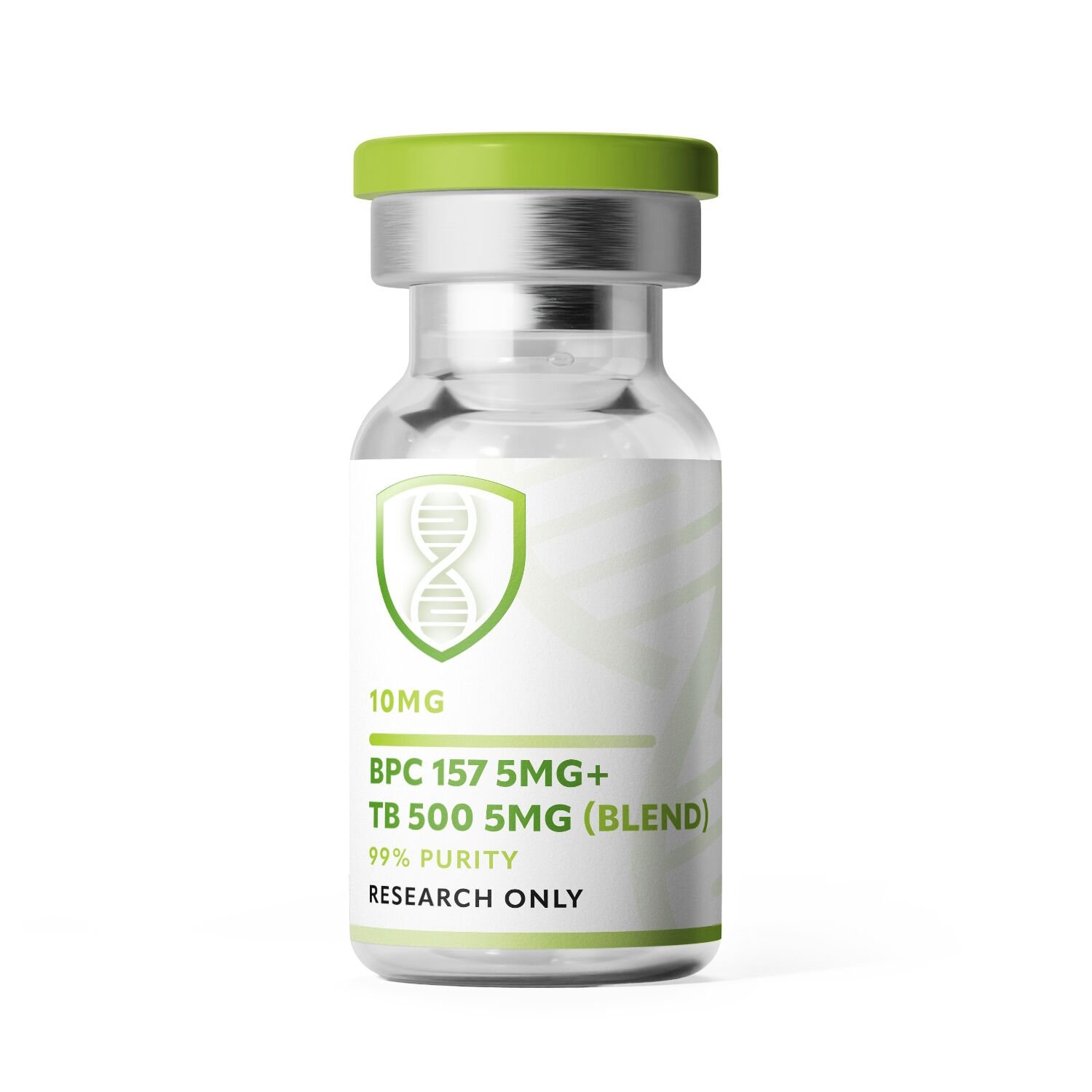
Buy BPC 157 and TB 500: Dual-Peptide Research Blend
Are you looking to buy BPC 157 and TB 500 together as a combined research formulation? Sino Research Peptide Manufacturer supplies a high-purity BPC-157 & TB-500 blend, pairing two of the most widely studied tissue-repair research peptides into a single product for laboratory investigations.
Below, we cover what each peptide contributes individually, what the combined research rationale looks like, and where to find this blend from a manufacturer that documents purity on every batch.
What Is the BPC-157 and TB-500 Peptide Blend?
This formulation combines BPC-157 (Pentadecapeptide BPC-157, or Body Protection Compound 157) with TB-500 (Synthetic Thymosin Beta-4, or TB-4). Both peptides are fully synthetic and widely studied in laboratory research for their potential roles in tissue healing, though each appears to work through distinct mechanisms. If you buyBPC-157 and TB-500 from Sino Research Peptide Manufacturer you are making the right decision.
BPC-157: A Brief Overview
Researchers speculate that BPC-157 engages with cellular communication routes tied to tissue rejuvenation and recuperation. Some studies suggest BPC-157 may encourage blood vessel formation and help regulate inflammation-related activity.(1) Experimental findings also point toward a potential role in safeguarding and regenerating various cells and tissues, with particular research interest in joint, tendon, muscle, and nerve tissue healing.
TB-500: A Brief Overview
Researchers have suggested TB-500 may assist the healing process following injury, especially in brain and neurological injury research. Other studies point toward wound healing and hair growth applications. As a synthetic variant of thymosin beta-4 — a peptide naturally found in thymus cells and encoded by the TMSB4X gene — TB-500 appears to modulate cell movement, differentiation, and tissue healing through various cellular signaling pathways. Research also suggests TB-500 may encourage angiogenesis alongside cellular and tissue renewal.(2)
Structurally, both peptides are synthetic polypeptides: TB-500 contains 43 amino acids, while BPC-157 contains 15.(3)(4)
TB 500 vs BPC 157: How Each Peptide Works
TB-500 Mechanism of Action
Research on Tβ4 suggests TB-500 may act on cellular motility by elevating actin protein levels. More specifically, it appears to regulate the actin-cytoskeleton and cellular migration by sequestering G-actin. A distinct amino acid segment — (17)LKKTETQ(23) — is hypothesized to drive actin binding and enhance cellular motility, which may support wound healing processes.(5)
TB-500 also appears to amplify microRNA-146a (miR-146a) levels, which may act as a repressive regulator for signaling routes tied to inflammation-related cytokines IRAK1 and TRAF6. Researchers noted that reversing miR-146a activity also reversed TB-500’s inhibitory effect on these cytokines, supporting this as a potential anti-inflammatory mechanism.(6)
BPC-157 Mechanism of Action
BPC-157 appears to exert action through nitric oxide production, tissue restoration cell control, growth elements, and inflammatory response regulation. Researchers suggest BPC-157 may engage with the NO mechanism, potentially safeguarding the endothelium and encouraging angiogenic behavior through new circulatory route development.
BPC-157 may also boost expression of the early growth response 1 gene, which could play a role in producing cytokines and growth stimuli, potentially aiding initial extracellular framework assembly, including collagen. Notably, BPC-157’s relationship with nerve growth factor 1-A binding protein-2 may exert inhibitory action on specific elements.(7) As a result, new collagen-based tissue may form, potentially enhancing wound healing speed.(8)
Why Researchers Combine Buy BPC-157 and TB-500
Since both peptides appear to exhibit similar pharmacological potential through different mechanisms, combining them may maximize their individual actions — potentially producing faster results than either peptide alone in experimental models.
Chemical Makeup
| Property | BPC-157 | TB-500 |
|---|---|---|
| Molecular Formula | C62H98N16O22 | C212H350N56O78S |
| Molecular Weight | 1419.5 g/mol | 4963 g/mol |
| Other Known Titles | Body Protection Compound-157 | Thymosin Beta-4 |
Research and Clinical Studies
No published research or clinical studies currently test Buy TB-500 and BPC-157 together in the same experiment or model. The findings below reflect studies on each peptide individually.
Tissue Repair Research
A 1999 study on Tβ4 examined experimentally wounded murine models, comparing saline-treated subjects against those presented with TB-500.(9) Four days in, TB-500-treated models showed a 41% increase in re-epithelialization. By day seven, TB-500 wounds had contracted at least 11% more than saline-treated wounds. The study authors concluded these results suggest Tβ4 functions as a potent wound healing factor with multiple activities.
A 2006 randomized, double-blind clinical trial tested TB-500 in 72 subjects with pressure ulcers.(10) One group received a placebo for 84 days, while the other received daily TB-500 at various concentrations for up to 84 days. By day 84, the TB-500 group showed signs of wound healing progress.
A separate BPC-157 study examined three murine models with acute or chronic wounds, divided into placebo and BPC-157 groups.(11) Histological examination showed the BPC-157 group had notably higher collagen and blood vessel formation compared to the placebo group.
Ligament Research
One study transected the medial collateral ligament (MCL) in murine models during surgery, then applied a fibrin sealing agent with or without TB-500.(12) Four weeks later, TB-500-treated tissue showed evenly formed, wider-spaced collagen cells compared to controls, along with improved mechanical properties in the regenerating femur-MCL-tibia complex.
Separate research suggests BPC-157 may aid connective tissue recovery by promoting tendon explant growth and enhancing cell resilience against oxidative stress — potentially linked to F-actin formation, as shown through FITC-phalloidin staining. BPC-157 also appeared to enhance tendon fibroblast movement and dispersion across culture plates. Western blot testing suggested BPC-157 may increase FAK and paxillin phosphorylation rates, even while total protein quantities remained constant, pointing toward a possible role for the FAK-paxillin signaling pathway.(8)
Muscle Research
A study on murine models with corticosteroid-induced gastrocnemius muscle damage compared placebo against daily BPC-157 treatment over 14 days.(13) The BPC-157 group showed complete muscle restoration and full functional ability, while the placebo group showed no improvement.
TB-500 research also points toward potential cardiac muscle cell regeneration effects. Studies suggest TB-500 may bolster myocardial resilience under low-oxygen conditions and foster angiogenesis that supports cardiac cell repair, potentially through cardiac fibroblasts transitioning into cardiomyocyte-like cells.(14) Murine coronary artery studies suggest TB-500 may elevate integrin-linked kinase (ILK) and protein kinase B activity in the heart, potentially boosting early cardiomyocyte survival and enhancing heart performance.(15) Researchers also suggest TB-500 may support myocardial and endothelial cell movement in the fetal heart, a capability that appears preserved in mature cardiomyocytes.
Where to Buy BPC 157 and TB 500
Best Place to Buy BPC-157 and TB-500
When you compare the best place to buy BPC-157 and TB-500, look for a supplier that documents batch purity, follows validated synthesis methods, and states clear research-use terms for both peptides in the blend.
Where to Buy BPC 157 and TB 500 at Sino Research Peptide Manufacturer
Sino Research Peptide Manufacturer builds each of these standards into every order. Whether your lab needs this blend for a single tissue-repair study or an ongoing research program, you can order with confidence in consistent quality.
Order the BPC-157 & TB-500 Blend Today
Ready to add this dual-peptide formulation to your research pipeline? Sino Research Peptide Manufacturer makes ordering simple, backed by rigorous internal quality checks on every batch.
BPC-157 & TB-500 Peptide Blend is available for research and laboratory purposes only. It is not intended for human or veterinary use. Please review and adhere to our Terms and Conditions before ordering.
References:
- Seiwerth, S., Milavic, M., Vukojevic, J., Gojkovic, S., Krezic, I., Vuletic, L. B., Pavlov, K. H., Petrovic, A., Sikiric, S., Vranes, H., Prtoric, A., Zizek, H., Durasin, T., Dobric, I., Staresinic, M., Strbe, S., Knezevic, M., Sola, M., Kokot, A., Sever, M., … Sikiric, P. (2021). Stable Gastric Pentadecapeptide BPC 157 and Wound Healing. Frontiers in pharmacology, 12, 627533. https://doi.org/10.3389/fphar.2021.627533
- Maar, K., Hetenyi, R., Maar, S., Faskerti, G., Hanna, D., Lippai, B., Takatsy, A., & Bock-Marquette, I. (2021). Utilizing Developmentally Essential Secreted Peptides Such as Thymosin Beta-4 to Remind the Adult Organs of Their Embryonic State-New Directions in Anti-Aging Regenerative Therapies. Cells, 10(6), 1343. https://doi.org/10.3390/cells10061343
- National Center for Biotechnology Information. “PubChem Compound Summary for CID 132558700, CID 132558700” PubChem, https://pubchem.ncbi.nlm.nih.gov/compound/132558700
- National Center for Biotechnology Information. “PubChem Compound Summary for CID 9941957” PubChem, https://pubchem.ncbi.nlm.nih.gov/compound/Bpc-157
- Gurtner GC, Werner S, Barrandon Y, Longaker MT. Wound repair and regeneration. Nature. 2008 May 15;453(7193):314-21. doi: 10.1038/nature07039. PMID: 18480812. https://pubmed.ncbi.nlm.nih.gov/18480812/
- Santra, M., Zhang, Z. G., Yang, J., Santra, S., Santra, S., Chopp, M., & Morris, D. C. (2014). Thymosin β4 up-regulation of microRNA-146a promotes oligodendrocyte differentiation and suppression of the Toll-like proinflammatory pathway. The Journal of biological chemistry, 289(28), 19508–19518. https://doi.org/10.1074/jbc.M113.529966
- Sikiric, Predrag et al. “Brain-gut Axis and Pentadecapeptide BPC-157: Theoretical and Practical Implications.” Current neuropharmacology vol. 14,8 (2016): 857-865. https://www.ncbi.nlm.nih.gov/pmc/articles/PMC5333585/#r1
- Chang, Chung-Hsun et al. “The promoting effect of pentadecapeptide BPC-157 on tendon healing involves tendon outgrowth, cell survival, and cell migration.” Journal of applied physiology (Bethesda, Md. : 1985) vol. 110,3 (2011): 774-80. doi:10.1152/japplphysiol.00945.2010. https://pubmed.ncbi.nlm.nih.gov/21030672/
- Katherine M. Malinda et.al, Thymosin β4 Accelerates Wound Healing, Journal of Investigative Dermatology, Volume 113, Issue 3, 1999, Pages 364-368, ISSN 0022-202X, https://www.sciencedirect.com/science/article/pii/S0022202X15405950
- Study of Thymosin Beta 4 in Patients With Pressure Ulcers. https://www.clinicaltrials.gov/ct2/show/NCT00382174
- S Seiwerth, et al. “BPC-157’s effect on healing.” Journal of physiology, Paris vol. 91,3-5 (1997): 173-8. doi:10.1016/s0928-4257(97)89480-6. https://pubmed.ncbi.nlm.nih.gov/9403790/
- Xu B, Yang M, Li Z, Zhang Y, Jiang Z, Guan S, Jiang D. Thymosin β4 enhances the healing of medial collateral ligament injury in rat. Regul Pept. 2013 Jun 10;184:1-5. doi: 10.1016/j.regpep.2013.03.026. https://pubmed.ncbi.nlm.nih.gov/23523891/
- Pevec D, Novinscak T, Brcic L, Sipos K, Jukic I, Staresinic M, Mise S, Brcic I, Kolenc D, Klicek R, Banic T, Sever M, Kocijan A, Berkopic L, Radic B, Buljat G, Anic T, Zoricic I, Bojanic I, Seiwerth S, Sikiric P. Impact of pentadecapeptide BPC-157 on muscle healing impaired by systemic corticosteroid application. Med Sci Monit. 2010 Mar;16(3):BR81-88. PMID: 20190676. https://pubmed.ncbi.nlm.nih.gov/20190676/
1 review for BPC 157 (5mg) +TB 500 (5mg) Blend 10mg*10vials
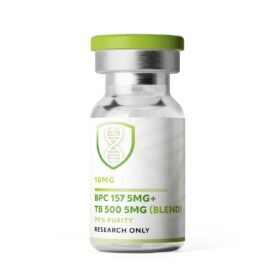 BPC 157 (5mg) +TB 500 (5mg) Blend 10mg*10vials
Related products
All Peptides
All Peptides
All Peptides
All Peptides
All Peptides
All Peptides
All Peptides
All Peptides
Ordered the BPC-157 and TB-500 research combo from Sino Research Peptide Manufacturer. Communication through email was excellent, she answered all my questions about dosing and storage within minutes. The package arrived in London in about 8 days with proper cold packs. COA was included in the shipment.