
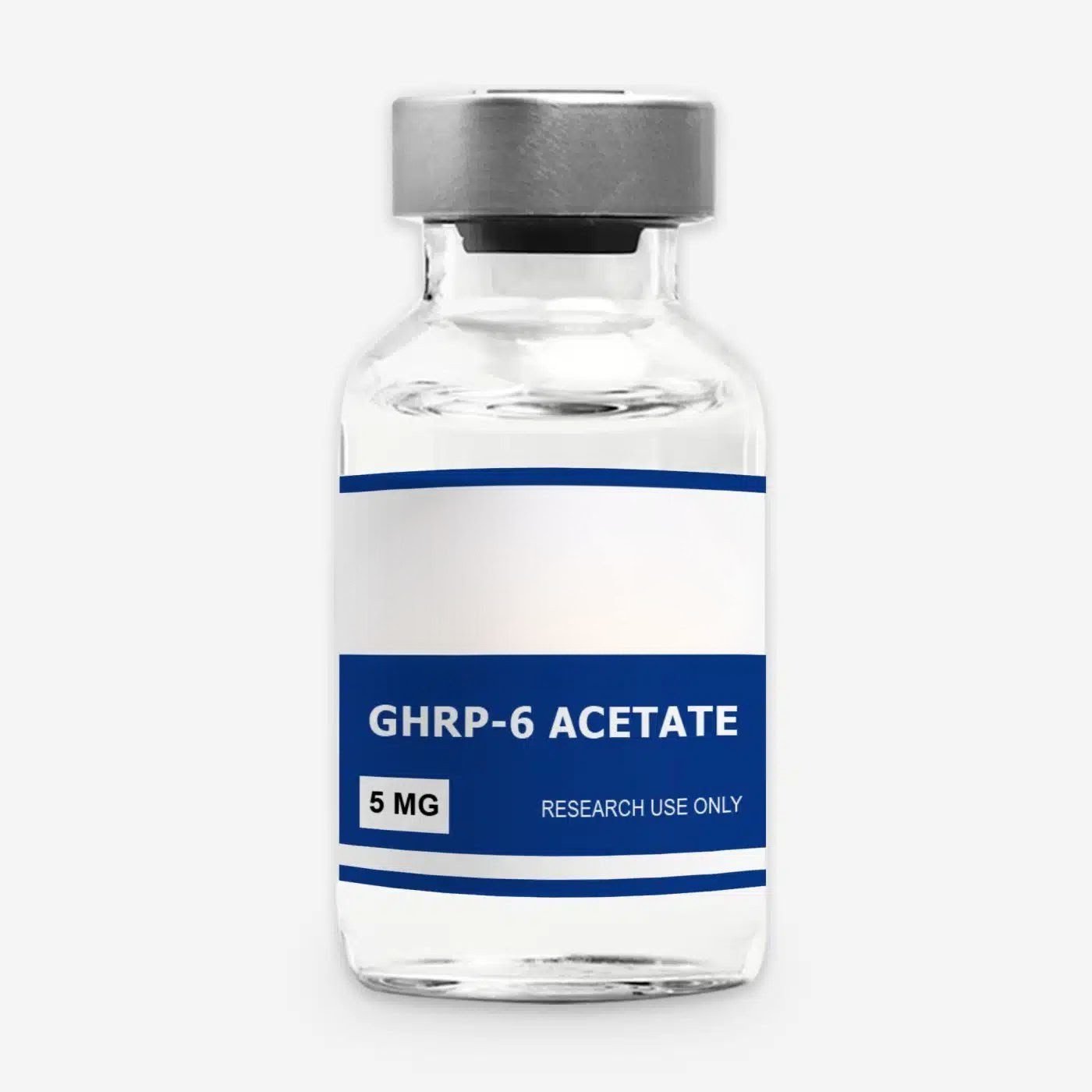
GHRP-6 Acetate
Price range: $30.00 through $33.00
GHRP-6 is a synthetic hexapeptide growth hormone secretagogue for laboratory and in vitro research. Supplied at >99% purity with a full third-party COA. For laboratory and in vitro research use only. Not for human consumption. Not a medicine
Buy GHRP-6: The Founding GH Secretagogue for Research
Looking to buy GHRP-6 for your lab? Sino Research Peptide Manufacturer supplies GHRP-6 at >99% HPLC-verified purity, complete with a batch-specific Certificate of Analysis (COA) and fast dispatch for laboratory and in vitro research use only.
What Is GHRP-6 Peptide?
Buy GHRP-6 (His-D-Trp-Ala-Trp-D-Phe-Lys-NH₂) is a synthetic hexapeptide and the original growth hormone releasing peptide — the founding member of the GHRP class. Its discovery in the early 1980s led directly to the identification of the ghrelin receptor (GHS-R1a) and the endogenous hormone ghrelin itself.
Researchers study Buy GHRP-6 for its dual GHS-R1a and CD36 receptor pharmacology, spanning GH and IGF-1 secretion, cardioprotection, cytoprotection, wound healing, anti-fibrotic signalling, NPY neuron biology, and gastrointestinal motility. This breadth makes it one of the most pharmacologically wide-ranging research peptides in the GHRP class.
The Discovery Peptide Behind the Ghrelin Receptor
Bowers et al. first developed GHRP-6 in the early 1980s as part of a systematic investigation into peptide analogues of met-enkephalin that retained GH-releasing activity without opioid activity. It became the first synthetic GH secretagogue ever characterised and has since served as the reference compound for the entire GHRP class.
Researchers originally called GHRP-6’s receptor the growth hormone secretagogue receptor (GHSR). However, once scientists discovered that ghrelin was the receptor’s natural endogenous ligand, they renamed it the ghrelin receptor. This reclassification highlights GHRP-6’s historical significance: its characterisation directly preceded and enabled the discovery of ghrelin itself.
Dual Receptor Pharmacology
GHRPs bind two different receptors that mediate their cytoprotective and other pharmacological properties: GHS-R1a and CD36. GHS-R1a mediates GH secretion, positive inotropic cardiac effects, and NPY neuron activation. CD36 binding activates prosurvival pathways including PI-3K/AKT1, reduces reactive oxygen species spillover, enhances antioxidant defences, reduces inflammation, and confers anti-fibrotic effects via PPARγ upregulation and TGF-β downregulation.
As the most extensively published founding GHRP in the scientific literature, GHRP-6 serves as the reference peptide against which all subsequent GHRPs — including GHRP-2, Ipamorelin, and Hexarelin — have been characterised.
How Does GHRP-6 Work?
GHRP-6’s pharmacology splits uniquely across two receptor systems — the ghrelin receptor (GHS-R1a) and the CD36 scavenger receptor — each conferring distinct and independently meaningful biological activity.
GHS-R1a Receptor Activation
GHRP-6 activates GHS-R1a via phospholipase C/diacylglycerol/PKC signalling, mobilising intracellular calcium in anterior pituitary somatotrophs to trigger GH vesicle fusion and exocytosis. It releases GH both in vivo and in vitro, and evidence suggests it acts as a functional somatostatin antagonist at the pituitary level — a mechanism that distinguishes it from the GHRH pathway and contributes to its synergistic GH-releasing effect when combined with GHRH analogues.
GHRH Co-Dependency for Maximal GH Release
In a key study, researchers administered a GHRH antagonist before GHRP-6 in healthy men, virtually eliminating the GH response — reducing the maximal GH increase from 33.8 ± 4.8 to 6.2 ± 1.8 µg/L. This finding demonstrates that endogenous GHRH is necessary for most of the GH response to GHRP-6 in humans, confirming it functions as a GHRH-amplifier at the hypothalamic level as well as a direct pituitary GHS-R1a agonist.
CD36 Receptor Binding
GHRP-6’s binding to CD36 activates prosurvival pathways including PI-3K/AKT1, reducing cellular death. The main biological properties mediated through CD36 include positive inotropic effects via calcium influx, anti-fibrotic effects via PPARγ upregulation followed by TGF-β, CTGF, and PDGF downregulation, anti-inflammatory effects via NFκB blunting, and cell survival via HIF-1α induction.
NPY Neuron and IGF-1/Akt Pathway Activation
Chronic systemic administration of GHRP-6 to normal adult rats increases IGF-1 mRNA and phosphorylated Akt (pAkt) levels in various brain regions, including the hypothalamus. GHRP-6 specifically stimulates NPY and IGF-1 mRNA synthesis and activates Akt in neuropeptide Y neurons of the arcuate nucleus, suggesting some effects involve local IGF-1 production and Akt activation in NPY neurons.
ACTH and Cortisol Co-Release
In both healthy controls and patients with type 1 diabetes mellitus, GHRP-6 produces significant ACTH and cortisol co-release alongside GH stimulation — a profile that distinguishes it from the selective GHS-R1a agonist Ipamorelin, which was developed specifically to eliminate these adrenal axis co-stimulations. This property makes GHRP-6 a valuable research tool for studying HPA axis interactions with the ghrelin receptor system.
Buy GHRP-6 Peptide Benefits and Research Applications
Researchers have studied GHRP-6 across a broader range of biological systems than any other GHRP-class peptide, including:
- GHS-R1a receptor binding, calcium signalling, and GH vesicle exocytosis studies
- GH and IGF-1 axis stimulation and GHRH co-dependency pharmacology
- ACTH and cortisol co-stimulation and HPA axis interaction
- CD36 scavenger receptor binding and PI-3K/AKT1 prosurvival pathway activation
- Cardiac protection, including ischaemia/reperfusion injury and post-MI models
- Wound healing, including closure kinetics and hypertrophic scar prevention
- Anti-fibrotic pathway research, including PPARγ upregulation and TGF-β1/CTGF suppression
- NPY neuron activation and hypothalamic Akt signalling
- Gastrointestinal motility research via GHS-R1a and motilin receptor interaction
- Atherosclerosis research via CD36 azapeptide analogue development
- Comparative GHRP-class research against Ipamorelin, GHRP-2, and Hexarelin
Buy GHRP-6 and Cardioprotection Research
GHRP-6 has demonstrated an ability to prevent and attenuate cardiac cell death and left ventricular failure across a variety of experimental scenarios. It activates both GHS-R1a and CD36 receptors in cardiac tissue, with CD36 playing a key role in supplying the myocardium’s major energy substrate. Agonistic CD36 binding protects against myocardial damage from ischaemia/reperfusion — notably, mice deficient in CD36 show complete loss of GHRP-6-mediated cardioprotection, confirming CD36 as an essential receptor for its cardiac effects.
Buy GHRP-6 and Wound Healing Research
In excisional full-thickness wound models in Wistar rats, topical GHRP-6 accelerated wound closure from the first 24 hours post-injury and significantly reduced proinflammatory and profibrogenic cytokines. In a rabbit ear hypertrophic scar model, it dramatically reduced the onset of exuberant scarring by activating PPARγ and downregulating fibrogenic cytokines. Researchers confirmed CD36 was abundantly expressed in wound granulation tissue, with RT-PCR data confirming GHRP-6’s modulation of TGF-β1, CTGF, and PPARγ gene expression at the wound site.
GHRP-6 and Anti-Fibrotic Pathway Research
RT-PCR analysis of GHRP-6-treated wounds confirmed significant reduction of TGFB1 and CTGF expression alongside significant elevation of PPARγ expression. This established a PPARγ-mediated antagonism of TGF-β1 signalling as a key mechanism of GHRP-6’s anti-fibrotic activity via CD36, positioning this pathway as an innovative research target for fibrotic disease.
GHRP-6 and Doxorubicin-Induced Cardiomyopathy Research
Research examining GHRP-6 co-administration with the chemotherapy agent doxorubicin found that GHRP-6 prevented the onset of dilated cardiomyopathy and heart failure alongside multiple organ damage. Sequential echocardiographic evaluation confirmed preservation of cardiac contractility and structural myocardial integrity, with preservation of mitochondrial physiology and reduced oxidative stress identified as key contributing mechanisms.
Buy GHRP-6 and Gastrointestinal Motility Research
Research confirms that GHRP-6 enhances neural contractile responses in the rabbit gastric antrum, partly through interaction with the motilin receptor on noncholinergic nerves and partly via a GHS-R subtype on cholinergic nerves. These findings distinguish GHRP-6 from ghrelin, which was found unable to induce contractions via the motilin receptor, positioning GHRP-6 as a uniquely valuable tool for studying the GI motility-ghrelin receptor interface.
GHRP-6 and CD36 Drug Discovery Research
The identification of GHRP-6 as a CD36 ligand has spawned an extensive azapeptide analogue medicinal chemistry programme, producing selective CD36 modulators that reduce macrophage-driven inflammation, mitigate atherosclerosis, inhibit pathological neovascularisation, and protect against ischaemia/reperfusion cardiac injury — with GHRP-6 serving as the foundational pharmacophore scaffold for this research direction.
What Do Studies Say About GHRP-6?
GHRP-6 carries one of the most extensive published research profiles of any synthetic peptide in the GH secretagogue class, with peer-reviewed literature spanning more than four decades.
The Discovery Peptide for the Ghrelin Receptor
GHRP-6 holds unique historical significance as the synthetic peptide whose characterisation led directly to the identification of the GHS receptor, later renamed the ghrelin receptor. This places GHRP-6 at the origin of an entire field of neuroendocrinology and positions it as an irreplaceable reference compound for GHS-R1a research.
The HPA Axis Research Profile
Studies comparing ghrelin, GHRP-6, and GHRH in patients with type 1 diabetes confirmed that GHRP-6 produces ACTH and cortisol release alongside GH stimulation — a profile shared with ghrelin but absent from Ipamorelin. This establishes GHRP-6 as the appropriate research tool when HPA axis co-stimulation alongside GHS-R1a activation is the experimental objective.
The GHRH Co-Dependency Research Model
The definitive study establishing GHRP-6’s dependence on endogenous GHRH for maximal GH release found that a GHRH receptor antagonist eliminated 82% of the GH response to GHRP-6, reducing AUC from 1701 ± 278 to 376 ± 113 µg·min/L. This finding established GHRP-6’s dual hypothalamic-pituitary mechanism, informing the scientific rationale for GHRH + GHRP combination research models.
Cytoprotective Evidence Base
A comprehensive review of the peer-reviewed literature concluded that GHRPs — with GHRP-6 as the founding and most extensively studied member — exhibit cytoprotective abilities across cardiac, neuronal, gastrointestinal, and hepatic cells through their dual GHS-R1a and CD36 pharmacology.
Foundational Pharmacophore for CD36 Drug Discovery
The CD36 scavenger receptor binds GHRP-6 and its analogues at the lysine-rich domain, with azapeptide GHRP-6 derivatives showing CD36 binding affinities in the 1–2 µM range. This binding mediates anti-angiogenic, anti-atherosclerotic, and cardioprotective activities independent of GHS-R1a, establishing GHRP-6 as the structural scaffold for an emerging CD36-focused drug discovery programme.
Key Cited Studies
- Bowers CY et al. (1984) — Endocrinology 114(5):1537–1545. DOI: 10.1210/endo-114-5-1537
- Pandya N et al. (1998) — J Clin Endocrinol Metab 83(2):401–405. PMID: 9543138
- Berlanga-Acosta J et al. (2017) — PMC5392015
- Mendoza Marí Y et al. (2016) — Plast Surg Int. PMC4854984
- Berlanga-Acosta J et al. (2024) — Front Pharmacol. DOI: 10.3389/fphar.2024.1402138
- Garcia-Ojalvo A et al. (2005) — PMID: 16218998
- Deghenghi R et al. (2001) — PMID: 12606621
- Proulx C et al. (2020) — PMC7432381
Where to Buy GHRP-6 Online
GHRP-6 for Sale
If you’ve been comparing suppliers for GHRP-6 for sale, Sino Research Peptide Manufacturer offers HPLC-verified material with full COA documentation per batch, so you always know exactly what you’re working with.
Where to Buy Legit GHRP-6
Researchers searching for where to buy legit GHRP-6 choose Sino Research Peptide Manufacturer for our third-party purity testing, batch-specific documentation, and consistent quality control across every order.
Buy GHRP-6 Acetate for Research
We supply GHRP-6 Acetate as a high-purity lyophilised powder, manufactured under strict, controlled laboratory conditions for consistent, reproducible research results.
Research Disclaimer
GHRP-6 is intended strictly for laboratory and in vitro research use. It is not intended for human consumption, veterinary use, or any medical or therapeutic application, and it has not been approved by any regulatory authority for use in humans or animals. All research citations on this page relate to pre-clinical studies and peer-reviewed pharmacological research and do not constitute a claim of safety or therapeutic efficacy. By purchasing, you confirm that you are a qualified researcher and that the product will be used solely within a controlled laboratory environment in compliance with all applicable laws, regulations, and institutional guidelines.
References:
- Rico M, Lorenzo MT, Pazo JA, Vega FV, De la Cruz LF. GHRP-6 in heifer and cow adenohypophisial cells separated by elutriation. J Physiol Biochem. 1999 Mar;55(1):33-9. PMID: 10494658.
- Berlanga-Acosta, Jorge et al. “Synthetic Growth Hormone-Releasing Peptides (GHRPs): A Historical Appraisal of the Evidences Supporting Their Cytoprotective Effects.” Clinical Medicine Insights. Cardiology vol. 11 1179546817694558. 2 Mar. 2017, doi:10.1177/1179546817694558. https://www.ncbi.nlm.nih.gov/pmc/articles/PMC5392015/
- Bowers, C.Y., et al (2012). Ghrelin: A history of its discovery. In Ghrelin in Health and Disaeas (pp. 1-35), Human press Inc. https://mayoclinic.pure.elsevier.com/en/publications/ghrelin-a-history-of-its-discovery
- Naushira Pandya, Roberta DeMott-Friberg, Cyril Y. Bowers, Ariel L. Barkan, Craig A. Jaffe, Growth Hormone (GH)-Releasing Peptide-6 Requires Endogenous Hypothalamic GH-Releasing Hormone for Maximal GH Stimulation, The Journal of Clinical Endocrinology & Metabolism, Volume 83, Issue 4, 1 April 1998, Pages 1186–1189. https://academic.oup.com/jcem/article-abstract/83/4/1186/2865313
- Popovic V, Damjanovic S, Micic D, Djurovic M, Dieguez C, Casanueva FF. Blocked growth hormone-releasing peptide (GHRP-6)-induced GH secretion and absence of the synergic action of GHRP-6 plus GH-releasing hormone in patients with hypothalamopituitary disconnection: evidence that GHRP-6 main action is exerted at the hypothalamic level. J Clin Endocrinol Metab. 1995 Mar;80(3):942-7. doi: 10.1210/jcem.80.3.7883854. PMID: 7883854. https://pubmed.ncbi.nlm.nih.gov/7883854/
| GHRP-6 Acetate | 5mg*10vials, 10mg*10vials |
|---|
1 review for GHRP-6 Acetate
Customer photos and videos
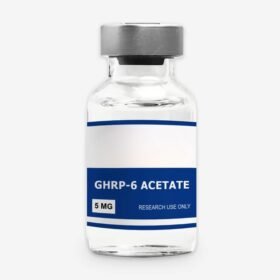 GHRP-6 Acetate
Related products
AICAR
All Peptides
All Peptides
All Peptides
All Peptides
All Peptides
All Peptides
All Peptides
The attention to packaging detail from Sino Research Peptide Manufacturer is something I really appreciate. Every peptide vial arrives individually vacuum sealed with cold packs maintaining proper temperature. My latest order of semaglutide and retatrutide was no exception. Paid with USDT and had tracking within 24hrs. This is premium service.