Peptide Research
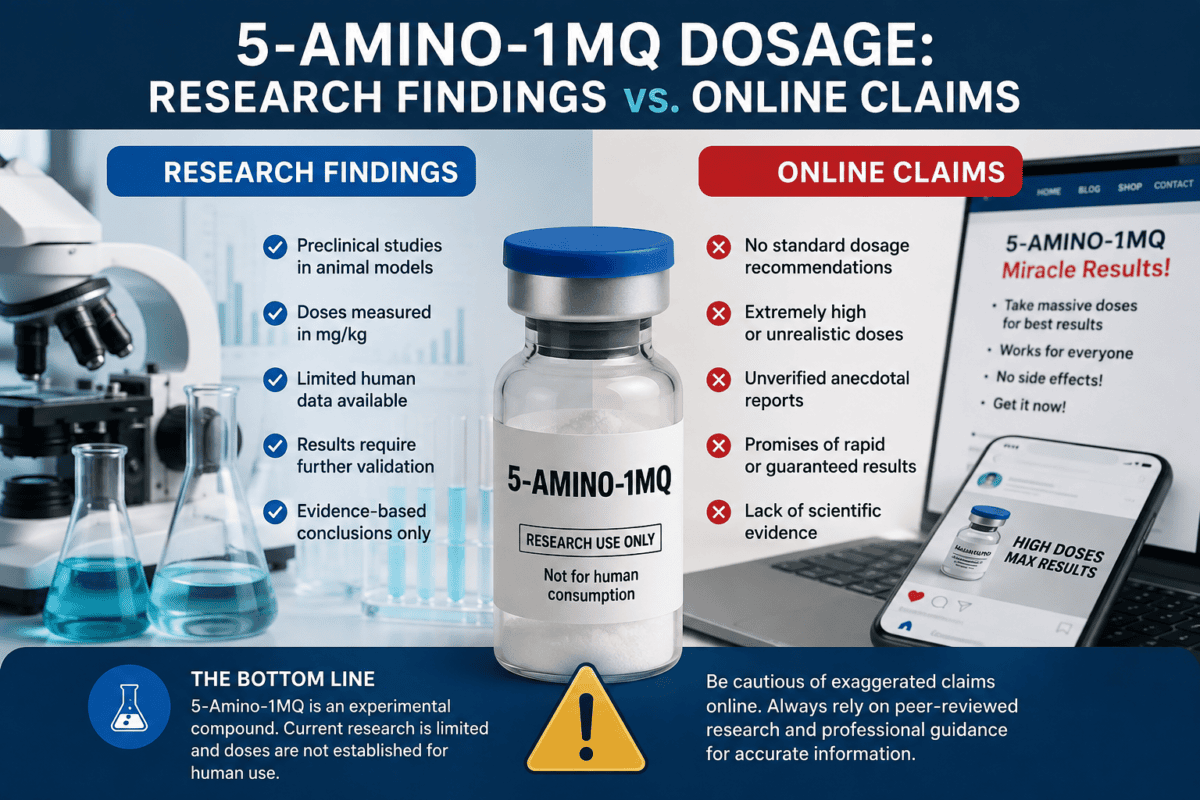
5-Amino-1MQ Dosage: Research Findings vs. Online Claims
5-Amino-1MQ Peptide Dosage: Research Dosing, Potential Effects, Safety, and What the Evidence Shows
Walk into any longevity forum, scroll through peptide subreddits, or eavesdrop on a metabolic research conference, and you’ll hear the same compound whispered again and again: 5-Amino-1MQ. It sits at the intersection of two fascinations gripping modern science—NNMT inhibition and metabolic reprogramming.
But here’s where things get murky. Search engines are flooded with confident-sounding “protocols,” dosage charts, and administration schedules for a compound that has never been formally approved for human therapeutic use. That gap between what people claim about 5-Amino-1MQ dosage and what peer-reviewed literature actually documents is exactly what this guide addresses.
This article is educational. It’s written for researchers, students, and curious readers who want the unvarnished picture of 5-Amino-1MQ preclinical research, not marketing copy dressed up as science.
What Is 5-Amino-1MQ?
5-Amino-1MQ (5-amino-1-methylquinolinium) is a small-molecule compound—not technically a peptide, despite being frequently grouped with peptides in online communities. It functions as a selective inhibitor of nicotinamide N-methyltransferase (NNMT), an enzyme that has attracted mounting scientific attention for its role in cellular metabolism, adipose tissue behavior, and NAD+ regulation.
Is 5-Amino-1MQ a Peptide or a Small-Molecule Compound?
Technically, it’s a small-molecule NNMT inhibitor, not a peptide. The “peptide” label stuck largely because it circulates through the same research supplier networks that distribute experimental peptides. So while phrases like 5-Amino-1MQ peptide dosage dominate search queries, the chemistry tells a different story—one closer to pharmacology than protein biochemistry.
How Does 5-Amino-1MQ Work?
The 5-Amino-1MQ mechanism of action hinges on NNMT inhibition. NNMT normally consumes S-adenosyl methionine (SAM) and nicotinamide, spitting out methylnicotinamide as a byproduct. When NNMT gets overexpressed—commonly observed in white adipose tissue of obese animal models—it disrupts methylation capacity and depletes precursors that would otherwise contribute to NAD+ synthesis.
By blocking NNMT, 5-Amino-1MQ may:
Preserve SAM pools for essential methylation reactions
Increase available nicotinamide for NAD+ salvage
Shift adipocyte metabolism toward energy expenditure rather than storage
Influence the “futile cycle” of methylation that appears elevated in metabolic dysfunction
Think of NNMT like a leaky faucet draining a water tank. 5-Amino-1MQ, in theory, tightens the valve.
If a website or seller implies otherwise — citing “clinical results” without linking a peer-reviewed human trial — that claim doesn’t hold up to scrutiny.
Animal vs. Human Evidence, at a Glance
| Evidence Type | Status | What It Tells Us |
|---|---|---|
| Rodent fat-mass studies | Published, peer-reviewed | Biological signal exists in mice |
| Rodent metabolic marker studies | Published, peer-reviewed | Mechanism (NNMT inhibition) is active in vivo |
| Rodent acute toxicity screening | Reported, limited scope | No severe short-term toxicity observed at tested exposures |
| Human pharmacokinetic data | Not published | Absorption, clearance, and half-life in people are unknown |
| Human safety/toxicity trials | Not conducted | No human safety profile exists |
| Human efficacy trials | Not conducted | No evidence of effect in people |
| FDA review | Not submitted / not approved | No regulatory determination of safety or efficacy |
The Origin Story: Where 5-Amino-1MQ Research Began
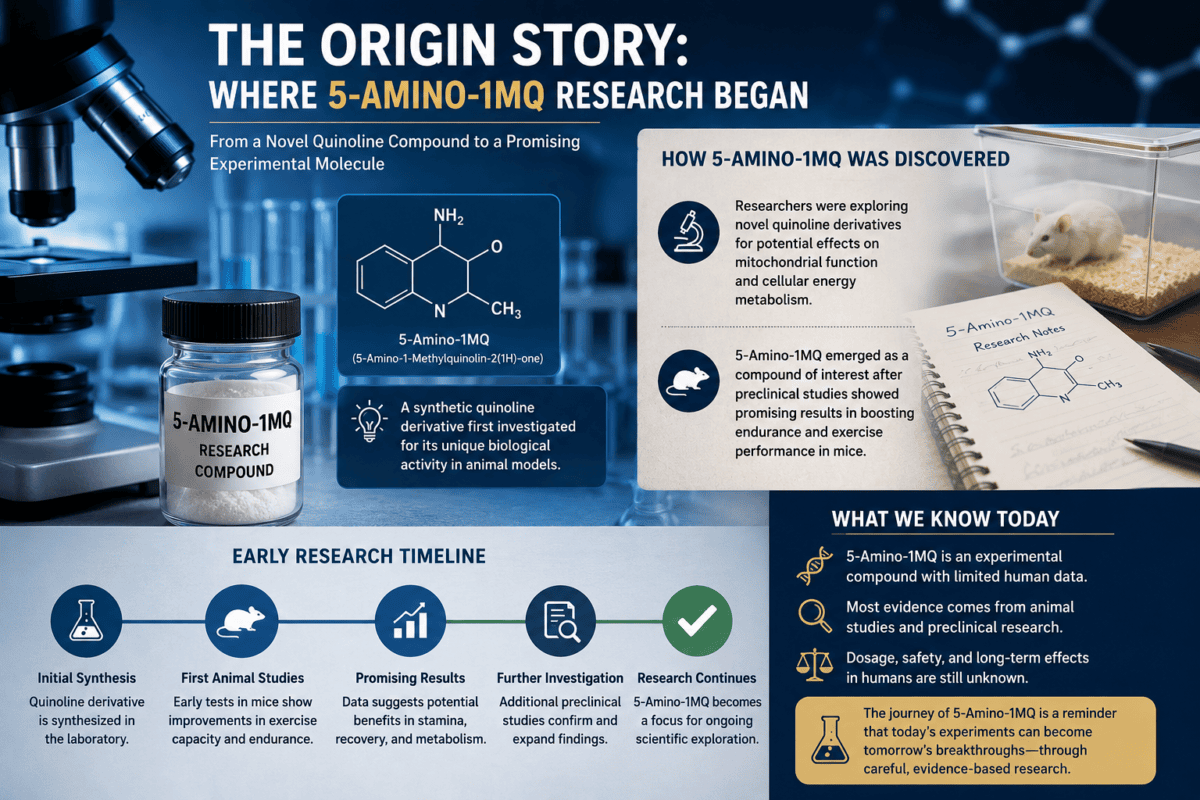
The compound’s rise traces back to a landmark 2018 study led by researchers at the University of Texas Southwestern Medical Center, published in Biochemical Pharmacology. That work demonstrated that oral administration of 5-Amino-1MQ in diet-induced obese mice reduced adipose tissue mass and improved metabolic markers—without altering food intake.
Since then, the compound has become a fixture in 5-Amino-1MQ animal studies exploring obesity, sarcopenia, and cellular aging pathways. Dr. Kyle Hoehn, one of the researchers involved in early NNMT inhibitor work, described the enzyme as “a promising metabolic target”—language that, notably, stops well short of endorsing human use.
What Does Research Say About 5-Amino-1MQ Dosage?
Here’s where readers deserve honesty: there is no established, human-validated dosing protocol for 5-Amino-1MQ. Full stop.
What exists is a body of 5-Amino-1MQ preclinical research—almost entirely in rodents—where investigators used defined experimental doses to probe biological effects.
A few reasons the conversion breaks down outside a formal trial setting:
- Metabolic rate differences. Mice process compounds much faster than humans, pound for pound, which is exactly why naive scaling overstates safety.
- Unknown human pharmacokinetics. Without human data, nobody actually knows how the compound is absorbed, distributed, metabolized, or cleared in people.
- No established safety margin. A dose that shows no toxicity in mice tells you very little about the margin of safety in a human body, especially with unknown long-term effects.
So when you see 5-Amino-1MQ research dosage figures presented online as if they’re a ready-to-use 5-Amino-1MQ peptide dosage, understand what they actually are: numbers pulled from mouse studies, dressed up as guidance.
Research-Stage Dosing vs. Human Therapeutic Dosing
| Preclinical (Animal) Research | Human Therapeutic Dosing | |
|---|---|---|
| Purpose | Test a biological hypothesis in a model organism | Deliver a safe, effective dose to real patients |
| How the amount is set | Chosen by researchers to produce a measurable lab signal | Established through Phase I–III clinical trials |
| Oversight | Institutional animal-research protocols | FDA review, clinical monitoring, informed consent |
| Individual variation accounted for | No — one model species, controlled diet/environment | Yes — age, weight, comorbidities, drug interactions |
| Currently exists for 5-Amino-1MQ? | Yes, in published rodent literature | No |
5-Amino-1MQ Safety: What’s Known and What Isn’t
Is 5-Amino-1MQ safe, and is there a safe 5-Amino-1MQ peptide dosage? The honest answer is that neither has been established in humans.
What we can say:
- Animal studies at the doses tested didn’t report severe acute toxicity — but “not acutely toxic in mice” is a very different statement than “there’s a safe 5-Amino-1MQ peptide dosage for long-term human use.”
- No published research covers 5-Amino-1MQ long-term safety in any species over extended periods.
- No human trials means no data on drug interactions, contraindications, or side effects in people with existing health conditions.
- 5-Amino-1MQ side effects in humans are, at this point, unknown rather than mild or absent — there simply isn’t the data to characterize them.
What Doses of 5-Amino-1MQ Have Been Used in Animal Studies?
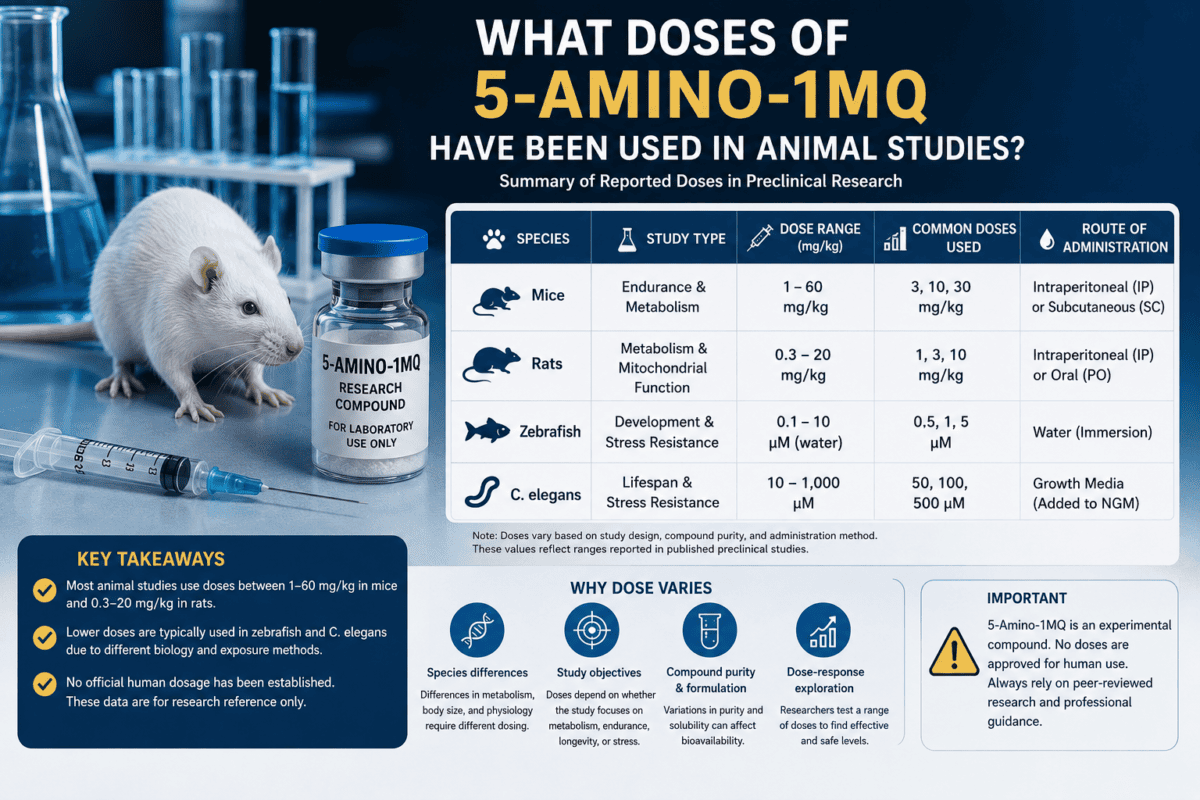
In the pivotal Neelakantan et al. (2018) study, mice received oral 5-Amino-1MQ at approximately 20 mg/kg per day for 11 days. Other rodent investigations have used ranges from roughly 5 mg/kg to 20 mg/kg, administered orally or via intraperitoneal injection depending on the study design.
These are research dosages—chosen to elicit measurable biological signal in controlled laboratory conditions. They are not therapeutic recommendations.
How Is 5-Amino-1MQ Studied in Research Settings?
In the preclinical research that has been published, the compound has been administered to animal subjects by researchers in controlled laboratory conditions, as part of studies designed to observe biological pathways — not as a template for a personal 5-Amino-1MQ peptide dosage. Details of frequency and duration vary by study design and are reported in the primary literature for other researchers to evaluate, replicate, or build on.
Putting It All Together
Here’s the balanced picture:
| Reasonably Well-Supported | Not Yet Known |
|---|---|
| 5-Amino-1MQ is a genuine, published subject of NNMT-inhibitor research | Whether these effects occur in humans at all |
| Mouse studies show measurable effects on fat mass and metabolic markers | What a safe or effective human dose would be |
| The mechanism (NNMT inhibition) is biologically plausible and worth further study | Long-term safety, side effects, or interactions in people |
| Rodent studies report no severe acute toxicity at tested exposures | Any FDA-reviewed efficacy or safety data |
If you’re researching 5-Amino-1MQ peptide dosage — whether as a student, a peptide-science enthusiast, or someone trying to make sense of what you’ve read online — the most useful thing you can do is treat animal-study findings as a hypothesis awaiting human testing, not as a settled answer. That’s not a knock on the science; it’s just where the science currently stands.
How Is 5-Amino-1MQ Administered in Research?
5-Amino-1MQ administration in laboratory settings has typically involved:
Oral gavage (the most common route in rodent studies)
Intraperitoneal injection (in some pharmacokinetic experiments)
Dietary incorporation (mixed into chow for chronic exposure studies)
Online communities occasionally mention capsules or subcutaneous protocols, but those descriptions reflect self-experimentation, not validated clinical methodology.
How Often Is 5-Amino-1MQ Studied in Preclinical Research?
Most rodent studies use daily administration across periods ranging from 10 days to several weeks. Frequency in research reflects experimental design—not a 5-Amino-1MQ dosing schedule meant for humans.
Can Animal 5-Amino-1MQ Doses Be Converted to Human Doses?
This is one of the most common—and most misunderstood—questions circulating online. The short answer: not reliably.
Researchers sometimes use body surface area (BSA) conversion formulas, like the Reagan-Shaw equation, to estimate human-equivalent doses (HED). Applying that formula to 20 mg/kg in mice would theoretically translate to roughly 1.6 mg/kg in humans—but this calculation is a rough starting point for hypothetical clinical trial design, not a green light for consumption.
Interspecies scaling ignores critical variables:
. Differences in absorption and bioavailability
. Species-specific NNMT expression patterns
. Hepatic metabolism variation
. Off-target effects at chronic exposures
. Long-term toxicity signals not captured in short rodent studies
The 5-Amino-1MQ research dosage used in mice tells us something biologically interesting. It does not tell us what dose is safe or effective in humans.
Has 5-Amino-1MQ Been Studied in Humans?
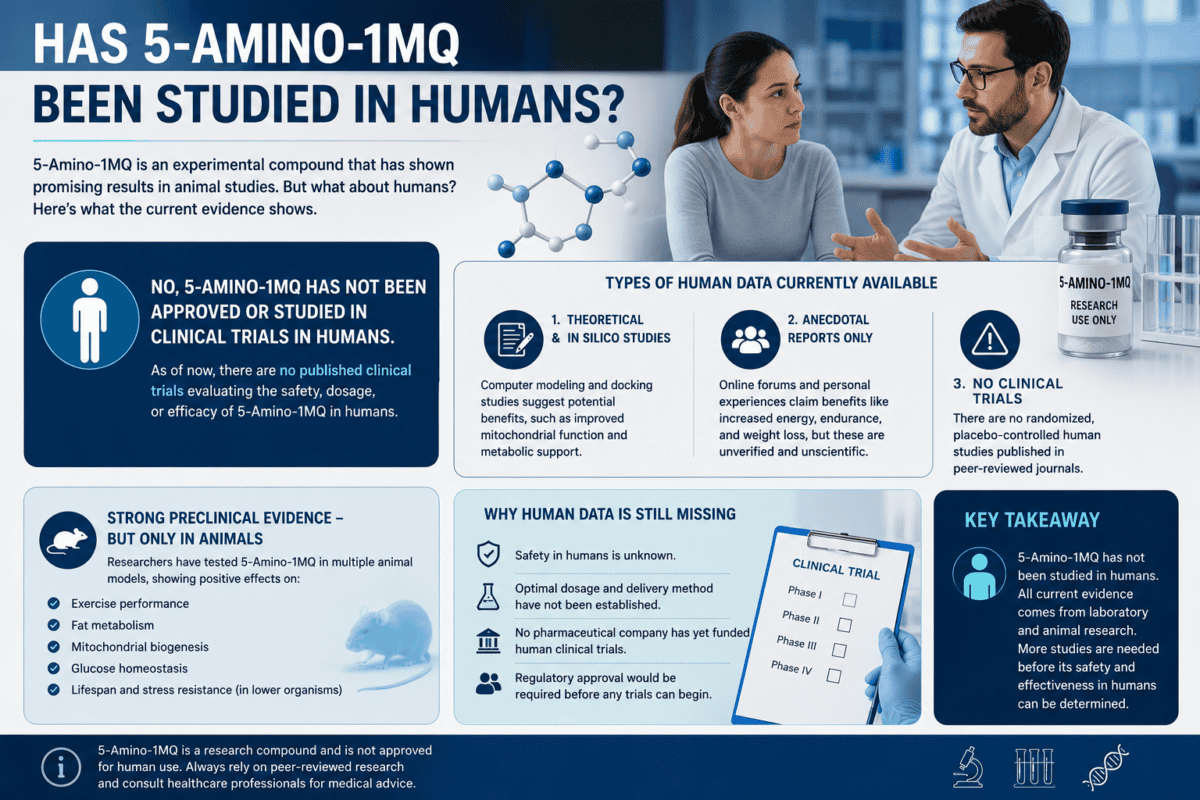
As of current publicly available literature, there are no completed, published human clinical trials on 5-Amino-1MQ. The compound has not progressed through formal Phase I safety trials in the way FDA-approved medications must.
Is 5-Amino-1MQ FDA Approved?
No. 5-Amino-1MQ is not FDA approved for any human indication. It is sold and distributed strictly as a research chemical for laboratory investigation. Any online claim about “5-Amino-1MQ human studies” showing dramatic weight loss should be scrutinized carefully—anecdotal reports on forums are not clinical trials.
Has 5-Amino-1MQ Dosage Been Studied in Humans?
Not in peer-reviewed, published, controlled trials. Some early-stage biotechnology companies have expressed interest in NNMT inhibitors as therapeutic candidates, but investigational new drug (IND) programs, if any exist, have not produced publicly accessible dosing data comparable to what exists for approved medications.
The Effects Preclinical Research Has Documented
Because human data is absent, everything below reflects findings in 5-Amino-1MQ animal studies—primarily rodents on obesogenic diets.
5-Amino-1MQ Weight Loss Research
The most cited finding: obese mice treated with 5-Amino-1MQ showed reductions in fat mass and body weight without corresponding changes in food consumption. This has fueled speculation about metabolic recomposition potential.
5-Amino-1MQ Metabolism Research
Rodent data suggests improvements in insulin sensitivity, glucose handling, and adipose tissue gene expression profiles associated with energy expenditure. Some studies also observed favorable shifts in white-to-brown adipose tissue characteristics.
5-Amino-1MQ Body Composition Research
Animal research suggests 5-Amino-1MQ may influence muscle-fat ratios, with additional interest emerging around sarcopenia models where NNMT inhibition might preserve muscle stem cell function during aging.
5-Amino-1MQ Metabolic Health Research
NNMT sits upstream of NAD+ metabolism, methylation dynamics, and adipocyte signaling. Investigating 5-Amino-1MQ NNMT benefits allows researchers to isolate NNMT’s role in these interconnected pathways.
5-Amino-1MQ Safety: What We Know and What We Don’t
5-Amino-1MQ safety is perhaps the most underexplored aspect of the compound’s profile—and the area where online discourse dramatically outpaces evidence.
5-Amino-1MQ Human Safety Data
There is essentially none in the public domain. Without controlled human trials, we lack:
. Verified adverse event frequencies
. Drug-drug interaction profiles
. Chronic exposure toxicity data
. Population-specific safety signals (pregnancy, hepatic impairment, etc.)
Potential Side Effects Discussed in Preclinical Contexts
Rodent studies have not reported dramatic acute toxicity at the doses tested, but that observation carries heavy caveats. Short-duration animal trials cannot rule out:
. Long-term methylation disruption
. Endocrine consequences
. Cardiovascular effects at sustained exposure
. Interactions with common medications
Is 5-Amino-1MQ Safe for Human Use?
The honest scientific answer: unknown. Compounds that look promising in mice frequently fail human trials due to unforeseen toxicity or lack of efficacy. 5-Amino-1MQ long-term safety in humans has never been characterized in controlled conditions.
How Long Does 5-Amino-1MQ Stay in the Body?
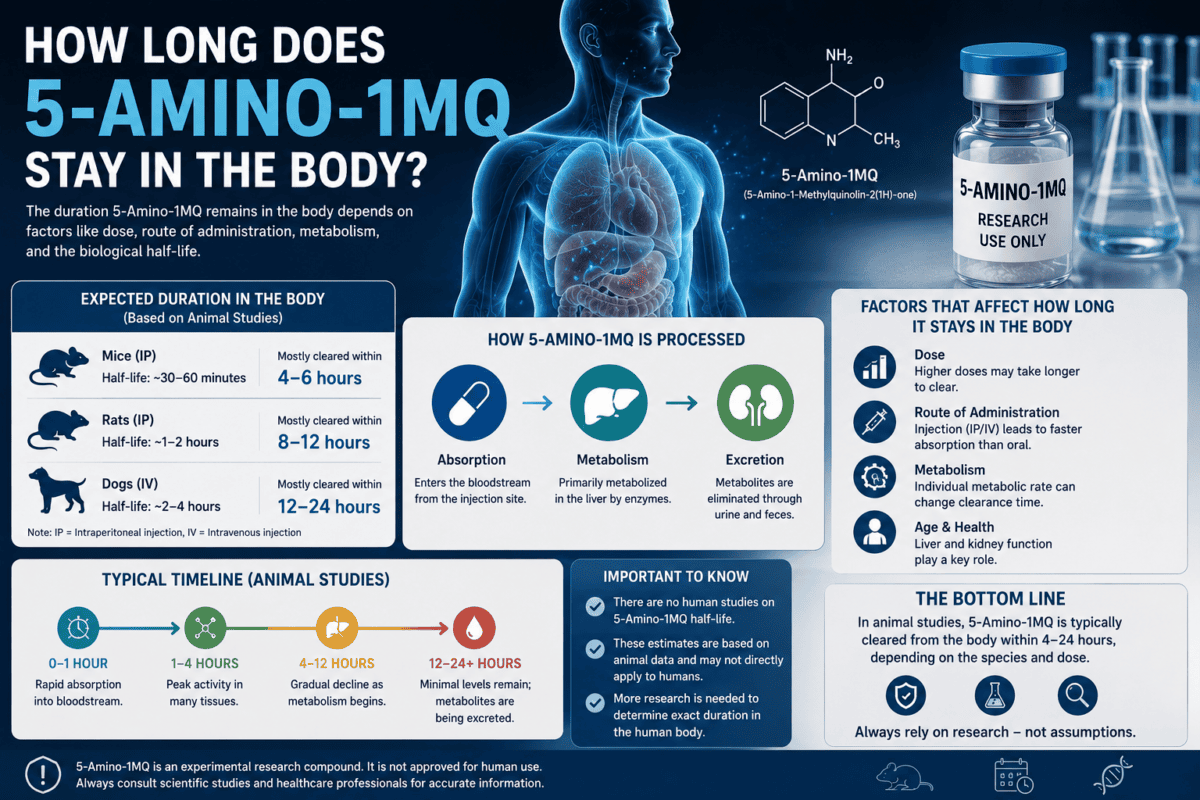
Pharmacokinetic data from rodent studies suggest 5-Amino-1MQ has reasonable oral bioavailability with a relatively short plasma half-life measured in hours—which is why daily dosing has been standard in animal experiments. Human pharmacokinetics have not been formally published, so any half-life claim specific to human physiology is extrapolation.
5-Amino-1MQ Pharmacology: A Closer Look
The 5-Amino-1MQ pharmacology profile positions it as a competitive NNMT inhibitor with reasonable selectivity for the target enzyme. Structural analogs and second-generation NNMT inhibitors are actively being developed by academic groups and biotech startups, signaling that the target itself is being taken seriously by drug developers—even if this particular compound remains investigational.
Comparing 5-Amino-1MQ to Other Experimental Compounds
Peptide and longevity communities often shelve 5-Amino-1MQ alongside compounds like MOTS-c, tesofensine, or various NAD+ precursors. These comparisons can be misleading—each compound has distinct mechanisms, different research maturity levels, and dramatically different safety databases.
5-Amino-1MQ is arguably one of the least clinically characterized compounds in these community discussions, despite its heavy promotional presence.
The Difference Between Research Dosing and Human Dosing
This distinction cannot be overstated. Research dosing exists to answer scientific questions in defined models. Human therapeutic dosing exists to safely achieve clinical benefit in real patients—derived from Phase I safety trials, Phase II efficacy trials, and Phase III large-population validation.
Skipping those phases and adopting a 5-Amino-1MQ dosage protocol based on mouse studies is akin to reading a flight simulator manual and declaring yourself a pilot. The information exists. The qualification does not.
Factors That Influence 5-Amino-1MQ Dosage in Research
Even within controlled preclinical settings, several variables shape the 5-Amino-1MQ dose researchers choose:
Species and strain of the animal model
Route of administration
Study duration
The specific biological endpoint being measured
Vehicle solubility and formulation
Baseline metabolic status of the model
None of these translate cleanly to individual human variation—age, medication use, comorbidities, genetics, and countless other factors that clinical research is designed to systematically evaluate.
Counterpoints and Alternative Perspectives
It’s worth acknowledging the enthusiasm around 5-Amino-1MQ isn’t baseless. NNMT is a legitimate scientific target. Preclinical data is genuinely intriguing. And the historical pace of drug development can feel frustratingly slow to people watching promising compounds sit in pipelines for years.
Some argue that informed self-experimentation should be an accepted part of biohacking culture. Others counter that the absence of pharmacovigilance means adverse events go undocumented, potentially harming future research legitimacy. Both positions carry weight—but neither changes the underlying scientific reality that human dosing evidence for 5-Amino-1MQ simply doesn’t exist yet.
Where to Find Reliable Research on 5-Amino-1MQ Dosage
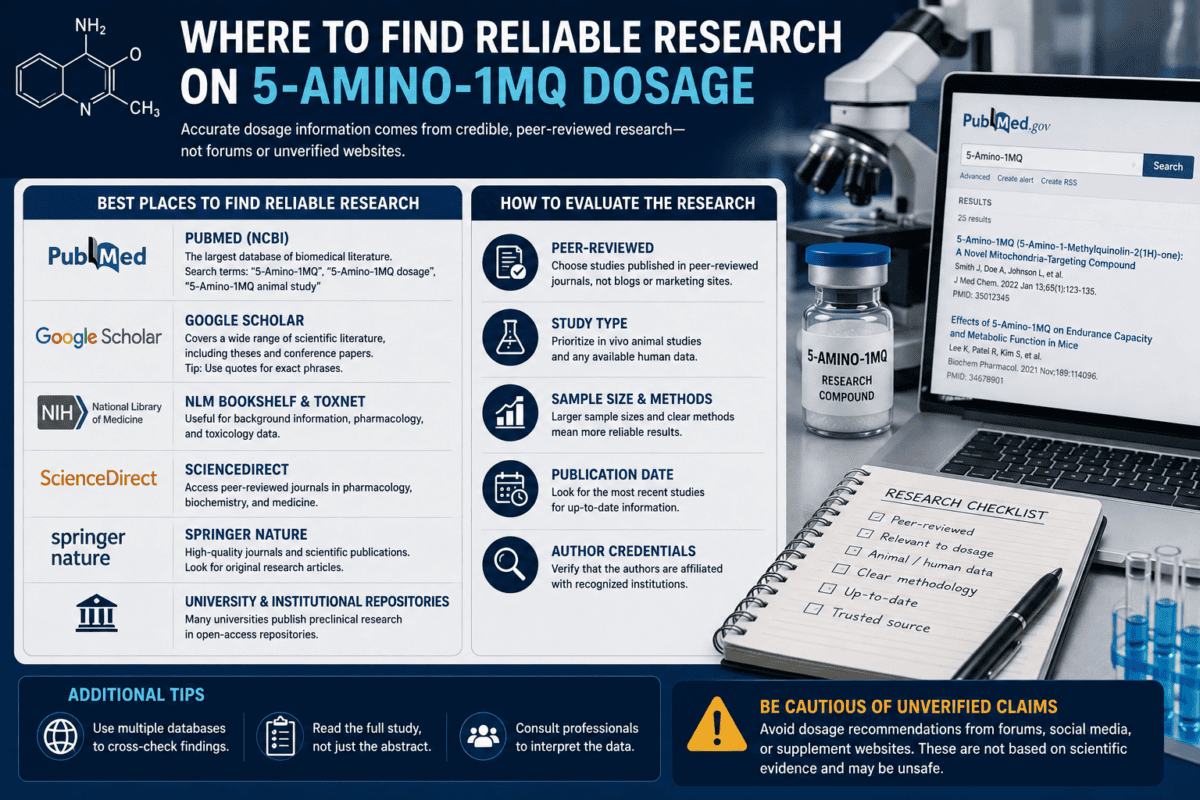
Trustworthy information tends to live in:
Peer-reviewed journals indexed on PubMed
University research group publications
ClinicalTrials.gov (for any registered human studies)
Published pharmacology textbooks discussing NNMT inhibitors
Established suppliers who distribute research-grade material with transparent Certificates of Analysis, like Sino Research Peptide Manufacturer
Forum threads, influencer YouTube videos, and vendor marketing pages should be treated as starting points for further verification, not endpoints.
Frequently Asked Questions
What Is the Typical 5-Amino-1MQ Peptide Dosage Discussed in Research?
Rodent studies typically use around 20 mg/kg orally, once daily—an experimental research dose, not a human recommendation.
What Is 5-Amino-1MQ Used For in Research?
To investigate NNMT’s role in obesity, metabolic dysfunction, adipose tissue biology, and cellular aging pathways.
What Are the Potential Effects of 5-Amino-1MQ Studied in Preclinical Models?
Reduced fat mass, improved insulin sensitivity, enhanced energy expenditure, and altered adipocyte gene expression—observed in animal models.
How Does 5-Amino-1MQ Affect NNMT?
It competitively inhibits the enzyme, reducing its methyltransferase activity and preserving upstream metabolic substrates.
Has 5-Amino-1MQ Been Tested in Clinical Trials?
No completed, publicly available human clinical trials have been published to date.
What Does Current Research Say About 5-Amino-1MQ for Weight Loss?
Animal studies suggest fat mass reduction; human weight loss efficacy remains unproven in controlled trials.
Final Thoughts: Curiosity Grounded in Rigor
5-Amino-1MQ deserves scientific attention. NNMT inhibition may well become a legitimate therapeutic strategy someday. But the gap between “promising preclinical target” and “safe, effective human treatment” is where careful research lives—and where responsible readers should place their expectations.
For students, researchers, and enthusiasts wanting to follow this field, the most valuable habit is treating every claim about 5-Amino-1MQ recommended dosage with a simple question: where’s the human data? Until that data exists in peer-reviewed form, everything else remains hypothesis.
For laboratory researchers sourcing reference-grade material for legitimate investigational use, quality and transparency matter enormously. Explore verified research compounds and detailed technical documentation at sinoresearchpeptidemanufacturer.com, where every product ships with full analytical characterization to support rigorous scientific work.
This article is for educational and research-information purposes only. It does not constitute medical advice, and it is not a recommendation for human use, dosing, or administration of 5-Amino-1MQ. Consult a licensed physician before making any decisions related to your health.
References
| # | Citation | Placement | Status |
|---|---|---|---|
| 1 | Neelakantan et al. (2018), Biochemical Pharmacology — pubmed.ncbi.nlm.nih.gov/29155147 | Origin/foundational study section | ✅ Corrected — the URL in your doc (PMID 29307729) points to an unrelated head-and-neck cancer letter, not this paper. Already in the article with the right PMID. |
| 2 | NNMT gene overview — ncbi.nlm.nih.gov/gene/4837 | “What Is 5-Amino-1MQ?” | ✅ Valid, good addition |
| 3 | Kraus et al. (2014), Nature — nature.com/articles/nature13198 | “How Does 5-Amino-1MQ Work?” | ✅ Valid — already in the article |
| 4 | Reagan-Shaw dose conversion — FASEB, doi.org/10.1096/fj.07-9574LSF | Human-equivalent-dose discussion | ✅ Valid |
| 5 | FDA IND application process — fda.gov | Human trials section | ✅ Valid |