
Peptide Research
ACE-031 Peptide Benefits vs. Risks: What Clinical Trials Actually Found
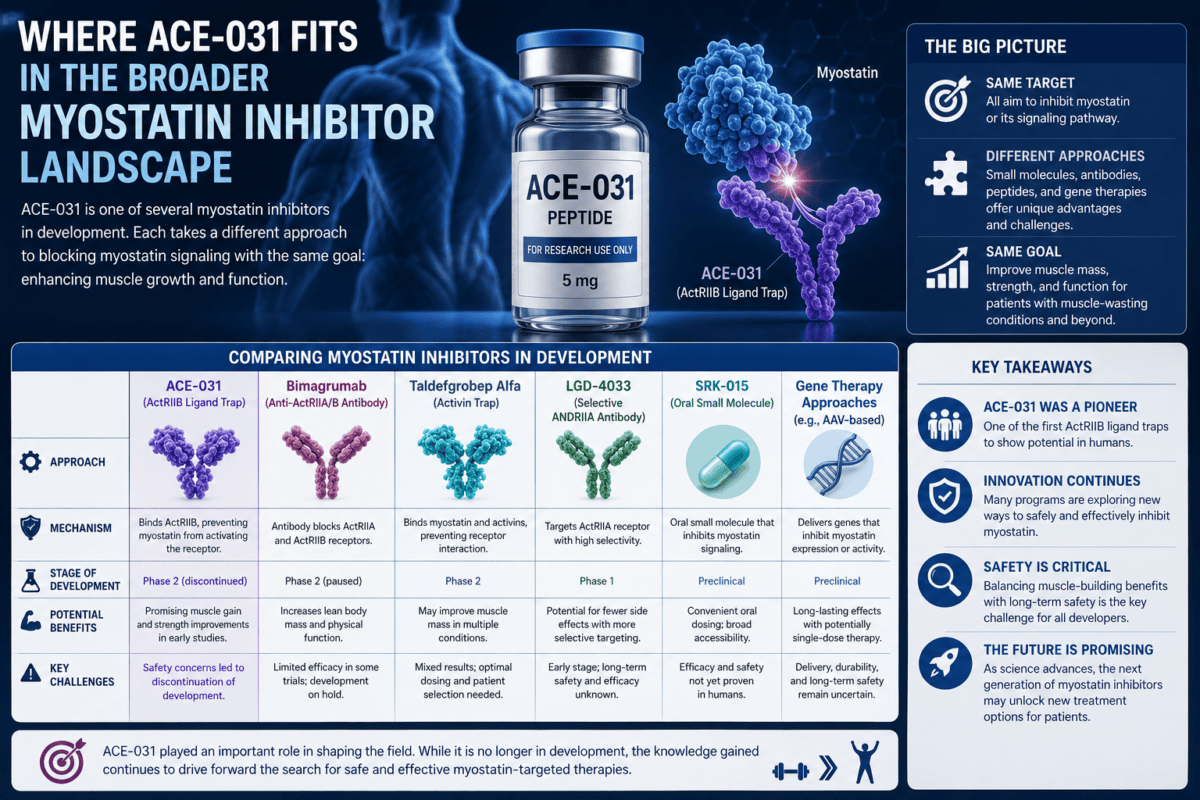
ACE-031 Peptide Benefits: What Research Says About Muscle Growth, Myostatin Inhibition, and Safety
If you’ve spent any time in muscle-biology forums or bodybuilding threads, you’ve probably run into claims about ACE-031 Peptide Benefits — usually described as a powerful myostatin inhibitor capable of unlocking dramatic muscle growth. It’s an interesting compound with a real, documented history. It’s also a compound whose human research program was shut down in 2013, and understanding exactly why matters more than any list of hoped-for ACE-031 Peptide Benefits.
This guide walks through what ACE-031 peptide research actually found — in animals and in people — what the data does and doesn’t support, and why the compound remains unapproved and experimental more than a decade after its most promising trial results were published. Our goal is to separate what’s documented from marketing claims that outrun the evidence.
A quick note on framing before we start: much of what circulates about ACE-031 Peptide Benefits online blends preclinical mouse data, a small number of human trials, and outright speculation into one confident-sounding narrative. This article tries to keep those three things separate, because they lead to very different conclusions.
What Is ACE-031?
ACE-031 isn’t technically a peptide in the strict biochemical sense — it’s a fusion protein. It combines the extracellular portion of the activin receptor type IIB (ActRIIB) with the Fc region of human IgG1 antibody. Researchers sometimes call it a “ligand trap,” and that description is a genuinely useful mental picture.
Here’s the analogy: imagine myostatin as a key, and its natural receptor on muscle cells as the lock it’s built to open. Myostatin’s job, once it engages that lock, is to hold muscle growth in check — it’s the body’s built-in brake pedal on skeletal muscle mass. ACE-031 works by floating around in the bloodstream as a decoy lock. It intercepts the myostatin key before it ever reaches the real receptor, so the brake pedal never gets pressed.
ACE-031 was developed by Acceleron Pharma, originally with Duchenne muscular dystrophy (DMD) as its primary target. DMD is a severe genetic disorder that causes progressive loss of muscle mass and function in young boys, and a drug that could reliably counteract that loss would represent a major therapeutic advance. That’s the context that shaped nearly all of the serious research into this molecule — it was built as a medicine for a devastating disease, not as a bodybuilding aid.
ACE-031 Development Timeline
Following the compound from first development to program termination helps make sense of why ACE-031 Peptide Benefits are talked about mostly in the past tense today.
| Year | Milestone |
|---|---|
| Pre-2010 | Preclinical development by Acceleron Pharma; strong efficacy signals in mouse models of muscle growth |
| 2010 | ACE-031 receives FDA orphan drug designation for Duchenne muscular dystrophy |
| 2010–2011 | Phase 1 study in healthy postmenopausal women shows increased lean body mass and thigh muscle volume |
| 2011 | Phase 2 dose-escalation trial begins in ambulatory boys with DMD, in partnership with Shire and the Muscular Dystrophy Association |
| April 2011 | Trial halted after minor nosebleeds, gum bleeding, and skin telangiectasias appear in participants |
| 2011–2013 | Acceleron reviews safety data with the FDA and Health Canada; DMD study formally terminated, extension study suspended |
| May 2013 | Acceleron and Shire jointly announce the end of the ACE-031 collaboration, with no plans to restart development |
| 2017 | Full Phase 2 DMD trial results are published in Muscle & Nerve, confirming both the muscle-related trends and the safety signal that ended the program |
| Present | ACE-031 remains an unapproved, discontinued research compound with no active human clinical program |
That table is the fastest way to see the core tension in the ACE-031 Peptide Benefits conversation: efficacy signals showed up early and consistently, but so did the safety signal that ultimately closed the program down.
How Does ACE-031 and Myostatin Inhibition Work?
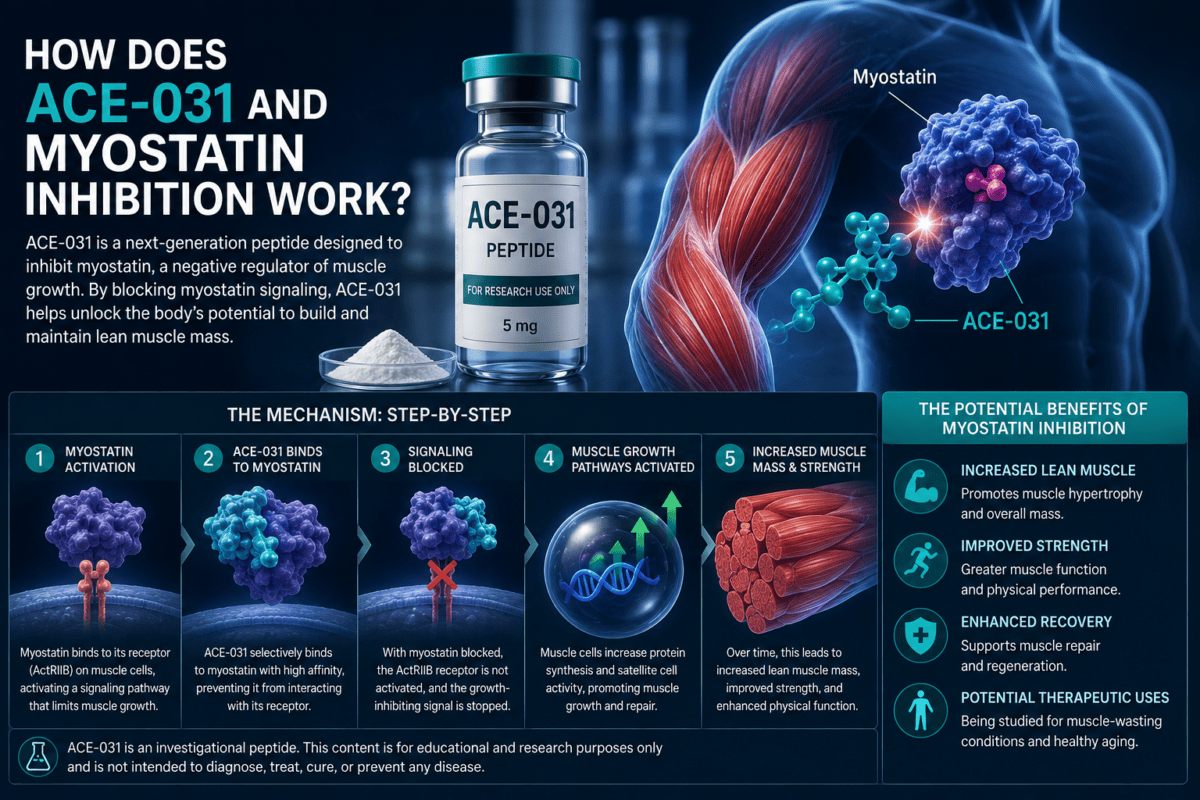
To understand ACE-031 and myostatin, it helps to zoom out to the biology of muscle regulation generally.
Myostatin (also called GDF-8) is part of the TGF-beta superfamily of signaling proteins, as described by the National Institutes of Health. Its entire biological purpose is to prevent muscle from growing indefinitely. This isn’t a design flaw — it’s a homeostatic system, the same kind of feedback loop that keeps your body temperature or blood sugar within a working range. Without it, muscle tissue could, in theory, grow unchecked, which carries its own metabolic and structural costs.
Animals and humans born with naturally occurring myostatin mutations show what happens when that brake is loosened. “Double-muscled” cattle breeds and a small number of documented human cases with myostatin gene mutations both show marked increases in muscle mass. This is the biological plausibility argument behind every myostatin inhibitor, including ACE-031 — it’s not a hypothesis invented by supplement marketers — it’s grounded in real developmental biology.
Where ACE-031 differs from more targeted approaches is its lack of selectivity. Because it traps the ActRIIB receptor pathway broadly, it doesn’t only intercept myostatin — it also binds activin A and, critically, growth factors called BMP9 and BMP10. That last detail turns out to be the single most important fact in the entire ACE-031 peptide research story, and we’ll come back to it.
What Did Preclinical (Animal) Research Find?
Before human trials, ACE-031 was studied extensively in animal models, and the preclinical picture — often cited as early evidence for ACE-031 Peptide Benefits — was genuinely striking.
In mice, blocking the ActRIIB pathway with molecules like ACE-031 produced substantial increases in muscle mass — among the most dramatic effects seen with any myostatin-pathway intervention in rodent models. Later research extended this to a primate model: a peer-reviewed study in common marmosets found that ACE-031 increased both muscle mass and isometric strength over a 14-week dosing period, with changes visible at the level of muscle fiber morphology, not just body weight.
This is where a lot of online claims about these effects stop — at the mouse and marmoset data. That’s a problem, because animal pharmacology, especially in a pathway as broadly conserved but functionally divergent as TGF-beta signaling, doesn’t automatically translate to human safety or efficacy at usable doses. The next section — the actual human data — is where the story gets more complicated, and more useful.
Has ACE-031 Been Studied in Humans? What Did the Trials Find?
Yes — and this is the part of the ACE-031 Peptide Benefits conversation that’s most often left out or softened.
ACE-031 dosing in clinical trials included two main human studies:
1. A Phase 1 study in healthy postmenopausal women. A single 250 mg dose of ACE-031, given without any exercise intervention, produced a 3.3% increase in lean body mass and a 5.1% increase in thigh muscle volume measured by DEXA and MRI at 29 days. For a single dose with no training component, those are meaningful numbers, and they’re the closest thing to hard human evidence for ACE-031 Peptide Benefits that exists for this compound.
2. A Phase 2, randomized, double-blind, placebo-controlled trial in ambulatory boys with DMD. This is the trial that matters most, because it was designed specifically to answer whether ACE-031 could help a real patient population — and because its outcome is the reason the compound doesn’t exist as an approved therapy today. The study, later published in Muscle & Nerve (2017), administered ACE-031 subcutaneously every 2–4 weeks. Its primary objective was safety, not efficacy — a detail worth sitting with, since so much online discussion treats it as a pure muscle-growth trial.
The trial did show pharmacodynamic trends consistent with the drug’s intended mechanism: signals toward increased lean mass, decreased fat mass, and favorable changes in bone mineral density and 6-minute walk distance in some participants. The study reported that ACE-031 was not associated with serious or severe adverse events.
But — and this is the pivotal fact for any balanced look at ACE-031 Peptide Benefits — the trial was stopped after the second dosing regimen because of safety concerns involving epistaxis (nosebleeds) and telangiectasias (small dilated blood vessels), according to the published trial results in Muscle & Nerve.
ACE-031 Human Trial Data at a Glance
| Trial | Population | Dose / Route | Duration | Key Muscle Finding | Outcome |
|---|---|---|---|---|---|
| Phase 1 (single-ascending-dose) | Healthy postmenopausal women (n=48, per published pharmacology data) | Single subcutaneous dose, up to 250 mg | 29-day follow-up | +3.3% lean body mass, +5.1% thigh muscle volume (DEXA/MRI) | Completed; supported advancing to DMD population |
| Phase 2 (A031-03) | Ambulatory boys with Duchenne muscular dystrophy | Subcutaneous, every 2–4 weeks, ascending dose | Stopped after 2nd dosing regimen | Trends toward increased lean mass, reduced fat mass, stabilized 6-minute walk distance | Terminated early for safety |
| Extension study (A031-06) | DMD boys who completed A031-03 | Continuation of prior regimen | Never completed | Not fully reported | Enrollment and dosing suspended |
Reading this table alongside the ACE-031 Peptide Benefits claims you’ll find on forums is instructive: the efficacy column is real but modest, drawn from short exposure windows, while the outcome column is where every human trial of this compound eventually landed.
Why Was ACE-031 Discontinued? The Safety Story in Detail
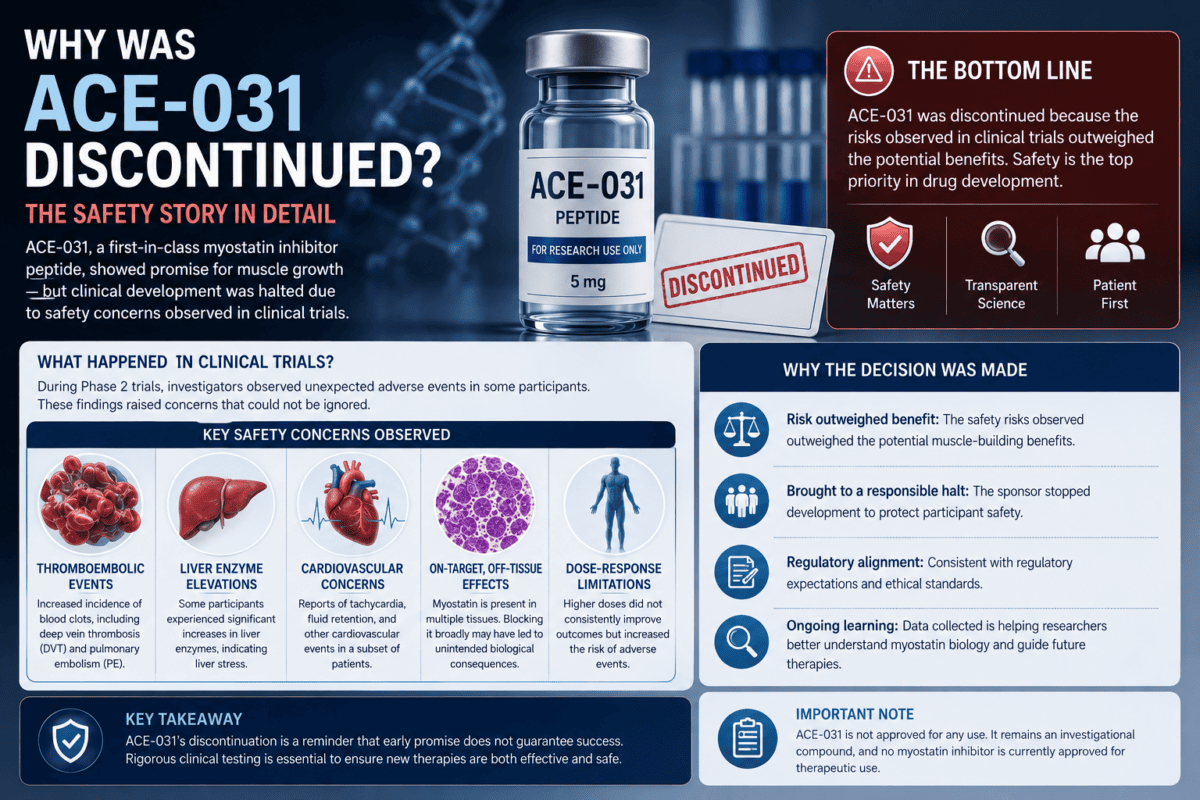
This is the section that any honest treatment of ACE-031 side effects has to lead with, not bury.
According to the Muscular Dystrophy Association’s official trial update, during the clinical trials in both healthy adults and DMD boys, participants experienced minor nosebleeds, gum bleeding, and small dilated blood vessels within the skin, and these events resolved fully once treatment was stopped. Taken in isolation, the bleeding events and dilated blood vessels were not considered a serious safety concern on their own.
So why did the program end? Two things happened at once. First, after reviewing the safety data with the FDA and Health Canada, Acceleron terminated the DMD study and suspended the follow-on extension study. Second, and more permanently, Acceleron and Shire announced in May 2013 that they had concluded their collaboration on ACE-031 and related molecules and would not restart the development program.
The mechanistic explanation for why these vascular effects occurred is genuinely important for understanding ACE-031 and myostatin inhibitors as a drug class, not just this one molecule. Researchers traced the bleeding and vascular changes to the compound’s lack of selectivity: because ACE-031 traps BMP9 and BMP10 in addition to myostatin and activin, and because those two growth factors are essential regulators of blood vessel maintenance, blocking them produces effects that closely resemble a rare inherited bleeding disorder called hereditary hemorrhagic telangiectasia. In other words, the same broad “net” that produces measurable ACE-031 Peptide Benefits for muscle mass in animal models is what caused it to interfere with normal vascular biology in humans.
That single design trade-off — a wide, non-selective ligand trap versus a narrower, muscle-specific one — is now the central lesson later compounds in this space have tried to learn from.
ACE-031 Reported Adverse Events at a Glance
| Adverse Event | Population Observed In | Severity | Outcome |
|---|---|---|---|
| Epistaxis (nosebleeds) | Healthy adults (Phase 1) and DMD boys (Phase 2) | Minor | Resolved after stopping treatment |
| Gingival (gum) bleeding | DMD boys | Minor | Resolved after stopping treatment |
| Telangiectasia (dilated skin blood vessels) | Healthy adults and DMD boys | Minor to moderate | Resolved after stopping treatment |
| Serious/severe adverse events | DMD boys (Phase 2) | None reported | Not applicable |
This table underscores an important nuance in the ACE-031 side effects conversation: none of the individual events were classified as severe, yet the pattern was consistent enough across two separate trial populations, and mechanistically explainable enough (via BMP9/BMP10 inhibition), that regulators and the sponsor judged it disqualifying for continued development.
Is ACE-031 FDA Approved?
No. ACE-031 is not FDA approved, and it is not approved by any regulatory body worldwide for any human use. It did receive orphan drug designation from the FDA in 2010, reflecting genuine interest in its potential for DMD, but orphan designation is not approval — it’s an incentive status granted early in development to encourage research into rare diseases. You can review orphan drug designation criteria directly on the FDA’s website.
ACE-031‘s legal status today is that of a discontinued clinical candidate. It exists in the world primarily as a “research compound” sold by chemical suppliers for laboratory and preclinical use — not as a substance with any approved human indication, dosing guidance, or manufacturing oversight for human consumption. Any product marketed around ACE-031 Peptide Benefits with dosing suggestions for personal use should be read with that regulatory reality in mind.
ACE-031 vs. Other Myostatin-Pathway Compounds
A common question is how ACE-031 compares with other myostatin inhibitors — particularly follistatin-based approaches and its newer cousin, ACE-083.
ACE-031 vs. follistatin-based approaches: Follistatin is the body’s own natural activin antagonist, and it inspired a separate line of therapeutic development. Like ACE-031, follistatin-based ligand traps neutralize myostatin, activin A, activin B, and GDF11 — but the therapeutic engineering challenge has been the same one ACE-031 ran into: activin and its relatives are active in many tissues throughout the body, not just muscle, so broad inhibition tends to produce off-target effects.
ACE-031 vs. ACE-083: This comparison is the clearest illustration of how the field responded to ACE-031’s safety problem, and it’s useful context for anyone weighing claimed ACE-031 Peptide Benefits against newer alternatives. ACE-083, also developed by Acceleron, is a locally acting, follistatin-based fusion protein designed to bind myostatin, activin A, activin B, and GDF11 — but administered by direct intramuscular injection rather than systemically. In animal models, this produced dose-dependent hypertrophy confined to the injected muscle, with no evidence of systemic muscle effects or endocrine disruption.
In a first-in-human Phase 1 trial in postmenopausal women, ACE-083 produced substantial localized muscle volume increases — up to 14.5% in the rectus femoris — with no serious adverse events, dose-limiting toxicities, or discontinuations. The trade-off is scope: ACE-083’s effect is local to the injected muscle, not systemic, which makes it a very different tool than ACE-031 was intended to be, but arguably a safer template for future development.
The throughline across this whole compound class: broader, systemic inhibition of the ActRIIB/activin pathway tends to produce bigger topline muscle numbers and bigger off-target risk in the same breath. Every compound in this space is, in some sense, negotiating that trade-off — and that trade-off is the real story behind ACE-031 Peptide Benefits versus its risks.
Where ACE-031 Fits in the Broader Myostatin Inhibitor Landscape
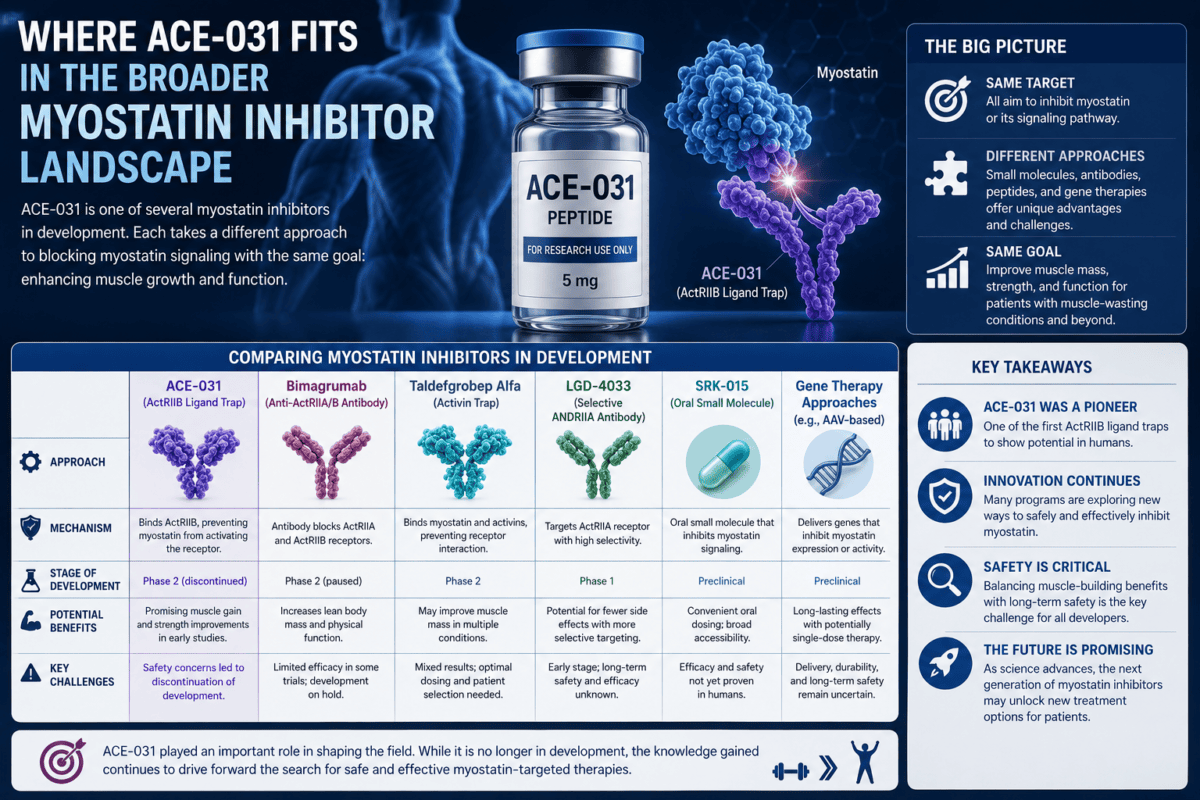
ACE-031 wasn’t the only attempt to drug the myostatin pathway, and it’s not the last. Understanding where it sits among later-generation compounds gives useful context for anyone evaluating ACE-031 Peptide Benefits against what’s come since.
| Compound | Mechanism | Primary Research Focus | Development Status | Notable Finding |
|---|---|---|---|---|
| ACE-031 | Soluble ActRIIB decoy receptor (broad ligand trap) | Duchenne muscular dystrophy | Discontinued (2013) | Muscle gains offset by vascular bleeding/telangiectasia signal |
| ACE-083 | Locally acting, follistatin-based ligand trap | Focal neuromuscular disease (FSHD, CMT) | Phase 1/2 completed | Localized hypertrophy with a cleaner safety profile, but effect confined to injected muscle |
| Bimagrumab | Anti-ActRII receptor antibody | Sarcopenia, obesity/GLP-1 combination therapy | Phase 2 (obesity) | Strong body-composition effects; more tolerability issues (e.g., muscle spasms) than newer antibodies |
| Trevogrumab | Anti-myostatin antibody (targets pro-, latent, and mature forms) | Muscle preservation during GLP-1-driven weight loss | Phase 2 (COURAGE trial) | Lean-mass preservation signal in combination with semaglutide |
| Apitegromab | Antibody targeting latent/pro-myostatin specifically | Spinal muscular atrophy, obesity-related lean mass preservation | Later-stage trials; FDA review ongoing | More selective mechanism than ACE-031, generally milder reported adverse-event profile |
| Landogrozumab (LY2495655) | Humanized anti-myostatin monoclonal antibody | Sarcopenia, falls risk in elderly patients | Phase 2 (discontinued as an active program) | Increased muscle mass and functional power measures in trial |
A pattern is visible across this table: the field has generally moved away from ACE-031‘s broad, systemic “trap everything” approach and toward antibodies that target myostatin more selectively, or ligand traps (like ACE-083) that act locally rather than throughout the bloodstream. That shift is a direct, traceable response to the vascular safety signal that ended ACE-031’s own clinical program — later developers built around the specific lesson ACE-031 taught the field, rather than around its topline muscle numbers alone.
It’s also worth noting that none of the compounds in this table, including the newer antibodies, are approved for bodybuilding, general muscle enhancement, or non-medical use. Where they’ve advanced furthest — apitegromab in spinal muscular atrophy, bimagrumab and trevogrumab in obesity-related muscle preservation — the FDA review process itself has been fraught, with delays and complete response letters even for compounds with cleaner safety data than ACE-031’s. That context is useful for calibrating expectations around ACE-031 Peptide Benefits: even mechanistically newer, safer-looking successors have not had a straightforward path to approval.
What Are the Real Limitations of ACE-031 Research?
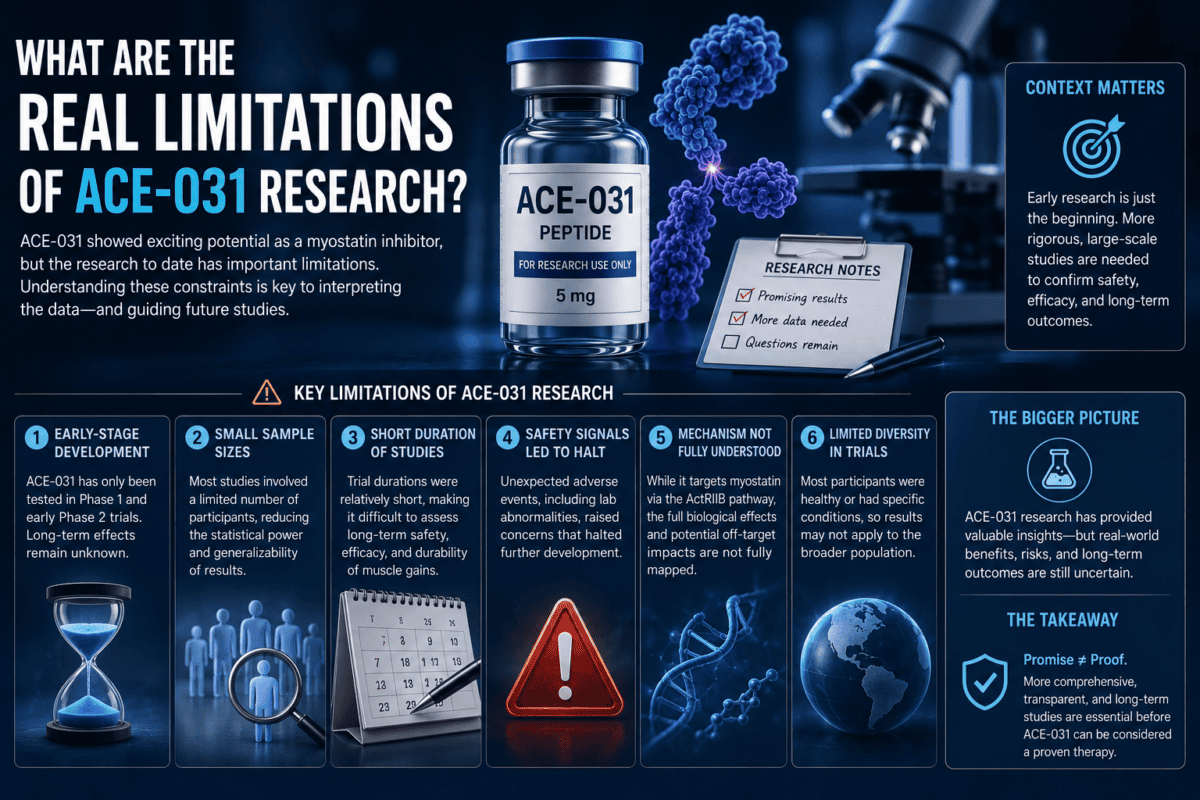
Being clear-eyed about ACE-031 research limitations is essential to any honest accounting of ACE-031 Peptide Benefits:
- The human efficacy dataset is small. A single-dose study in postmenopausal women and a dose-escalation trial in DMD boys that was stopped early are not the basis for confident claims about muscle hypertrophy in healthy adults, let alone athletes.
- The DMD trial’s primary objective was safety, not muscle gain — and it was designed for a specific patient population with a specific disease, not for general population strength or physique outcomes.
- No long-term human safety data exists. Because the program was discontinued in 2013, there is no dataset on what chronic, months-to-years-long exposure to ACE-031 does to vascular health, bone, or other tissues in humans.
- The doses and routes of administration studied were tightly controlled clinical protocols, not the kind of self-administered dosing seen in gray-market use.
- Mechanistic vascular risk is not a side detail — it’s central. The BMP9/BMP10 interaction isn’t an incidental finding; it’s arguably the main reason ACE-031’s clinical story ended where it did.
Frequently Asked Questions
What does ACE-031 peptide do? It acts as a decoy receptor that binds myostatin and related growth-inhibiting proteins in the bloodstream, intended to reduce the natural brake on muscle growth.
Does ACE-031 increase muscle mass? In the human trials that exist, yes — modest increases in lean mass and muscle volume were observed, most notably in the single-dose Phase 1 study in healthy postmenopausal women. Trends toward increased lean mass also appeared in the DMD trial before it was stopped.
Is ACE-031 safe? The available data shows the bleeding and vascular side effects observed were not classified as serious individually, and resolved after stopping treatment. But the trials were halted specifically because of these safety signals, and no long-term human safety data exists. “Not associated with serious adverse events in a short trial” is a very different statement from “safe for extended use” — an important distinction when weighing ACE-031 Peptide Benefits against risk.
Is ACE-031 FDA approved? No. It holds no FDA approval for any indication and is not legally marketed for human use.
How does ACE-031 compare with ACE-083? ACE-083 uses a related but more localized mechanism (intramuscular injection, follistatin-based) and showed a cleaner safety profile in its Phase 1 trial, at the cost of producing localized rather than systemic effects.
What conditions has ACE-031 been studied for? Primarily Duchenne muscular dystrophy, along with a Phase 1 safety and pharmacodynamics study in healthy postmenopausal women.
Why is ACE-031 considered experimental? Because its clinical development was discontinued before any regulatory approval was sought or granted, and it has not been re-entered into human trials since 2013.
The Bottom Line
The honest version of the ACE-031 Peptide Benefits story is this: it’s a scientifically interesting molecule that demonstrated real, measurable effects on muscle mass in both animal models and limited human trials, built on a genuinely sound mechanistic rationale involving myostatin inhibition. It’s also a molecule whose own developer walked away from it after safety signals emerged in the exact patient population — young boys with a serious muscle-wasting disease — that stood to benefit most from it working.
That combination — real biological activity, real safety concerns, and a permanently discontinued clinical program — is precisely why ACE-031 remains a research subject rather than a product, and why any claims about ACE-031 Peptide Benefits framed as settled deserve a second look at the underlying trial data before being taken at face value.
This article is for educational and research-informational purposes. It does not constitute medical advice, and ACE-031 is not approved for human use.