
Peptide Research
AICAR Peptide Dosage: What Research Actually Reveals
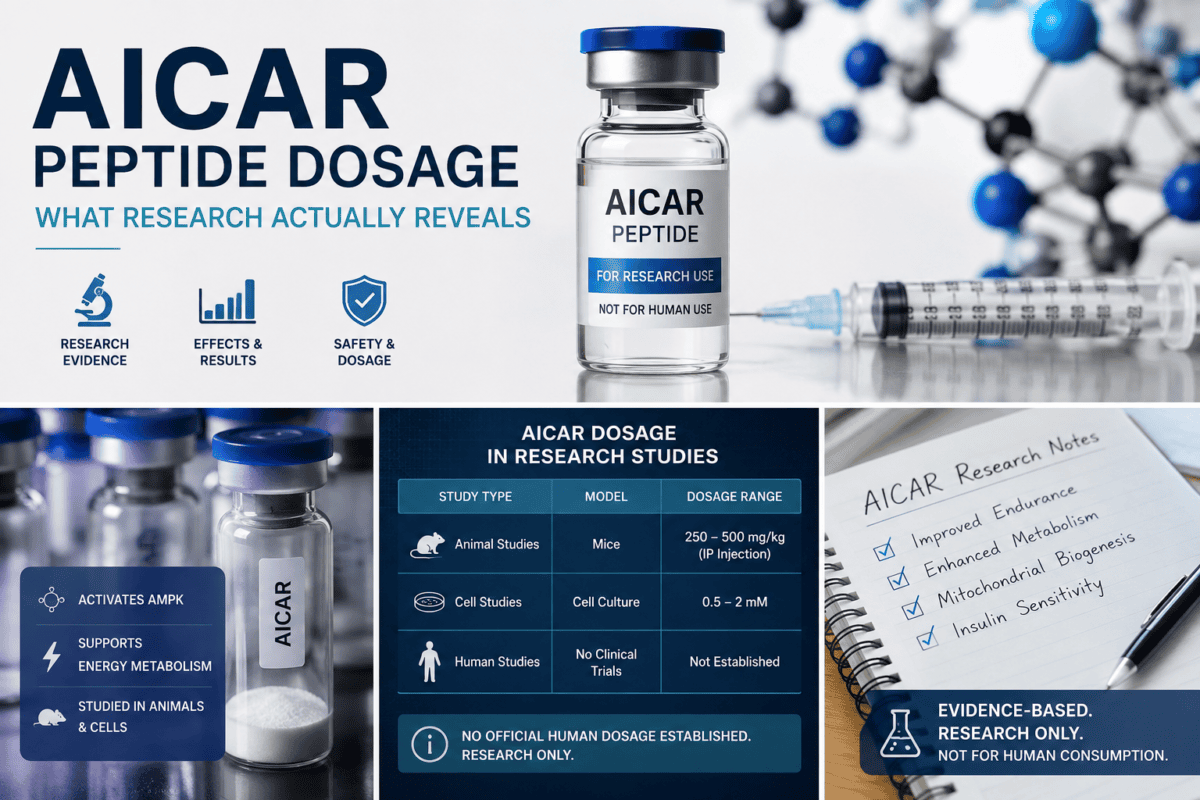
The Real AICAR Peptide Dosage Story: Research Findings, Experimental Protocols, Safety, and What the Evidence Shows
If you’ve spent any time searching for AICAR peptide dosage information, you’ve probably noticed something frustrating. Every source seems to have a different number. One forum post says one thing. A vendor’s website says another. A peer-reviewed paper says something entirely different — and often doesn’t answer the question you actually came with.
That gap is the whole story here.
This guide is a deep, honest look at AICAR peptide dosage — how AICAR has been dosed in laboratory and animal research, what limited human data exists, and why the confident-sounding dosing charts circulating online don’t line up with the scientific literature. It’s written to help you understand the science behind AICAR, not to tell you what to do with it.
Let’s start with the fundamentals before working through every angle of AICAR peptide dosage that the research actually supports.
What Is AICAR?
AICAR (5-aminoimidazole-4-carboxamide ribonucleotide, sometimes studied clinically as acadesine) is a molecule that has been used in laboratories for decades to probe AICAR AMPK activation research. AMPK — AMP-activated protein kinase — is often described as the body’s cellular energy gauge. It switches on when a cell senses low energy availability, nudging metabolism toward processes that generate more energy and away from processes that consume it.
Because AICAR can activate AMPK somewhat independently of true energy depletion, it became a favorite research tool for scientists trying to understand what AMPK activation does, without needing to physically stress the cell or the animal to trigger it. That’s the historical role AICAR has played: a laboratory reagent, not a consumer product with an established AICAR peptide dosage for research conversion, let alone a consumer one.
This distinction matters enormously for the AICAR peptide dosage conversation, because a compound designed as a lab tool is studied very differently than a compound designed to become an approved medicine.
How AICAR Has Been Studied
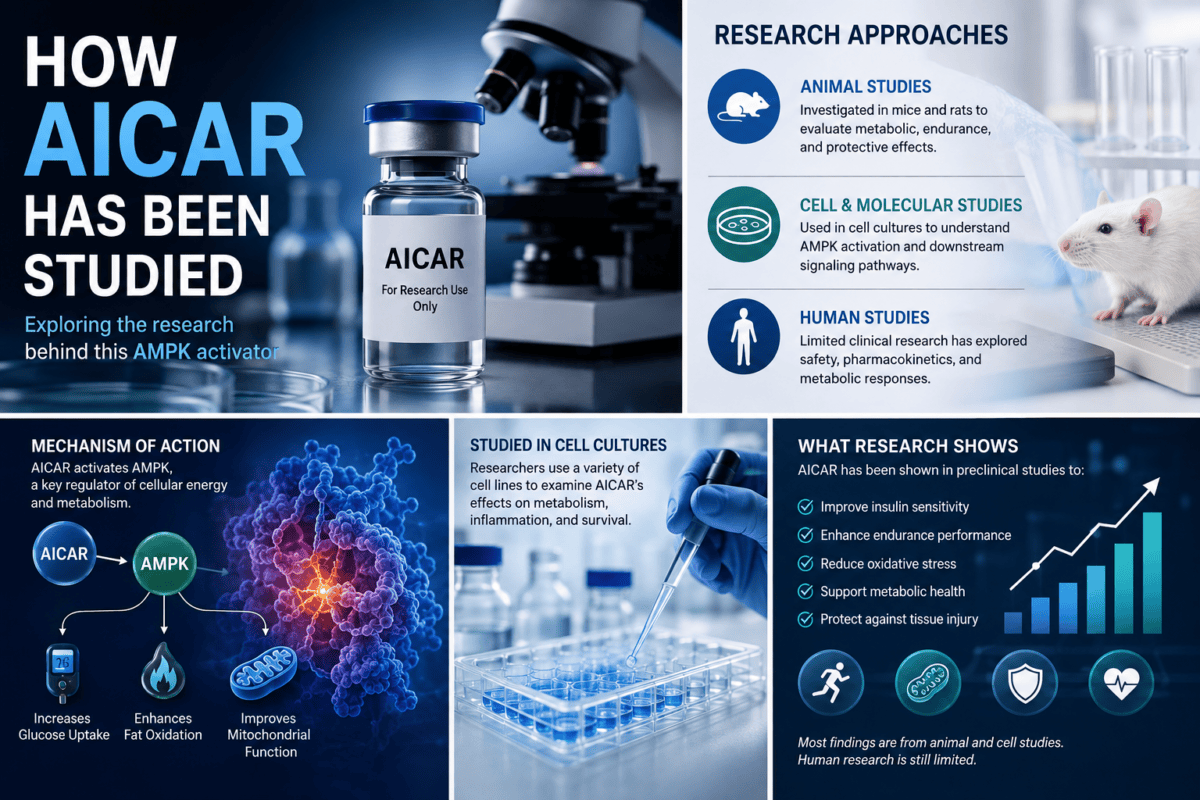
Before getting into any discussion of amounts, it’s worth understanding how AICAR has been studied in the first place, because the type of study changes what any given number actually tells us. The table below summarizes the three broad tiers of AICAR research and what each one can and can’t tell us about AICAR peptide dosage.
| Research Tier | What It Involves | What It Tells Us | What It Doesn’t Tell Us |
|---|---|---|---|
| Cell / tissue studies (in vitro) | AICAR applied directly to cells or isolated tissue | Mechanism — how AICAR interacts with AMPK molecularly | Anything about whole-body dosing in a living organism |
| Animal studies (in vivo) | AICAR injected into rodents, dose measured per kg body weight | AICAR dose response relationships, physiological effects | A validated human dose — species differ in metabolism and clearance |
| Human clinical trials | AICAR (acadesine) given intravenously under medical supervision | Effects in a narrow surgical/cardioprotective context | General “wellness,” performance, or fat-loss dosing information |
Cell and Tissue Studies
The earliest and most abundant body of AICAR research dosage data comes from in-vitro work. These studies are genuinely useful for understanding mechanism, but they tell us almost nothing about what happens in a living, whole-body system. A concentration that activates AMPK in a dish doesn’t translate into an AICAR dose a person could reasonably take.
AICAR Dosage in Animal Studies
AICAR dosage animal studies — primarily in rodents — form the bulk of what’s often cited, misleadingly, as “dosing evidence” online. In these studies, AICAR is typically administered by injection, and researchers report a clear dose response: higher doses producing more pronounced AMPK activation and downstream metabolic effects, up to a point.
The most frequently cited example is the 2008 study by Narkar and colleagues, published in Cell, in which sedentary mice given AICAR for roughly four weeks showed a substantial increase in treadmill running endurance without any exercise training, alongside gene-expression changes resembling those produced by exercise itself. You can read the original paper here: Narkar et al., 2008, Cell — “AMPK and PPARδ Agonists Are Exercise Mimetics”. That study, and others like it, is where much of the “exercise in a pill” framing around AICAR originated — and it’s also the study that most vendor AICAR dosing protocol pages lean on when they present a per-kilogram injected mouse dose as if it were relevant guidance for a person.
A related human-adjacent study worth knowing about examined AICAR administration in rats, not mice, comparing it against actual exercise training: McConell et al., 2008, Journal of Applied Physiology, which found that AICAR could partially, but not fully, replicate the AMPK-signaling adaptations produced by real treadmill training.
Here’s the catch that gets lost in translation: mouse metabolism runs faster and differently than human metabolism, mouse dosing is calculated per kilogram of body weight using very different pharmacokinetic assumptions, and — critically — can animal AICAR doses be converted to a human dosage?
Not reliably, and not safely as a do-it-yourself calculation. Allometric scaling, the method researchers use to estimate rough dose equivalence across species, accounts for body surface area and metabolic rate, but it does not account for differences in absorption, distribution, organ-specific toxicity thresholds, or long-term effects that simply haven’t been tested in humans. A 2021 systematic review in Cells makes this point directly, cautioning that many AICAR effects attributed to AMPK activation are in fact AMPK-independent, complicating any simple dose-response extrapolation: Bujak et al., 2021, Cells — “AICAr: A Widely Used AMPK Activator with Important AMPK-Independent Effects”.
AICAR Dosage in Clinical Trials
This is where the evidence thins out considerably, and where the AICAR peptide dosage conversation most often gets misrepresented. AICAR dosage in clinical trials and AICAR human study dosage data exist, but in a narrower context than most online claims suggest.
Historically, AICAR — under the name acadesine — was studied in human clinical trials primarily for cardioprotective purposes, such as reducing tissue damage during cardiac surgery involving temporary blood flow restriction. Those trials involved intravenous administration under close medical supervision, with protocols built around a specific surgical context, not general wellness, fat loss, or athletic performance.
In other words, the human dosing data that exists doesn’t map onto the way AICAR is discussed in fitness and biohacking spaces. It was studied as a hospital-administered cardioprotective agent in a narrow clinical window, not as a self-administered metabolic compound with an established AICAR recommended dosage.
This is worth repeating: AICAR dosage vs human clinical dose comparisons found online frequently borrow numbers from a completely different research context and present them as general-purpose guidance.
Why Online AICAR Dosage Information Is So Inconsistent
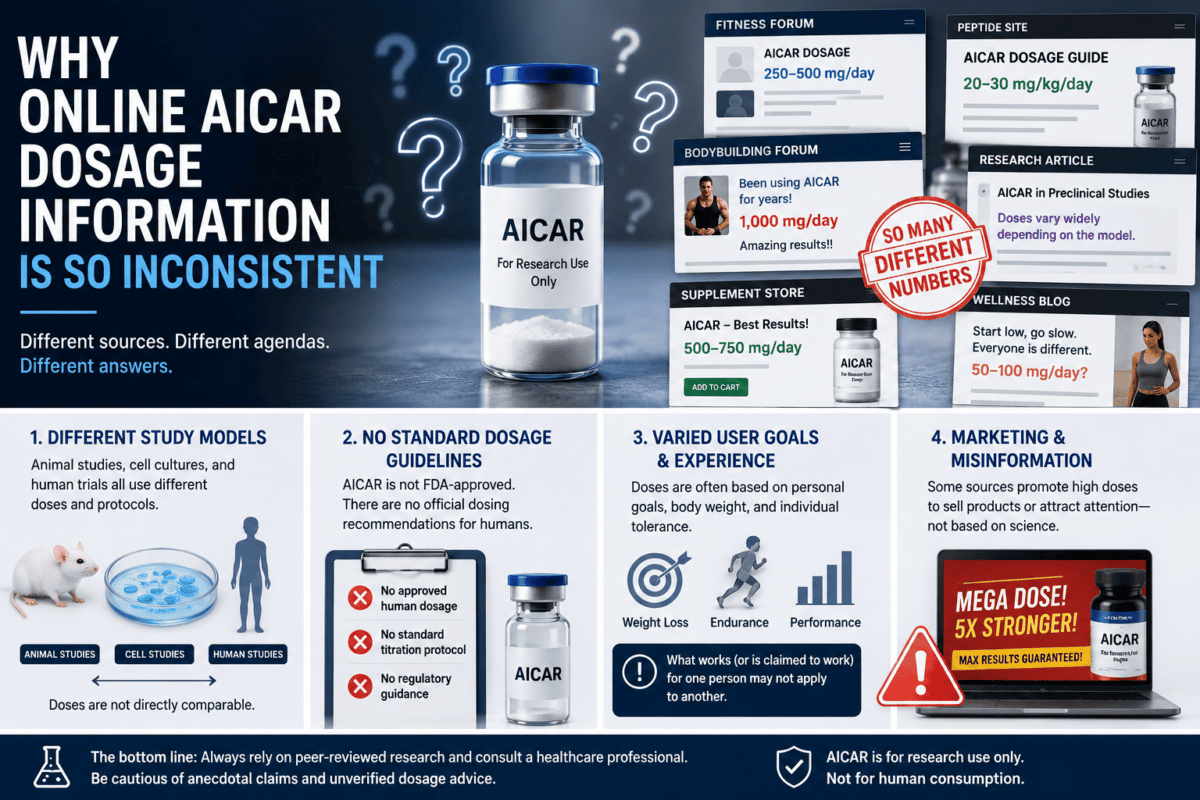
Why is AICAR dosage information online often inconsistent? A few reasons converge here, and understanding them is the fastest way to evaluate any AICAR dosage protocol you come across.
| Source of the Number | Original Context | Why It Gets Misapplied |
|---|---|---|
| Rodent injection studies | Per-kg dosing in mice or rats | Scaled up casually without accounting for species differences |
| Clinical cardioprotection trials | IV dosing during cardiac surgery | Presented as if relevant to fitness or fat-loss use |
| Vendor “protocol” pages | Not independently verified | Framed with clinical-sounding language despite “research use only” labeling |
| Forum/anecdotal reports | Self-reported, unstandardized | Treated as equivalent to peer-reviewed data |
- Different source studies get blended together. A number from a rodent study, a number from a cardiac trial, and a number from an anonymous forum post can all end up on the same page, presented as if they’re interchangeable.
- Research-grade AICAR is sold labeled “not for human consumption.” Legally, companies selling AICAR peptide products can’t provide dosing instructions for human use, which paradoxically creates a vacuum that gets filled by informal, unverified anecdotes framed as an AICAR dosing schedule.
- There’s no established AICAR dosage protocol for general human use. Unlike an FDA-approved drug with a package insert, no regulatory body has reviewed and published a standard AICAR dosing schedule for consumer use, because AICAR hasn’t been approved for that purpose.
If a page online gives you a confident, specific figure for an AICAR starting dose or AICAR maintenance dose, it’s worth asking where that number actually originated, because in most cases it isn’t drawn from peer-reviewed human research at all.
AICAR Pharmacokinetics and Half-Life
Understanding AICAR pharmacokinetics helps explain why the AICAR peptide dosage question isn’t as simple as picking a number and a frequency.
Research indicates that AICAR half life is relatively short, meaning it’s cleared from the bloodstream fairly quickly after administration — a factor that has influenced how researchers design dosing intervals in the animal and clinical studies that do exist. Absorption and distribution also appear to differ depending on route of administration, which is part of why translating an animal-study injection protocol into any other context is scientifically messy.
Because comprehensive human pharmacokinetic data is limited, there’s still meaningful uncertainty about how AICAR behaves across different populations, body compositions, and health statuses. That uncertainty is itself an important part of the safety picture, and it’s a big part of why no consensus AICAR peptide dosage exists in the medical literature.
AICAR Mechanism of Action, Briefly
The AICAR mechanism of action centers on its conversion inside cells to a compound called ZMP, which mimics AMP and activates AMPK. Once activated, AMPK influences several downstream pathways involved in glucose uptake, fatty acid oxidation, and mitochondrial biogenesis, which is why AICAR has drawn interest from the AICAR dosage for endurance and AICAR dosage for fat loss crowd.
It’s worth pairing this with AICAR vs exercise research directly, since that comparison is often what draws people to this topic in the first place. The Narkar et al. 2008 study found that AICAR could partially replicate gene-expression changes associated with endurance training in sedentary mice. That’s a genuinely interesting mechanistic finding — but “partially replicates some changes in mice” is a very different claim than “works like exercise in humans,” and the research hasn’t closed that gap. A more recent aged-mouse study extended this comparison to cognitive and hippocampal effects, again finding partial, not complete, overlap between AICAR and actual exercise: comparison of AICAR and exercise on hippocampal mitochondrial quality control, Food Science and Human Wellness.
AICAR vs Other AMPK Activators
AICAR isn’t the only AMPK activator that’s been studied. Metformin, for instance, activates AMPK through a different upstream pathway and has decades of human safety and dosing data behind it because it’s an approved medication used in over 50 registered clinical trials for other indications, according to a 2014 PNAS mechanistic study: Liu et al., 2014, PNAS. When people ask about AICAR vs other AMPK activators, this is usually the most important contrast: some AMPK activators have a well-established human safety and dosage profile, and AICAR, at this point, does not.
| Compound | Human Approval Status | Established Human Dosing Data | Primary Research Context |
|---|---|---|---|
| AICAR (acadesine) | Not FDA-approved | Limited, narrow clinical context only | Cardioprotection (historical), AMPK research tool |
| Metformin | FDA-approved | Extensive, decades of data | Type 2 diabetes, ongoing cancer research |
| A769662 (direct AMPK activator) | Not approved | Preclinical only | Laboratory research tool |
Safety Considerations
Is AICAR safe? The honest answer is that this hasn’t been comprehensively established for general human use outside supervised clinical settings, and that gap is central to any responsible discussion of AICAR peptide dosage.
Some safety-relevant findings from the existing research include:
- Cardiac trials using acadesine (AICAR) tracked specific adverse events under close medical supervision, underscoring that even its studied clinical use required careful oversight rather than self-administration.
- AICAR long term safety in humans, outside short-duration clinical trial windows, has not been established. There is no long-term human safety database comparable to what exists for approved medications.
- AICAR contraindications haven’t been formally defined for general population use, because AICAR isn’t approved or labeled for that use.
- Animal research has also explored AICAR in disease models. A rat model of cholestatic liver injury found that AICAR reduced fibrosis markers in that specific injury context: Zhu et al., 2018, Canadian Journal of Gastroenterology and Hepatology. Findings like this are informative for disease-model research, but they describe a controlled, supervised, disease-specific animal protocol — not a transferable human dosing recommendation.
- A 2014 PNAS study also identified AMPK-independent, off-target effects of AICAR relevant to cell-cycle regulation, a reminder that AICAR’s biology is more complex than “more AMPK activation, more benefit”: Liu et al., 2014, PNAS.
Given these gaps, questions like what are the potential side effects of AICAR? and is there a safe AICAR dosage established for humans? don’t currently have well-defined, evidence-backed answers for non-clinical use. That absence of an answer is itself the answer worth taking seriously when evaluating any claimed AICAR peptide dosage guide.
Regulatory and Legal Status
Is AICAR FDA approved for human use? No. AICAR does not have FDA approval as a drug or supplement for human consumption. It’s typically sold and marketed as a research chemical, explicitly labeled “not for human use.”
Is AICAR legal for human use? Its legal status as a research compound varies by jurisdiction and intended use, but its research-only labeling exists precisely because it hasn’t gone through the clinical trial and approval process required for a compound to be legally marketed for human consumption or performance use. AICAR has also been on the World Anti-Doping Agency’s prohibited list since 2009, which independently limits any legitimate athletic-context AICAR dosage protocol from being developed or published. This is worth sitting with before treating any online dosing chart as a legitimate guide.
What the Evidence Actually Supports — and What It Doesn’t
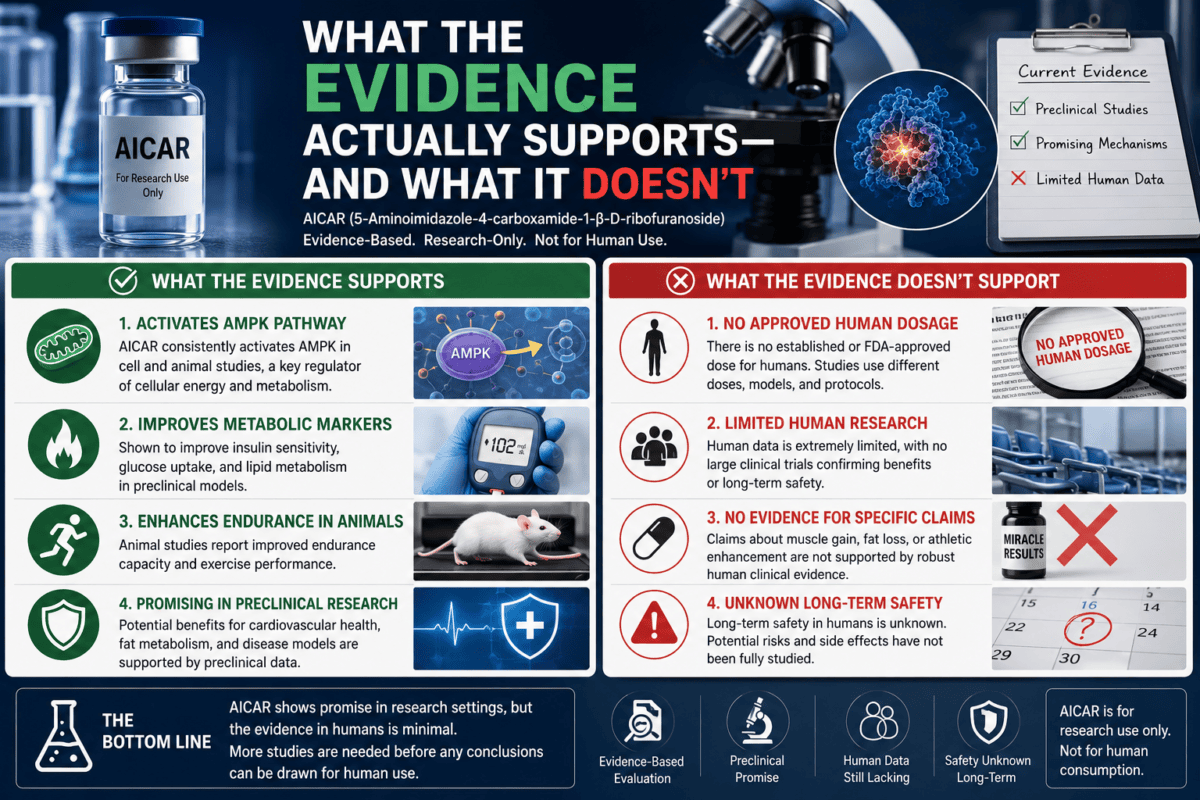
To bring this back together, here’s a grounded summary of AICAR evidence as it currently stands, organized against the most common claims made about AICAR peptide dosage.
| Claim | Evidence Level | Notes |
|---|---|---|
| AICAR activates AMPK | Strong (cell, animal, some human) | Well-replicated mechanism |
| AICAR improves endurance without training | Animal only | Based mainly on the 2008 mouse study |
| AICAR supports fat oxidation | Animal only | Mechanistically plausible, not human-confirmed |
| A safe, effective human dosage exists | Not established | No validated general-use human dosing data |
| AICAR is FDA-approved | False | Research-use-only status |
| Online dosing charts reflect clinical research | Generally false | Usually extrapolated from animal or narrow surgical data |
What research supports:
- AICAR reliably activates AMPK in cell and animal models.
- In some rodent studies, AICAR produced metabolic changes resembling aspects of exercise adaptation.
- Clinical (human) research exists, but in a narrow cardioprotective surgical context, using medically supervised intravenous administration.
What research does not currently support:
- A validated, safe AICAR recommended dosage for general human use.
- Long-term human safety data.
- Evidence that fitness-context dosing claims found online reflect anything studied in a controlled clinical trial.
- Approval or endorsement for weight loss, fat loss, or athletic performance use in humans.
AICAR Research Limitations
Any honest discussion of AICAR peptide dosage has to name its own limits. AICAR research limitations include a relatively small pool of human trials, a narrow clinical context (cardiac surgery) that doesn’t generalize well to other proposed uses, heavy reliance on animal data that can’t be cleanly converted to human application, and a scarcity of independent, replicated research outside the original mechanistic studies from the 2000s.
This is the kind of gap that responsible reporting on AICAR peptide research has to be upfront about, rather than smoothing over with confident-sounding dosage charts borrowed from unrelated animal or surgical protocols.
Frequently Asked Questions
What is the typical AICAR peptide dosage? There isn’t an established, validated dosage for general human use — most cited numbers online come from animal studies or a narrow clinical trial context, not general-use human research.
What dosage of AICAR has been used in research studies? Doses vary widely by study type — cell studies use concentrations, animal studies use per-kilogram injected doses, and the limited human trials used medically supervised IV protocols specific to cardiac surgery.
How is AICAR dosage determined in scientific research? Researchers typically set doses based on prior pharmacokinetic data, the specific biological outcome being studied, and species-specific safety thresholds established in earlier toxicology work — a rigorous process that online vendor charts don’t replicate.
Has AICAR been studied in humans, and what doses were investigated? Yes, primarily as acadesine in cardioprotective surgical trials, using supervised intravenous protocols distinct from any general wellness or performance context.
What is the AICAR dosing protocol used in clinical research? Clinical protocols were designed around a specific surgical window and administered by medical staff — they weren’t designed as a general-purpose reference for self-administration.
How often has AICAR been administered in research studies? Frequency and duration have varied considerably depending on the study’s goal, from single-dose surgical protocols to repeated daily dosing in longer animal studies.
What is the difference between AICAR research dosage and online dosage claims? Research dosage figures come from controlled, peer-reviewed protocols tied to a specific study design; online claims are frequently unsourced or borrowed from a mismatched context.
Can animal AICAR doses be converted to a human dosage? Not reliably. Allometric scaling offers a rough mathematical estimate but doesn’t account for differences in toxicity thresholds, long-term effects, or individual variation.
What factors influence AICAR dosage in research? Body weight, route of administration, study duration, the specific outcome being measured, and species-specific metabolic rate all shape how researchers design a dose in a given study.
What are the potential side effects of AICAR? Comprehensive human side-effect data outside supervised clinical trials doesn’t exist; animal research has flagged effects on liver metabolism and off-target, AMPK-independent cellular effects worth further study.
Is there a safe AICAR dosage established for humans? No validated general-use human dosage currently exists in the peer-reviewed literature.
How long does AICAR stay in the body? Research suggests a relatively short half-life, though comprehensive human pharmacokinetic profiling remains limited.
What is the half-life of AICAR? Available data points to rapid clearance, which has shaped dosing-interval decisions in the studies that do exist, though a precisely established human half-life value isn’t well documented in the general literature.
Does AICAR dosage affect AMPK activation? Preclinical research suggests a dose-response relationship, with higher doses producing more pronounced AMPK activation up to a threshold, though this hasn’t been mapped out in humans outside clinical trial settings.
Has AICAR been studied for weight loss or fat loss? Indirectly, through its effects on metabolism and gene expression in animal models — but there’s no established human clinical evidence supporting its use specifically for weight or fat loss.
What does research say about AICAR dosage for exercise performance? The strongest performance-related findings come from a single 2008 mouse study; no controlled human performance trial data currently exists.
Is AICAR FDA approved for human use? No, it is not approved by the FDA for human consumption.
Is AICAR legal for human use? Its status as a research chemical varies by jurisdiction and is separate from approval for human consumption; it is also on WADA’s prohibited list for athletes.
Why is AICAR dosage information online often inconsistent? Because it blends data from different research contexts — animal studies, narrow clinical trials, and unverified anecdotes — without distinguishing between them.
What are the limitations of current AICAR dosage research? A small human evidence base, heavy reliance on animal data, and a lack of independent replication outside the original mechanistic studies.
The Bottom Line
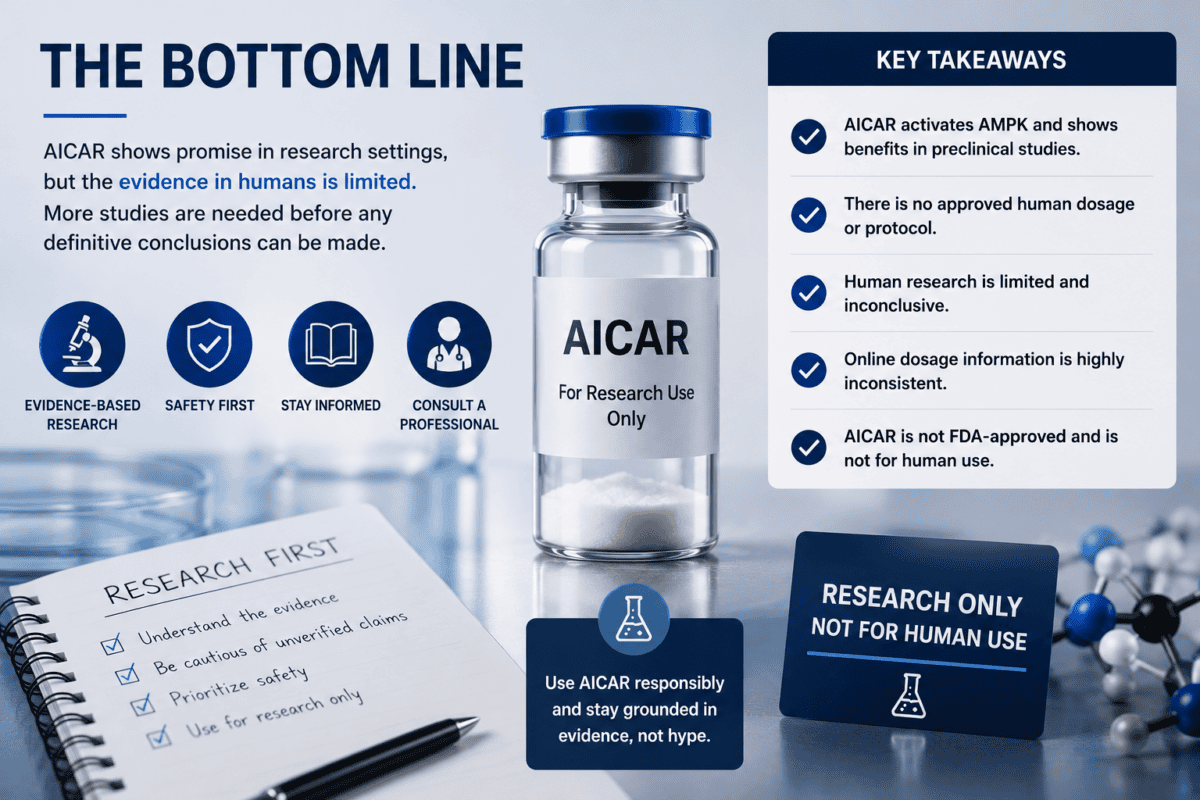
The gap between what’s been published in the scientific literature and what circulates in online dosing guides is the central issue with AICAR peptide dosage discussions. Animal studies and a narrow set of clinical trials tell us a lot about mechanism and possibility, but they don’t add up to an established, validated protocol for general human use.
Anyone comparing AICAR peptide dosage claims across different sites will keep running into this same pattern, which is exactly why source-checking matters more than the number itself. If you’re researching AICAR peptide dosage, the most valuable habit you can build is asking where a given number actually comes from, and treating the absence of solid human dosing and safety data as meaningful information in itself, not a gap to be filled in by anecdote.
References
- Narkar, V. A., et al. (2008). AMPK and PPARδ Agonists Are Exercise Mimetics. Cell, 134(3), 405–415. Full text
- McConell, G. K., et al. (2008). Differential attenuation of AMPK activation during acute exercise following exercise training or AICAR treatment. Journal of Applied Physiology, 105(5), 1422–1427. PubMed
- Liu, X., et al. (2014). Discrete mechanisms of mTOR and cell cycle regulation by AMPK agonists independent of AMPK. PNAS. Full text
- Bujak, A. L., et al. (2021). AICAr: A Widely Used AMPK Activator with Important AMPK-Independent Effects — A Systematic Review. Cells, 10(5), 1095. Full text
- Zhu, H., et al. (2018). AICAR-Induced AMPK Activation Inhibits the Noncanonical NF-κB Pathway to Attenuate Liver Injury and Fibrosis in BDL Rats. Canadian Journal of Gastroenterology and Hepatology. Full text
- Comparison of AICAR and exercise on mitochondrial quality control in hippocampus and cognitive function of aged mice. Food Science and Human Wellness. Full text
This article is for educational and informational purposes only. It does not constitute medical advice, and it is not a recommendation or instruction for use of AICAR or any research compound. AICAR is not approved by the FDA for human consumption. Consult a qualified healthcare professional before making any decisions related to research compounds or your health.