
Peptide Research
Adipotide (FTPP) Side Effects: Why the Human Trial Failed
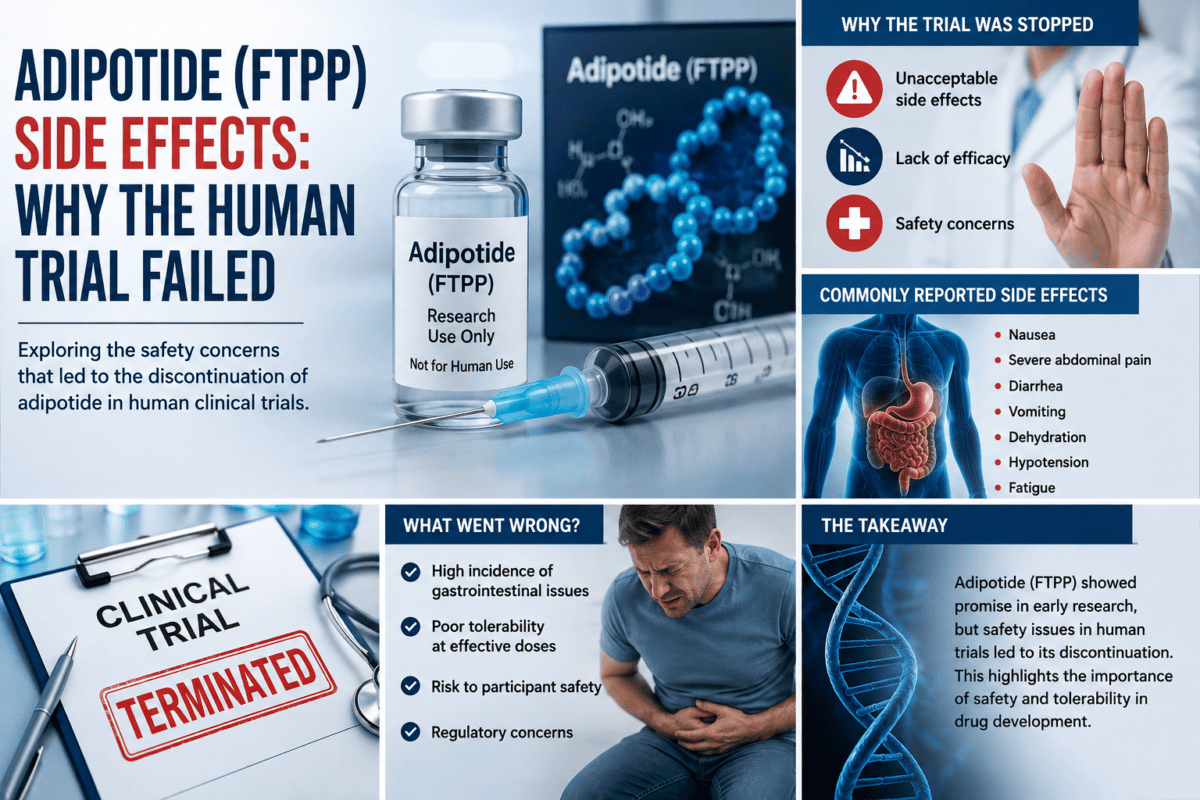
Adipotide (FTPP) Side Effects: The Concerning Truth Research Reveals
If you’ve spent time in peptide research forums, you’ve probably run into Adipotide — sometimes labeled FTPP — described as a fat-targeting compound that made headlines after a widely reported obesity study in monkeys. The before-and-after imaging was striking. The claims that followed online were, in many cases, far less careful than the science itself.
This article is a plain-language, source-linked breakdown of Adipotide (FTPP) side effects — what preclinical research and the limited human trial actually documented, as opposed to what gets repeated in vendor copy and forum threads. If you’re trying to understand adipotide ftpp side effects before drawing your own conclusions, the goal here is to separate documented findings from speculation.
What Is Adipotide (FTPP), Briefly
Understanding Adipotide (FTPP) side effects starts with understanding what the compound actually is. Adipotide — also called Prohibitin-Targeting Peptide 1, or FTPP (Fat-Targeted Pro-apoptotic Peptide) in some sources — is a synthetic peptidomimetic developed by researchers affiliated with the University of Texas MD Anderson Cancer Center. It was designed to home in on the blood vessels feeding white adipose (fat) tissue and trigger localized cell death in those vessels, cutting off the blood supply so fat tissue is broken down and reabsorbed.
What is FTPP Adipotide, mechanically speaking? It’s a two-part molecule: a targeting sequence that binds prohibitin, a receptor enriched on fat-tissue vasculature, fused to a pro-apoptotic sequence that induces programmed cell death once bound. That mechanism — destroying blood vessels rather than suppressing appetite or blocking fat absorption — is what makes Adipotide mechanistically different from most other weight-related compounds, and it’s also the reason adipotide kidney side effects became the central safety question in every study that followed.
It’s worth stating clearly up front, because it shapes how every other claim in this article should be read: Adipotide has never been approved by the FDA for any use. Is Adipotide FDA approved? No — and understanding why requires looking at what the actual studies found.
How Adipotide Has Actually Been Studied
The credibility of any discussion of Adipotide (FTPP) side effects depends on being precise about what was tested, in what species, and for how long.
Rodent Studies
The earliest work on this compound was done in diet-induced obese mice, where researchers reported weight loss of up to roughly 30% over 28 days, with no significant weight change in lean control animals given the same dose. This “threshold effect” — the drug appearing to act only where there was substantial fat-tissue vasculature to target — became a recurring theme in later primate work as well.
The Primate Study
The pivotal piece of adipotide toxicity research — and the study most Adipotide (FTPP) side effects claims trace back to — is a study published in Science Translational Medicine in November 2011 by Barnhart, Christianson, Hanley, and colleagues, titled “A Peptidomimetic Targeting White Fat Causes Weight Loss and Improved Insulin Resistance in Obese Monkeys.” Ten spontaneously obese female rhesus monkeys received daily subcutaneous injections of adipotide for 28 days, followed by a 28-day washout period, alongside five untreated controls.
The treated monkeys lost between roughly 7% and 15% of their body weight, and imaging confirmed the reduction occurred primarily in fat mass, with reported improvements in insulin resistance alongside decreases in abdominal circumference (Science Translational Medicine, 2011; ScienceDaily coverage).
Here is where the adipotide kidney toxicity story begins. The same paper documented dose-dependent, reversible changes to renal tubular tissue and elevated serum creatinine in treated animals, which normalized during the post-treatment washout period. That finding — mild and reversible in a closely monitored primate setting — became the central safety concern carried into every subsequent stage of Adipotide’s development, and it’s the reason adipotide renal toxicity now dominates almost every serious conversation about this compound.
The Human Trial — And Why It Was Stopped
Has Adipotide been tested in humans? Yes, but only in a small, specific, and ultimately unsuccessful trial. In January 2012, the FDA cleared an Investigational New Drug application, and MD Anderson Cancer Center initiated a Phase I dose-finding study — registered on ClinicalTrials.gov as NCT01262664, “A First-in-Man, Phase I Evaluation of a Single Cycle of Prohibitin Targeting Peptide 1 in Patients With Metastatic Prostate Cancer and Obesity.”
What happened during the Adipotide human trial? The study enrolled obese men with castrate-resistant prostate cancer who had exhausted standard treatment options — not a general population seeking weight loss, but cancer patients for whom reducing white fat was hypothesized to potentially slow disease progression. Participants received daily subcutaneous injections starting at a very low dose (0.03 mg/kg, far below the primate dose) for a single 28-day cycle, with dose escalation planned across cohorts.
The trial did not proceed as planned. According to industry and research-tracking sources, it enrolled only about four participants before it was terminated in January 2019 at the investigator’s request, with dose-limiting kidney toxicity cited as the central reason. Why was Adipotide development discontinued? The therapeutic window — the gap between a dose that did anything useful and a dose that stressed the kidneys — appears to have been too narrow to continue safely in humans, even at doses far lower than what had been used in the monkey study. No peer-reviewed efficacy or safety results from the trial have ever been published.
That detail matters enormously for anyone trying to weigh is Adipotide safe or is Adipotide dangerous: the only human study of this compound was stopped early, specifically over kidney concerns, before it could even establish a maximum tolerated dose.
Adipotide Research Timeline
| Year | Milestone | Key Finding |
|---|---|---|
| ~2004–2010 | Rodent studies (diet-induced obese mice) | Up to ~30% weight loss in obese mice; no effect in lean controls |
| 2011 | Rhesus monkey study published, Science Translational Medicine | 7–15% body weight loss; reversible kidney tubular changes and elevated creatinine |
| Jan 2012 | FDA clears IND application | Enables first human trial |
| Jul 2012 | Phase I trial begins (NCT01262664) | Obese men with prostate cancer; starting dose 0.03 mg/kg |
| Jan 2019 | Trial terminated at investigator’s request | Only ~4 participants enrolled; nephrotoxicity concerns cited |
| 2026 | Current status | No FDA approval; no published human efficacy or safety data; sold only as a research chemical |
Adipotide (FTPP) Side Effects: The Full Breakdown
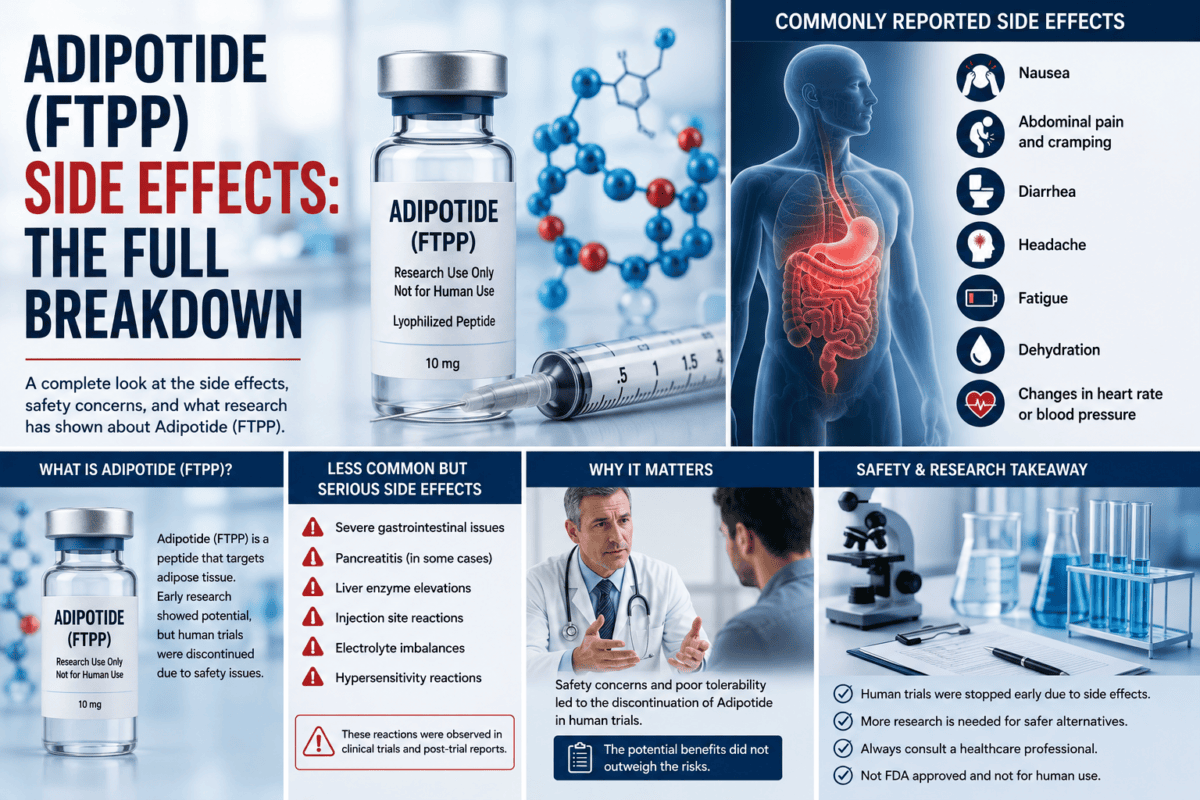
Based on the published research above, the documented and potential Adipotide (FTPP) side effects fall into a few distinct categories. The table below summarizes what was actually observed, by study — a level of specificity that most online summaries skip.
| Effect Category | Rodent Studies | Primate Study (2011) | Human Trial (NCT01262664) |
|---|---|---|---|
| Weight/fat loss | Up to ~30% body weight | 7–15% body weight; imaging-confirmed fat loss | Not published |
| Kidney effects | Not well characterized | Reversible tubular changes, elevated creatinine | Dose-limiting nephrotoxicity; trial stopped early |
| Insulin sensitivity | Improved | Improved | Not published |
| GI/injection-site effects | Not reported | Not emphasized in published data | Reported in trial monitoring, per secondary sources |
| Long-term data | None | None (28-day treatment, 28-day washout only) | None (trial terminated early) |
Kidney-Related Effects
This is the headline concern in every serious discussion of Adipotide (FTPP) side effects, and for good reason. Of all documented Adipotide (FTPP) side effects, kidney impact is the one with the most consistent evidence behind it.
Does Adipotide cause kidney damage? In the primate study, yes — researchers documented measurable, dose-dependent kidney effects. Why is Adipotide associated with kidney toxicity in the first place? The explanation traces back directly to mechanism: the peptide is engineered to disrupt blood vessels, and kidneys are extraordinarily vessel-dense organs responsible for filtering the entire blood supply repeatedly throughout the day. A compound built to destroy vasculature feeding fat tissue does not appear to stay perfectly confined to fat tissue.
Are Adipotide side effects reversible? In the 2011 monkey study, the kidney changes reportedly improved during the post-treatment washout period. But “improved in a closely monitored, single 28-day cycle in ten primates” is a fundamentally different claim than “safe to use repeatedly, at scale, in an unsupervised human setting.” What are the long-term risks of Adipotide? This remains genuinely unanswered. No study — animal or human — has followed subjects for an extended period, or through repeated dosing cycles, to determine what sustained or repeated exposure might do to kidney function over time.
Gastrointestinal and Systemic Effects
Kidney effects aren’t the only entry in the Adipotide (FTPP) side effects list, even if they’re the most serious. Beyond the kidney findings, secondary sources describing the human trial reference gastrointestinal symptoms and injection-site reactions among monitored adverse events, though these were secondary to the nephrotoxicity finding that ultimately ended the study.
Are Side Effects Different in Animals vs. Humans?
Are Adipotide side effects different in humans and animals? This is one of the most important — and least discussed — questions in the entire conversation, and the trial data suggests the answer may be yes, in a concerning direction. The human trial used a starting dose of 0.03 mg/kg — dramatically lower than the 0.43 mg/kg used in the monkey study — and still ran into dose-limiting kidney toxicity concerns severe enough to end the trial after only a handful of participants.
That’s a meaningful signal. Primate physiology is closer to human physiology than rodent models, which is part of why the monkey data was taken seriously in the first place. But “closer” is not “identical,” and the human trial outcome suggests the kidney sensitivity to this compound may be more pronounced — or the safety margin narrower — in humans than the animal data alone predicted.
Is Adipotide Safe? Weighing Adipotide (FTPP) Side Effects Against the Evidence
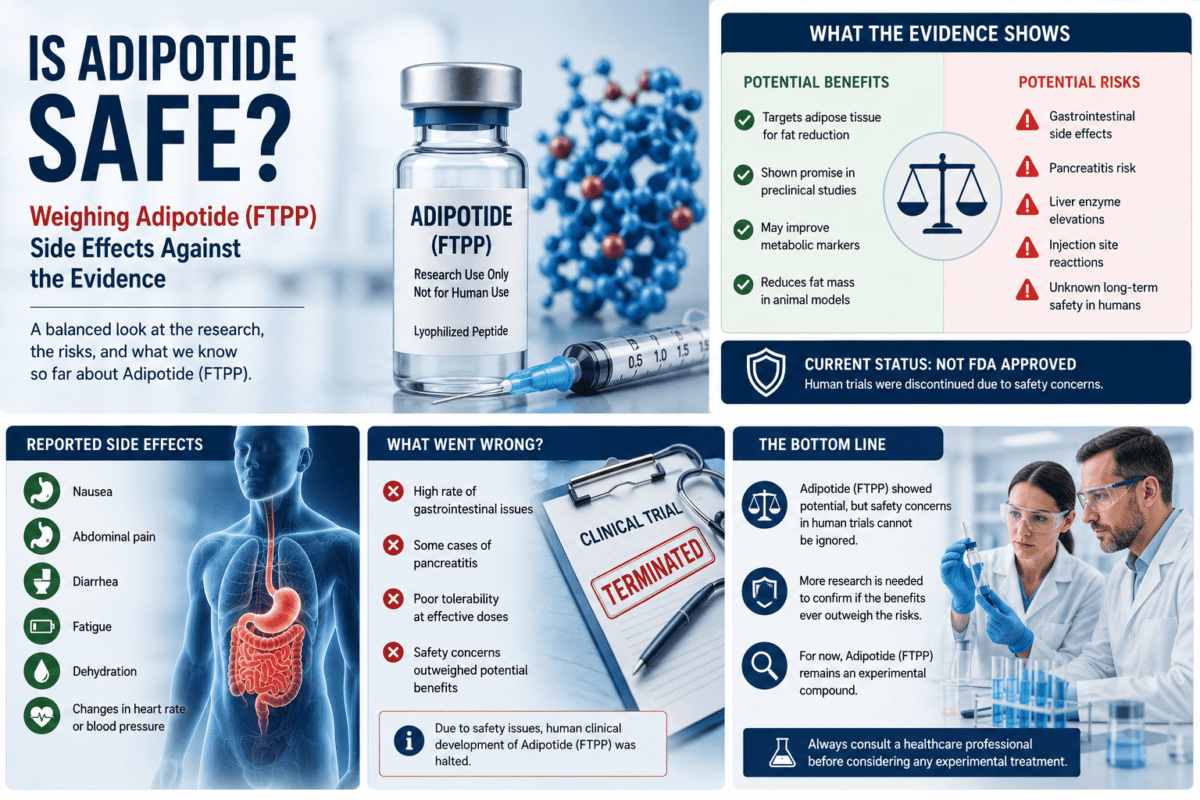
These are the two questions most readers actually want answered, and the honest response is unsatisfying by design: there is not enough evidence to call Adipotide either clearly safe or definitively dangerous for general human use, because the one study built to answer that question was stopped before it could.
What can be said with confidence about adipotide safety in humans:
- A documented kidney toxicity signal exists in both the primate study and the human trial.
- The only human study was a small, early-phase safety trial in cancer patients — not a healthy population, and not a weight-loss efficacy trial.
- That human trial was terminated early, specifically citing nephrotoxicity, after enrolling only about four participants.
- No maximum tolerated human dose was ever established.
- No long-term human safety data exists in any published or registered source.
- It has not cleared FDA review for any indication, and is sold only as a research chemical, not for human consumption.
Framed against adipotide risks more broadly, the compound sits in a genuine research gray zone: mechanistically interesting enough to have justified a human trial, and risky enough that the trial didn’t survive contact with actual human kidneys.
Adipotide vs. Established Obesity Treatments
For readers comparing Adipotide (FTPP) side effects against the safety record of approved options, the contrast in evidence quality is stark.
| Factor | Adipotide (FTPP) | FDA-Approved GLP-1 Medications (e.g., semaglutide, tirzepatide) |
|---|---|---|
| FDA approval | None | Approved for specific indications |
| Human trial phases completed | Phase I (terminated early) | Phase I–III completed, thousands of participants |
| Published human safety data | None | Extensive, peer-reviewed |
| Established dosing | None | Standardized, clinically validated |
| Mechanism | Destroys fat-tissue vasculature | Regulates appetite and insulin signaling via GLP-1 receptor pathways |
| Known kidney safety signal | Documented in animal and human trial data | Studied extensively; monitored in label |
Is FTPP peptide approved for weight loss? No. Adipotide has none of the multi-phase trial history behind it that approved medications do. That doesn’t mean the underlying science is worthless — targeting adipose vasculature remains a genuinely interesting concept in obesity research, and related peptides (some derived from the same research group) continue to be studied for other applications, including cancer combination therapy. It means the specific compound discussed here, as actually studied, is not a validated substitute for treatments that have completed the human safety review process.
Common Questions About Adipotide, Fat Cells, and Mechanism
What peptide kills fat cells? Adipotide’s proposed mechanism doesn’t kill fat cells directly — it targets and destroys the blood vessels supplying them, causing fat tissue to shrink from reduced blood supply rather than direct destruction of the fat cells themselves. This vascular-targeting approach is what separates it mechanistically from appetite-suppressing or metabolism-altering compounds.
Do fat cells ever go away, or just shrink? This is worth understanding independently of Adipotide. Under calorie restriction or exercise, fat cells typically shrink in size rather than disappear — the total number of fat cells a person carries is relatively stable in adulthood, while individual cell size fluctuates with energy balance. The primate research on Adipotide suggested a somewhat different pathway involving vascular disruption, though the long-term cellular consequences in humans remain uncharacterized.
What stimulates fat cell growth? Chronic caloric surplus, insulin resistance, and certain hormonal and metabolic conditions are among the well-documented drivers of fat cell growth and expansion — an area of research that is far better established than anything specific to Adipotide.
What diseases are linked to adipose tissue? Excess adipose tissue, particularly visceral fat, is associated with type 2 diabetes, cardiovascular disease, certain cancers, and metabolic syndrome — part of why compounds targeting fat tissue attract so much research interest, and why the prostate cancer trial hypothesized that reducing white fat might have downstream benefits.
Which peptide is most effective for reducing belly fat? No peptide, including Adipotide, has clinical-grade published evidence establishing superiority for targeted abdominal fat reduction in humans. Claims of this kind circulating online typically extrapolate from animal data or anecdote rather than controlled human trials.
Reviews, Vendor Claims, and What They’re Missing
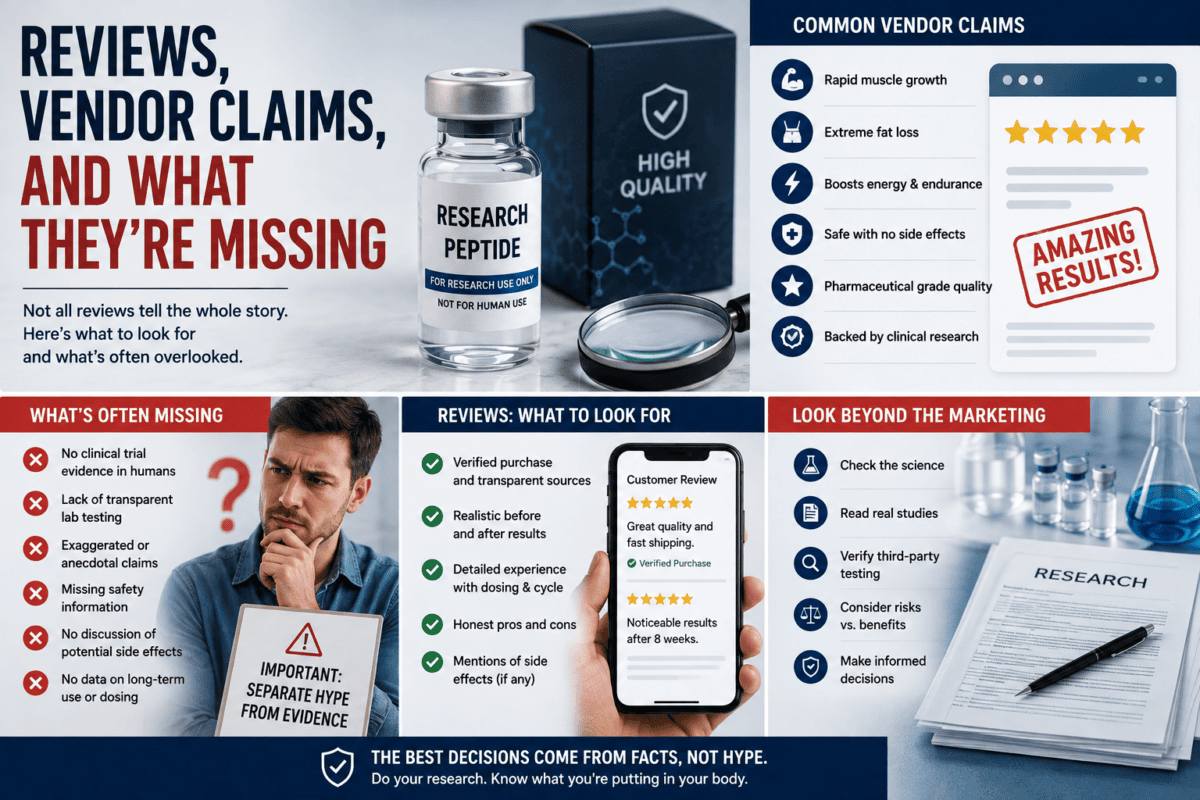
What are the reviews of Adipotide? Search results and forum posts describing personal experiences with Adipotide are not clinical evidence — they are uncontrolled, unverified, self-reported anecdotes, often from people using research-chemical-grade material outside any medical supervision, with no standardized dosing and no kidney function monitoring. Weighed against a terminated human trial that cited kidney toxicity after just a handful of monitored, medically supervised participants, anecdotal “reviews” carry essentially no weight as safety evidence.
Where can I buy Adipotide peptide? It’s sold by various research-chemical vendors, typically labeled “for laboratory research use only, not for human consumption.” That labeling exists because the compound has not been evaluated by the FDA for safety or efficacy in humans — it is a legal distinction, not a safety endorsement.
How long does Adipotide take to work? In the primate study, measurable weight and fat-mass changes were observed within the 28-day treatment window. No validated human timeline exists, because no human efficacy trial was completed.
How long does it take for weight loss injections to work? For FDA-approved GLP-1 medications, clinical trials show measurable weight loss typically beginning within the first several weeks and continuing over months under medical supervision — a very different evidence base than anything available for Adipotide.
Where This Leaves the Research-Minded Reader
If you’re a researcher, student, or science-oriented reader trying to get an accessible overview of Adipotide (FTPP) side effects, here’s the honest summary of what does research say about Adipotide side effects:
- Rodent and primate studies showed weight loss alongside a documented, dose-dependent kidney toxicity signal.
- The one human trial was a small, early-phase safety study in cancer patients — not a weight-loss trial — and it was terminated early after enrolling only a handful of participants, specifically citing kidney toxicity concerns.
- No FDA approval, no established human safety data, no validated dosing exists, because the research needed to establish those things was never completed.
- The kidney signal is the central and consistent finding across every stage of Adipotide research — rodent, primate, and human — and it is the direct reason serious clinical development stopped.
Online claims, vendor product pages, and forum testimonials routinely outpace what the published science actually supports. When it comes to genuine Adipotide (FTPP) side effects, the gap between “showed promising results in a monkey study” and “proven safe for human use” is not a minor technicality — it’s the exact gap that ended the only human trial this compound ever had.
Frequently Asked Questions About Adipotide (FTPP) Side Effects
What are the potential side effects of taking Adipotide? This is the most common way people phrase a search for Adipotide (FTPP) side effects. Based on published research: dose-dependent kidney effects (documented in both primate and human data), reported gastrointestinal and injection-site effects, and — because so little human data exists — a wide range of unknown and unstudied long-term risks.
Can Adipotide cause renal toxicity? Yes. Renal toxicity is the most consistently documented finding across the primate study and the human trial, and it’s the specific reason the human trial was terminated.
Does Adipotide affect kidney function? Yes, based on both animal and the limited human data available — this is the single most well-supported finding in the entire body of Adipotide research.
What side effects were observed in Adipotide animal studies? Weight loss, improved insulin sensitivity, and reversible kidney tubular changes with elevated creatinine were the primary findings reported in the 2011 primate study.
Are Adipotide side effects reversible? In the monitored primate study, kidney changes reportedly reversed during a washout period. Whether this holds for repeated dosing, longer exposure, or unsupervised human use has never been studied.
What are the limitations of Adipotide safety research? The evidence base is small: a handful of rodent studies, one ten-monkey primate trial, and one human trial that enrolled roughly four participants before stopping early. There is no long-term data, no large-scale human safety trial, and no peer-reviewed human efficacy data at all.
The Bottom Line on Adipotide (FTPP) Side Effects
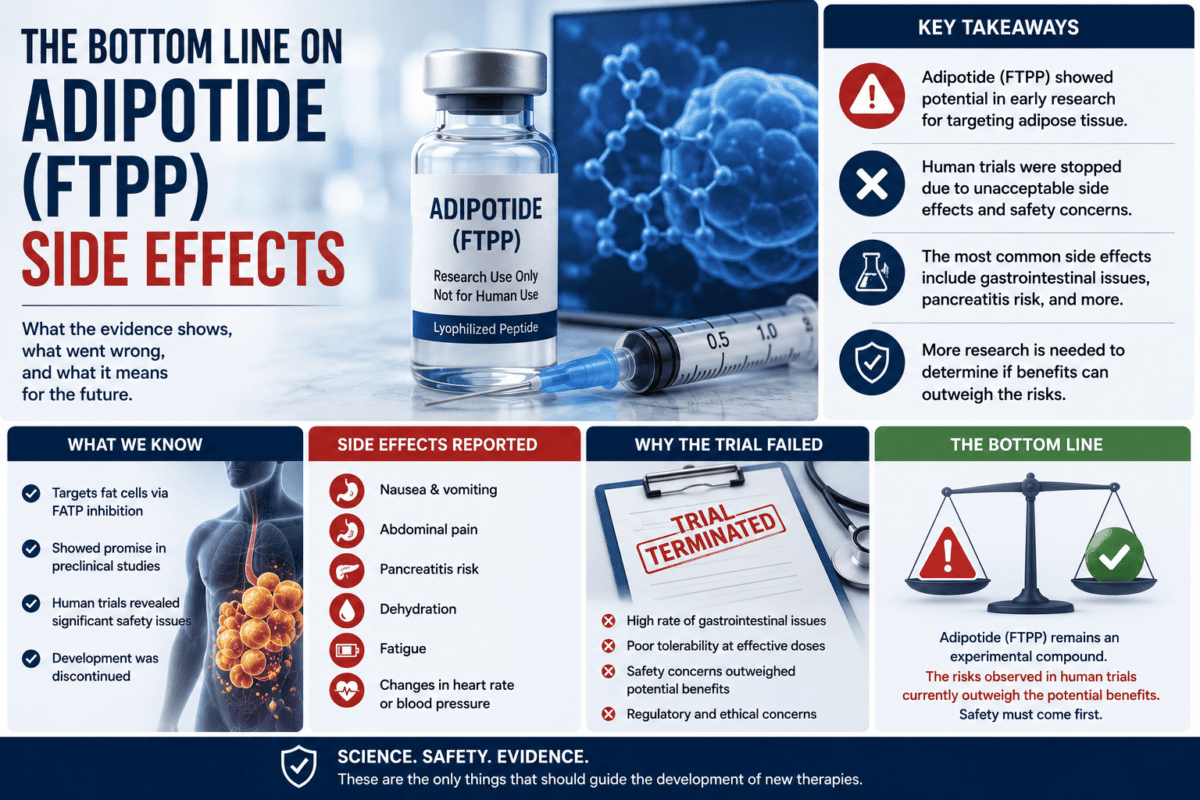
Adipotide remains an experimental, unapproved compound. The available evidence — animal studies showing efficacy alongside a real kidney toxicity signal, and a human trial that was stopped early over that same concern — is informative but far from complete. Anyone evaluating claims about Adipotide (FTPP) side effects should weigh them against this actual evidence base: a terminated trial, an undefined safety margin, and a consistent, unresolved kidney signal — not against marketing copy or anecdotal reports.
Sources:
- Barnhart KF, et al. “A Peptidomimetic Targeting White Fat Causes Weight Loss and Improved Insulin Resistance in Obese Monkeys.” Science Translational Medicine, 2011. science.org/doi/10.1126/scitranslmed.3002621
- ClinicalTrials.gov. “A First-in-Man, Phase I Evaluation of a Single Cycle of Prohibitin Targeting Peptide 1 in Patients With Metastatic Prostate Cancer and Obesity.” Identifier NCT01262664. clinicaltrials.gov/study/NCT01262664
- ScienceDaily. “Obese monkeys lose weight on drug that attacks blood supply of fat cells.” 2011. sciencedaily.com/releases/2011/11/111109143009.htm
- Arrowhead Pharmaceuticals investor announcements on Adipotide IND clearance and Phase I dosing, 2012. ir.arrowheadpharma.com
This article is provided for educational and research-awareness purposes. It does not constitute medical advice, and it is not an endorsement of Adipotide for personal use. Readers considering weight-management options should consult a licensed healthcare provider about approved, evidence-based treatments.