
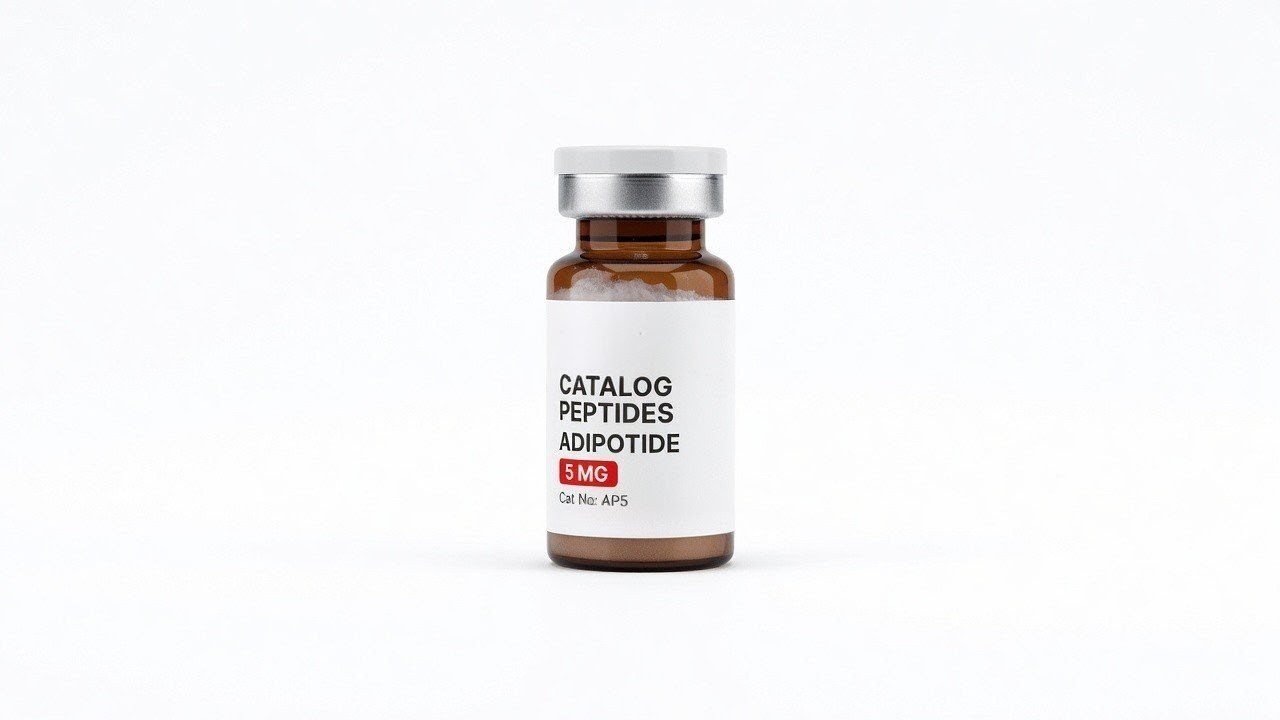
Adipotide For Sale: Research-Grade Fat-Targeted Proapoptotic Peptide
Looking for Adipotide for sale? Sino Research Peptide Manufacturer supplies high-purity Adipotide (FTPP), formulated specifically for laboratory and research use. Below, you’ll find a full research overview of this fat-targeted proapoptotic peptide, along with everything you need to know before you buy Adipotide online.
What Is Adipotide?
Adipotide, also known as FTPP (Fat-Targeted Proapoptotic Peptide), has been widely researched and is posited by scientists to be a proapoptotic peptide that may contribute to cell apoptosis. Adipotide may possibly act as a peptide targeting prohibitin, which is why it also bears the name Prohibitin-targeting peptide 1 (Prohibitin-TP01). Current research continues to explore Adipotide’s potential in this area and its actions related to targeting properties. Prohibitins are natural proteins that scientists consider to regulate functions such as cell formation, metabolism, and inflammation.
From Cancer Research to Obesity Research
Research teams initially considered Adipotide for its potential to mitigate cancer cell action. It was presumed the peptide might prevent blood supply to cancer cells, resulting in cell death and inhibited malignant cell growth. Upon further research, scientists suggested the peptide appeared to exhibit the same mechanism of action, but on fat cells instead — an unexpected finding that opened Adipotide’s research potential toward lipolysis and obesity mitigation. Researchers consider this early-stage “proof of concept” study significant, though the compound requires further study to understand its full potential and cellular impact.
How Adipotide Was Developed
Researchers isolated a naturally occurring peptide (sequence CKGGRAKDC) via phage display methodology and combined it with a proapoptotic sequence, forming the compound now termed Adipotide. Adipotide is homologous to the peptide sequence found in white adipose tissue. Because of this development, researchers suggest the peptide may target the prohibitin PHB1 found at the surface of adipose tissue, possibly attaching to and damaging it, potentially disrupting blood supply to adipocytes (fat cells).
Prohibitins are considered by scientists to act as a vascular marker of fatty tissues, and Adipotide may possibly identify these markers and consequently induce apoptosis in these cells. Researchers also speculate Adipotide may interact not only with prohibitin but also with another receptor called annexin A2 (ANX2), potentially disrupting their role in supporting blood and fat supply to fat cells in white adipose tissue.
Early preclinical studies on monkeys also suggested that following Adipotide presentation, the monkeys exhibited apparently reduced insulin resistance.
Chemical Makeup
| Property | Detail |
|---|---|
| Molecular Formula | C152H252N44O42 |
| Molecular Weight | 2611.41 g/mol |
| Other Known Titles | FTPP |
What Is Adipotide Used For in Research?
Before you buy Adipotide online, it helps to understand what current research suggests about its potential applications. Below, we break down the key study areas.
Adipotide Initial Research
Adipotide’s mode of action appears to hinge on its selective affinity for the prohibitin receptor, expressed on the surface of endothelial cells in the vasculature of white adipose tissue. The compound’s potential to cause targeted apoptosis is facilitated by its fusion to the D-enantiomer D(KLAKLAK)2 sequence, an amphipathic peptidomimetic posited to disrupt mitochondrial membranes upon cellular internalization, potentially leading to cell death in the targeted vasculature.
To evaluate the compound’s potential, researchers presented Adipotide to three different types of primate models daily for four weeks, without deliberate changes to diet or exercise routine. Following the study, researchers suggested the models lost about 11% of body weight and 39% of fat deposits compared to baseline.
Researchers also reported that some models exhibited apparent mild renal dysfunction across four study groups (A, B, C, and D). Creatinine levels apparently increased in groups A and B, though these returned to optimal levels after a washout period. Researchers also noted an apparent reduction in food intake among test models, raising questions about potential effects on appetite or satiety signals — though the specific mechanisms, if any, remain unclear. While Adipotide is suggested to have cellular-level potential for inducing weight loss by targeting white adipose tissue vasculature, its exact mechanisms, particularly regarding appetite regulation and metabolic changes, require further investigation.
Adipotide and Malignant Cell Research
Scientists surveyed numerous blood vessels and tissues, both normal and malignant, isolating and studying various peptides and molecules distributed within them. Through chemical isolation and analytical techniques, researchers posited four native ligand receptors that appeared specific to certain carcinogenic cell types, potentially serving as vascular markers through which Adipotide exerts some of its action.
Researchers identified four native ligand-receptors within the vasculature’s cellular composition — two apparently common across multiple tissues (integrin α4/annexin A4 and cathepsin B/apolipoprotein E3), and two potentially specific to certain tissues. Researchers identified these through protein purification, native ligand identification from protein arrays, and supervised database searches.
Adipotide and Diabetes Research
In preliminary studies, obese murine models received Adipotide to explore its potential mechanism on adipose cells. Within 2 to 3 days, researchers observed the models appeared to exhibit improved glucose tolerance and decreased triglyceride levels — notably, without a corresponding change in body weight, suggesting a mechanism independent of weight loss.
Adipotide apparently improved glucose tolerance, as suggested by reductions in insulin and triglycerides, distinct from changes seen in control groups with similar food intake. The apparent improvement in glucose tolerance occurred rapidly, suggesting a potential direct influence on glucose regulatory mechanisms rather than a downstream effect of reduced eating.
Microarray analysis suggested shifts in gene expression within white adipose tissue of Adipotide-exposed models. Pathways related to mitochondrial function, oxidative phosphorylation, and amino acid degradation appeared altered by a high-fat diet but seemingly reversed by Adipotide exposure — suggesting a potential role in modulating mitochondrial activity and metabolic processing in white adipose tissue.
Researchers also examined various metabolic variables. While increased serum lipids were expected due to rapid white adipose tissue reduction, findings differed: triglycerides decreased in Adipotide-exposed models, with distinctive fatty acid and acylcarnitine levels compared to controls, hinting at metabolic alterations not solely tied to food intake or body weight changes. Serum adipokine levels, including adiponectin and resistin, didn’t show significant Adipotide-attributable changes, leading researchers to suggest the rapid glucose homeostasis improvement might not directly link to these adipokines. Adipotide also appeared to cause unique changes in serum acylcarnitines — specifically, a decrease in short- and medium-chain acylcarnitines alongside an increase in long-chain species, implying a shift in the metabolic processing of these molecules.
Where to Buy Adipotide (FTPP) Online
What Is Adipotide and Where to Buy It
If you’ve been searching for what is Adipotide and where to source it, Sino Research Peptide Manufacturer offers a straightforward path to reliable, research-grade FTPP. Every batch ships with purity verification, so you always know exactly what you’re working with.
Where to Buy Adipotide For Sale
Wondering where to buy Adipotide for sale? Our streamlined ordering process gets research-grade material to your lab quickly, with fast, tracked dispatch to laboratories and institutions.
Best Place to Get Adipotide For Sale
Researchers looking for the best place to get Adipotide for sale choose Sino Research Peptide Manufacturer for consistent quality control, transparent documentation, and dependable supply. You can buy FTPP Adipotide peptide online directly through our platform, whether you’re placing a first order or restocking for an ongoing study.
You want to Know More About Adipotide For Sale?
Studies indicate that prohibitin and ANX2, in conjunction with the fatty acid transporter CD36, may enhance fatty acid uptake by endothelial cells and its transport into adipocytes. Research showed that mice lacking ANX2 exhibited reduced white adipose tissue despite normal vascularization and glucose metabolism, likely due to impaired fatty acid uptake. The interaction between ANX2 and prohibitin is crucial for effective fatty acid transport, with their colocalization on adipocyte surfaces being influenced by extracellular fatty acids. This dynamic regulation suggests a potential target for compounds like Adipotide, which may facilitate fat burning in these cells.
Studies suggest that prohibitin and ANX2, when interacting in a complex with the fatty acid transporter CD36, potentially facilitate fatty acid uptake by the endothelium and subsequent transport into adipocytes. One study observed purported white adipose tissue hypotrophy in murine models lacking ANX2, despite apparently normal vascularization, adipogenesis, and glucose metabolism — potentially attributed to reduced fatty acid uptake. Researchers suggested the efficiency of fatty acid transport relies on the interaction of ANX2 and prohibitin, essential for mediating fatty acid transport from the endothelium into adipocytes.
This colocalization of prohibitin and CD36 on the adipocyte surface appeared induced by extracellular fatty acids, suggesting dynamic regulation of this protein complex — unveiling a potential pathway that compounds like Adipotide might target. Consequently, researchers speculate Adipotide may potentially burn fat stored in these cells as fuel.Studies suggest that prohibitin and ANX2, when interacting in a complex with the fatty acid transporter CD36, potentially facilitate fatty acid uptake by the endothelium and subsequent transport into adipocytes.
One study observed purported white adipose tissue hypotrophy in murine models lacking ANX2, despite apparently normal vascularization, adipogenesis, and glucose metabolism — potentially attributed to reduced fatty acid uptake. Researchers suggested the efficiency of fatty acid transport relies on the interaction of ANX2 and prohibitin, essential for mediating fatty acid transport from the endothelium into adipocytes. This colocalization of prohibitin and CD36 on the adipocyte surface appeared induced by extracellular fatty acids, suggesting dynamic regulation of this protein complex — unveiling a potential pathway that compounds like Adipotide might target. Consequently, researchers speculate Adipotide may potentially burn fat stored in these cells as fuel.
Important Research Notice
Adipotide peptide is available for research and laboratory purposes only. It is not intended for human or veterinary use. Please review and adhere to our Terms and Conditions before placing an order.
.
References:
- Thuaud, F., Ribeiro, N., Nebigil, C. G., & Désaubry, L. (2013). Prohibitin ligands in cell death and survival: mode of action and therapeutic potential. Adipotide For Sale Chemistry & biology, 20(3), 316–331. https://doi.org/10.1016/j.chembiol.2013.02.006
- Melissa H., Adipotide For Sale Cancer treatment shows promise for rapid weight loss, Los Angeles Times, 10 Nov 2011. https://www.latimes.com/local/la-xpm-2011-nov-10-la-he-drug-fat-loss-20111110-story.html
- Kolonin, Mikhail G et al. “Reversal of obesity by targeted ablation of adipose tissue.” Nature medicine vol. 10,6 (2004): 625-32. https://pubmed.ncbi.nlm.nih.gov/15133506/
- Salameh A, Daquinag AC, Staquicini DI, An Z, Hajjar KA, Pasqualini R, Arap W, Kolonin MG. Prohibitin/annexin 2 interaction regulates fatty acid transport in adipose tissue. JCI Insight. 2016 Jul 7;1(10):e86351. doi: Adipotide For Sale 10.1172/jci.insight.86351. PMID: 27468426; PMCID: PMC4959783.
- Barnhart, Kirstin F et al. “A peptidomimetic targeting white fat causes weight loss and improved insulin resistance in obese monkeys.” Science translational medicine vol. 3,108 (2011): 108ra112. doi:10.1126/scitranslmed.3002621. https://pubmed.ncbi.nlm.nih.gov/22072637/
- Staquicini, Fernanda I et al. “Vascular ligand-receptor mapping by direct combinatorial selection in cancer patients. Adipotide For Sale” Proceedings of the National Academy of Sciences of the United States of America vol. 108,46 (2011): 18637-42. doi:10.1073/pnas.1114503108. https://pubmed.ncbi.nlm.nih.gov/22049339/
- Kim, Dong-Hoon et al. “Rapid and weight-independent improvement of glucose tolerance induced by a peptide designed to elicit apoptosis in adipose tissue endothelium.” Diabetes vol. 61,9 (2012): 2299-310. doi:10.2337/db11-1579 Adipotide For Sale. https://pubmed.ncbi.nlm.nih.gov/22733798/
- Kolonin, Mikhail G et al. “Reversal of obesity by targeted ablation of adipose tissue.” Nature medicine vol. Adipotide For Sale 10,6 (2004): 625-32. doi:10.1038/nm1048. https://pubmed.ncbi.nlm.nih.gov/15133506/
| Adipotide | 2mg*10vials, 5mg*10vials |
|---|
1 review for Adipotide (FTPP) (10mg)
 Adipotide (FTPP) (10mg)
Related products
All Peptides
All Peptides
All Peptides
All Peptides
All Peptides
All Peptides
All Peptides
All Peptides
2nd order and once again excellent service and speedy delivery. Free back water syringes and wipes a fabulous bonus and so much appreciated. Jordan on the ball, confirms my orders when i ask. Have recommended to friends 🧡