Buy KLOW Peptide: A Four-Peptide Research Blend for Repair Biology
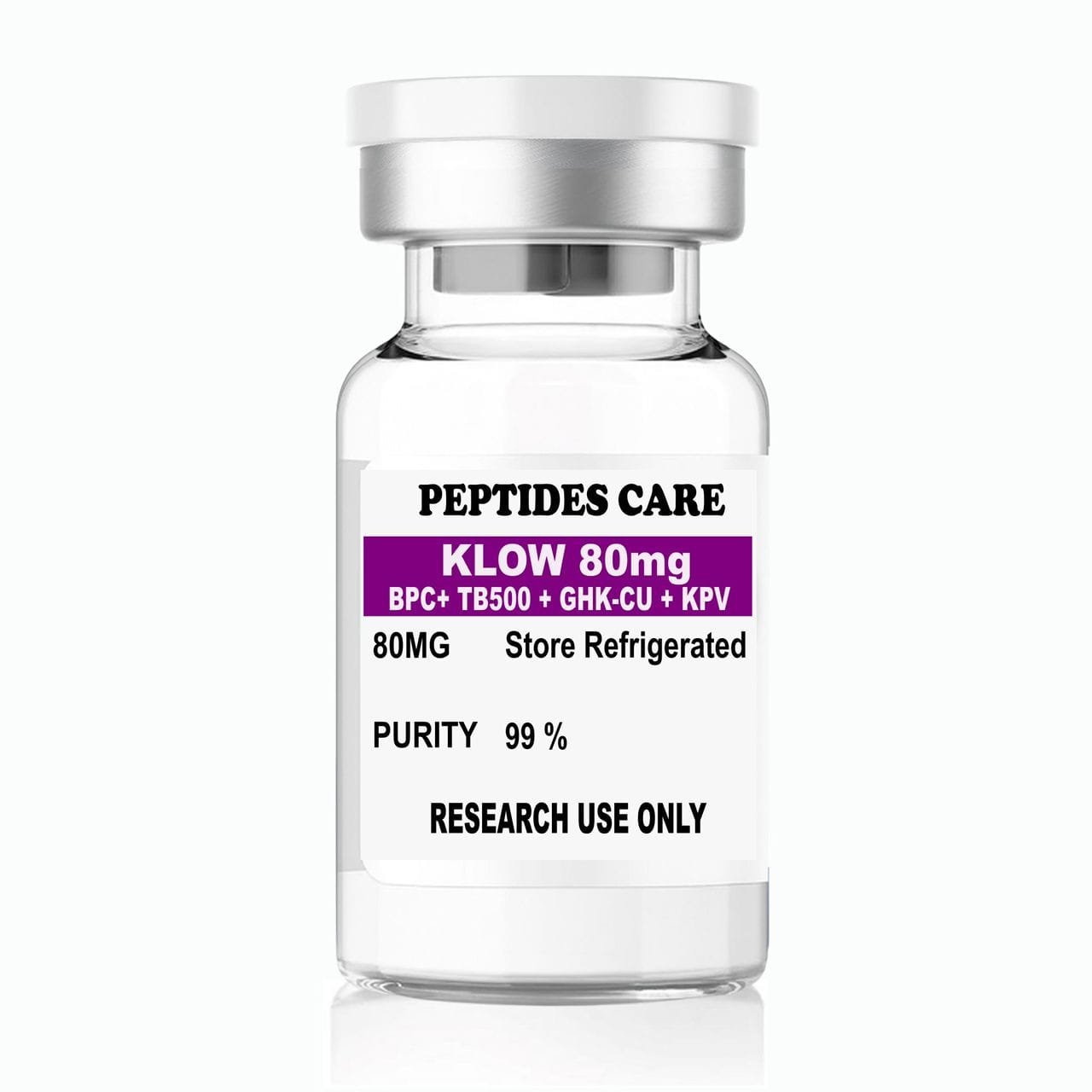
Ready to buy KLOW peptide for your lab? Sino Research Peptide Manufacturer supplies the KLOW Blend — BPC-157 (10mg), KPV (10mg), TB-500 (10mg), and GHK-Cu (50mg) — as individually vialed, research-grade peptides. Below, you’ll find the research context behind each component, along with everything you need to know before you buy KLOW peptide online.
KLOW Blend Peptide Benefits: The Four Components
BPC-157, TB-500, GHK-Cu, and KPV are peptides under investigation in laboratory models for their potential to support inflammatory signaling, angiogenesis, and repair mechanisms. Structurally, they differ considerably from one another: BPC-157 appears to be a synthetic pentadecapeptide, TB-500 mirrors the endogenous thymosin beta-4, GHK-Cu is a tripeptide bound to a copper ion, and KPV represents the C-terminal segment of alpha-melanocyte-stimulating hormone.
Each peptide appears to converge on overlapping repair-associated processes, supporting the hypothesis behind combining them as the KLOW Blend — actions that researchers consider partly overlapping and partly complementary based on available research data.
Chemical Makeup
| Peptide | Molecular Formula | Molecular Weight | Other Known Titles |
|---|---|---|---|
| BPC-157 | C62H98N16O22 | ~1419.5 g/mol | Body Protection Compound-157 |
| KPV | C16H30N4O4 | ~343 g/mol | MSH(11-13), ACTH(11-13), alpha-MSH(11-13) |
| TB-500 | C212H350N56O78S | ~4963 g/mol | Synthetic Thymosin Beta-4 |
| GHK-Cu | C14H23CuN6O4 | ~338 g/mol | Glycyl-L-histidyl-L-lysine-copper 2+ |
Individual Peptide Mechanisms
BPC-157 Research
BPC-157 appears to be a synthetic peptide built from fifteen amino acids, with a potential parent protein remaining undefined. Laboratory models from the team of Sikiric et al. point toward a possible interaction between BPC-157 and intracellular signaling systems tied to vascular growth through angiogenic pathways, alongside inflammatory control through dampening pro-inflammatory cascades.
TB-500 Research
TB-500 mimics the endogenously occurring thymosin beta-4 and has drawn attention for its apparent involvement in cell migration, cytoskeletal arrangement, and inflammatory signaling. Cell culture experiments by Maar et al. hint that TB-500 exposure may assist cellular movement and structural organization, while potentially engaging pathways connected to angiogenesis and regulation of inflammatory mediators.
GHK-Cu Research
GHK-Cu is a peptide complex made from the tripeptide GHK — glycine, histidine, and lysine — joined to a divalent copper ion (Cu²⁺). Investigators such as Maquart et al. propose the GHK sequence may arise endogenously as a signal that collagen breakdown is occurring and repair is needed. GHK-Cu is posited to function as a repair-associated signal engaging fibroblasts, immune cells, enzymes, ion channels, and cell-surface receptors, with copper itself potentially central to collagen formation, inflammatory signaling adjustment, and antioxidant activity.
KPV Research
KPV is a tripeptide of lysine, proline, and valine, corresponding to the C-terminal segment of alpha-melanocyte-stimulating hormone (α-MSH). Research from Böhm et al. suggests KPV may carry much of the anti-inflammatory potential attributed to the larger α-MSH molecule despite being a minimal fragment, potentially involving reduction of NF-κB and MAP kinase signaling alongside interactions with vasodilators like nitric oxide (NO).
What Does the Research Say About the KLOW Blend?
Anti-Inflammatory Signaling Research
All four peptides are posited to occupy complementary, partly overlapping positions within inflammatory signaling. Laboratory work by Santra et al. suggests TB-500 may reduce inflammation-linked signaling in oligodendrocyte progenitor cell cultures by raising levels of miR-146a, a regulatory RNA molecule that may act as a brake on inflammatory routes tied to NF-κB activation.
Research by Sikiric et al. suggests BPC-157 may curb infiltration of inflammatory cells, with investigators reporting lower biochemical markers of inflammation and heightened macrophage activity steering inflammation toward resolution. Researchers have suggested BPC-157 may interact with the nitric oxide system in a way that supports endothelium protection, potentially restraining inflammatory amplification.
Further experiments by Park et al. indicate GHK-Cu may temper inflammatory signaling in activated macrophages, lowering reactive oxygen species and pulling down TNF-α and IL-6 release, possibly by blunting NF-κB activation. Laboratory work by Dalmasso et al. posits that KPV may enter epithelial and immune cell cultures through the PepT1 transporter, slowing IκB-α degradation and dampening MAP kinase signaling once inside.
Extracellular Matrix and Collagen Research
Research on TB-500 by Xu et al. suggests the peptide may reinforce structural organization in recovering tendon fibroblasts, with more uniformly aligned collagen fibers and larger fibril diameters observed in exposed cultures. BPC-157 may also assist repair by supporting tendon fibroblasts — research by Chang et al. reports quickened fibroblast migration and better survival under oxidative stress, linked to upregulation of actin fiber formation and focal adhesion signaling through FAK and paxillin phosphorylation.
GHK-Cu may additionally promote collagen synthesis at the tendon-bone cell interface, with research by Fu et al. suggesting better-supported bone cell growth around tendon cell grafts. KPV may contribute to this dimension by quieting the inflammatory environment that often accompanies tissue damage, potentially allowing fibroblast activity and matrix deposition to continue with less inflammatory interference.
Tissue Regeneration and Angiogenesis Research
Research by Lv et al. suggests TB-500 may shape cell movement by binding globular actin (G-actin), a baseline requirement for sprouting angiogenesis — the peptide reportedly raised cell viability, migration, and tube formation on matrices, alongside lifted expression of angiogenesis-linked factors like VEGFA and the Tie2 receptor.
Further research by Sikiric et al. suggests BPC-157 may aid angiogenesis by steadying the vascular setting required for new vessel growth, shielding endothelial cells, and preserving vessel patency. Additional investigations by Bonfiglio et al. found that laboratory models exposed to KPV achieved complete structural regeneration within 60 hours in mechanically induced abrasion models, compared to incomplete closure in controls — an effect apparently blocked by a nitric oxide synthase inhibitor.
Research on GHK-Cu by Mulder et al. suggests the peptide may upregulate VEGF and encourage endothelial migration and tube formation, with copper itself potentially serving as a required cofactor for angiogenic enzymes and transcriptional programs.
KLOW vs GLOW Peptide
Researchers and suppliers sometimes reference other repair-focused peptide combinations alongside the KLOW Blend, including variations sometimes marketed as “GLOW” blends. Since our source research documentation covers the four-peptide KLOW combination specifically (BPC-157, TB-500, GHK-Cu, and KPV), we can’t speak to the exact composition or research basis of GLOW-branded blends offered elsewhere. If you’re comparing options, we’d recommend confirming the specific peptide components and dosages in any blend before comparing it against KLOW.
Where to Buy KLOW Peptide Online
Buy KLOW Peptide Online
If you’ve been searching for where to buy KLOW peptide online, Sino Research Peptide Manufacturer offers a straightforward path to reliable, research-grade material across all four components. Every batch ships with purity verification, so you always know exactly what you’re working with.
KLOW Peptide for Sale
We keep the KLOW peptide for sale as four individually vialed, lyophilized components, giving researchers flexibility in reconstitution ratios for their specific protocol.
Important Research Notice
The KLOW Blend (BPC-157 10mg, KPV 10mg, TB-500 10mg, and GHK-Cu 50mg) is available for research and laboratory purposes only. It is not intended for human or veterinary use. Please review and adhere to our Terms and Conditions before placing an order.
References
- Seiwerth S, Milavic M, Vukojevic J, Gojkovic S, Krezic I, Vuletic LB, Pavlov KH, Petrovic A, Sikiric S, Vranes H, Prtoric A, Zizek H, Durasin T, Dobric I, Staresinic M, Strbe S, Knezevic M, Sola M, Kokot A, Sever M, Lovric E, Skrtic A, Blagaic AB, Sikiric P. Stable Gastric Pentadecapeptide BPC 157 and Wound Healing. Front Pharmacol. 2021 Jun 29;12:627533. doi: 10.3389/fphar.2021.627533. PMID: 34267654; PMCID: PMC8275860. Buy KLOW Peptide
- Maar, K., Hetenyi, R., Maar, S., Faskerti, G., Hanna, D., Lippai, B., Takatsy, A., & Bock-Marquette, I. (2021). Utilizing Developmentally Essential Secreted Peptides Such as Thymosin Beta-4 to Remind the Adult Organs of Their Embryonic State-New Directions in Anti-Aging Regenerative Therapies. Cells, Buy KLOW Peptide 10(6), 1343. https://doi.org/10.3390/cells10061343
- Maquart FX, Pickart L, Laurent M, Gillery P, Monboisse JC, Borel JP. Stimulation of collagen synthesis in fibroblast cultures by the tripeptide-copper complex glycyl-L-histidyl-L-lysine-Cu2+. FEBS Lett. 1988 Oct 10;238(2):343-6. doi: 10.1016/0014-5793(88)80509-x. PMID: 3169264. Buy KLOW Peptide
- Böhm M, Luger TA, Tobin DJ, García-Borrón JC. Melanocortin receptor ligands: new horizons for skin biology and clinical dermatology. J Invest Dermatol. 2006 Sep;126(9):1966-75. doi: 10.1038/sj.jid.5700421. PMID: 16912693. Buy KLOW Peptide
- Santra M, Zhang ZG, Yang J, Santra S, Santra S, Chopp M, Morris DC. Thymosin β4 up-regulation of microRNA-146a promotes oligodendrocyte differentiation and suppression of the Toll-like proinflammatory pathway. J Biol Chem. 2014 Jul 11;289(28):19508-18. doi: 10.1074/jbc.M113.529966. Epub 2014 May 14. PMID: 24828499; PMCID: PMC4094061.
- Sikiric P, Seiwerth S, Rucman R, Turkovic B, Rokotov DS, Brcic L, Sever M, Klicek R, Radic B, Drmic D, Ilic S, Kolenc D, Stambolija V, Zoricic Z, Vrcic H, Sebecic B. Focus on ulcerative colitis: stable gastric pentadecapeptide BPC 157. Curr Med Chem. 2012;19(1):126-32. doi: 10.2174/092986712803414015. PMID: 22300085. Buy KLOW Peptide
- Park JR, Lee H, Kim SI, Yang SR. The tripeptide GHK-Cu complex ameliorates lipopolysaccharide-induced acute lung injury in mice. Oncotarget. 2016 Sep 6;7(36):58405-58417. doi: 10.18632/oncotarget.11168. PMID: 27517151; PMCID: PMC5295439.
- Dalmasso G, Charrier-Hisamuddin L, Nguyen HTT, Yan Y, Sitaraman S, Merlin D. PepT1-Mediated Tripeptide KPV Uptake Reduces Intestinal Inflammation. Gastroenterology. 2008 Jan;134(1):166-178. doi: 10.1053/j.gastro.2007.10.026. PMID: 18061177; PMCID: PMC2431115. Buy KLOW Peptide
- Xu B, Yang M, Li Z, Zhang Y, Jiang Z, Guan S, Jiang D. Thymosin β4 enhances the healing of medial collateral ligament injury in rats. Regul Pept. 2013 Jun 10;184:1-5. doi: 10.1016/j.regpep.2013.03.026. Epub 2013 Mar 21. PMID: 23523891.
- Chang CH, Tsai WC, Lin MS, Hsu YH, Pang JH. The promoting effect of pentadecapeptide BPC 157 on tendon healing involves tendon outgrowth, cell survival, and cell migration. J Appl Physiol (1985). 2011 Mar;110(3):774-80. doi: 10.1152/japplphysiol.00945.2010. Epub 2010 Oct 28. PMID: 21030672.
- Fu SC, Cheuk YC, Chiu WY, Yung SH, Rolf CG, Chan KM. Tripeptide-copper complex GHK-Cu (II) transiently improved healing outcome in a rat model of ACL reconstruction. J Orthop Res. 2015 Jul;33(7):1024-33. doi: 10.1002/jor.22831. Epub 2015 Apr 10. PMID: 25731775. Buy KLOW Peptide
- Lv S, Cai H, Xu Y, Dai J, Rong X, Zheng L. Thymosin‑β 4 induces angiogenesis in critical limb ischemia mice via regulating Notch/NF‑κB pathway. Int J Mol Med. 2020 Oct;46(4):1347-1358. doi: 10.3892/ijmm.2020.4701. Epub 2020 Aug 11. PMID: 32945357; PMCID: PMC7447324.
- Sikiric P, Seiwerth S, Rucman R, Kolenc D, Vuletic LB, Drmic D, Grgic T, Strbe S, Zukanovic G, Crvenkovic D, Madzarac G, Rukavina I, Sucic M, Baric M, Starcevic N, Krstonijevic Z, Bencic ML, Filipcic I, Rokotov DS, Vlainic J. Brain-gut Axis and Pentadecapeptide BPC 157: Theoretical and Practical Implications. Curr Neuropharmacol. 2016;14(8):857-865. doi: Buy KLOW Peptide 10.2174/1570159×13666160502153022. PMID: 27138887; PMCID: PMC5333585.
- Bonfiglio V, Camillieri G, Avitabile T, Leggio GM, Drago F. Effects of the COOH-terminal tripeptide alpha-MSH(11-13) on corneal epithelial wound healing: role of nitric oxide. Exp Eye Res. 2006 Dec;83(6):1366-72. doi: 10.1016/j.exer.2006.07.014. Epub 2006 Sep 11. PMID: 16965771. Buy KLOW Peptide
- Mulder GD, Patt LM, Sanders L, Rosenstock J, Altman MI, Hanley ME, Duncan GW. Enhanced healing of ulcers in patients with diabetes by topical treatment with glycyl-l-histidyl-l-lysine copper. Wound Repair Regen. 1994 Oct;2(4):259-69. doi: 10.1046/j.1524-475X.1994.20406.x. PMID: 17147644.
1 review for KLOW80 CU50+TB10+BC10+KPV10
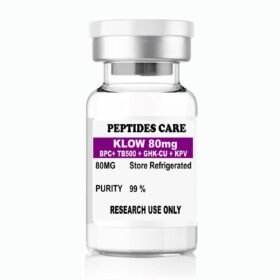 KLOW80 CU50+TB10+BC10+KPV10
Related products
All Peptides
All Peptides
All Peptides
All Peptides
All Peptides
All Peptides
All Peptides
All Peptides
Have used the website multiple times for multiple different items including Klow80, can’t fault both the products and the service. Always super quick delivery and great communication.