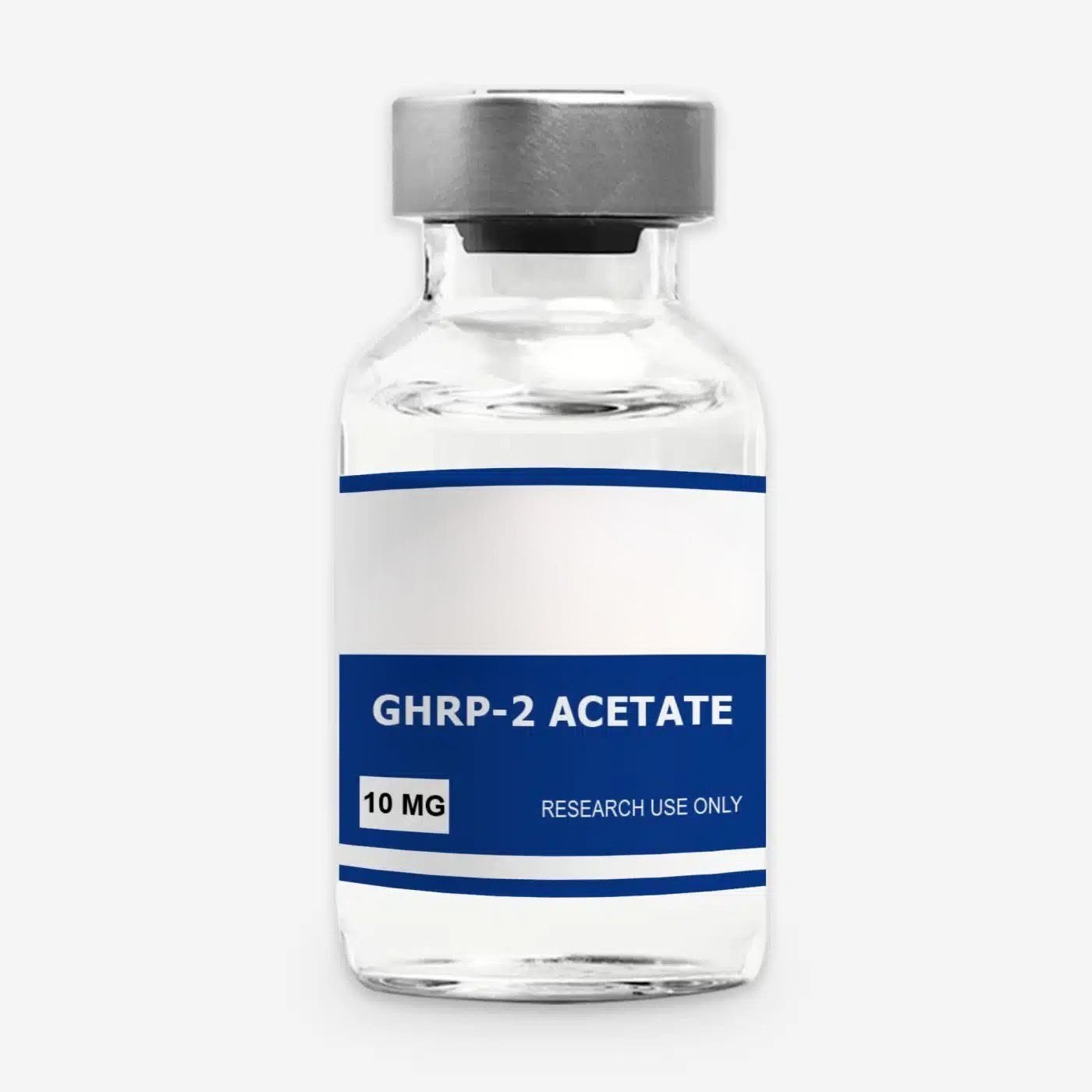
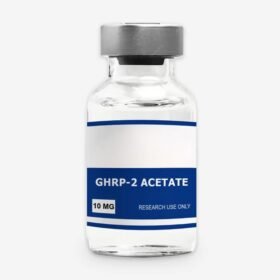
GHRP-2 Acetate
Price range: $30.00 through $50.00
GHRP-2 is a synthetic hexapeptide ghrelin mimetic for laboratory and in vitro research. Supplied at >99% purity with a full third-party COA. For laboratory and in vitro research use only. Not for human consumption. Not a medicine.
Buy GHRP-2: High-Potency GH Secretagogue for Research
Looking to buy GHRP-2 for your lab? Sino Research Peptide Manufacturer supplies GHRP-2 at >99% HPLC-verified purity, complete with a batch-specific Certificate of Analysis (COA) and fast dispatch for laboratory and in vitro research use only.
What Is GHRP-2 Peptide?
Buy GHRP-2 (D-Ala-D-βNal-Ala-Trp-D-Phe-Lys-NH₂) is a synthetic hexapeptide and one of the most potent members of the GHRP class. Researchers developed it as a second-generation GH secretagogue, designed as a higher-efficacy successor to the founding peptide GHRP-6.
Scientists study GHRP-2 for its potent GHS-R1a agonism, dual GHS-R1a and CD36 receptor pharmacology, GH and IGF-1 secretion, cardioprotective signaling, cytoprotective pathway activation, anti-fibrotic biology, and hypothalamic-pituitary-adrenal (HPA) axis interaction. Together, these properties make it one of the most pharmacologically active peptides in the GHRP research literature.
A Second-Generation Reference Peptide
Following Bowers et al.’s characterisation of GHRP-6 in the 1980s, researchers designed GHRP-2 specifically to deliver greater GHS-R1a binding potency and enhanced GH-releasing efficacy, while retaining the hexapeptide structural scaffold. Today, it ranks among the most extensively studied GH secretagogues in the class, alongside Hexarelin, with whom it shares comparable GHS-R1a potency.
Like all GHRPs, GHRP-2 binds both the ghrelin receptor (GHS-R1a) and the CD36 scavenger receptor. This dual binding gives it a bifurcated pharmacological profile that spans GH axis biology as well as cytoprotective, anti-inflammatory, and anti-fibrotic activity independent of the GH axis. Notably, GHRP-2 also produces significant ACTH and cortisol co-release, a feature it shares with GHRP-6 and Hexarelin but not with the more selective Ipamorelin.
How Does GHRP-2 Peptide Work?
GHRP-2’s pharmacology splits across two distinct receptor systems: the ghrelin receptor (GHS-R1a) and the CD36 scavenger receptor. Each pathway drives independently meaningful biological activity.
GHS-R1a Receptor Activation
Buy GHRP-2 activates GHS-R1a through phospholipase C/diacylglycerol/PKC signalling, mobilising intracellular calcium in anterior pituitary somatotrophs and triggering GH vesicle fusion and exocytosis. Because GHRP-2 binds GHS-R1a with greater affinity than GHRP-6, it produces a more robust GH secretory response in both in vitro and in vivo models.
This enhanced receptor potency, combined with a longer peptide half-life than GHRP-6, makes GHRP-2 the preferred reference compound for research models requiring maximal pituitary GHS-R1a activation. It also acts as a functional somatostatin antagonist at the pituitary level and promotes endogenous GHRH release at the hypothalamic level.
GHRH Co-Dependency
Like GHRP-6, GHRP-2’s maximal GH-releasing activity depends partly on endogenous GHRH availability. Studies show GHRP-2 works both as a direct pituitary GHS-R1a agonist and as an indirect promoter of hypothalamic GHRH release — a dual mechanism that distinguishes the GHRP class from GHRH analogues alone. GHRP-2 shows partial GHRH co-dependency, with slightly less dependence than GHRP-6 at equivalent doses.
CD36 Receptor Binding
Buy GHRP-2 also binds CD36, activating the same downstream prosurvival pathways documented for GHRP-6. These include PI-3K/AKT1 activation (reducing cellular death), PPARγ upregulation followed by TGF-β, CTGF, and PDGF downregulation (anti-fibrotic effects), NFκB blunting (anti-inflammatory effects), and HIF-1α induction (cell survival). Since these effects are independent of GHS-R1a, they contribute substantially to GHRP-2’s cardioprotective and cytoprotective activity in pre-clinical models.
ACTH and Cortisol Co-Release
GHRP-2 produces significant ACTH and cortisol co-release alongside GH stimulation — a profile shared with GHRP-6 and Hexarelin but absent from Ipamorelin. Researchers have characterised this dose-dependent HPA co-stimulation in both healthy subjects and patient populations, including children with idiopathic short stature undergoing GH stimulation testing.
IGF-1 Upregulation
GHRP-2 stimulates pituitary GH secretion, which drives hepatic and peripheral IGF-1 production consistent with the broader GHRP class. Pre-clinical studies have characterised its ability to elevate serum IGF-1 following repeated administration, supported by evidence from both animal and human clinical research.
Buy GHRP-2 Peptide Benefits and Research Applications
Researchers have studied GHRP-2 across a broad range of biological systems, with particular depth in GH axis pharmacology, pituitary biology, and cardioprotective research. Key applications include:
- GHS-R1a receptor binding, calcium signalling, and GH vesicle exocytosis studies
- GH and IGF-1 axis stimulation, with enhanced potency relative to GHRP-6 and Ipamorelin
- ACTH and cortisol co-stimulation and HPA axis interaction with the ghrelin receptor
- Pituitary somatotroph biology, somatostatin antagonism, and GHRH co-dependency pharmacology
- CD36 receptor binding, PI-3K/AKT1 pathway activation, and HIF-1α induction
- Cardiac protection, including ischaemia/reperfusion and doxorubicin-induced cardiotoxicity models
- Anti-fibrotic pathway research, including PPARγ upregulation and TGF-β1/CTGF suppression
- Cytoprotective biology across cardiac, neuronal, and hepatic cell models
- Idiopathic short stature and GH deficiency stimulation-test research
- Comparative GHRP pharmacology against GHRP-6, Ipamorelin, and Hexarelin
Buy GHRP-2 and Cardioprotection Research
GHRP-2 has shown cardioprotective activity in pre-clinical models through its dual GHS-R1a and CD36 receptor pharmacology. CD36 binding activates PI-3K/AKT1 prosurvival pathways and reduces oxidative stress in cardiomyocytes, and ischaemia/reperfusion models confirm that GHRP-2 attenuates cardiomyocyte death while preserving left ventricular function. Researchers have also examined its potential to reduce doxorubicin-induced cardiotoxicity through preserved mitochondrial physiology and reduced reactive oxygen species.
Buy GHRP-2 and Anti-Fibrotic Pathway Research
Through CD36 receptor binding, Buy GHRP-2 activates PPARγ-mediated antagonism of TGF-β1 signalling — the same anti-firotic mechanism documented for GHRP-6 in wound healing and hypertrophic scar models. This pathway positions GHRP-2 as a valuable research tool for studying CD36-mediated anti-fibrotic biology, with its higher GHS-R1a potency enabling comparative models where dual receptor stimulation intensity is a variable.
GHRP-2 and Idiopathic Short Stature Research
Clinical research has studied GHRP-2 as a GH stimulation agent in children with idiopathic short stature and growth hormone deficiency, confirming robust GH and IGF-1 responses alongside ACTH and cortisol co-release. These studies have established GHRP-2 as a reference GH stimulation peptide in paediatric endocrinology research contexts.
GHRP-2 and Pituitary Somatotroph Biology
GHRP-2’s high GHS-R1a affinity makes it a preferred reference compound for in vitro studies of pituitary somatotroph GH secretory biology. Researchers use it to characterise GHS-R1a intracellular signalling dynamics — including PLC activation, DAG/PKC cascades, and calcium-dependent GH vesicle exocytosis — at stimulus intensities not achievable with GHRP-6 or Ipamorelin at equivalent concentrations.
What Do Studies Say About GHRP-2?
GHRP-2 carries an extensive published research profile spanning more than three decades, covering GH axis pharmacology, pituitary biology, cardioprotection, HPA axis interaction, and comparative GHRP pharmacology.
A High-Potency GHS-R1a Reference Agonist
Multiple comparative studies confirm that GHRP-2 produces greater GH secretory responses than GHRP-6 at equivalent doses, establishing it — alongside Hexarelin — as one of the most potent GHRP-class GHS-R1a agonists in the research literature. This enhanced potency reflects a higher GHS-R1a binding affinity from GHRP-2’s optimised structure, which incorporates D-βNal in place of GHRP-6’s D-Trp.
The HPA Axis Research Profile
Studies comparing GHRP-2’s neuroendocrine profile with GHRP-6, Ipamorelin, and GHRH confirm that GHRP-2 produces robust ACTH and cortisol co-release alongside GH stimulation — consistent with the ghrelin receptor’s known expression in the HPA axis and shared with GHRP-6 and Hexarelin, but absent from Ipamorelin.
Cytoprotective Evidence Base
As a confirmed CD36 ligand with established PI-3K/AKT1 and PPARγ pathway activity, GHRP-2 belongs to the cytoprotective GHRP subclass — compounds that show prosurvival, anti-inflammatory, and anti-fibrotic properties across cardiac, neuronal, and hepatic cell types. Cardioprotective studies specifically document CD36-dependent mechanisms consistent across the GHRP-2, GHRP-6, and Hexarelin subclass.
A Comparative Pharmacology Reference
GHRP-2 occupies a key position in GHRP class structure-activity-relationship (SAR) research, serving as the benchmark against which Ipamorelin’s selectivity and Hexarelin’s extreme potency are compared. These comparative studies have generated fundamental insights into GHS-R1a pharmacophore requirements for potency, selectivity, and HPA axis co-stimulation.
Key Cited Studies
- Bowers CY et al. (1994) — Endocrinology 134(5):1974–1983. DOI: 10.1210/endo.134.5.8156994
- Arvat E et al. (1997) — J Clin Endocrinol Metab 82(8):2439–2444. PMID: 9253315
- Berlanga-Acosta J et al. (2017) — PMC5392015
- Deghenghi R et al. (1998) — PMID: 9658369
- Proulx C et al. (2020) — PMC7432381
- Muller EE et al. (1999) — Endocr Rev 20(2):189–220. PMID: 10204116
GHRP-2 vs GHRP-6 vs Ipamorelin vs Hexarelin
| Feature | GHRP-2 | GHRP-6 | Ipamorelin | Hexarelin |
|---|---|---|---|---|
| Amino Acids | 6 | 6 | 5 | 6 |
| GHS-R1a Activity | More potent than GHRP-6 | Potent (founding reference) | Potent (most selective) | Most potent classic GHRP |
| CD36 Binding | Yes | Yes | Not established | Yes |
| ACTH/Cortisol Release | Yes (significant) | Yes (significant) | No (selective GH only) | Yes (significant) |
| GHRH Co-Dependency | Partial | Yes (~82% of GH response) | Partial | Partial |
| Cardioprotection Research | Moderate | Extensive | None | Extensive |
| Wound Healing Research | None established | Published (PPARγ/TGF-β) | None | None |
| Historical Significance | High-potency second-generation GHRP | Discovery peptide (led to ghrelin) | First selective GHRP | Most potent classic GHRP |
GHRP-2’s combination of enhanced GHS-R1a potency relative to GHRP-6, confirmed CD36 pharmacology, and significant HPA axis co-stimulation makes it an essential research tool for GH axis biology, pituitary pharmacology, and cytoprotective pathway research — occupying a distinct niche from the selective Ipamorelin and the more extensively CD36-characterised GHRP-6.
Product Specifications
| Property | Detail |
|---|---|
| Full Name | Growth Hormone Releasing Peptide-2 |
| Sequence | D-Ala-D-βNal-Ala-Trp-D-Phe-Lys-NH₂ |
| Amino Acids | 6 |
| Molecular Weight | 817.94 g/mol |
| Molecular Formula | C₄₅H₅₅N₉O₆ |
| Receptor Targets | GHS-R1a (primary) + CD36 (secondary) |
| Purity | >99% (HPLC verified) |
| Form | Lyophilised powder |
| Storage | Store dry at -20°C; protect from light |
| Solubility | Bacteriostatic water, sterile water, or suitable laboratory solvents |
Quality and Purity Assurance
Every batch of GHRP-2 from Sino Research Peptide Manufacturer includes:
- 99% purity, verified by HPLC and mass spectrometry
- A full Certificate of Analysis (COA) on request
- Lyophilised powder for maximum stability and long shelf life
- Manufacture under strict, controlled laboratory conditions
- Consistent batch-to-batch quality for reproducible research results
Where to Buy GHRP-2 Online
GHRP-2 for Sale
If you’ve been comparing suppliers for GHRP-2 for sale, Sino Research Peptide Manufacturer offers HPLC and MS-verified material with full COA documentation per batch. This means you always know exactly what you’re working with.
Buy GHRP-2 Online with Confidence
You can buy GHRP-2 online directly through our platform, with fast, tracked dispatch to laboratories and research institutions. We also offer competitive pricing with bulk research discounts available for larger orders.
Why Researchers Choose Sino Research Peptide Manufacturer
Sino Research Peptide Manufacturer is a trusted peptide supplier providing research-grade compounds verified by independent HPLC testing. When you buy GHRP-2 through us, you receive:
- 99% purity, HPLC and MS verified, third-party tested
- Full COA documentation per batch
- Fast dispatch with tracked delivery
- Trusted supply for researchers across multiple regions
Research Disclaimer
All products supplied by Sino Research Peptide Manufacturer are intended strictly for in vitro laboratory research and scientific study use only. They are not intended for human consumption, veterinary use, or any medical or therapeutic application. GHRP-2 is not a licensed medicine or drug and has not been approved by any regulatory authority for use in humans or animals.
GHRP-2, as a growth hormone secretagogue, is classified as a prohibited substance under WADA regulations and is not approved for use in sport or competition. All research citations on this page relate to pre-clinical studies and peer-reviewed pharmacological research and do not constitute a claim of safety or therapeutic efficacy. Sino Research Peptide Manufacturer accepts no liability for any misuse of research compounds. By purchasing, you confirm that you are a qualified researcher and that the product will be used solely within a controlled laboratory environment in compliance with all applicable laws, regulations, and institutional guidelines.
References:
- Kleinman HK, Sosne G. Thymosin β4 Promotes Dermal Healing. Vitam Horm. 2016;102:251-75. doi: 10.1016/bs.vh.2016.04.005. Epub 2016 May 24.
- Ho EN, Kwok WH, Lau MY, Wong AS, Wan TS, Lam KK, Schiff PJ, Stewart BD. Doping control analysis of TB-500, a synthetic version of an active region of thymosin β₄, in equine urine and plasma by liquid chromatography-mass spectrometry. J Chromatogr A. 2012 Nov 23;1265:57-69. doi: 10.1016/j.chroma.2012.09.043. Epub 2012 Sep 23.
- Gurtner GC, Werner S, Barrandon Y, Longaker MT. Wound repair and regeneration. Nature. 2008 May 15;453(7193):314-21. doi: 10.1038/nature07039. PMID: 18480812.
- Santra, M., Zhang, Z. G., Yang, J., Santra, S., Santra, S., Chopp, M., & Morris, D. C. (2014). Thymosin β4 up-regulation of microRNA-146a promotes oligodendrocyte differentiation and suppression of the Toll-like proinflammatory pathway. The Journal of biological chemistry, 289(28), 19508–19518. https://doi.org/10.1074/jbc.M113.529966
- Katherine M. Malinda et.al, Thymosin β4 Accelerates Wound Healing, Journal of Investigative Dermatology, Volume 113, Issue 3, 1999, Pages 364-368, ISSN 0022-202X.
- Treadwell T, Kleinman HK, Crockford D, Hardy MA, Guarnera GT, Goldstein AL. The regenerative peptide thymosin β4 accelerates the rate of dermal healing in preclinical animal models and in patients. Ann N Y Acad Sci. 2012 Oct.
- Wei C, Kim IK, Li L, Wu L, Gupta S. Thymosin Beta 4 protects mice from monocrotaline-induced pulmonary hypertension and right ventricular hypertrophy. PLoS One. 2014 Nov 20;9(11):e110598.
- Srivastava, D., Ieda, M., Fu, J., & Qian, L. (2012). Cardiac repair with thymosin β4 and cardiac reprogramming factors. Annals of the New York Academy of Sciences, 1270, 66–72. https://doi.org/10.1111/j.1749-6632.2012.06696.x
- Bock-Marquette, I., Saxena, A., White, M. D., Dimaio, J. M., & Srivastava, D. (2004). Thymosin beta4 activates integrin-linked kinase and promotes cardiac cell migration, survival and cardiac repair. Nature, 432(7016), 466–472. https://doi.org/10.1038/nature03000
- Gao, Xy., Hou, F., Zhang, Zp. et al. Role of thymosin beta 4 in hair growth. Mol Genet Genomics 291, 1639–1646 (2016).
- Huff, T., Müller, C. S., Otto, A. M., Netzker, R., & Hannappel, E. (2001). beta-Thymosins, small acidic peptides with multiple functions. The international journal of biochemistry & cell biology, 33(3), 205–220. https://doi.org/10.1016/s1357-2725(00)00087-x
- Freeman, K. W., Bowman, B. R., & Zetter, B. R. (2011). Regenerative protein thymosin beta-4 is a novel regulator of purinergic signaling. FASEB journal : official publication of the Federation of American Societies for Experimental Biology, 25(3), 907–915. https://doi.org/10.1096/fj.10-169417
- Lv, S., Cai, H., Xu, Y., Dai, J., Rong, X., & Zheng, L. (2020). Thymosin‑β 4 induces angiogenesis in critical limb ischemia mice via regulating Notch/NF‑κB pathway. International journal of molecular medicine, 46(4), 1347–1358. https://doi.org/10.3892/ijmm.2020.4701
- Sosne, G., Qiu, P., & Kurpakus-Wheater, M. (2007). Thymosin beta 4: A novel corneal wound healing and anti-inflammatory agent. Clinical ophthalmology (Auckland, N.Z.), 1(3), 201–207.
| GHRP-2 Acetate | 5mg*10vials, 10mg*10vials |
|---|
1 review for GHRP-2 Acetate
 GHRP-2 Acetate
Related products
All Peptides
All Peptides
All Peptides
All Peptides
All Peptides
All Peptides
All Peptides
All Peptides
Ordered GHRP-2 Acetate for our dermatology research project. Each vial came with a COA matching what was stated. Purity was verified through our own testing. Shipping to Sweden was 9 days. Small deduction because the vial labels could be more detailed, but the product itself is amazing 😍🤩