
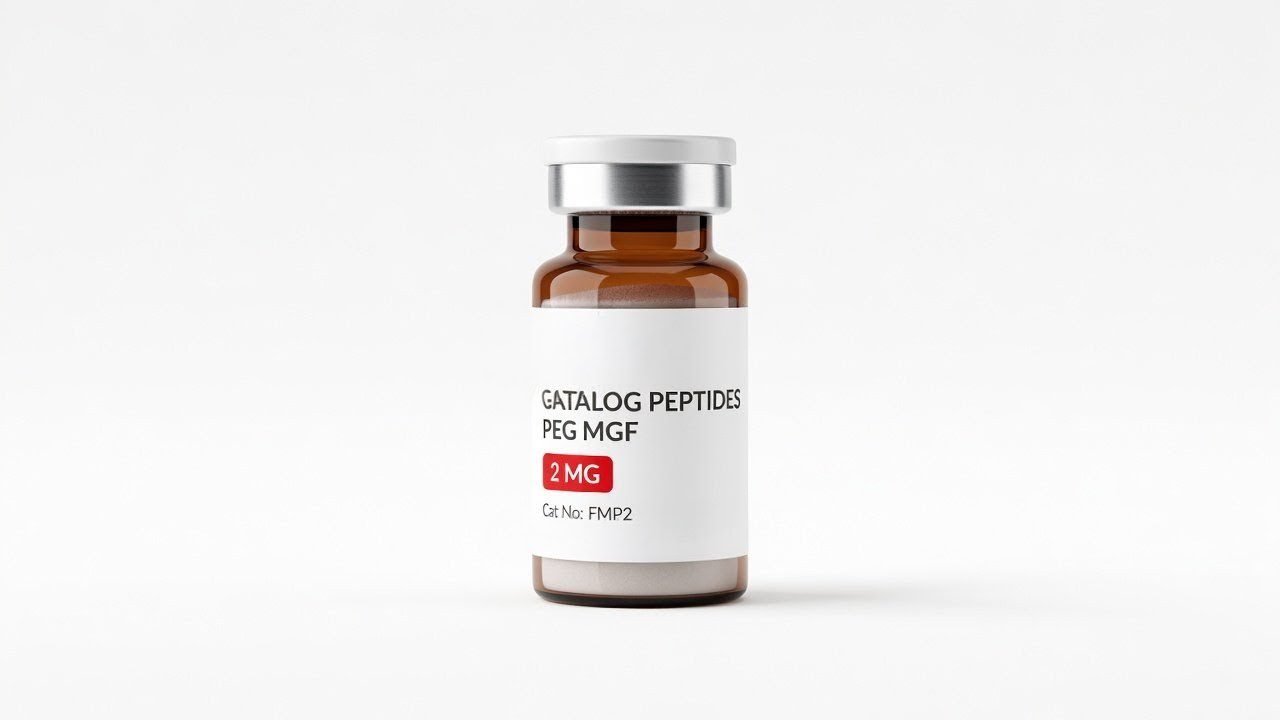
PEG-MGF For Sale: Extended-Action Mechano Growth Factor for Research
Looking for PEG-MGF for sale? Sino Research Peptide Manufacturer supplies high-purity PEG-MGF, formulated specifically for laboratory and research use. Below, you’ll find a full research overview of this pegylated IGF-1 isoform, along with everything you need to know before you buy PEG-MGF online.
What Is PEG-MGF Peptide?
MGF, short for Mechano Growth Factor, is a research peptide that scientists consider to belong to the IGF-1 (insulin-like growth factor) family. As an isoform of IGF-1, MGF is also known as IGF-1Ec and is believed to primarily be produced in the liver. The IGF-1 gene appears to undergo transcription and may generate three mRNA isoforms: IGF-1Ea, IGF-1Eb, and IGF-1Ec — indicating MGF (or IGF-1Ec) may be identical to IGF-1 but with a different E domain. Synthesis of each isoform appears to serve specific functions in different tissues, responding to diverse stimuli.
PEG-MGF, or polyethylene glycol (PEG)-ylated MGF, represents a synthetic form of MGF. Pegylation connects polyethylene glycol to another compound to alter its structure. Scientists consider that MGF alone may have a short half-life; however, once bound with PEG, this half-life may extend by several days.
Why Pegylation Matters for MGF Research
Research suggests PEG IGF-1 may be more impactful than recombinant IGF-1 for muscle cell regeneration and improving muscle function. Researchers primarily attribute this to the hypothesis that PEG may not easily bind with other compounds, potentially leading to delayed clearance. Additionally, modifying the C-terminus of IGF-1 with the addition of PEG may increase the peptide’s potential impact on tissues.
The IGF-1 Splicing Pathway
Researchers suggest the existence of three IGF-1 precursor proteins formed upon splicing of mature IGF-1. Each precursor comprises 70 amino acid residues from mature IGF-1, differing only in the amino acid sequence attached to the COOH terminal — which possibly determines its function. During the late 1990s and early 2000s, researchers suggested one of these three precursors, IGF-1EC (MGF), may increase upon muscle injury.
Several studies have since isolated and synthesized PEG-ylated MGF to modify and potentially improve the peptide’s impact. Research suggests that under muscle stress, mature IGF-1 may become spliced as a stress response, producing and releasing IGF-1EC (Mechano Growth Factor).
One research hypothesis suggests that as MGF increases, the amino acid sequence attached to its COOH terminal may activate and promote cell proliferation in muscle stem cells. Further studies indicated PEG-MGF may stimulate proliferation of C2C12 muscle cells and myoblasts upon presentation. Based on these results, researchers suggested the MGF peptide may be biologically active and inert by nature, with PEG-MGF potentially inducing a stronger, more durable action than normal MGF.
Chemical Makeup
| Property | Detail |
|---|---|
| Molecular Formula | C121H200N42O39 |
| Molecular Weight | N/A |
| Other Known Titles | PEG-MGF-E, PEG-MGF-Ct24E |
PEG-MGF Peptide Benefits: What Does the Research Say?
Before you buy PEG-MGF online, it helps to understand what current research suggests about its potential applications. Below, we break down the key study areas.
PEG-MGF and Muscle Structure
Muscle resistance activity appears to activate MGF mRNA in muscle tissues, with researchers reporting a substantial 163% rise from baseline — suggesting a potentially direct response of MGF to mechanical stimuli. An observed surge in growth hormone levels that typically accompanies muscle resistance may add complexity to this interplay: data suggests a 456% increase in MGF mRNA coinciding with resistance activities, while elevated growth hormone alone appears to influence MGF mRNA expression by about 80% compared to baseline. Researchers have suggested this pattern may reflect broader upregulation of IGF-I gene transcription prior to splicing, hypothesizing that MGF may play a critical role in the body’s intrinsic mechanism for mitigating muscle damage and promoting tissue repair in response to mechanical stress.
A related study examined MGF’s potential in muscle repair and wound healing, using murine models with induced muscle contusion and muscular macrophage depletion. Following comprehensive analysis, researchers theorized MGF might induce muscular repair in wounded tissue, with the peptide appearing to decline fibrosis rates in contused muscles and reduce expression of inflammatory cytokines, chemokines, and stress factors. Preliminary analyses indicated MGF might affect fibrosis through likely suppression of collagen types I and III expression, alongside a noticeable decrease in oxidative stress markers and matrix metalloproteinases (MMPs).
The investigation also proposed that MGF’s influence on satellite cell functional dynamics post-injury might be minimal, based on stable MyoD and myogenin expression levels — key markers of satellite cell proliferation and differentiation. The study further suggested MGF might modify the injured muscle’s inflammatory environment, tentatively evidenced by decreased expression of pro-inflammatory cytokines (TNF-α, IFN-γ, IL-1β, TGF-β) and chemokines (CCL2, CCL5, CXCR4), alongside a speculative reduction in gp91phox expression, a NADPH oxidase component tied to reactive oxygen species generation.
PEG-MGF and Cardioprotection Research
This study evaluated MGF’s potential effect on cardiac muscles undergoing programmed cell death following hypoxia. Researchers induced hypoxia in rats using only 1% oxygen supply, leading to cellular apoptosis. Once researchers presented the peptide, the study reported it appeared to induce increased stem cell migration to the heart, possibly leading to apoptosis inhibition.
More specifically, MGF is suggested to potentially enhance migration of mesenchymal stem cells (hMSCs), suggesting a chemotactic action that may guide stem cells to areas affected by injury. Researchers based this on apparent increases in Bcl-2 gene levels, believed to play a critical role in cell survival — suggesting MGF may possess qualities that inhibit apoptotic processes, potentially positioning it as an agent for enhancing tissue regeneration.
PEG-MGF and Bone Fracture Research
This study evaluated MGF’s potential effect on bone injury using 27 rabbits with experimentally induced 5-mm bone defects, divided into three groups receiving MGF or a control substance over 5 consecutive days. Post-trial histological examination suggested control tissue appeared least healed, while MGF-exposed bone tissue appeared most healed. MGF-exposed tissues also exhibited a superior healing process compared to those exposed to IGF-1 alone, suggesting MGF may interact with cellular processes differently than IGF-1.
Further insights suggest MGF might influence the cell cycle by potentially halting it at specific stages, while also activating the MAPK-Erk1/2 signaling pathway — indicating MGF might employ a multifaceted strategy involving both cell cycle progression and specific molecular pathways crucial for cellular repair.
PEG-MGF and Neuroprotection Research
Several studies examined increased MGF concentration’s effect on brain cells in mice. One study bred mice to constitutively overproduce MGF in the hippocampus, the brain region primarily responsible for regulating neurogenesis. This overproduction appeared to result in high concentrations of BrdU, a biological marker representing proliferative action.
Another study bred mice for conditional MGF production at 1, 3, and 12 months old, examining behavioral analysis and biological responses after 2 years. These mice reportedly exhibited elevated BrdU levels and neurogenesis.
PEG-MGF and Muscle Tissue Hypertrophy
One pivotal study assessed MGF’s potential across muscle cells of varying ages, from neonatal to aged stages. In younger cells, MGF seemed to postpone cellular senescence onset, suggesting a potential to maintain muscle function and regenerative properties that typically decline with age. The study noted enhanced cell proliferation in cells ranging from neonatal to young, though this didn’t extend to older cells — which instead showed increased muscle hypertrophy alongside a marked reduction in reserve cells.
This fusion process appeared enhanced across all age groups by MGF, increasing myotube size and potentially muscle functional capabilities through augmented expression of muscle-specific contractile proteins. The reduced presence of reserve cells suggests MGF might encourage these cells to participate more actively in muscle formation. Researchers concluded that the MGF-24aa-E peptide alone demonstrates a notable capacity to promote satellite cell activation, proliferation, and fusion in support of muscle repair and maintenance.
Where to Buy PEG-MGF Online
What Is PEG-MGF Peptide and Where to Buy It
If you’ve been searching for what is PEG-MGF peptide and where to source it, Sino Research Peptide Manufacturer offers a straightforward path to reliable, research-grade material. Every batch ships with purity verification, so you always know exactly what you’re working with.
Where to Buy PEG-MGF Peptide for Sale
Wondering where to buy PEG-MGF peptide for sale? Our streamlined ordering process gets research-grade material to your lab quickly, with fast, tracked dispatch to laboratories and institutions.
Best Place to Get PEG-MGF for Sale
Researchers looking for the best place to get PEG-MGF for sale choose Sino Research Peptide Manufacturer for consistent quality control, transparent documentation, and dependable supply. You can buy PEG-MGF online directly through our platform, whether you’re placing a first order or restocking for an ongoing study.
Important Research Notice
PEG-MGF is available for research and laboratory purposes only. It is not intended for human or veterinary use. Please review and adhere to our Terms and Conditions before placing an order.
References:
- Philippou A, Papageorgiou E, Bogdanis G, Halapas A, Sourla A, Maridaki M, Pissimissis N, Koutsilieris M. Expression of IGF-1 isoforms after exercise-induced muscle damage in humans: characterization of the MGF E peptide actions in vitro. PEG-MGF For Sale In Vivo. 2009 Jul-Aug;23(4):567-75. https://pubmed.ncbi.nlm.nih.gov/19567392/
- Zabłocka, B., Goldspink, P. H., Goldspink, G., PEG-MGF For Sale & Górecki, D. C. (2012). Mechano-Growth Factor: an important cog or a loose screw in the repair machinery? Frontiers in endocrinology, 3, 131. https://www.ncbi.nlm.nih.gov/pmc/articles/PMC3485521/
- Janssen, J. A., Hofland, L. J., Strasburger, C. J., van den Dungen, E. S., & Thevis, M. PEG-MGF For Sale (2016). Potency of Full-Length MGF to Induce Maximal Activation of the IGF-I R Is Similar to Recombinant Human IGF-I at High Equimolar Concentrations. PloS one, 11(3), e0150453. https://www.ncbi.nlm.nih.gov/pmc/articles/PMC4798685/
- Rotwein P. (2014). Editorial: the fall of mechanogrowth factor?. Molecular endocrinology (Baltimore, Md.), 28(2), PEG-MGF For Sale 155–156. https://www.ncbi.nlm.nih.gov/pmc/articles/PMC3896639/
- Hameed M, Lange KH, Andersen JL, Schjerling P, Kjaer M, Harridge SD, Goldspink G. The effect of recombinant human growth hormone and resistance training on IGF-I mRNA expression in the muscles of elderly men. J Physiol. 2004 Feb 15;555(Pt 1):231-40. doi: 10.1113/jphysiol.2003.051722. Epub 2003 Oct 17. PMID: 14565994; PMCID: PMC1664832. PEG-MGF For Sale
- Liu X, Zeng Z, Zhao L, Chen P, Xiao W. Impaired Skeletal Muscle Regeneration Induced by Macrophage Depletion Could Be Partly Ameliorated by MGF Injection. Front Physiol. 2019 May 17;10:601. https://pubmed.ncbi.nlm.nih.gov/31164836/
- Doroudian G, Pinney J, Ayala P, Los T, Desai TA, Russell B. Sustained delivery of MGF peptide from microrods attracts stem cells and reduces apoptosis of myocytes. PEG-MGF For Sale Biomed Microdevices. 2014 Oct;16(5):705-15. https://pubmed.ncbi.nlm.nih.gov/24908137/
- Deng M, Zhang B, Wang K, Liu F, Xiao H, Zhao J, Liu P, Li Y, Lin F, Wang Y. Mechano growth factor E peptide promotes osteoblasts proliferation and bone-defect healing in rabbits. Int Orthop. 2011 Jul;35(7): PEG-MGF For Sale 1099-106. https://pubmed.ncbi.nlm.nih.gov/21057789/
- Alec Walker. Hearts and Minds of Mice and Men: Mechano Growth Factor a new tool in the battle against age-related neuron loss? 20 Jul 2017.
- Kandalla PK, Goldspink G, Butler-Browne G, Mouly V. Mechano Growth Factor E peptide (MGF-E), derived from an isoform of IGF-1, PEG-MGF For Sale activates human muscle progenitor cells and induces an increase in their fusion potential at different ages. Mech Ageing Dev. 2011 Apr. https://pubmed.ncbi.nlm.nih.gov/21354439/
 PEG-MGF (2mg)
Related products
AICAR
All Peptides
All Peptides

All Peptides
All Peptides
All Peptides
All Peptides
All Peptides
Reviews
There are no reviews yet