Peptide Research
BPC157 + TB 500 Blend Benefits: What the Evidence Actually Shows
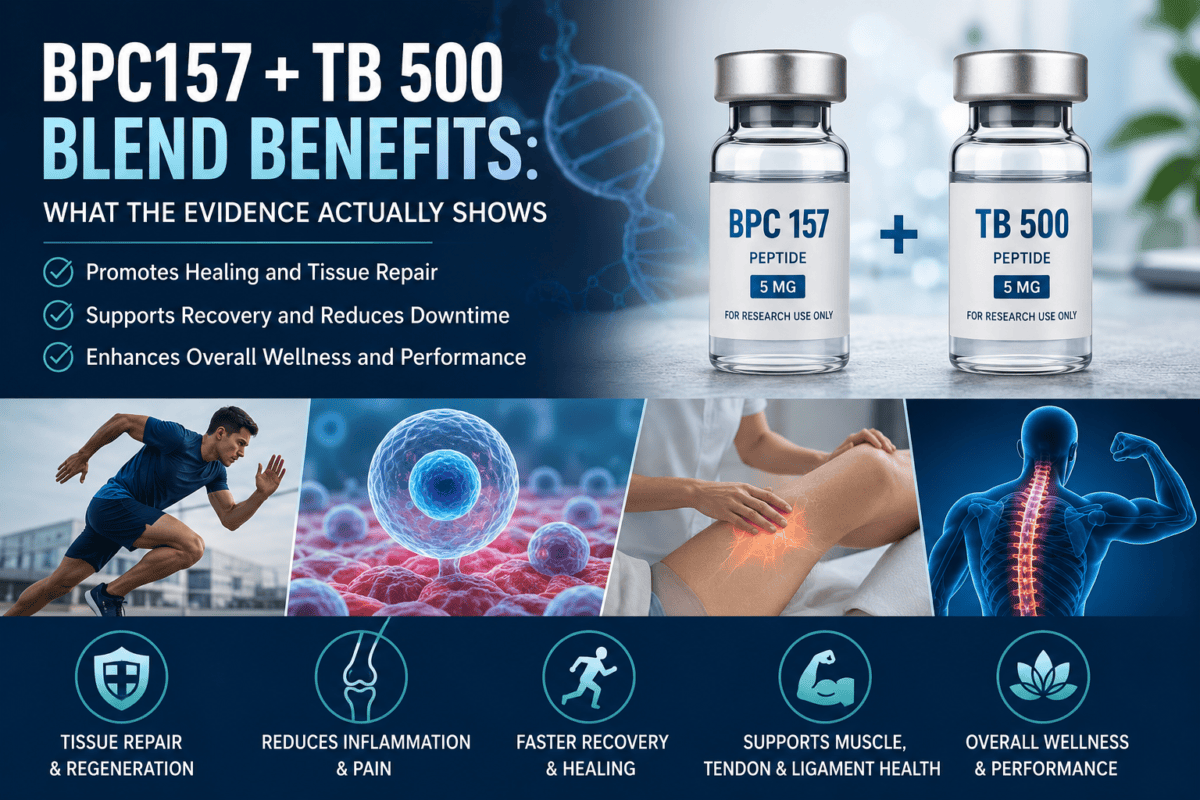
BPC157 + TB 500 Blend Benefits: The Surprising Truth About Recovery, Tissue Repair, and Safety
If you’ve spent any time in fitness forums, biohacking communities, or peptide research circles, you’ve probably run into two names paired together constantly: BPC-157 and TB-500. Ask around and someone will tell you a story — a training partner whose shoulder “just came back,” a friend of a friend whose old ankle injury finally settled down. These anecdotes about BPC157 + TB 500 blend benefits travel fast online. The science, as it turns out, travels a lot slower.
That gap — between the online enthusiasm and the actual state of the evidence — is exactly what this article closes. We’ll walk through what BPC-157 and TB-500 are, why they’re so often discussed as a BPC-157 and TB-500 peptide blend, what research (mostly preclinical) suggests about their mechanisms, what the current regulatory picture looks like, and — just as importantly — what we still don’t know about the BPC157 + TB 500 blend benefits people claim to experience.
A Quick Overview Before We Dive In
Here’s the shape of the argument before the details:
- BPC-157 and TB-500 are peptides originally studied for roles in tissue protection and repair-related biological processes.
- They’re frequently discussed together because their proposed mechanisms are considered complementary rather than redundant — which is the core rationale behind the BPC157 + TB 500 blend benefits conversation.
- The benefits associated with the blend — faster healing, tendon repair, reduced inflammation — are drawn almost entirely from animal and in-vitro research, not large-scale human clinical trials.
- The regulatory status of both compounds has actually shifted during 2025 and 2026, and it’s more complicated than a simple “banned” or “approved” label — more on that below.
- Meaningful safety data in humans remains limited, and that gap is a real limitation, not a technicality.
With that framing in place, let’s get into specifics.
What Is BPC-157?
BPC-157 (Body Protection Compound-157) is a synthetic peptide built from a 15-amino-acid sequence, derived from a protective protein found in human gastric juice. Researchers first became interested in it for its apparent role in protecting and healing the stomach lining — hence the name.
Animal research later expanded interest well beyond the gut. Investigators began examining BPC-157 in tendon, ligament, muscle, and even nerve tissue models, largely because it appeared to influence blood vessel formation (angiogenesis) and cellular signaling pathways tied to repair. A 2025 literature and patent review in the journal Pharmaceuticals described BPC-157 as demonstrating pleiotropic beneficial effects across various preclinical models mimicking conditions such as tissue injury, inflammatory bowel disease, and even central nervous system disorders — while also noting plainly that it has not been approved for use in standard medicine by the FDA or other global regulatory authorities due to a lack of sufficient, comprehensive clinical studies confirming benefits in humans. You can read that full review on PubMed Central.
What Is TB-500?
TB-500 is the synthetic version of a peptide fragment derived from Thymosin Beta-4, a protein present in nearly all human and animal cells. Thymosin Beta-4 plays a role in cell migration and structural changes at the cellular level — think of it as something that helps cells move to exactly where they’re needed.
Because of that cell-migration property, TB-500 has drawn research interest in wound healing and tissue regeneration studies, particularly involving soft tissue. Much like BPC-157, its regulatory and safety picture has also evolved recently — a compounding-pharmacy regulatory tracker noted that BPC-157 and TB-500 were both previously placed in Category 2 of the FDA’s 503A bulk substances list over impurity-related safety concerns, before being removed from that category in April 2026 following withdrawal of their nominations (source: New Drug Loft regulatory update).
Why Are BPC-157 and TB-500 Commonly Discussed as a Combination?
This is one of the most-searched questions on the topic, and it has a fairly simple answer: proposed complementary mechanisms.
Picture a construction site after a storm. One crew clears debris and repairs the structural framework. Another crew focuses on getting new materials and workers to exactly the right spots on-site. Neither crew’s job is the same, but the site doesn’t get rebuilt without both.
That’s roughly the theory behind the BPC-157 and TB-500 peptide blend:
- BPC-157 is theorized to support the local tissue environment and blood vessel formation.
- TB-500 is theorized to support cell migration and structural remodeling.
Because their proposed roles don’t overlap directly, researchers and wellness communities have hypothesized that combining the two could address more of the repair process than either compound alone — which is the entire premise behind the BPC157 + TB 500 blend benefits discussion. It’s important to underline the word theorized: this combined-effect model is a hypothesis built from separate lines of animal and cellular research, not a conclusion drawn from trials that tested the actual blend in humans.
BPC-157 TB-500 Mechanism of Action: What’s Actually Being Studied
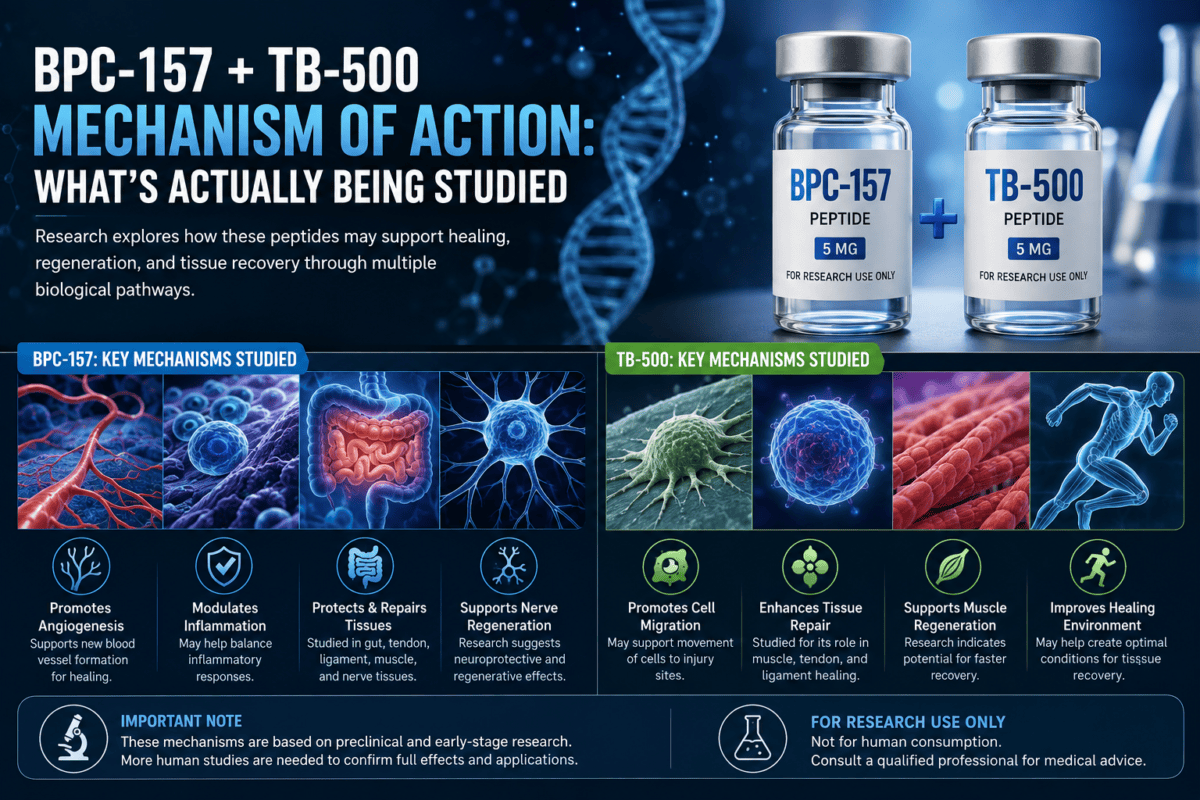
When people search for the BPC-157 and TB-500 mechanism of action, they’re really asking: what is this stuff supposedly doing at the cellular level? Based on preclinical literature, a few themes recur.
Table 1: Proposed Mechanisms at a Glance
| Mechanism | Primarily Associated With | What It’s Thought to Do | Evidence Type |
|---|---|---|---|
| Angiogenesis (new blood vessel growth) | BPC-157 | Improve blood supply to damaged tissue | Animal models, cell studies |
| Cell migration / actin regulation | TB-500 | Help repair-related cells travel to an injury site | Cell studies, limited animal data |
| Inflammatory pathway modulation | Both | Influence local inflammatory signaling | Animal models |
| Collagen fiber organization | BPC-157 | Support structural alignment in healing tendon tissue | Animal (rodent) tendon models |
| Nitric oxide (NO) system regulation | BPC-157 | Modulate NO-related vascular signaling | Preclinical pharmacology research |
Researchers Sikiric and colleagues, in a 2025 paper published in Pharmaceuticals, described BPC-157’s proposed activity as centered on a pleiotropic beneficial effect that controls and modulates angiogenesis and the nitric oxide system, and argued that the compound has demonstrated high safety in animal models, with no lethal dose (LD1) identified — a claim that remains debated among other researchers, since animal safety data doesn’t automatically translate to confirmed human safety. You can review that paper on PubMed Central.
A separate pharmacokinetics study conducted in rats and beagle dogs found that BPC-157 had an elimination half-life of less than 30 minutes and showed linear pharmacokinetic characteristics across tested doses, with roughly 14–19% bioavailability in rats and 45–51% in dogs following intramuscular injection — useful mechanistic data, but again, generated entirely in animals, not people. That study is available via Frontiers in Pharmacology.
It’s worth being direct here: nearly all of this mechanistic research comes from rodent models, cell cultures, or in-vitro assays. Promising cellular or animal data is a meaningful starting point for research — it is not the same as proof that a mechanism plays out identically in the human body. This distinction is central to any honest discussion of BPC157 + TB 500 blend benefits.
Where the BPC157 + TB 500 Blend Benefits Conversation Came From
It helps to understand how the BPC157 + TB 500 blend benefits conversation actually took shape, because it didn’t start in a lab studying the combination — it started as two separate research threads that later got merged by word of mouth.
BPC-157 research grew out of gastroenterology, with early Croatian pharmacology work (much of it from the Sikiric research group referenced earlier in this article) focused on gut-lining protection. TB-500’s research lineage runs through wound-healing and cardiac-regeneration studies tied to Thymosin Beta-4. Neither line of research was originally designed around athletic recovery, tendon injuries, or bodybuilding — those applications came later, driven largely by online communities extrapolating from the underlying mechanisms rather than from dedicated trials.
That’s an important piece of context for anyone evaluating BPC157 + TB 500 blend benefits claims today: the “blend” itself is a wellness-community invention, not a formulation that originated inside a clinical research program. The individual peptides have decades of preclinical history behind them; the specific pairing does not have anywhere near that same research pedigree.
Potential Benefits Being Explored — With an Important Caveat
Given the mechanisms above, here’s what research communities are actively exploring in relation to a BPC-157 and TB-500 blend:
- Tissue repair research — animal studies on tendon, ligament, and muscle tissue
- BPC-157 TB-500 for muscle recovery — preclinical interest in muscle-injury models
- BPC-157 and TB-500 for tissue repair — broader soft-tissue regeneration research
- BPC-157 TB-500 for injury recovery — a frequent framing in fitness and sports contexts
- BPC-157 TB-500 tendon research — collagen alignment studies in rodent tendon-injury models
Table 2: Claimed Benefit vs. Actual Evidence Level
| Commonly Claimed Benefit | Evidence Source | Human Trial Support? |
|---|---|---|
| Faster tendon/ligament healing | Rodent tendon-injury models | No dedicated human trials |
| Improved muscle recovery | Preclinical muscle-injury studies | No dedicated human trials |
| Reduced localized inflammation | Animal + cell culture research | Very limited, indirect |
| Gut lining protection (BPC-157 specifically) | Older, small human GI studies (oral route) | Narrow, dated, not injectable-route data |
| General “anti-aging” or performance benefits | Anecdotal / marketing claims | None |
Here’s the caveat that has to sit right alongside every one of those rows: the potential benefits of BPC-157 and TB-500 described in research literature and online discussion are largely extrapolated from non-human studies. Where human data exists at all, it tends to be limited, older, narrow in scope, or focused on outcomes unrelated to athletic recovery or injury healing — the outcomes that generate the most search interest today.
Neuroscientist Dr. Andrew Huberman has noted a pattern that applies well here: promising preclinical signals often generate excitement that outpaces the actual clinical evidence supporting a compound’s real-world effect in people. That’s not a reason to dismiss the research outright — it’s a reason to hold the claims loosely until better human data exists.
BPC-157 TB-500 Human Studies: Where Things Currently Stand
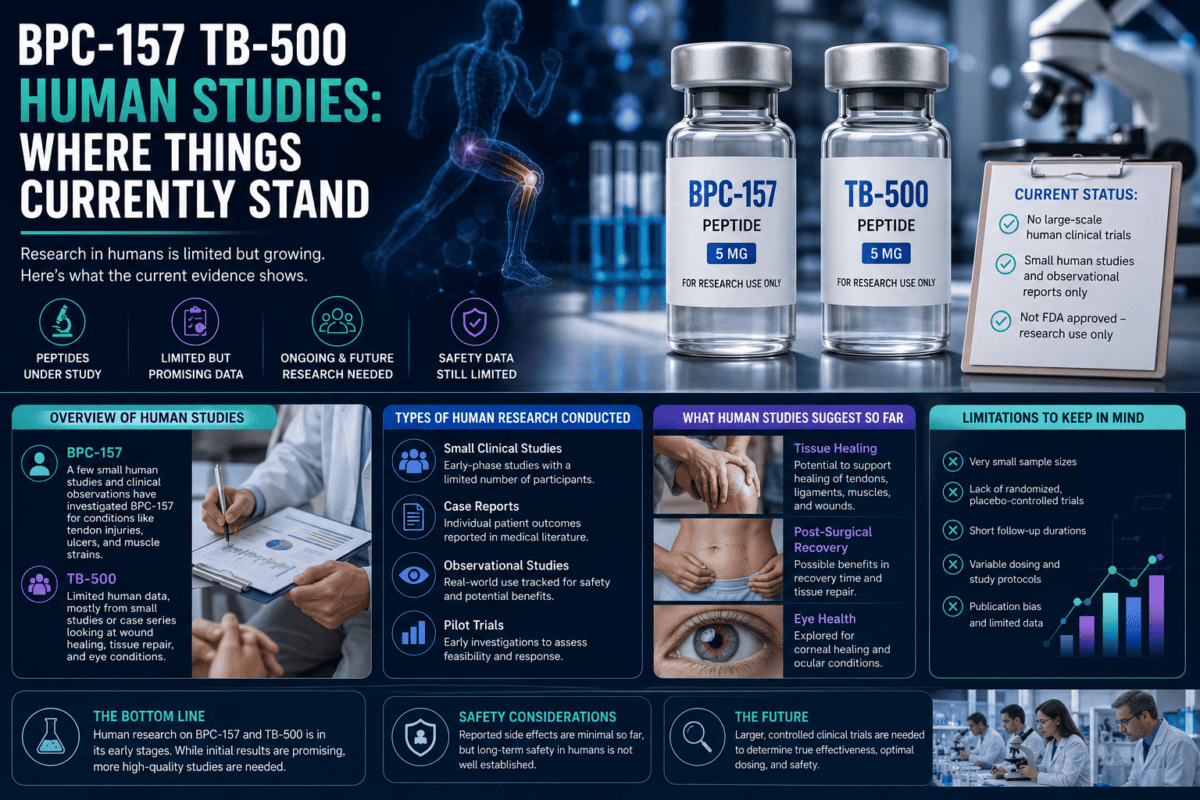
This is the section most peptide-curious readers actually want answered honestly, so here it is plainly: robust, peer-reviewed BPC-157 TB-500 clinical research in humans remains extremely limited.
An FDA Pharmacy Compounding Advisory Committee briefing document reviewed the human evidence base for BPC-157 directly and found that available data do not support the use of BPC-157 for the treatment of ulcerative colitis, and separate reporting on that same 2026 hearing noted that the single most relevant human study reviewers could find was a decades-old meeting abstract that was never published as a peer-reviewed trial and used an oral route of administration rather than the injectable or subcutaneous routes that wellness clinics actually use — meaning no human data supports the injection routes currently in circulation. You can read the FDA’s own briefing document at fda.gov.
Most of what circulates online tracing back to “BPC-157 TB-500 clinical research” actually breaks down into:
- Animal studies (primarily rodent models)
- In-vitro (cell culture) research
- A small number of older, small, or narrowly scoped human studies — including case series run out of a single physician’s own clinic, several published in Alternative Therapies in Health and Medicine, that reporting on the topic noted ranged in size from two to sixteen participants and did not include comparison groups (see the full reporting at STAT News)
There is no substantial body of BPC-157 TB-500 human studies examining the combined blend for recovery, healing, or performance outcomes in the general population. When you see confident claims about how the blend “works in the body” for tendon repair or muscle recovery, it’s worth asking: is that conclusion coming from a human trial, or from a rodent study being generalized to people? This evidence gap is the single most important thing to understand before engaging further with the topic of BPC157 + TB 500 blend benefits.
Is BPC-157 TB-500 FDA Approved?
No. Neither BPC-157 nor TB-500 is FDA-approved for any human therapeutic use. But the fuller regulatory picture is more nuanced than a flat “banned” label, and it has genuinely changed over the past two years.
Table 3: BPC-157 & TB-500 Regulatory Timeline
| Period | Status | What Changed |
|---|---|---|
| Late 2023 | Added to FDA’s “Category 2” compounding list | FDA cited immunogenicity risk, impurity concerns, and insufficient human safety data |
| Early 2025 | Formal prohibition from compounding | US compounding pharmacies could no longer legally prepare BPC-157 |
| April 2026 | Removed from Category 2 | Nominations for BPC-157 and TB-500 were withdrawn from that specific category |
| July 2026 | FDA Pharmacy Compounding Advisory Committee (PCAC) public meeting | Committee reviewed seven peptides, including BPC-157 and TB-500, for possible inclusion on the 503A Bulks List |
| July 2026 (same meeting) | 8–6 advisory vote in favor of compounding eligibility | A non-binding committee recommendation — not full FDA approval, and not approval for over-the-counter or unregulated retail sale |
A July 2026 report on that advisory committee vote clarified that even reviewers who voted in favor acknowledged serious gaps, noting the FDA’s own Adverse Event Reporting System contained a case in which a patient developed diffuse hyperpigmentation and gingival darkening after using a blended BPC-157/TB-500 product labeled “research purposes only” (full story at Tech Times).
A few things to take away from this table:
- An advisory committee recommendation is not the same as FDA drug approval. It affects whether licensed compounding pharmacies may legally prepare the substance under a physician’s order — it does not create an approved, over-the-counter, or retail-legal product.
- Both peptides are still typically sold online under “research use only” or “not for human consumption” labeling, and that labeling exists precisely because neither has cleared the clinical bar required for approval.
- Because approval still hasn’t happened, there remains no FDA oversight of manufacturing quality, dosing accuracy, or purity for most products sold this way.
BPC-157 TB-500 Regulatory Status: Sport and Government Context
Beyond FDA compounding rules, BPC-157 carries restrictions in other regulatory contexts too. The U.S. Anti-Doping Agency has stated plainly that BPC-157 is not approved for human clinical use, may lead to negative health effects, and could be added to the Prohibited List at any time, and separately confirmed it sits in the WADA Prohibited List’s Class S0 (Non-Approved Substances) category, as well as the Department of Defense’s Prohibited Dietary Supplement Ingredients List. Full detail is available from USADA and the Operation Supplement Safety program.
Regulatory status isn’t a bureaucratic footnote — it reflects the current evidence base directly. Approval requires demonstrated safety and efficacy from controlled human trials, and even the most recent, most favorable committee vote hasn’t met that bar.
BPC-157 TB-500 Safety, Side Effects, and Risks
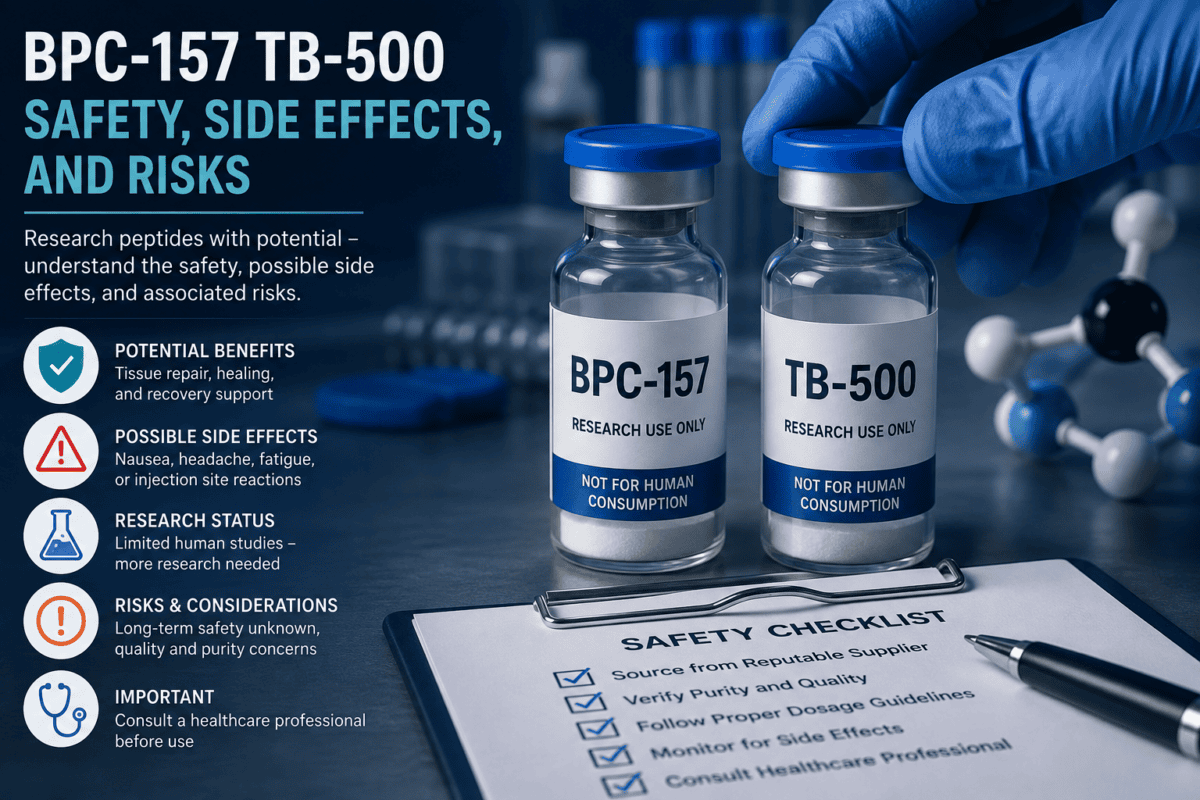
Because rigorous human trials are lacking, comprehensive BPC-157 TB-500 safety data simply doesn’t exist in the way it would for an approved medication. That absence of data is itself a risk factor worth taking seriously.
Table 4: Key Safety Considerations
| Concern | What’s Known | Why It Matters |
|---|---|---|
| Long-term human safety | Largely unstudied beyond short observation periods | Chronic-use risk profile is unknown |
| Product purity / quality | Unregulated “research chemical” market | Contamination and inaccurate dosing are realistic risks |
| Angiogenesis and cancer risk | Theoretical/mechanistic concern, not demonstrated in humans | Blood-vessel-promoting mechanisms could theoretically affect undiagnosed tumors |
| Immune reactions | Cited by FDA as a specific concern for both peptides | Reason cited for the original Category 2 compounding restriction |
| Drug/supplement interactions | Not meaningfully studied in humans | Unknown risk when combined with medications |
On the cancer-risk question specifically — one of the most searched safety concerns — an FDA compounding hearing summary described the underlying mechanism directly: BPC-157 promotes angiogenesis through pathways including VEGFR2, and while no study has definitively shown BPC-157 causes cancer in humans, and no vascular tumors have been observed in animal models with prolonged use, the concern remains mechanistic and preclinical rather than resolved. A separate physician-authored review put it more bluntly, stating that we simply do not know what happens when a person uses BPC-157 for months or years, and until real evidence says otherwise, the default assumption must be that such risks could exist (full piece at Orthopaedic & Wellness).
On the specific worry questions readers often bring up — whether BPC-157 affects the liver, the heart, or hormone levels like testosterone — the honest answer is that there isn’t strong, dedicated human research settling any of these questions definitively. That uncertainty is precisely why caution, professional medical guidance, and skepticism toward confident online claims all matter when evaluating BPC157 + TB 500 blend benefits claims you encounter online.
Who Should Avoid Peptides Like These?
While this isn’t medical advice, the research gaps outlined above point toward a few groups for whom the uncertainty is especially significant:
- Anyone who is pregnant or breastfeeding
- Anyone with a personal or family history of cancer, given unresolved questions around angiogenesis-related compounds and cell growth
- Anyone with significant cardiovascular or liver conditions
- Anyone currently taking medications with narrow safety margins, given unknown interaction risks
Because of the regulatory status and evidence gaps discussed throughout this piece, decisions about experimental peptides belong in a conversation with a qualified healthcare provider — not a blog post, and not a forum thread.
BPC-157 vs TB-500: How They Differ
It’s easy to lump these two together, but they aren’t interchangeable. Here’s a simple side-by-side of how BPC-157 is different from TB-500 in peptide research.
Table 5: BPC-157 vs. TB-500 Comparison
| BPC-157 | TB-500 | |
|---|---|---|
| Origin | Derived from a gastric-protective protein | Derived from Thymosin Beta-4 |
| Primary research focus | Gastrointestinal protection; expanded to tissue and vascular research | Cell migration and structural/actin regulation |
| Proposed strength | Blood vessel formation, tissue environment support | Cell movement and recruitment to injury sites |
| Elimination half-life (animal data) | Under 30 minutes (rats, dogs) | Not consistently reported in comparable studies |
| Human trial history | Some older, narrow, GI-focused human research | Very limited human research overall |
| Recent FDA compounding status (2026) | Removed from Category 2; PCAC recommended Bulks List inclusion | Same category shift, reviewed at the same 2026 meeting |
Neither compound “replaces” the other in the research hypothesis — they’re proposed to work on different parts of the same broader repair process, which is the whole rationale behind combining them into what’s marketed as a BPC-157 and TB-500 blend.
Reading the Research Critically: A Balanced Perspective
It’s worth acknowledging the strongest counterargument to everything above: preclinical research isn’t worthless. Rodent and in-vitro studies are a legitimate, necessary early stage of the scientific process, and many now-approved therapies started exactly there. Some researchers, including the Zagreb-based team behind much of the foundational BPC-157 literature, have pushed back hard against overly cautious readings of the data, arguing the compound’s high safety profile and pleiotropic beneficial effects deserve defense against speculation about tumorigenesis and other negative outcomes (their full response is published on PubMed Central).
The reasonable, balanced position isn’t “this research is meaningless.” It’s “this research is early, and the leap from animal data to confident claims about human recovery, muscle growth, or injury treatment hasn’t been fully earned yet.” Readers researching BPC157 + TB 500 blend benefits owe it to themselves to hold both of those things at once — genuine scientific interest, and genuine skepticism about premature conclusions.
How to Evaluate BPC157 + TB 500 Blend Benefits Claims You See Online
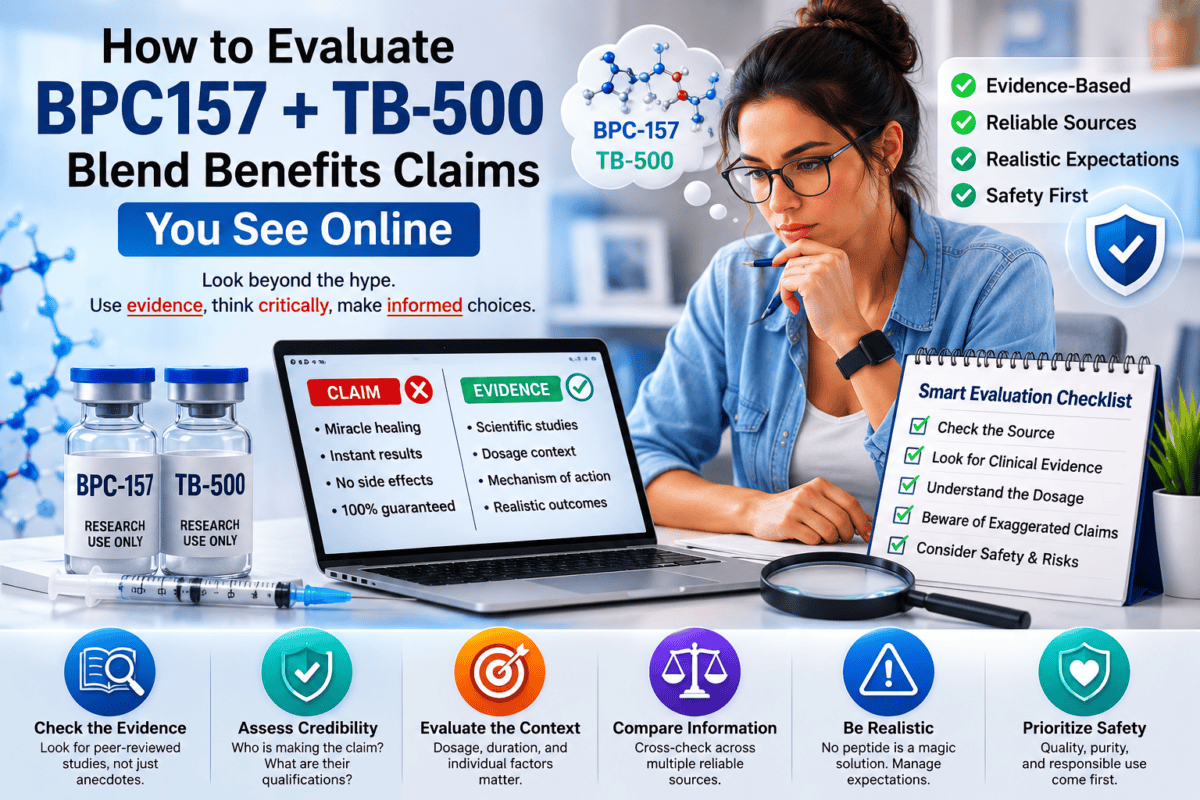
Given everything above, it’s worth having a practical framework for reading any page, video, or forum post that promises specific BPC157 + TB 500 blend benefits. A few questions are worth asking every time:
- Is the claim citing a human trial, or an animal study? Most confident recovery claims trace back to rodent research, even when the surrounding text doesn’t say so directly.
- Who’s making the claim, and do they sell the product? A page hosted on a peptide manufacturer’s own site has a financial interest in presenting BPC157 + TB 500 blend benefits as more settled than the evidence supports.
- Does the source acknowledge the regulatory status? Credible sources are upfront about the fact that neither compound is FDA-approved for therapeutic use.
- Is dosing or “how to take it” advice included? That’s a signal the content is aimed at encouraging self-administration rather than informing research-minded readers — and it’s a line that responsible, evidence-based coverage shouldn’t cross.
- Are safety limitations mentioned at all, or only benefits? One-sided pages that list BPC157 + TB 500 blend benefits without any discussion of the evidence gaps or regulatory history are a red flag, not a reassurance.
Running claims through that checklist won’t tell you definitively whether the compounds “work” — nobody can tell you that yet, human trials simply haven’t been done — but it will tell you whether the page you’re reading is engaging with the actual research honestly.
Frequently Asked Questions
What is a BPC-157 TB-500 blend used for? In research and wellness communities, it’s discussed in the context of tissue repair, tendon and ligament research, and recovery-related studies — primarily based on animal and cellular research rather than established human clinical use.
What do BPC-157 and TB-500 do together? Based on preclinical research, BPC-157 is studied for its relationship to blood vessel formation and tissue-environment support, while TB-500 is studied for cell migration. Together, they’re hypothesized to address complementary parts of the repair process — a combined effect that hasn’t been established in human trials.
Are BPC-157 and TB-500 backed by human clinical studies? Not substantially. The bulk of available evidence comes from animal and in-vitro research. Comprehensive human clinical trials on the blend specifically are lacking, and even single-compound human data is thin and often drawn from small, non-comparative studies.
Is BPC-157 TB-500 FDA approved? No. Neither peptide is FDA-approved for human use. As of mid-2026, an FDA advisory committee has recommended a path toward legal compounding eligibility, but that is a narrower, non-binding recommendation — not full drug approval, and not a green light for unregulated retail sale.
What are the risks of BPC-157 and TB-500? Key risks include unknown long-term effects, inconsistent product quality in an unregulated market, theoretical (mechanistic) cancer-related concerns tied to angiogenesis, immune-reaction risk cited directly by the FDA, and unknown interactions with existing health conditions or medications.
Is the BPC-157 and TB-500 blend safe? Safety hasn’t been established through rigorous human research. This is a genuine limitation, not a minor caveat, for anyone evaluating BPC157 + TB 500 blend benefits claims circulating online.
Does BPC-157 mess with your heart, liver, or testosterone? There isn’t strong, dedicated human research directly settling any of these specific questions. That absence of data is itself the honest answer.
The Bottom Line
The story of BPC157 + TB 500 blend benefits is really a story about the space between early scientific promise and real-world proof. The mechanisms are genuinely interesting. The animal and cellular research is real, ongoing, and — as the 2026 FDA advisory committee proceedings show — actively shifting the regulatory conversation. But the confident claims about healing, recovery, and injury treatment that circulate online are, at this point, still ahead of what human research has actually demonstrated.
If you’re researching this topic — whether as a student, a professional, an athlete, or simply someone curious about peptide science — the most valuable thing you can bring to it is exactly what got you reading an article like this one in the first place: healthy curiosity paired with healthy skepticism. Follow the primary research, watch for actual human trial data as it emerges, and treat any decisions about personal use as a conversation for a qualified healthcare provider, not a marketing page.
Further Reading
- FDA Pharmacy Compounding Advisory Committee Briefing Document
- BPC 157 Literature and Patent Review — PubMed Central
- BPC 157 Pharmacokinetics in Rats and Dogs — Frontiers in Pharmacology
- USADA: BPC-157 Experimental Peptide Creates Risk for Athletes
- Operation Supplement Safety: BPC-157 Prohibited Peptide Overview
BPC157 + TB 500 blend benefits